Flying in the age of coronavirus comes packed with uncertainty about the health status of fellow travelers. Now, Florida's Tampa International Airport is running a pilot program that offers on-the-spot COVID-19 tests for travelers.
With more than 120 people participating in the optional testing per day, Joe Lopano, Tampa International Airport CEO, said the program is showing promising results.
"We've had some customers who have tested positive and Baycare, the healthcare professionals, have a discussion with that passenger and tell them that they should not continue on their way and passengers have accepted it," Lopano told Cheddar.
The airport offers two tests, the $125 PCR nasal swab, which usually takes 3 to 4 days to yield results, and the $50 rapid Antigen test. The cost of both tests, Lopano said, can be covered by insurance companies if travelers provide a receipt from the airport.
Testing at the airport, according to Lopano, will not have much impact on overall travel time. In fact, those not checking a bag only need to account for an additional 30 minutes as a cushion, he added.
"It's immediate testing. Sometimes you have to wait in a short line. You'll get your results in 15 minutes, so it really is not a very time-consuming function and it's very convenient," Lopano said.
While other airports have implemented testing for specific destinations, Lopano said Tampa is the first to offer widespread testing for passengers on all flights arriving and departing. The pilot program is likely to continue running through the holiday season as the number of participants and customer satisfaction is assessed.
For Lopano, offering a testing site at the airport is not only maintaining passenger safety but can also help revitalize a struggling travel industry that is fighting to get customers off the ground.
"It's a high priority because we need to do whatever we can to create confidence in the travel experience and now that widespread testing is available, the technology is available, what better way to do that than right at the airport," he said.
Andrew Miller, Chief Operating Officer at Benchmark Mineral Intelligence, joined Closing Bell to discuss the warning from Rivian's CEO about a possible EV battery shortage due to lack of access to key metals like lithium.
While the push for sustainable fashion has been gaining traction, traditional swimwear is often still made with toxic plastic fibers. Natalie Herzig joins Cheddar News to explain how her brand Argot Swim is sustainable from sourcing to shipping.
Mike Gauyo, writer and founder of Black Boy Writes Media, joins Cheddar News to talk about the new class of mentees for his Black Boy Writes/Black Girl Writes Mentorship Initiative.
Ron Carson, CEO and Founder of Carson Wealth, sits down with Cheddar's Hena Doba to share why he prioritizes giving back to his community and the world and to share the work being done by his charitable 'Dreamweaver Foundation.'
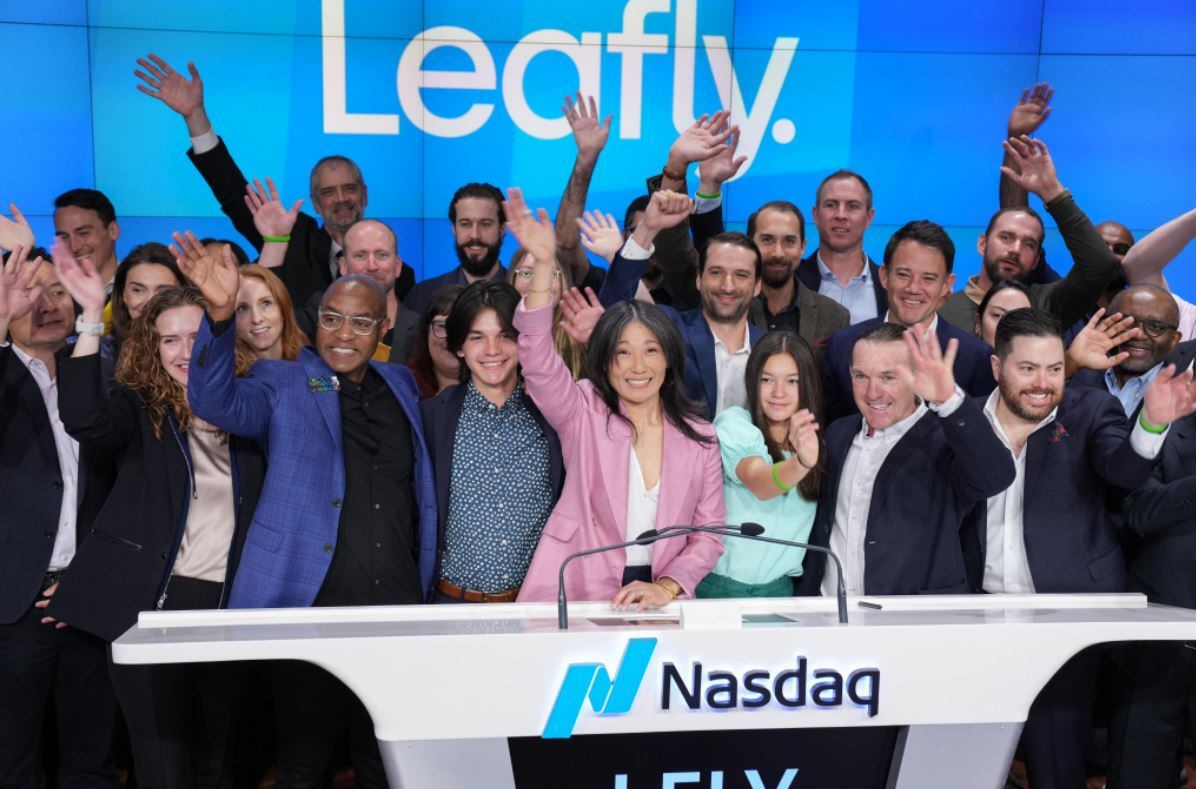
Fresh off of ringing the opening bell on the Nasdaq on the marijuana holiday, 4/20, Yoko Miyashita, CEO of cannabis website Leafly, joined Cheddar News to discuss the future of cannabis in the U.S. and the growth of her company going forward. "I think this is a new a new high, pardon the pun, but really elevating 4/20 from what used to be sort of an insider cultural moment to something that we're recognizing across the industry, really memorials the impact that this industry has," she said.
Fathom Digital Manufacturing, one of the largest on-demand digital manufacturing platforms in North America, went public late last year and serves the product development and manufacturing needs of companies such as Google, Amazon, Tesla, Johnson & Johnson, and more. CEO Ryan Martin joined Cheddar's Opening Bell to discuss what the IPO means to the company and how he thinks digital manufacturing can help mitigate supply chain issues seen throughout the pandemic. "We can take parts that would take 4-6 weeks condense that down into just days using additive manufacturing in many cases. And so it's all about speed," he said.