Earth Day comes around once a year, but investors can put their money to work to combat climate change year-round.
As more individuals come to terms with the existential threat of climate change, sustainable investing is no longer niche. It's gone mainstream, and it's a growing force in the capital markets.
An often cited 2019 survey from Morgan Stanley found that 85 percent of investors with at least $100,000 in investable assets were interested in sustainable investing.
Some 48 percent of investors with $10,000 or more invested said they were "very or somewhat" interested in sustainable investment funds, according to a 2022 Gallup poll. But only 25 percent said they'd heard "a lot or fair amount" about it, and only 10 percent said they were currently invested in sustainable funds.
Not only is familiarity with sustainable investing low, concepts like ESG can be confusing. ESG refers to "environmental, social, and governance." It's a set of standards used to evaluate companies through a social lens, but a study from Stanford University found ESG ratings can be unreliable because there isn't a standardized criteria for evaluation, information gathering is expensive, and data can be incomplete or unreliable.
Peter Krull, a partner and director of sustainable investing at Prime Capital Investment Advisors company Earth Equity Advisors, echoed those concerns.
"An ESG portfolio that reduces its exposure to ExxonMobil is less bad. One that eliminates it entirely is better. But one that replaces it with First Solar is actually sustainable," Krull told Cheddar News.
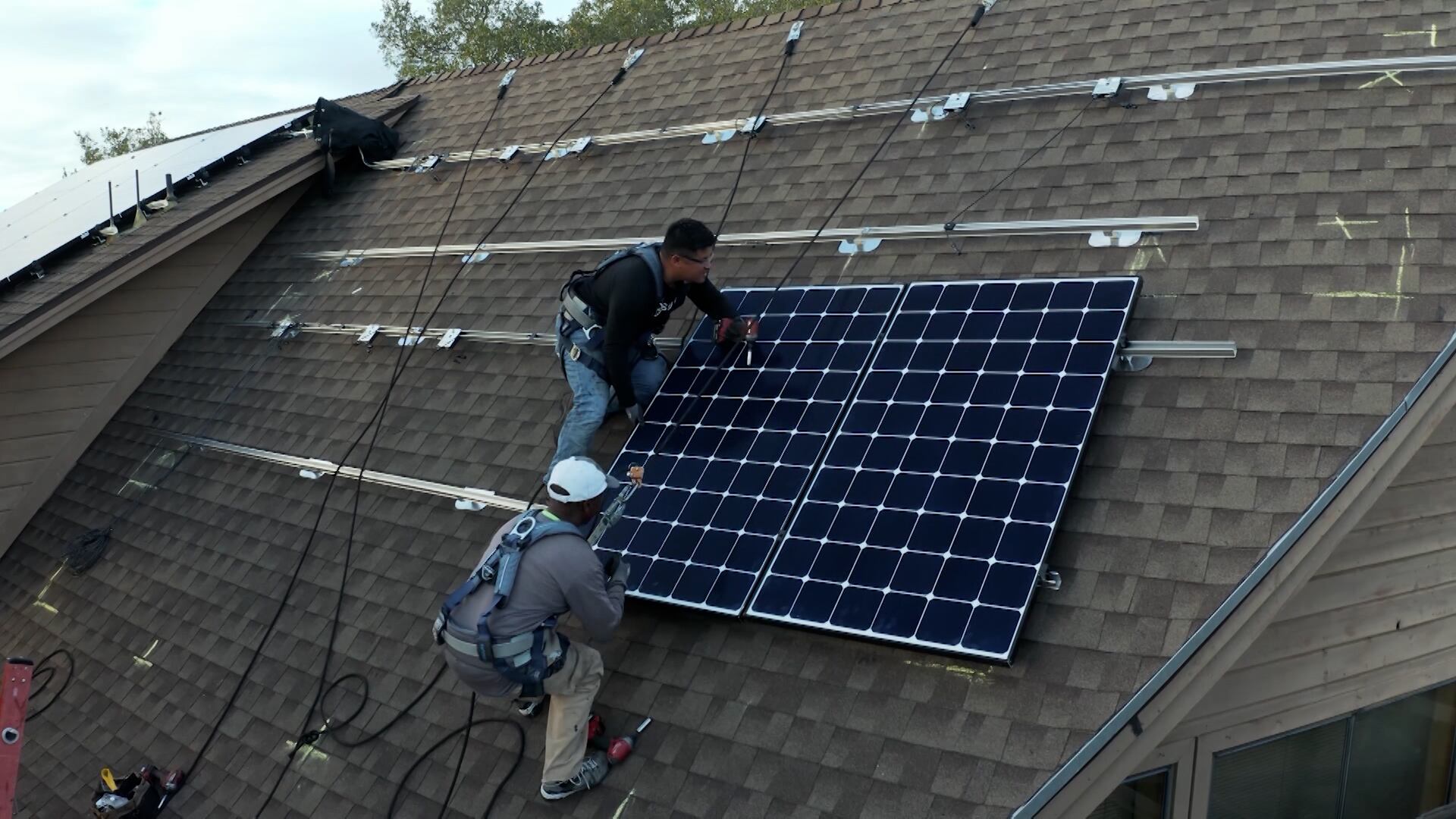
Krull recommended sustainable investors eliminate fossil fuel companies or funds that contain them from their portfolios altogether, but other sectors aren't so cut and dried. Mining operations, for example, can mine fossil fuels, but they can also mine minerals for electric vehicle batteries. As for what goes into a green portfolio, Krull recommended alternative energy companies that focus on solar, wind, and geothermal power, as well as less obvious choices like insurance companies that consider climate risk and biotech that improves health outcomes.
"I like to call traditional index investing rearview mirror investing because it's really about investing in where we've been or where the economy has been. Whereas sustainable investing is where the economy is going," Krull said.
Being a smart and sustainable investor can require a great deal of critical thinking and research, and Krull recommended tools like Fossil Free Funds and Invest Your Values to help sort through the noise.
Ultimately, investing is about generating a return. When it comes to sustainable investing, Krull also suggested that investors think long term.
"Because sustainable investing is about investing for the future, [investments are] not always going to be up, especially when value investing is in style," he said. "Over the long term, it should play out. But in short terms, just like we're dealing with right now over the last 12 to 18 months, that value has been in style, you probably will underperform a little bit."
April Fools’ Day is full of eye-rolling marketing ideas that sometimes make us chuckle, but mostly make us groan. Here’s a roundup of some of the notable products we won’t be seeing on shelves anytime soon.
Amit Bendov, the CEO and co-founder of Gong, a platform utilizing artificial intelligence to help sales and customer support teams, joined Cheddar News to talk about the tech company's innovative use of AI. Bendov pointed to an example of how the platform aided a client in selling point-of-sales software to restaurants. "Gong came up with a recommendation that when they called to introduce yourself to a new company, you should talk about the iPad before the application. That small change increased sales by 12 percent. It's a very simple change," he said. "The funny thing, Gong doesn't even know what an iPad is, what the application [is], or anything about their business. It just observed. But this is what the top 5 percent of people are doing that nobody else does. It's a very simple change to implement. Very hard to detect."
The Week's Top Stories is a guided tour through the biggest market stories of the week, from winning stocks to brutal dips to the facts and forecasts generating buzz on Wall Street.
Between Bells EP Conor White recaps some of the biggest stories of the week, while Baker Machado and Hena Doba test their knowledge, and maybe learn a thing or two. It's This Week in Trivia!
The social marketplace Poshmark recently revealed its survey on spring cleaning with tips on how decluttering might lead to cash. Steven Tristan Young, the company's chief marketing officer, joined Cheddar News to talk about the survey of its customers, especially how Millennials and Gen Z'ers are gravitating toward cleaning out their closets to reboot their wardrobes. "I think style and fashion and image is so important to this audience that this is probably one of the reasons why they're really thinking about this spring cleaning, and our hope is turning it into spring selling," he noted.
U.S. regulators are sounding the alarms about the meme stock mania fueled by retail investors. FINRA, the regulator for all brokerage firms and exchanges in the U.S. is warning that retail traders could easily get in over their heads due to their lack of knowledge about complex investments like options, ETF's and structured notes. Thomas Gorman, Attorney, Dorsey Whitney & former Securities Exchange Commission Regulator joined Cheddar's Opening Bell to discuss how regulators and trading platforms can crack down on retail investors.
The deadline for filing federal taxes is just a few weeks away. Experts are warning taxpayers to brace for yet another year of delays and complications, as the pandemic causes backlogs and obstacles to the system. Dan Geltrude, Managing Partner at Geltrude & Co, joined Cheddar's Opening Bell to give some tips on tax season.
Sophie Karp, Equity Research Analyst at Keybanc Capital Markets, talks about the push toward clean energy amid rising oil prices and highlights the challenges the U.S. faces in shifting toward renewables.