Earth Day comes around once a year, but investors can put their money to work to combat climate change year-round.
As more individuals come to terms with the existential threat of climate change, sustainable investing is no longer niche. It's gone mainstream, and it's a growing force in the capital markets.
An often cited 2019 survey from Morgan Stanley found that 85 percent of investors with at least $100,000 in investable assets were interested in sustainable investing.
Some 48 percent of investors with $10,000 or more invested said they were "very or somewhat" interested in sustainable investment funds, according to a 2022 Gallup poll. But only 25 percent said they'd heard "a lot or fair amount" about it, and only 10 percent said they were currently invested in sustainable funds.
Not only is familiarity with sustainable investing low, concepts like ESG can be confusing. ESG refers to "environmental, social, and governance." It's a set of standards used to evaluate companies through a social lens, but a study from Stanford University found ESG ratings can be unreliable because there isn't a standardized criteria for evaluation, information gathering is expensive, and data can be incomplete or unreliable.
Peter Krull, a partner and director of sustainable investing at Prime Capital Investment Advisors company Earth Equity Advisors, echoed those concerns.
"An ESG portfolio that reduces its exposure to ExxonMobil is less bad. One that eliminates it entirely is better. But one that replaces it with First Solar is actually sustainable," Krull told Cheddar News.
Krull recommended sustainable investors eliminate fossil fuel companies or funds that contain them from their portfolios altogether, but other sectors aren't so cut and dried. Mining operations, for example, can mine fossil fuels, but they can also mine minerals for electric vehicle batteries. As for what goes into a green portfolio, Krull recommended alternative energy companies that focus on solar, wind, and geothermal power, as well as less obvious choices like insurance companies that consider climate risk and biotech that improves health outcomes.
"I like to call traditional index investing rearview mirror investing because it's really about investing in where we've been or where the economy has been. Whereas sustainable investing is where the economy is going," Krull said.
Being a smart and sustainable investor can require a great deal of critical thinking and research, and Krull recommended tools like Fossil Free Funds and Invest Your Values to help sort through the noise.
Ultimately, investing is about generating a return. When it comes to sustainable investing, Krull also suggested that investors think long term.
"Because sustainable investing is about investing for the future, [investments are] not always going to be up, especially when value investing is in style," he said. "Over the long term, it should play out. But in short terms, just like we're dealing with right now over the last 12 to 18 months, that value has been in style, you probably will underperform a little bit."
Stocks closed near session lows Thursday as investors digested Federal Reserve Chair Jerome Powell's comment about a potential 50 basis point rate hike at the central bank's May meeting. Powell's announcement also sent the 10-year and other yields higher, with the benchmark 10-year rate hitting its highest level since late 2018. Victor Zhang, CIO at American Century Investments, joins Closing Bell to discuss today's close, Powell's comments, the Fed's moves on inflation, and more.
Tesla has continued to beat expectations as illustrated by its last quarter earnings despite issues in Shanghai, China. Dan Ives, the managing director of equity research at Wedbush Securities, joined Cheddar News to talk about the resilience of Tesla. "I thought they were almost Cinderella-like numbers," he said about the delivery numbers. "They are performing just miles ahead of any auto player, and that's why the stock is doing what it's doing. In my opinion, they're expanding their lead in EVs, even in this Category 5 hurricane that we're seeing in China." Ives noted that issues in China could pose ongoing challenges going forward even with the largely positive outlook.
Inflation is driving a return to the gig economy, according to a new survey from Branch & Marqeta that found 85 percent of workers have increased or planned to increase their amount of gig work in the past six months, with 58 percent citing inflation as the reason behind this change. Arun Sundararajan, professor at NYU Stern School of Business, breaks down this dynamic and how it's impacting the broader economy. "Inflation is rampant and people need more money. Salaried wages haven't kept up. Plus the labor market is tight. People can't find full time employees, employers can't find full time employees, and so some people are being opportunistic," he said. "And I also think there's a COVID effect because people have gotten used to more flexibility and time and space because people have gotten used to more flexibility and time and space, through the months of the lockdown."
A new report from DrakeStar Partners, an investment bank that closely tracks the sector, said $98.7 billion in deals were announced or closed in the first three months of the year. T
AT&T reported a 2.5 percent rise in its core wireless revenue for the first quarter as its 5G rollout expands across the United States, even as the company pivots away from streaming to focus on its communication business amid heightened demand for high-speed internet. CEO John Stankey joined Cheddar's Opening Bell to discuss the company's 5G plans, its divestment from WarnerMedia, and its push into the metaverse. "To the extent that we start to see social aspects come into the metaverse that allows people to — as they're out and about — experience those kinds of things, that just puts a higher premium on mobile networks and scaled robust mobile networks to enable those applications, which is our bread and butter, and it's probably one of our best returning and best yielding businesses," he said.
The last pocket of resistance in Mariupol, Ukraine, has been given a brief respite, the Biden admin is appealing the transit mask mandate being overturned, and Tesla reports earnings. Here is all the news you Need2Know for April 21, 2022.
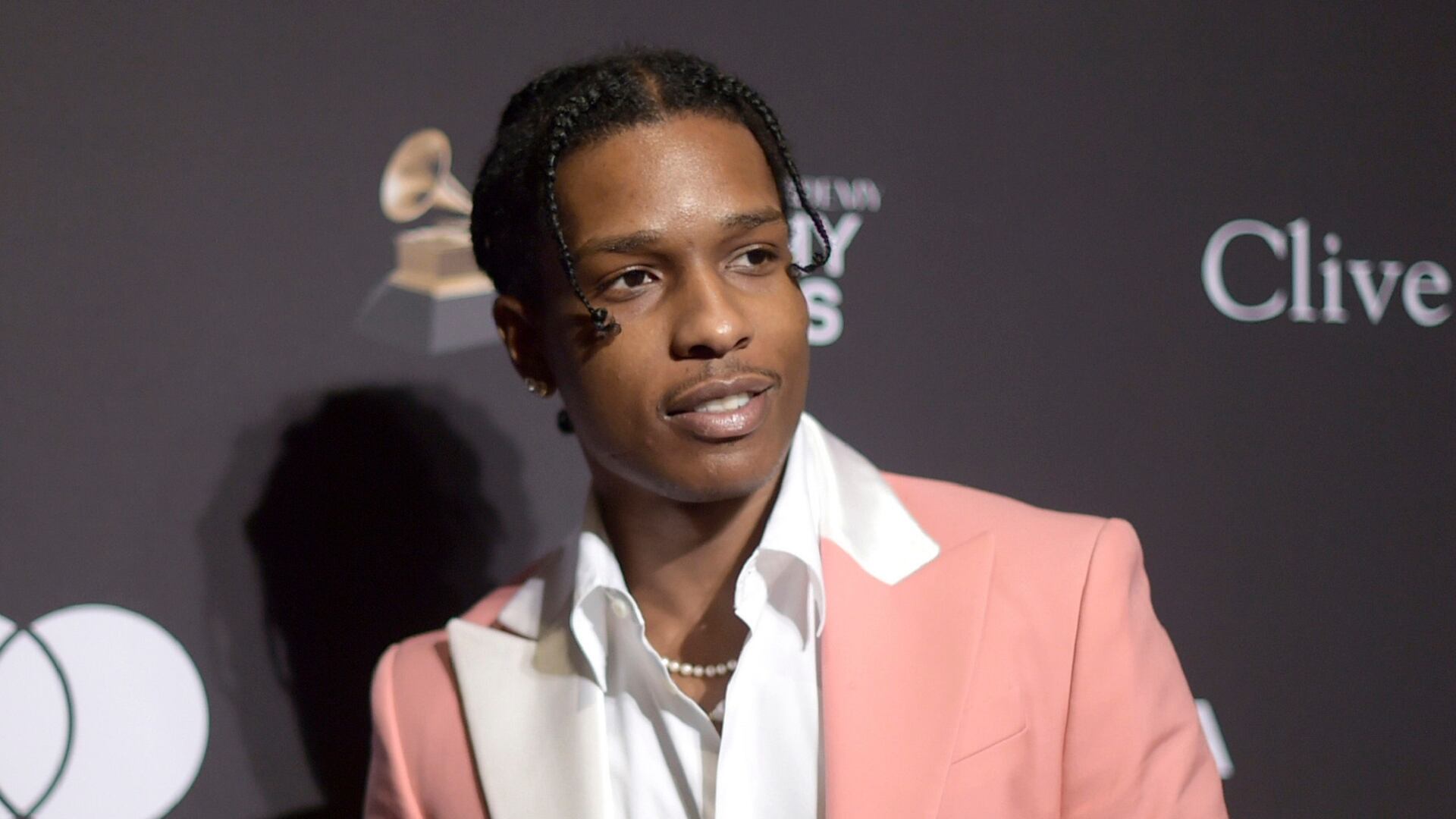
Catching you up on what you need to know on April 21, 2022, with President Biden set to announce more security assistance funding to Ukraine, polls showing a majority of Americans in favor of transit mask mandates, rapper A$AP Rocky's arrest, and more.