Earth Day comes around once a year, but investors can put their money to work to combat climate change year-round.
As more individuals come to terms with the existential threat of climate change, sustainable investing is no longer niche. It's gone mainstream, and it's a growing force in the capital markets.
An often cited 2019 survey from Morgan Stanley found that 85 percent of investors with at least $100,000 in investable assets were interested in sustainable investing.
Some 48 percent of investors with $10,000 or more invested said they were "very or somewhat" interested in sustainable investment funds, according to a 2022 Gallup poll. But only 25 percent said they'd heard "a lot or fair amount" about it, and only 10 percent said they were currently invested in sustainable funds.
Not only is familiarity with sustainable investing low, concepts like ESG can be confusing. ESG refers to "environmental, social, and governance." It's a set of standards used to evaluate companies through a social lens, but a study from Stanford University found ESG ratings can be unreliable because there isn't a standardized criteria for evaluation, information gathering is expensive, and data can be incomplete or unreliable.
Peter Krull, a partner and director of sustainable investing at Prime Capital Investment Advisors company Earth Equity Advisors, echoed those concerns.
"An ESG portfolio that reduces its exposure to ExxonMobil is less bad. One that eliminates it entirely is better. But one that replaces it with First Solar is actually sustainable," Krull told Cheddar News.
Krull recommended sustainable investors eliminate fossil fuel companies or funds that contain them from their portfolios altogether, but other sectors aren't so cut and dried. Mining operations, for example, can mine fossil fuels, but they can also mine minerals for electric vehicle batteries. As for what goes into a green portfolio, Krull recommended alternative energy companies that focus on solar, wind, and geothermal power, as well as less obvious choices like insurance companies that consider climate risk and biotech that improves health outcomes.
"I like to call traditional index investing rearview mirror investing because it's really about investing in where we've been or where the economy has been. Whereas sustainable investing is where the economy is going," Krull said.
Being a smart and sustainable investor can require a great deal of critical thinking and research, and Krull recommended tools like Fossil Free Funds and Invest Your Values to help sort through the noise.
Ultimately, investing is about generating a return. When it comes to sustainable investing, Krull also suggested that investors think long term.
"Because sustainable investing is about investing for the future, [investments are] not always going to be up, especially when value investing is in style," he said. "Over the long term, it should play out. But in short terms, just like we're dealing with right now over the last 12 to 18 months, that value has been in style, you probably will underperform a little bit."
In the wake of Robinhood announcing it will be letting go of 9 percent of its staff, Caleb Silver, Investopedia editor-in-chief, joined Cheddar News to talk about the growing pains that the trading platform is going through, how it is affecting its user experience, and where it goes from here. “I think you're gonna see a little bit more automation, but that's how Robinhood was built," he said. "I think what you'll see is less marketing." Silver also noted that the steep drop in the stock price leaves it potentially open to being acquired. "I'm not saying that I know anything about this, but they're looking awful cheap. And when you think about what's going on with Twitter and some of these other platforms, you can see a buyer coming for Robinhood any minute now."
Stocks closed slightly higher Wednesday as the Nasdaq closed flat after a failed attempt to close higher. Investors are keeping an eye on earnings, which so far have been shaky for big tech giants and companies that typically drive the market. Garrett Phillips, Managing Partner at 3Summit Investment Management, joins Closing Bell to discuss today's close, our current volatile environment, where to invest in the current environment, and more.
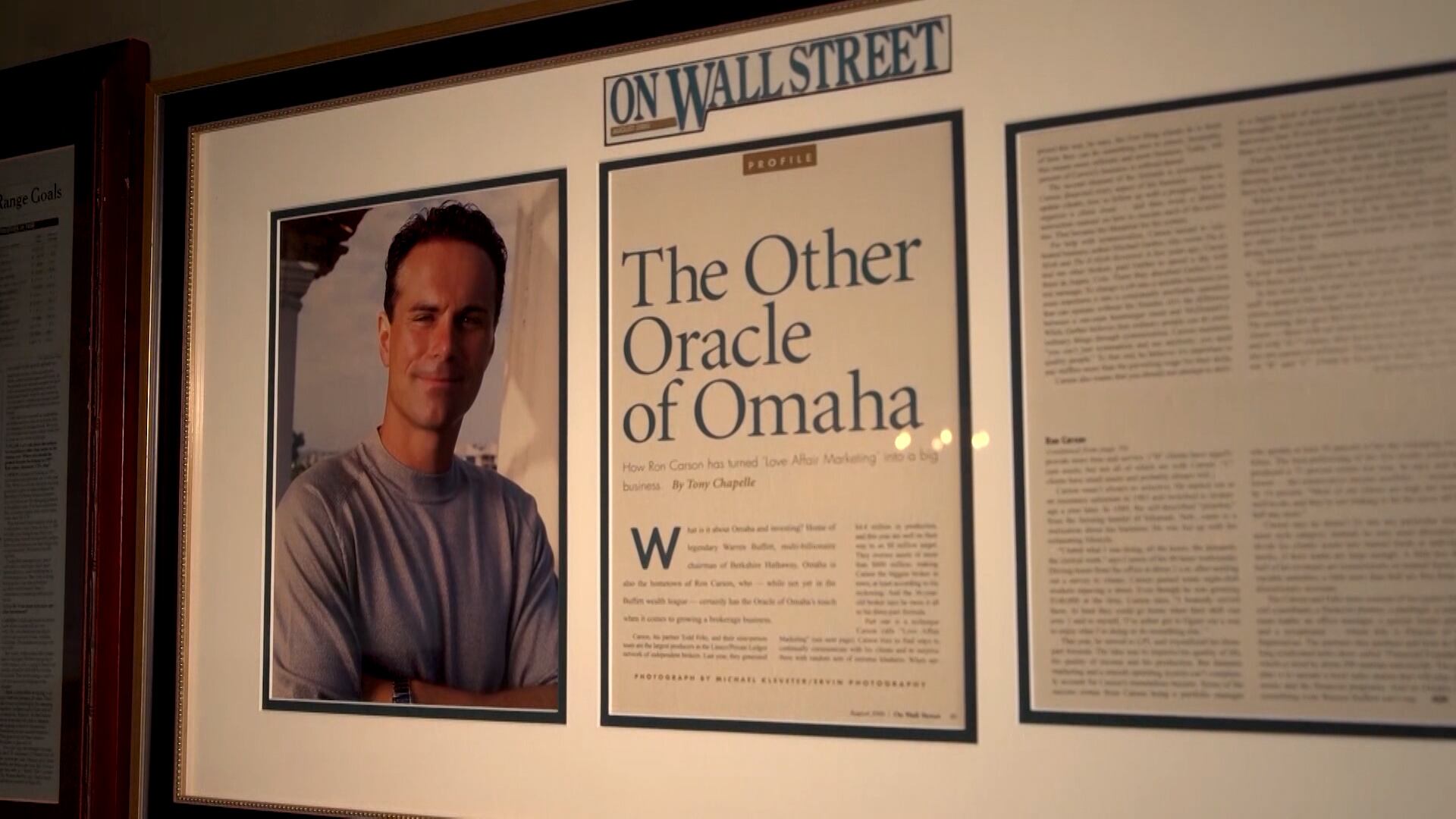
Ron Carson, CEO and Founder of Carson Wealth, sits down with Cheddar's Hena Doba to share how he achieved 'work-life harmony' by investing time and money into businesses he's passionate about.
Jan Lee, co-founder of Neighbors United Below Canal, joins Cheddar News to discuss how the new mega jail in NYC's Chinatown will negatively impact the community.
Melissa Eamer, founder and CEO of aging wellness brand Modern Age, joins Cheddar News to discuss the recent launch of its digital experience and flagship in New York City.
Danny Trejo is teaming up with Tostitos the once again for Cinco de Mayo. The actor and restaurateur is starring in the tortilla chip brand's commercial with Sofia Reyes to inspire others on how to celebrate the holiday. The "Machete" star joined Cheddar News to talk about the campaign. "I only do things I like, and I like Tostitos," he said. "You know, I love their Scoops. They don't break in the guacamole."
With National Infertility Awareness Week underway, the fertility and family-building benefits provider for employers, Kindbody, is looking to make a full suite of treatments and care accessible — including for LGBTQ+ patients. Founder and chairwoman Gina Bartasi joined Cheddar's Opening Bell to talk about the importance of infertility awareness, what role employers play in offering benefits, and how to remove the stigma around the fertility conversation. "We have to talk about the patient holistically, not just fertility services, but what can we do from a mental health standpoint to support patients," she said. "Most patients talk about fertility being more stressful than divorce, infertility being more prevalent than cancer or diabetes. So it is our mission, remains our mission, to elevate awareness around infertility, not just [during] National Infertility Awareness Week."
With a constrained supply of housing in the most desirable markets, home prices have risen nearly 20 percent year-over-year in February. David O’Reilly, CEO of Howard Hughes Corporation, joined Cheddar News to talk about where people are migrating to, and away from, leading to red hot real estate. "We see clearly the most demand is going into those states that I would define as warmer and less expensive, those secondary cities like Houston, Phoenix, and Las Vegas, where individuals are trading in higher traffic and lower quality of life for more affordability," he said. O'Reilly pointed to urban centers in the Northeast and West Coast as seeing the most losses in residents.
Social media giants including Twitter, Meta, Alphabet, and Pinterest all report earnings this week, and there's plenty to keep an eye on. One big earnings report to watch will be Twitter's, after the company today accepted Tesla CEO Elon Musk's $44 billion bid to take the company private. Investors will also be keeping an eye on ad revenue, user numbers, and more when it comes to Meta's social media networks like Facebook and Instagram. Ted Mortonson, technology strategist at Baird, joins Closing Bell to discuss Musk's Twitter takeover, how Apple's iOS privacy change could continue to impact ad revenue, and more.
Brian Moody, Executive Editor at Autotrader, joined Closing Bell's Ken Buffa to look ahead at what to expect from legacy automakers GM and Ford, as the auto industry attempts to navigate a combination of issues, including supply chain constraints and rising interest rates.