Earth Day comes around once a year, but investors can put their money to work to combat climate change year-round.
As more individuals come to terms with the existential threat of climate change, sustainable investing is no longer niche. It's gone mainstream, and it's a growing force in the capital markets.
An often cited 2019 survey from Morgan Stanley found that 85 percent of investors with at least $100,000 in investable assets were interested in sustainable investing.
Some 48 percent of investors with $10,000 or more invested said they were "very or somewhat" interested in sustainable investment funds, according to a 2022 Gallup poll. But only 25 percent said they'd heard "a lot or fair amount" about it, and only 10 percent said they were currently invested in sustainable funds.
Not only is familiarity with sustainable investing low, concepts like ESG can be confusing. ESG refers to "environmental, social, and governance." It's a set of standards used to evaluate companies through a social lens, but a study from Stanford University found ESG ratings can be unreliable because there isn't a standardized criteria for evaluation, information gathering is expensive, and data can be incomplete or unreliable.
Peter Krull, a partner and director of sustainable investing at Prime Capital Investment Advisors company Earth Equity Advisors, echoed those concerns.
"An ESG portfolio that reduces its exposure to ExxonMobil is less bad. One that eliminates it entirely is better. But one that replaces it with First Solar is actually sustainable," Krull told Cheddar News.
Krull recommended sustainable investors eliminate fossil fuel companies or funds that contain them from their portfolios altogether, but other sectors aren't so cut and dried. Mining operations, for example, can mine fossil fuels, but they can also mine minerals for electric vehicle batteries. As for what goes into a green portfolio, Krull recommended alternative energy companies that focus on solar, wind, and geothermal power, as well as less obvious choices like insurance companies that consider climate risk and biotech that improves health outcomes.
"I like to call traditional index investing rearview mirror investing because it's really about investing in where we've been or where the economy has been. Whereas sustainable investing is where the economy is going," Krull said.
Being a smart and sustainable investor can require a great deal of critical thinking and research, and Krull recommended tools like Fossil Free Funds and Invest Your Values to help sort through the noise.
Ultimately, investing is about generating a return. When it comes to sustainable investing, Krull also suggested that investors think long term.
"Because sustainable investing is about investing for the future, [investments are] not always going to be up, especially when value investing is in style," he said. "Over the long term, it should play out. But in short terms, just like we're dealing with right now over the last 12 to 18 months, that value has been in style, you probably will underperform a little bit."
Ariel Wolf, general counsel for the Self-Driving Coalition, an industry group promoting autonomous vehicles, joined Cheddar to discuss the ongoing supply chain woes partially attributed to a lack of truck drivers. "Autonomous vehicle technology has the ability to partner with that ecosystem and help alleviate this immediate problem we have and solve the problem going forward," Wolf said. As for safety, Wolf sees a future where self-driving trucks could potentially be safer than human drivers.
Rishi Bharwani, the director of partnerships and policy for nonprofit Accountable Tech, joined Cheddar to discuss the hot button topic of regulatory oversight of social media giant Facebook. Bharwani discussed the bipartisan pieces of legislation already making their way through Congress and said the body should pass stronger data privacy laws, ban surveillance advertising, and require meaningful accountability and transparency from the company. "Now I think we've reached a boiling point where congressional action is needed and inaction is no longer acceptable," he said. Bharwani also called for a concurrent investigation into Mark Zuckerberg's company.
The United Nations COP26 climate talks are scheduled for October 31 to November 12 in Glasgow, Scotland. Heads of state will be joined by private sector leaders to once again discuss the shrinking window of time left to take action against global temperature rise. Barbara Humpton, CEO of focused technology company Siemens U.S., is also attending and spoke to Cheddar about what she hopes to see during the conference for both the public and private spheres. "What we are really urging is that there are large commitments made in Glasgow and that we really commit to this next decade of action," she said.
Hertz, the car rental giant, has placed an order for 100,000 Tesla Model 3s and sent Tesla's value soaring, pushing it into the $1 trillion club during the trading day Monday. Dan Ives, managing director of equity research for Wedbush, told Cheddar's 'Closing Bell', "It shows [electric vehicles] going to the mainstream." The move gives Hertz a leg up by differentiating itself from competitors and shows Tesla's dominance in the marketplace, He noted. And as for that trillion-dollar valuation? Ives said he could see it rising even higher down the road.
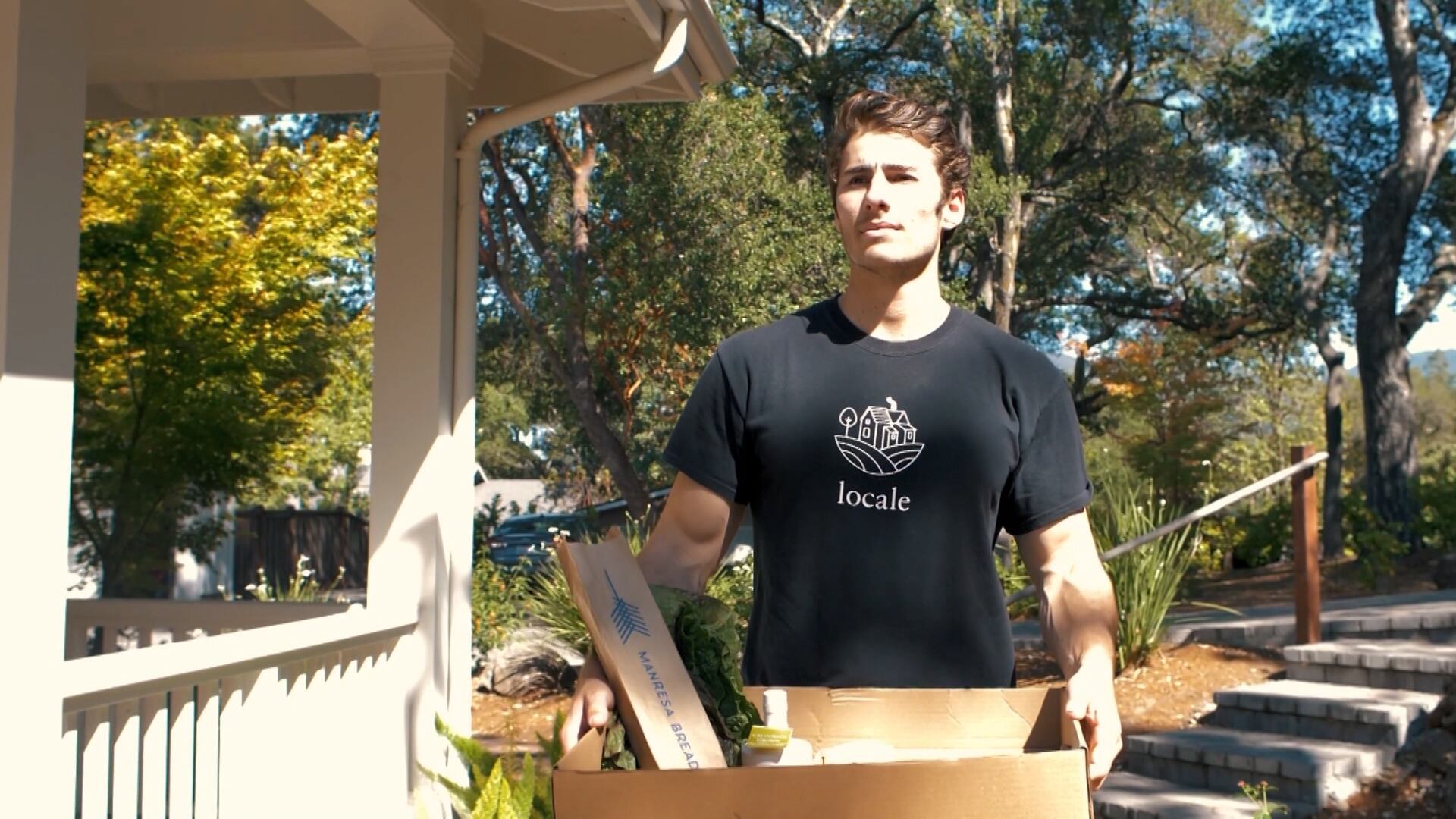
Jonathan Friedland, co-founder of Locale, joins Cheddar News to talk about how the company enables customers to order from dozens of business even if they live hours away.
As we gear into the holiday season, several industries have expressed how the ongoing supply chain shortage continues to impact their business. According to one winery out in California, many wineries are having a difficult time moving their products all because of shipping and labor shortage issues. Senior Retail Reporter at the Insider Aine Cain, joined Cheddar to discuss more and how this issue may not be going away anytime soon.
The gaming industry is about to take center stage as the next dominant technology platform, according to a new report from the consulting firm Activate. The pandemic has accelerated gaming's popularity, with overall time spent gaming increasing by 29 percent. Michael J. Wolf, co-founder and CEO of Activate, joined Cheddar to discuss some of the key findings of the report and why he thinks video game platforms are the only ones that stand a chance of building the so-called metaverse.
Voyager, Nanoracks, and Lockheed Martin are all teaming up to develop the first-ever free-flying commercial space station with room for a crew of four astronauts. The private companies are joining forces as part of NASA’s greater mission to retire the International Space Station by the year 2030. The low-earth orbit space station will be called "Starlab," and is planned to achieve operational capability by 2027. Lisa Callahan, Vice President and General Manager of Commercial Civil Space at Lockheed Martin, and Matthew J. Kuta, President and Chief Operating Officer of Voyager Space, joined Cheddar’s Opening Bell.