Earth Day comes around once a year, but investors can put their money to work to combat climate change year-round.
As more individuals come to terms with the existential threat of climate change, sustainable investing is no longer niche. It's gone mainstream, and it's a growing force in the capital markets.
An often cited 2019 survey from Morgan Stanley found that 85 percent of investors with at least $100,000 in investable assets were interested in sustainable investing.
Some 48 percent of investors with $10,000 or more invested said they were "very or somewhat" interested in sustainable investment funds, according to a 2022 Gallup poll. But only 25 percent said they'd heard "a lot or fair amount" about it, and only 10 percent said they were currently invested in sustainable funds.
Not only is familiarity with sustainable investing low, concepts like ESG can be confusing. ESG refers to "environmental, social, and governance." It's a set of standards used to evaluate companies through a social lens, but a study from Stanford University found ESG ratings can be unreliable because there isn't a standardized criteria for evaluation, information gathering is expensive, and data can be incomplete or unreliable.
Peter Krull, a partner and director of sustainable investing at Prime Capital Investment Advisors company Earth Equity Advisors, echoed those concerns.
"An ESG portfolio that reduces its exposure to ExxonMobil is less bad. One that eliminates it entirely is better. But one that replaces it with First Solar is actually sustainable," Krull told Cheddar News.
Krull recommended sustainable investors eliminate fossil fuel companies or funds that contain them from their portfolios altogether, but other sectors aren't so cut and dried. Mining operations, for example, can mine fossil fuels, but they can also mine minerals for electric vehicle batteries. As for what goes into a green portfolio, Krull recommended alternative energy companies that focus on solar, wind, and geothermal power, as well as less obvious choices like insurance companies that consider climate risk and biotech that improves health outcomes.
"I like to call traditional index investing rearview mirror investing because it's really about investing in where we've been or where the economy has been. Whereas sustainable investing is where the economy is going," Krull said.
Being a smart and sustainable investor can require a great deal of critical thinking and research, and Krull recommended tools like Fossil Free Funds and Invest Your Values to help sort through the noise.
Ultimately, investing is about generating a return. When it comes to sustainable investing, Krull also suggested that investors think long term.
"Because sustainable investing is about investing for the future, [investments are] not always going to be up, especially when value investing is in style," he said. "Over the long term, it should play out. But in short terms, just like we're dealing with right now over the last 12 to 18 months, that value has been in style, you probably will underperform a little bit."
The largest car search platform in India, Cardekho, recently raised $250 million in what the company calls a pre-IPO round led by leapfrog investments. The funding bumps CarDekho above unicorn status with a $1.2 billion valuation. The company currently has a catalogue of more than 3,000 pre-owned cars for online purchases and hopes to expand with the new funding. Partner and co-head of South Asian investment for LeapFrog Stewart Langdon joins Cheddar News' Closing Bell to discuss.
E-scooter company Bird made its public debut on the New York Stock Exchange on Thursday. CFO Yibo Ling joined Cheddar to discuss what made the company launch a SPAC IPO now. Ling noted one of the deciding factors was the need to scale the business to help take "gas-guzzling cars off the road" by growing into more locations. "A large portion of our proceeds will go to fund expansion into these new geographies," he said.
Booking Holdings CEO Glenn Fogel joined Cheddar's "Closing Bell" to discuss the online travel company's Q3 earnings beat and the state of the travel industry. The earnings win was a sign that a sense of normalcy is slowly returning, according to Fogel, though he expressed disappointment in the Biden administration's delay allowing international vaccinated travelers into the country. He also predicted that elevated prices in areas like room bookings will remain high as travelers continue to pay more even as occupancy rates remain low.
Fintech firm NerdWallet made its IPO debut on the Nasdaq on Thursday. CEO Tim Chen joined Cheddar to talk about the decision to tap the capital markets now and explained the company's revenue model by taking a cut from financial products like credit cards and loans sold through the site. Chen also talked about the firm's stance on cryptocurrencies, noting it advises people to only invest what they can afford to lose. (Updated November 5, 2021 to reflect that NerdWallet went public on Nasdaq, not NYSE.)
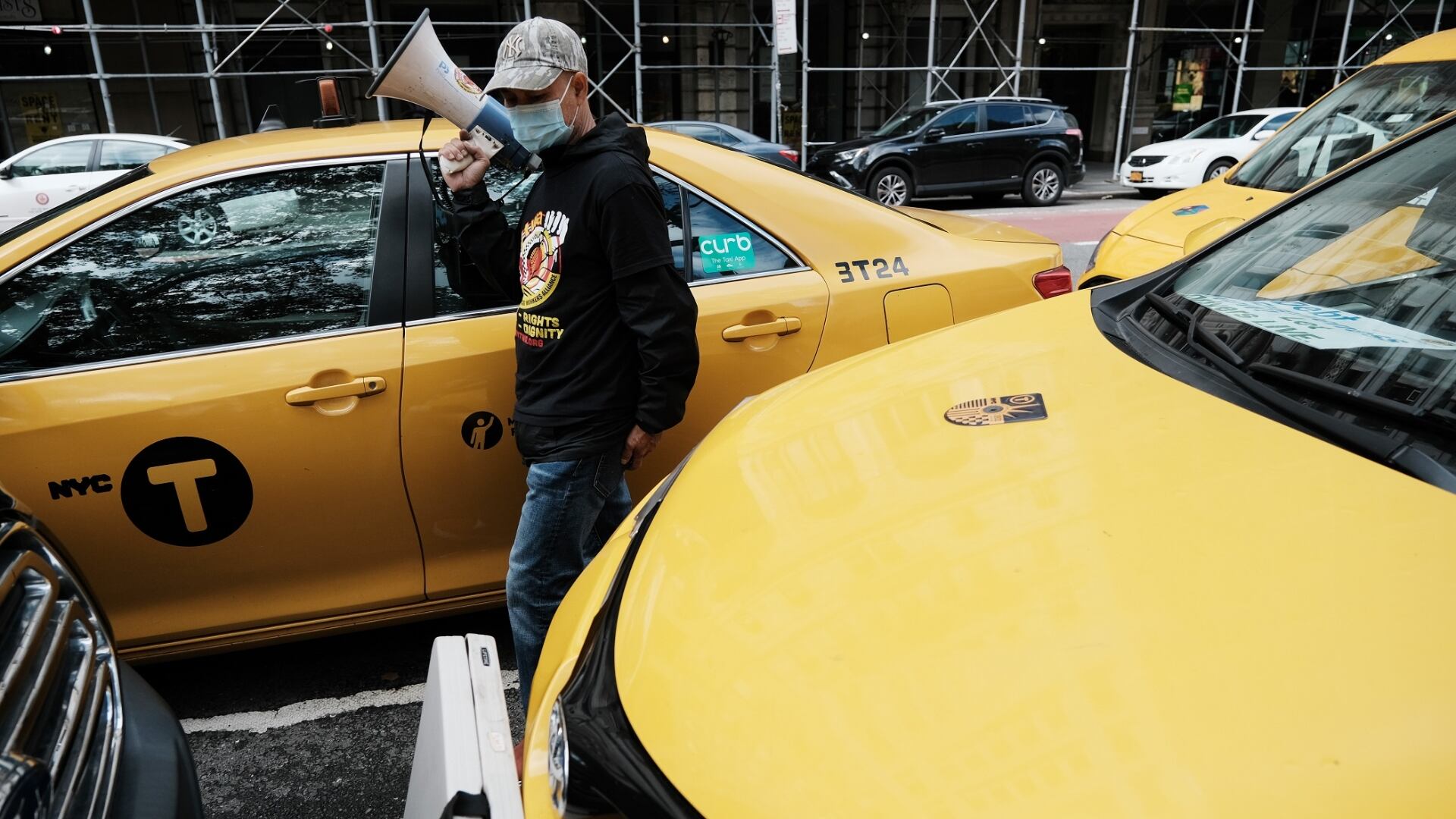
New York City taxi drivers won a major victory to slash the cost of money owed for taxi medallions. The announcement follows a two-week long hunger strike at City Hall by some drivers to demand debt relief.
Moderna reported a massive miss on revenue in its Q3 earnings, taking in $5 billion versus the expected $6.21 billion despite sales of the COVID-19 vaccine. The pharmaceutical giant's stock dropped sharply on the news.
Joan E. Solsman, a senior reporter at CNET, joined Cheddar's "Opening Bell" to talk about Netflix moving to offer mobile video games for Android users as part of their subscription. She said this is likely one "baby step" for the streaming giant as it moves into the space. "You can see what Netflix wants to do eventually down the line is have these great ambitions to make their service be more than just passive TV, movies," she said. "They're moving more into merchandising, that they're moving more into in-person experiences. They're trying to broaden a way, which is a great thing to do when everyone keeps talking about metaverses."
CVS is working to become a major health care provider as the pharmacy chain adds doctors to its payroll, following a trend among pharmacies like Walgreens integrating more primary health care services.
Insurance tech company Lemonade is now offering automobile coverage, and CEO Daniel Schreiber joined Cheddar to talk about the company's commitment to not investing in "coal or other pollutant industries." He noted that the new product was incentivizing car insurance in "an environmentally responsible way." Schreiber also discussed expanding coverage beyond pet, life, and home insurance, and how it has impacted business since going public.