Earth Day comes around once a year, but investors can put their money to work to combat climate change year-round.
As more individuals come to terms with the existential threat of climate change, sustainable investing is no longer niche. It's gone mainstream, and it's a growing force in the capital markets.
An often cited 2019 survey from Morgan Stanley found that 85 percent of investors with at least $100,000 in investable assets were interested in sustainable investing.
Some 48 percent of investors with $10,000 or more invested said they were "very or somewhat" interested in sustainable investment funds, according to a 2022 Gallup poll. But only 25 percent said they'd heard "a lot or fair amount" about it, and only 10 percent said they were currently invested in sustainable funds.
Not only is familiarity with sustainable investing low, concepts like ESG can be confusing. ESG refers to "environmental, social, and governance." It's a set of standards used to evaluate companies through a social lens, but a study from Stanford University found ESG ratings can be unreliable because there isn't a standardized criteria for evaluation, information gathering is expensive, and data can be incomplete or unreliable.
Peter Krull, a partner and director of sustainable investing at Prime Capital Investment Advisors company Earth Equity Advisors, echoed those concerns.
"An ESG portfolio that reduces its exposure to ExxonMobil is less bad. One that eliminates it entirely is better. But one that replaces it with First Solar is actually sustainable," Krull told Cheddar News.
Krull recommended sustainable investors eliminate fossil fuel companies or funds that contain them from their portfolios altogether, but other sectors aren't so cut and dried. Mining operations, for example, can mine fossil fuels, but they can also mine minerals for electric vehicle batteries. As for what goes into a green portfolio, Krull recommended alternative energy companies that focus on solar, wind, and geothermal power, as well as less obvious choices like insurance companies that consider climate risk and biotech that improves health outcomes.
"I like to call traditional index investing rearview mirror investing because it's really about investing in where we've been or where the economy has been. Whereas sustainable investing is where the economy is going," Krull said.
Being a smart and sustainable investor can require a great deal of critical thinking and research, and Krull recommended tools like Fossil Free Funds and Invest Your Values to help sort through the noise.
Ultimately, investing is about generating a return. When it comes to sustainable investing, Krull also suggested that investors think long term.
"Because sustainable investing is about investing for the future, [investments are] not always going to be up, especially when value investing is in style," he said. "Over the long term, it should play out. But in short terms, just like we're dealing with right now over the last 12 to 18 months, that value has been in style, you probably will underperform a little bit."
The TSA screened more than 2.2 million airline passengers on Friday, the most since March 2020. Willis Orlando, senior product operations specialist at Scott's Cheap Flights, discusses the impact of the surge on the travel industry as well as travel infrastructure itself.
Stocks began the week closing at session lows on a day when bond yields rose and President Biden decided to stick with Jerome Powell as Fed Chair. Bryan Lee, Chief Investment Officer at Blue Zone Wealth Advisors, joins Cheddar News' Closing Bell, where he breaks down the day's activity and discusses what the Fed now needs to do going forward.
A group of crypto enthusiasts pooled over $40 million dollars in an attempt to win a copy of the U.S. Constitution last week. However, their efforts came up short, as hedge fund billionaire Ken Griffin emerged as the victor in a $43.2 million Sotheby's auction. Matt Cutler, CEO & Co-Founder of Blocknative, joins Cheddar News' Closing Bell, where he explains why ConstitutionDAO ultimately came up short.
Gparency, a company that says its mission is to revolutionize the commercial mortgage industry, raised $15 million in its first funding round - representing the largest ever seed round in the commercial real estate space. Gparency's service will allow landlords and real estate developers to receive funding directly from banks, without the need for a mortgage broker. The company says its new approach will give power back to the consumer. Gparency founder and CEO Ira Zlotowitz joins Cheddar News' Closing Bell to discuss.
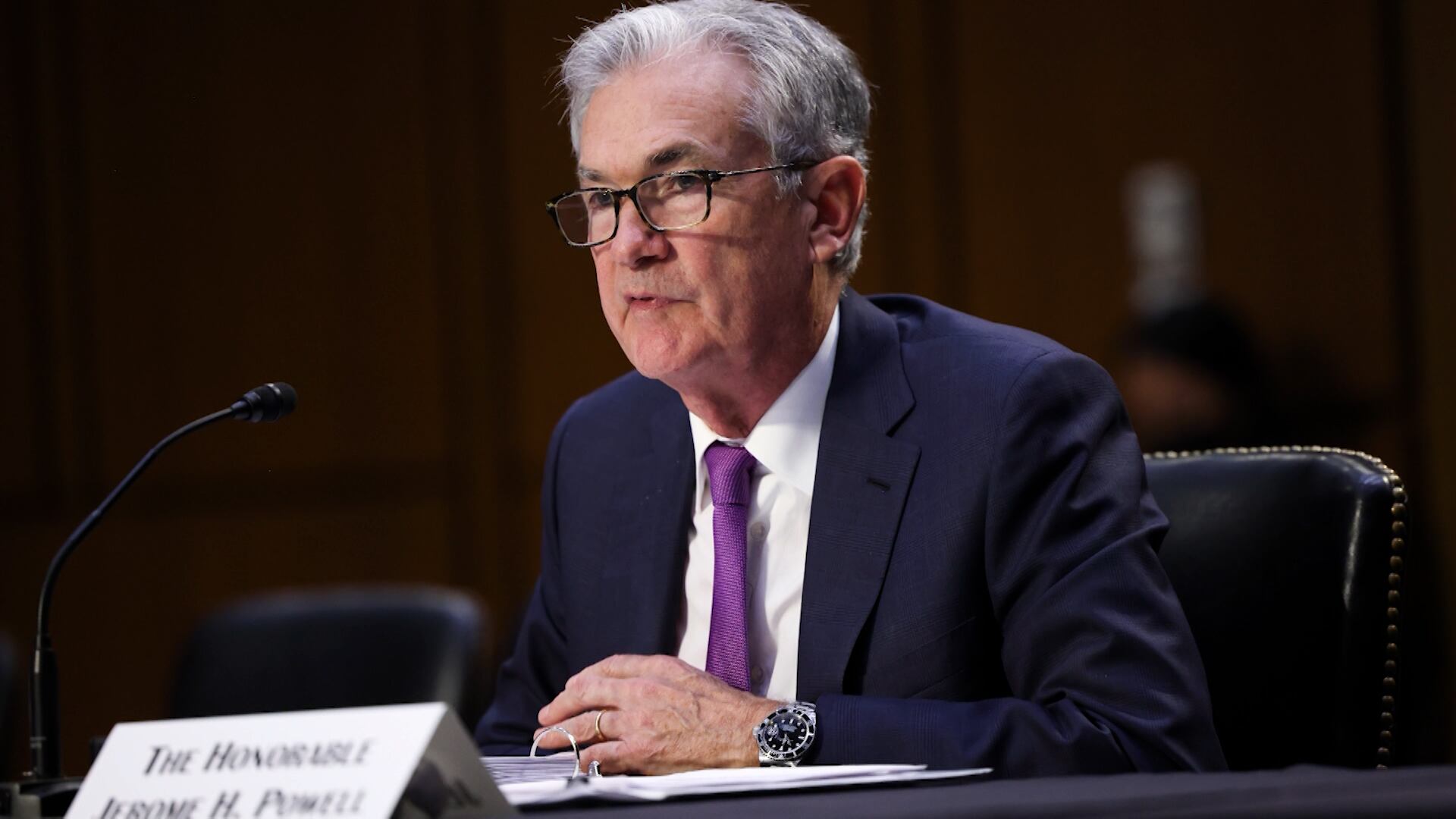
President Joe Biden announced Monday he is re-nominating Federal Reserve Chairman Jerome Powell after weeks of speculation that he would choose Democrat and Fed Governor Lael Brainard to fill the role. Biden could be looking for continuity as the U.S. continues to grapple with COVID-19 and high inflation, and investors could be on the same page: markets and treasuries ticked up after the White House made the announcement. MarketWatch Senior Reporter Greg Robb joins Cheddar News' Closing Bell to discuss Powell's re-nomination, what we can expect from the Fed's December meeting, whether it will speed up its taper timeline, and more.
President Joe Biden named Jerome Powell, initially appointed by President Trump, to keep his seat as the chair of the Federal Reserve on Monday amid the ongoing challenges of the pandemic, inflation, and unemployment. David Beckworth, a former international economist for the Treasury Department and a senior fellow with the Mercatus Center, joined Cheddar to discuss what he sees as the practicality of Biden's decision. "What Powell brings to the table is he's built up political capital with Republicans and Democrats," he said. "It's easy for him to get the job done. I think in one way he was the path of least resistance for the president."
As housing prices continues to rise, Tim Rood, managing director at the real estate finance solutions company SitusAMC, joined Cheddar's "Closing Bell" to talk about what is driving up the costs, attributing it to supply chain constraints and regulatory expenses. Rood stated that the federal government's response to the 2008 financial crisis has added to the growing price tags. "The government came down super hard on banks and independent mortgage companies because of the defaults," he said.
Colleen Kelly, CEO of Concern Worldwide US, joined Cheddar to discuss food insecurity concerns as the cost of this year's Thanksgiving dinner has surged amid record inflation. Kelly also talked about the ongoing issues derailing global supply chains and raising food prices, which undercuts efforts to tackle food insecurity in the United States and around the world. "Everything that hits the U.S. hits countries that are in extreme poverty even harder, and as you can imagine there were three major things affecting this in the last year: climate change, COVID, and conflict," she said.