Earth Day comes around once a year, but investors can put their money to work to combat climate change year-round.
As more individuals come to terms with the existential threat of climate change, sustainable investing is no longer niche. It's gone mainstream, and it's a growing force in the capital markets.
An often cited 2019 survey from Morgan Stanley found that 85 percent of investors with at least $100,000 in investable assets were interested in sustainable investing.
Some 48 percent of investors with $10,000 or more invested said they were "very or somewhat" interested in sustainable investment funds, according to a 2022 Gallup poll. But only 25 percent said they'd heard "a lot or fair amount" about it, and only 10 percent said they were currently invested in sustainable funds.
Not only is familiarity with sustainable investing low, concepts like ESG can be confusing. ESG refers to "environmental, social, and governance." It's a set of standards used to evaluate companies through a social lens, but a study from Stanford University found ESG ratings can be unreliable because there isn't a standardized criteria for evaluation, information gathering is expensive, and data can be incomplete or unreliable.
Peter Krull, a partner and director of sustainable investing at Prime Capital Investment Advisors company Earth Equity Advisors, echoed those concerns.
"An ESG portfolio that reduces its exposure to ExxonMobil is less bad. One that eliminates it entirely is better. But one that replaces it with First Solar is actually sustainable," Krull told Cheddar News.
Krull recommended sustainable investors eliminate fossil fuel companies or funds that contain them from their portfolios altogether, but other sectors aren't so cut and dried. Mining operations, for example, can mine fossil fuels, but they can also mine minerals for electric vehicle batteries. As for what goes into a green portfolio, Krull recommended alternative energy companies that focus on solar, wind, and geothermal power, as well as less obvious choices like insurance companies that consider climate risk and biotech that improves health outcomes.
"I like to call traditional index investing rearview mirror investing because it's really about investing in where we've been or where the economy has been. Whereas sustainable investing is where the economy is going," Krull said.
Being a smart and sustainable investor can require a great deal of critical thinking and research, and Krull recommended tools like Fossil Free Funds and Invest Your Values to help sort through the noise.
Ultimately, investing is about generating a return. When it comes to sustainable investing, Krull also suggested that investors think long term.
"Because sustainable investing is about investing for the future, [investments are] not always going to be up, especially when value investing is in style," he said. "Over the long term, it should play out. But in short terms, just like we're dealing with right now over the last 12 to 18 months, that value has been in style, you probably will underperform a little bit."
Jared C. Bass, senior director for Higher Education at the Center for American Progress, joins Cheddar News to discuss how schools are navigating the Omicron variant.
Martin Fischer, president of technology supplier for cars and commercial vehicles ZF North America, joined Cheddar to discuss the company's solutions for next-generation mobility in autonomous vehicles and its plans to usher in the next phase of electric vehicles. He also talked about the rising demand for self-driving technology on a global scale. "Whereas we are really active also there for passenger cars and commercial vehicles, what we showcase at CES now virtually is our autonomous shuttles," he said. "So, what that means is we bring these vehicles to busy city centers and can take traffic levels down."
Pfizer and BioNTech are working to develop an mRNA-based shingles vaccine following the success of the COVID-19 shot. This latest collaboration will mark the third time the pharmaceutical companies have worked together on a vaccine.
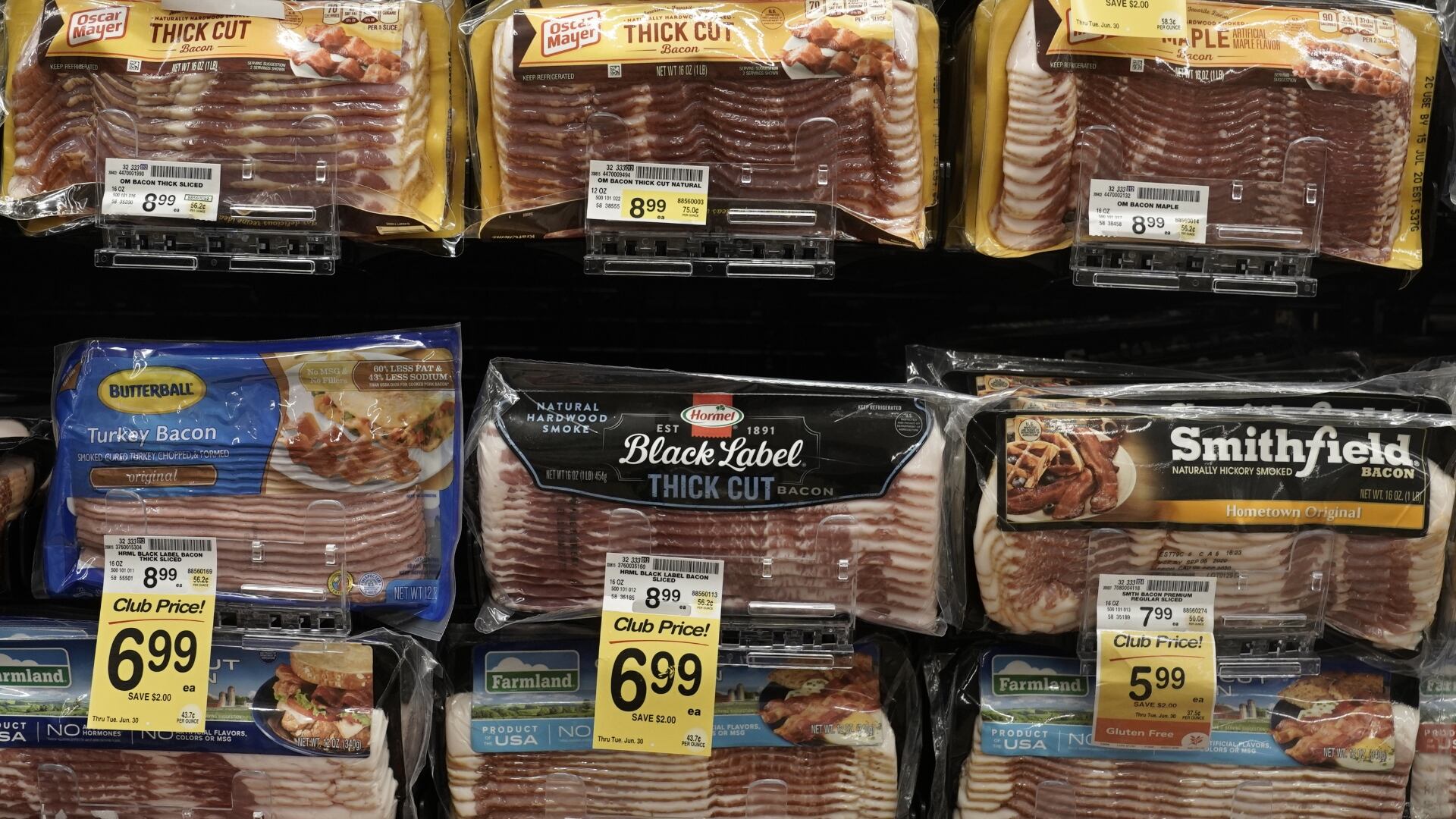
On Monday, President Biden announced his new plan to take on inflation by taking down the big meat monopolies - turning to the federal government's antitrust authorities to investigate the major meatpackers that control a significant share of the market. The White House plans to devote one billion dollars to aiding independent meat and poultry producers in an effort to undercut the few powerful meat producers that have control of the sector. Austin Frerick, deputy director of Thurman Arnold Project at Yale, joins Cheddar News to discuss.
Flight cancellations remain high nearly two weeks after the Christmas holiday, with more than 1,400 counted on Tuesday. Carriers are facing a number of factors including staff shortages linked to COVID-19 spread as well as inclement weather.
SGH, formerly known as Smart Global Holdings, reported Q1 earnings after the bell on Tuesday. The holdings company reported solid net sales, up a whopping 60 percent from the same period last year, marking its seventh consecutive quarter of year-over-year revenue growth. SGH also announced a two-for-one share split in the form of a share dividend of one ordinary share for every one ordinary share owned. Mark Adams, CEO, SGH and Former President, Micron, joined Wake Up with Cheddar to discuss.
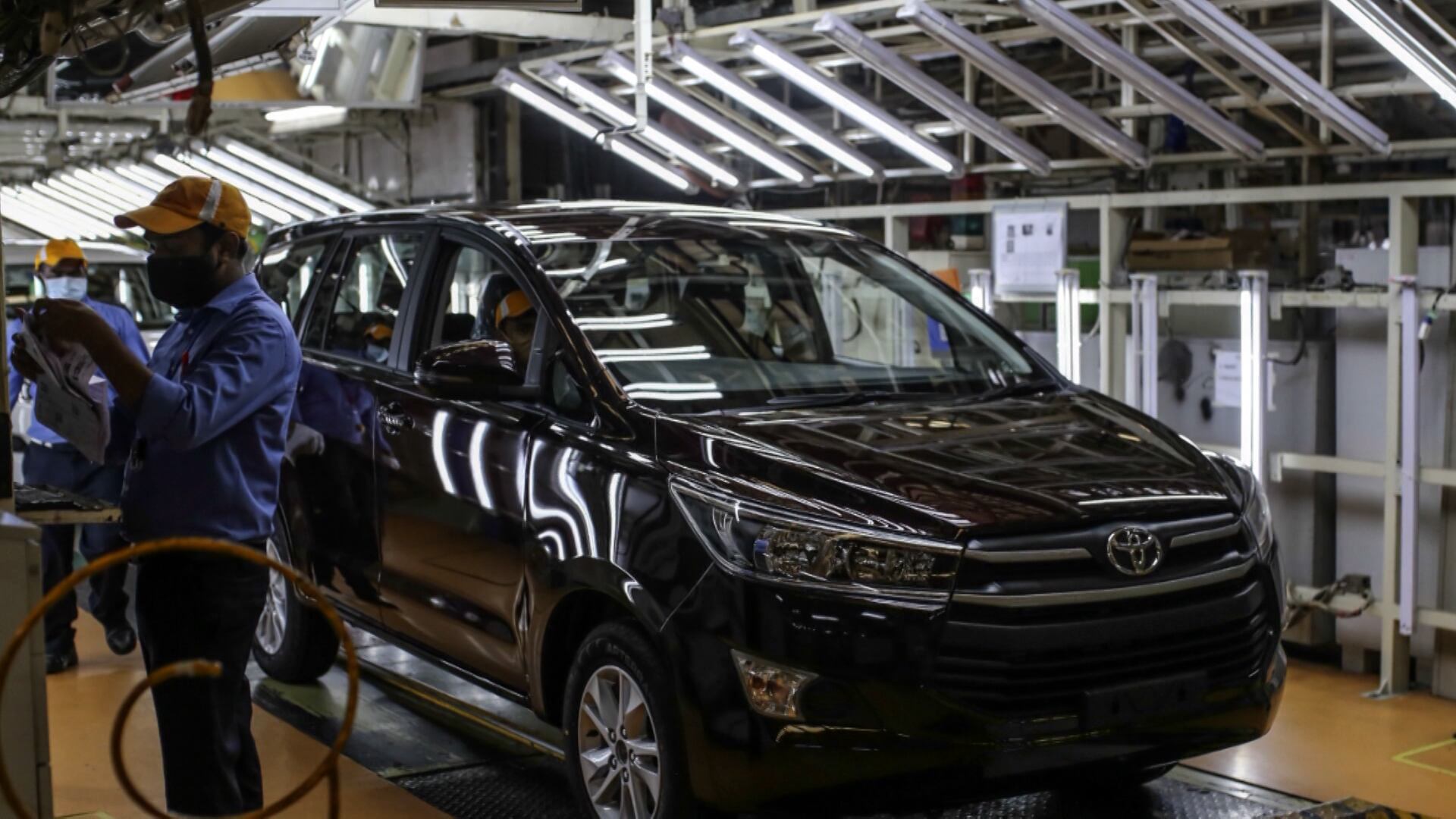
For the first time in 90 years, General Motors has officially been dethroned as the top car seller in the U.S. after Toyota sold 2.3 million vehicles last year. Paulina Likos, an investing reporter at U.S News & World Report, said that the Japanese auto giant's 2021 success is linked to its large stockpile of semiconductor chips that allowed it to continue producing vehicles while others lagged behind. Likos noted that both GM and Toyota noted that this is unlikely to be a long-term trend and pointed to both automakers' push to become EV leaders. "I think what's great in this EV market is that there are so many different competitors, and certainly both GM and Toyota are trying to be leaders in this space," she said.