Earth Day comes around once a year, but investors can put their money to work to combat climate change year-round. 

As more individuals come to terms with the existential threat of climate change, sustainable investing is no longer niche. It's gone mainstream, and it's a growing force in the capital markets. 

An often cited 2019 survey from Morgan Stanley found that 85 percent of investors with at least $100,000 in investable assets were interested in sustainable investing.

Some 48 percent of investors with $10,000 or more invested said they were "very or somewhat" interested in sustainable investment funds, according to a 2022 Gallup poll. But only 25 percent said they'd heard "a lot or fair amount" about it, and only 10 percent said they were currently invested in sustainable funds. 

Not only is familiarity with sustainable investing low, concepts like ESG can be confusing. ESG refers to "environmental, social, and governance." It's a set of standards used to evaluate companies through a social lens, but a study from Stanford University found ESG ratings can be unreliable because there isn't a standardized criteria for evaluation, information gathering is expensive, and data can be incomplete or unreliable.

Peter Krull, a partner and director of sustainable investing at Prime Capital Investment Advisors company Earth Equity Advisors, echoed those concerns.

"An ESG portfolio that reduces its exposure to ExxonMobil is less bad. One that eliminates it entirely is better. But one that replaces it with First Solar is actually sustainable," Krull told Cheddar News.

Krull recommended sustainable investors eliminate fossil fuel companies or funds that contain them from their portfolios altogether, but other sectors aren't so cut and dried. Mining operations, for example, can mine fossil fuels, but they can also mine minerals for electric vehicle batteries. As for what goes into a green portfolio, Krull recommended alternative energy companies that focus on solar, wind, and geothermal power, as well as less obvious choices like insurance companies that consider climate risk and biotech that improves health outcomes.

"I like to call traditional index investing rearview mirror investing because it's really about investing in where we've been or where the economy has been. Whereas sustainable investing is where the economy is going," Krull said. 

Being a smart and sustainable investor can require a great deal of critical thinking and research, and Krull recommended tools like Fossil Free Funds and Invest Your Values to help sort through the noise.

Ultimately, investing is about generating a return. When it comes to sustainable investing, Krull also suggested that investors think long term.

"Because sustainable investing is about investing for the future, [investments are] not always going to be up, especially when value investing is in style," he said. "Over the long term, it should play out. But in short terms, just like we're dealing with right now over the last 12 to 18 months, that value has been in style, you probably will underperform a little bit."

Share:
More In Business
Research Shows Financial Institutions Weakening Fight Against Climate Change
Adele Shraiman, Campaign Representative for the Sierra Club’s Fossil Free Finance Campaign, joins Cheddar Climate, where she explains how Wall Street and climate change are related. She also elaborates on how decisions made by financial institutions are actually hurting the ability to reduce carbon emissions.
Breaking Down the 5G Deployment Disconnect Between Airlines and Telecoms
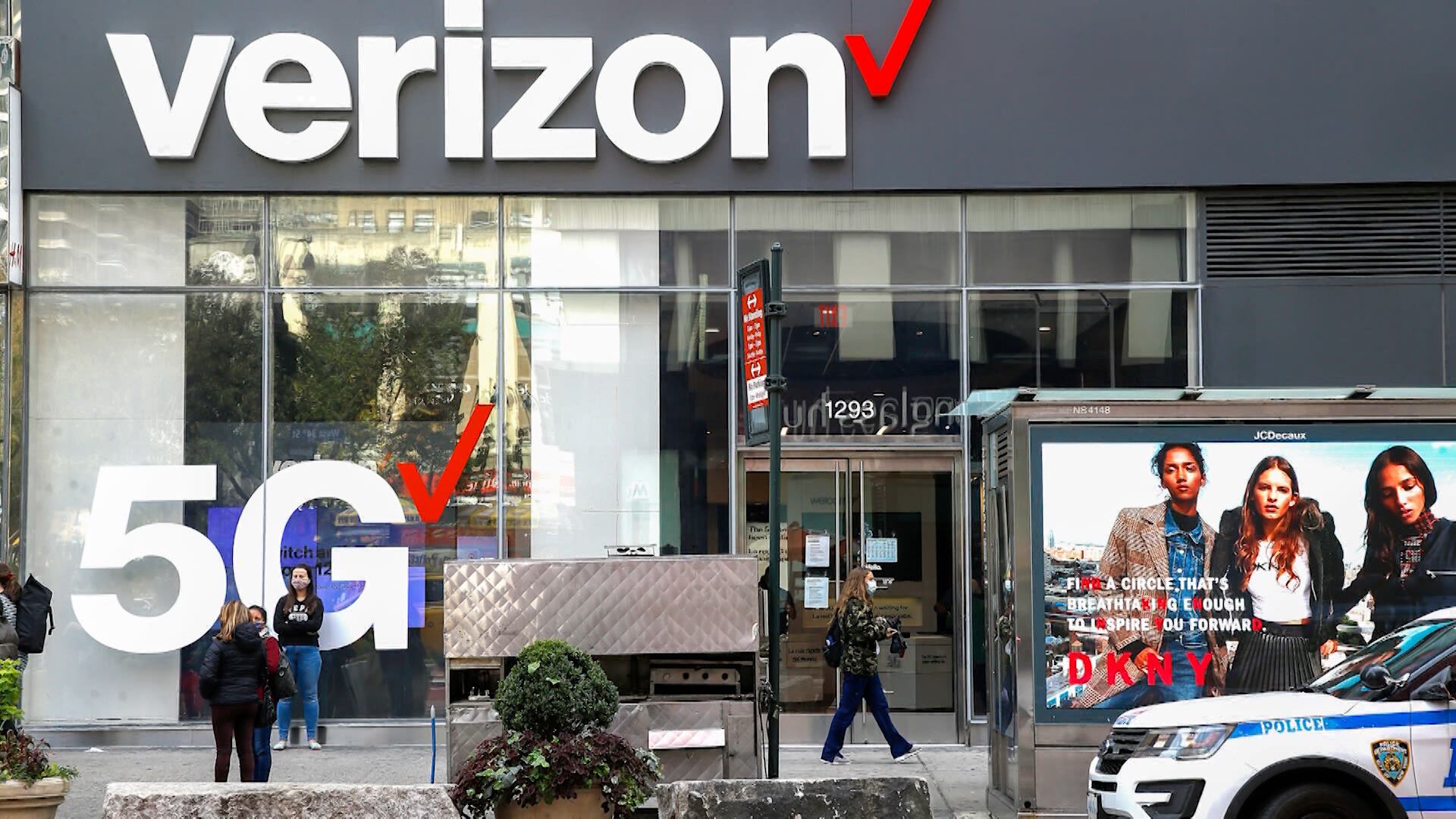
Hugh Odom, founder and president of Vertical Consultants, shared his expertise on telecommunications with Cheddar on the safety issue raised about 5G deployment by airlines. The installation was partially delayed again on Tuesday as the airlines warned of potentially catastrophic delays in a letter to the Biden administration. Later, both Verizon and AT&T relented and put a pause on some of the implementations. "The first thing the Biden administration needs to do is get everybody in the room and say, look, aviation industry, identify the problem — wireless industry, come up with a solution," said Odom.
Microsoft Acquisition of Activision a Step Towards Leading on the Metaverse
Microsoft announced on Tuesday it's acquiring video game publisher Activision Blizzard for nearly $70 billion in cash, a company that's is known for big titles like "Call of Duty" and "World of Warcraft." Lyron Bentovim, Glimpse Group president and CEO, and Dan Ives, managing director and senior equity research analyst at Wedbush, sat down to talk about what Ives called "a shot across the bow" towards the competition. "This is pretty exciting for the industry as a whole because another one of the big players is coming to the metaverse," said Bentovim. "Microsoft using metaverse in the quote from their CEO in their press release shows the importance of this deal."
What Netflix Investors Should Look for as Streaming Competition Grows
Netflix may not be staying at the top of the streaming wars, according to some wary investors, as competition heats up and it raises prices yet again. Tuna Amobi, director and senior equity analyst at CFRA Research, spoke with Cheddar about what investors should be considering should they stick with the streaming pioneer or drop the investment. "I think it's always mostly about the subscriber growth for the Q4, which is going to be an indicator of how the company has been navigating the speed bumps that we saw early in the year," said Amobi.
L’Oréal Leans Into High-Tech Innovations for Home Hair Coloring
L’Oréal is doubling down on its investment in tech. The French beauty giant unveiled two new high-tech products ahead of CES 2022, aimed at simplifying the hair coloring process. Guive Balooch, global vice president of L’Oréal Technology Incubator, joined Cheddar's Opening Bell to discuss the company's innovations for hair coloring, including the Colorsonic application device and the Coloright AI diagnostic tool.
Walmart to Throw Its Hat Into the Ring of Metaverse, Crypto & NFTs
Walmart is one of the latest companies looking to adapt to the emerging digital economy by possibly establishing its own cryptocurrency. The retail giant filed at least seven applications with the U.S. Patent and Trademark Office, including one for blockchain assets.
Load More