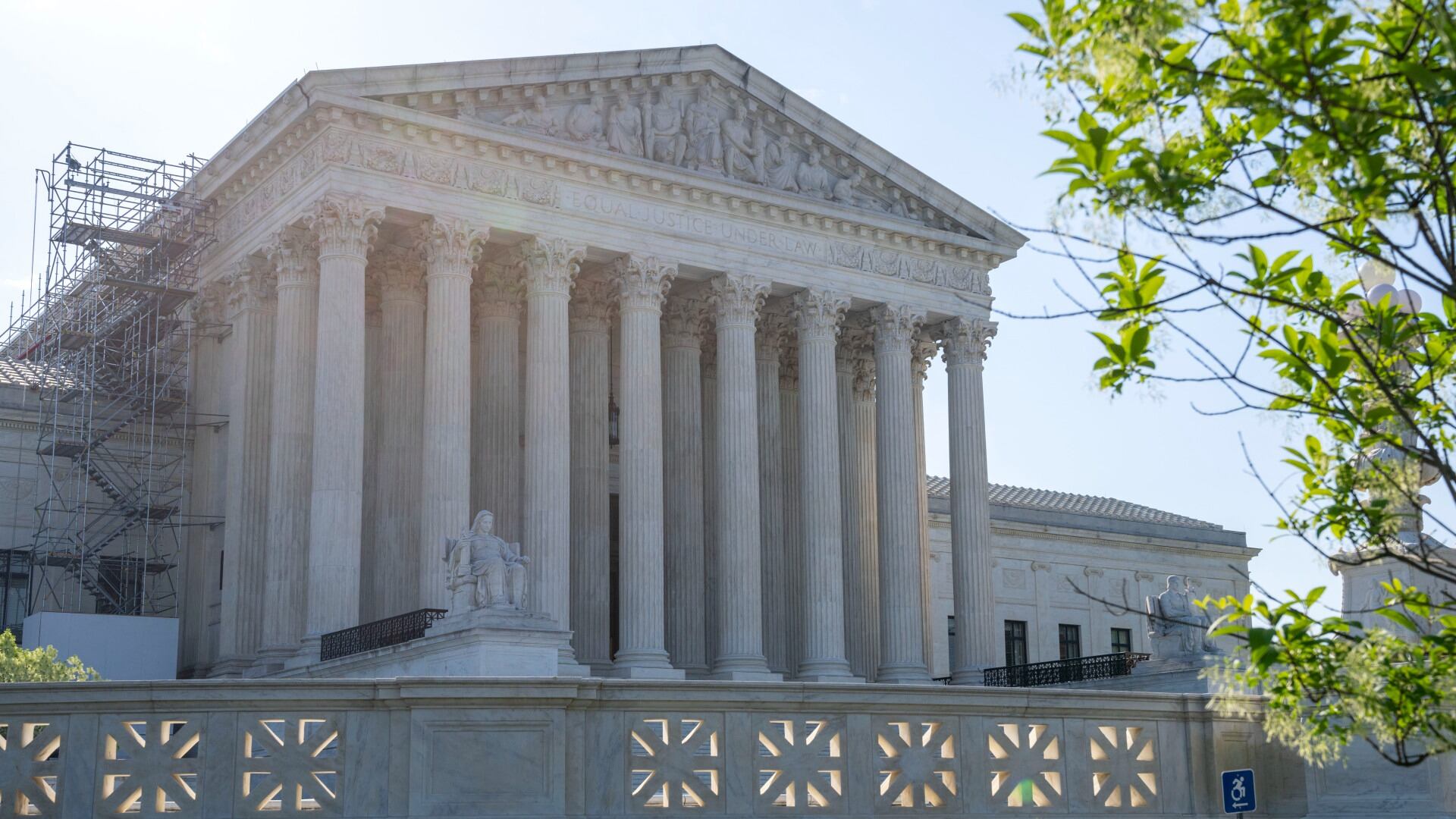
The Supreme Court is seen, Friday, April 21, 2023, ahead of an abortion pill decision in Washington. (AP Photo/Jacquelyn Martin)
By Jessica Gresko
The Supreme Court said Monday it won't review North Carolina's decision to stop issuing specialty license plates with the Confederate flag.
As is typical, the court did not comment in declining to hear the case, which challenged the state's decision. The dispute was one of many the court said Monday it would not hear. It was similar to a case originating in Texas that the court heard in 2015, when it ruled the license plates are state property.
The current dispute stems from North Carolina's 2021 decision to stop issuing specialty license plates bearing the insignia of the North Carolina chapter of the Sons of Confederate Veterans. The chapter sued, claiming that the state's decision violated state and federal law. A lower court dismissed the case, and a federal appeals court agreed with that decision.
North Carolina offers three standard license plates and more than 200 specialty plates. Civic clubs including the Sons of Confederate Veterans can create specialty plates by meeting specific requirements.
In 2021, however, the state Department of Transportation sent the group a letter saying it would "no longer issue or renew specialty license plates bearing the Confederate battle flag or any variation of that flag" because the plates "have the potential to offend those who view them."
The state said it would consider alternate artwork for the plates' design if it does not contain the Confederate flag.
The organization unsuccessfully argued that the state's decision violated its free speech rights under the Constitution's First Amendment and state law governing specialty license plates.
In 2015, the Sons of Confederate Veterans’ Texas chapter claimed Texas was wrong not to issue a specialty license plate with the group's insignia. But the Supreme Court ruled 5-4 that Texas could limit the content of license plates because they are state property.
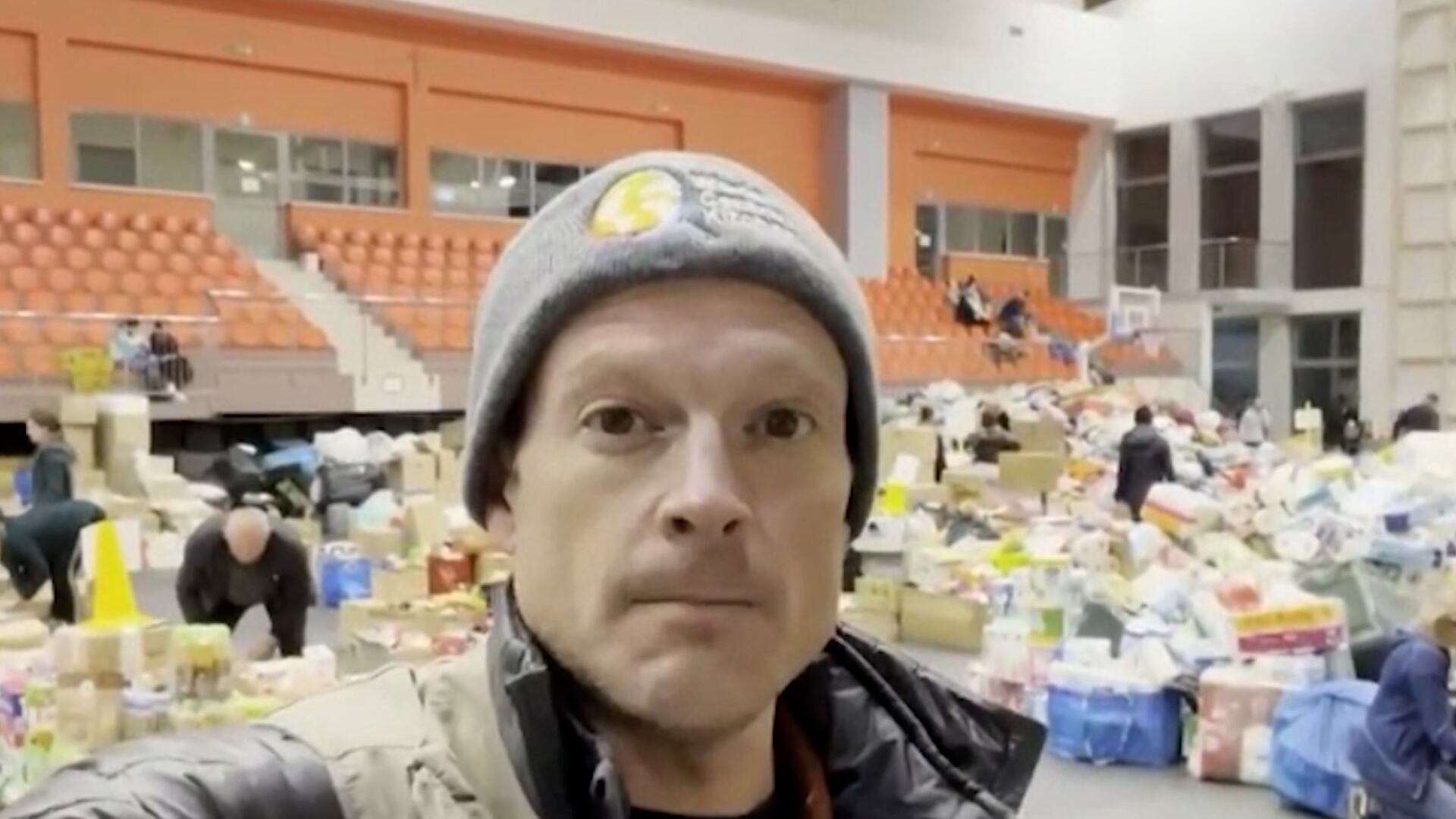
World Central Kitchen is Ukraine helping to feed people remaining in the country or fleeing from the Russian forces. Nate Mook, CEO for the non-profit, joined Cheddar New to discuss the efforts being made to help those in need in a very tenuous situation and how the invasion disrupted the lives of Ukrainian people."We met a young woman from Kyiv who had crossed into Poland, she had a great job, she just moved into a new apartment. She was really excited about decorating her apartment. You know, things that we all do on a day-to-day basis, and she had to just abandon her life," he said.
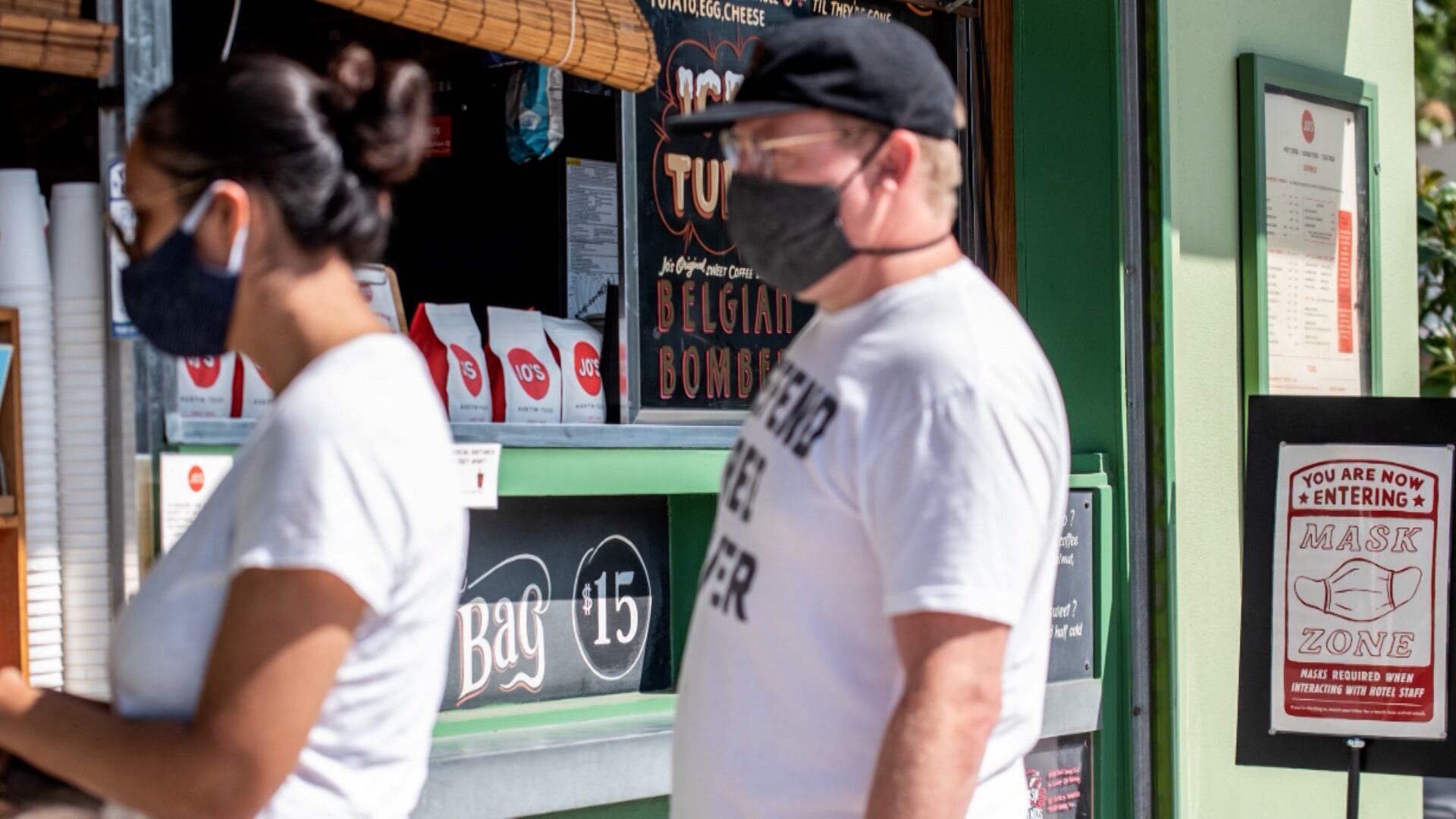
Bina Venkataraman, Boston Globe Editorial Page Editor & former White House disaster policy adviser joins Cheddar News to discuss the current state of the pandemic as well as Biden's handling of the crisis
Michael Li senior counsel for the Brennan Center's Democracy Program joins Cheddar News to discuss gerrymandering and how it's impacting American politics
As half a million Ukrainians fled when Russia invaded its neighbor, some civilians chose to stay in harm's way. Igor Gamaniuk, a 17-year-old Ukrainian college student, joined Cheddar News to talk about his decision to remain in his beloved country and volunteer to support soldiers with food, clothing, and supplies. "Right now people are pretty calm in my town. We are trying not to panic. But we have to be cautious because every day and every night the siren could sound and we have to move away from the window or go to the nearest shelter," Gamaniuk explained.
As Russia continues to invade Ukraine, its tech outsourcing sector is at risk. Over the past few years, the country has become a popular outsourcing destination for American and European tech companies, but now the future of that industry is uncertain. Isabelle Bousquette, enterprise technology reporter, for The Wall Street Journal, discusses what repercussions the crisis might have on the industry, and what companies are doing to mitigate possible disruptions.
In a nearly 3,700 page UN report, climate scientists outline the imminent dangers caused by climate change, saying fossil fuels are 'choking humanity.' The report calls some of the impacts of global warming 'irreversible,' warning of extreme consequences in the near future. Kristie L. Ebi, Professor of Global Health and Environmental and Occupational Health Sciences, University of Washington joined Cheddar's Opening Bell to discuss.