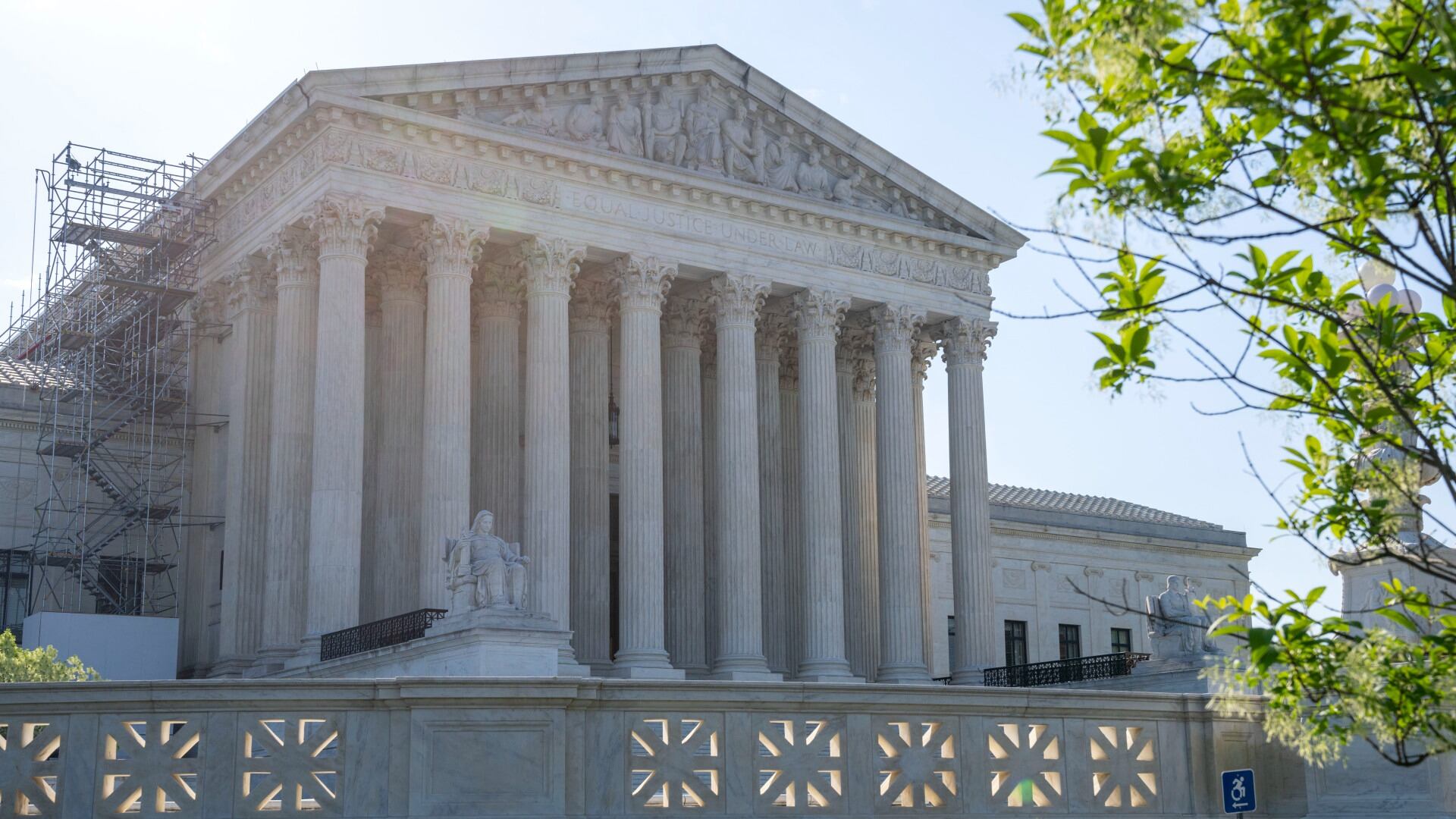
The Supreme Court is seen, Friday, April 21, 2023, ahead of an abortion pill decision in Washington. (AP Photo/Jacquelyn Martin)
By Jessica Gresko
The Supreme Court said Monday it won't review North Carolina's decision to stop issuing specialty license plates with the Confederate flag.
As is typical, the court did not comment in declining to hear the case, which challenged the state's decision. The dispute was one of many the court said Monday it would not hear. It was similar to a case originating in Texas that the court heard in 2015, when it ruled the license plates are state property.
The current dispute stems from North Carolina's 2021 decision to stop issuing specialty license plates bearing the insignia of the North Carolina chapter of the Sons of Confederate Veterans. The chapter sued, claiming that the state's decision violated state and federal law. A lower court dismissed the case, and a federal appeals court agreed with that decision.
North Carolina offers three standard license plates and more than 200 specialty plates. Civic clubs including the Sons of Confederate Veterans can create specialty plates by meeting specific requirements.
In 2021, however, the state Department of Transportation sent the group a letter saying it would "no longer issue or renew specialty license plates bearing the Confederate battle flag or any variation of that flag" because the plates "have the potential to offend those who view them."
The state said it would consider alternate artwork for the plates' design if it does not contain the Confederate flag.
The organization unsuccessfully argued that the state's decision violated its free speech rights under the Constitution's First Amendment and state law governing specialty license plates.
In 2015, the Sons of Confederate Veterans’ Texas chapter claimed Texas was wrong not to issue a specialty license plate with the group's insignia. But the Supreme Court ruled 5-4 that Texas could limit the content of license plates because they are state property.
Catching you up on what you need to know on Tuesday, May 31, 2022, EU leaders agree to ban 90% of Russian oil by year-end, funerals begin in Uvalde, Texas one week after a mass shooting killed 19 children and two adults, and President Biden meets with the world's biggest boy band BTS.
The Week's Top Stories is a guided tour through the biggest market stories of the week, from winning stocks to brutal dips to the facts and forecasts generating buzz on Wall Street.
An inflation gauge closely tracked by the Federal Reserve rose 6.3% in April from a year earlier, just below a four-decade high set in March and the first slowdown since November 2020.
The pain and grief from this week’s shooting in a 4th grade classroom at Robb Elementary School in Uvalde, Texas is still with us. Cheddar's Shannon Lanier ends the week by pausing to remember some of the faces of the 19 children killed and their teachers.
Cheddar New’s reporter Megan Pratz reports from the scene in Uvalde, Texas, with additional details that indicate the shooter was inside Robb Elementary School for more than an hour before law enforcement was able to confront and kill him.
U.S. stocks ended near session highs to close Thursday's session after retailers released positive earnings results. Investors also continued to weigh the federal reserve's recent indication that the central will raise rates in an effort to curb inflation. Adam Johnson, Portfolio Manager for Adviser Investments, joins Cheddar News' Closing Bell to discuss.
After the horrific mass shooting at a Texas elementary school, activists are once again urging Congress to take action. Trevon Bosley, a gun violence prevention activist, joined Cheddar News to talk about how to push legislators on the issue of new gun restrictions. “Even 10 years later the same sense of hopelessness from before," Bosley said, referring to the lack of change since the Sandy Hook massacre.
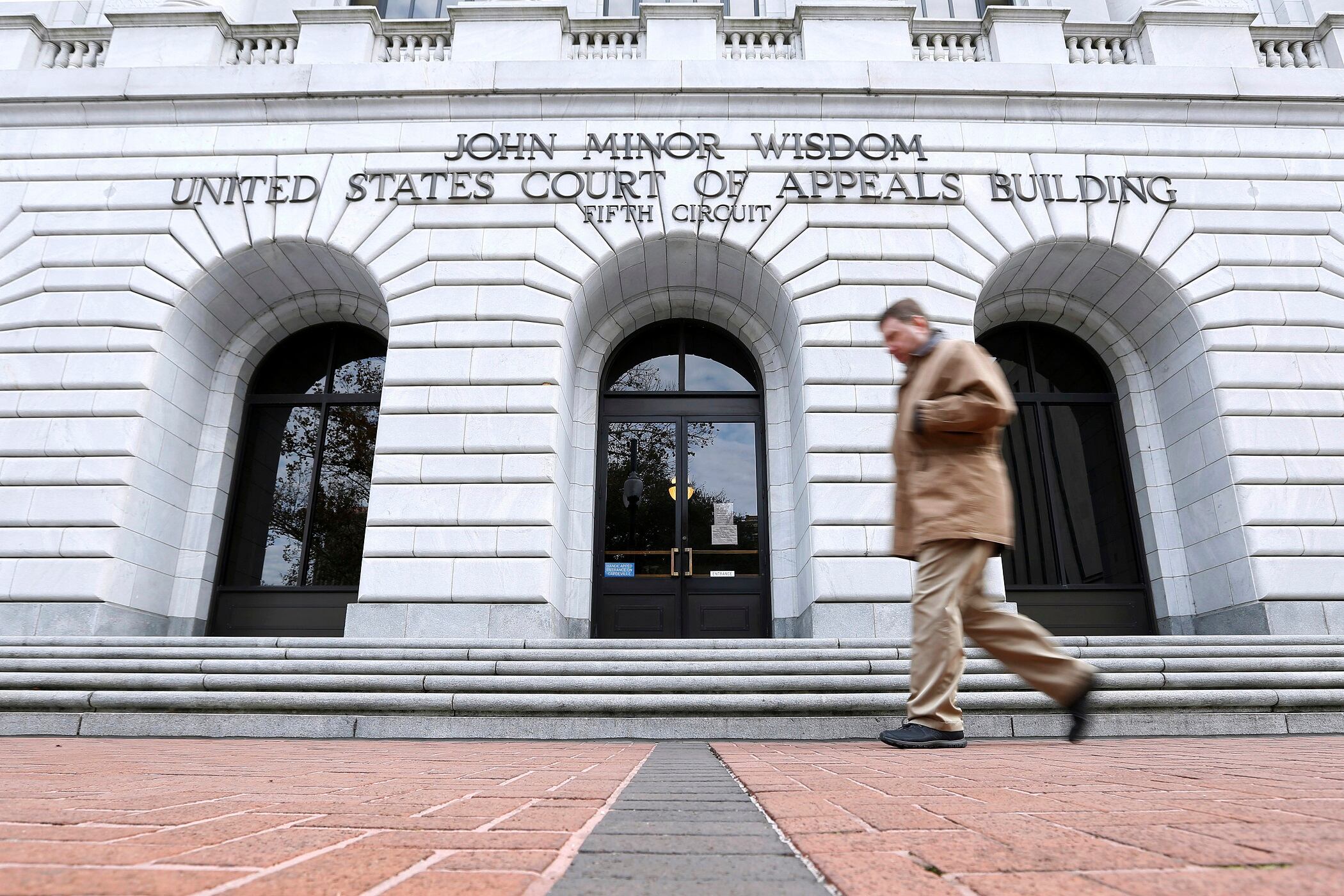
In Jarkesy v. Securities and Exchange Commission, the 5th U.S. Circuit Court of Appeals ruled that the SEC violated the U.S. Constitution. Cheddar's Alex Vuocolo dives into how the ruling could potentially change everything for regulators.