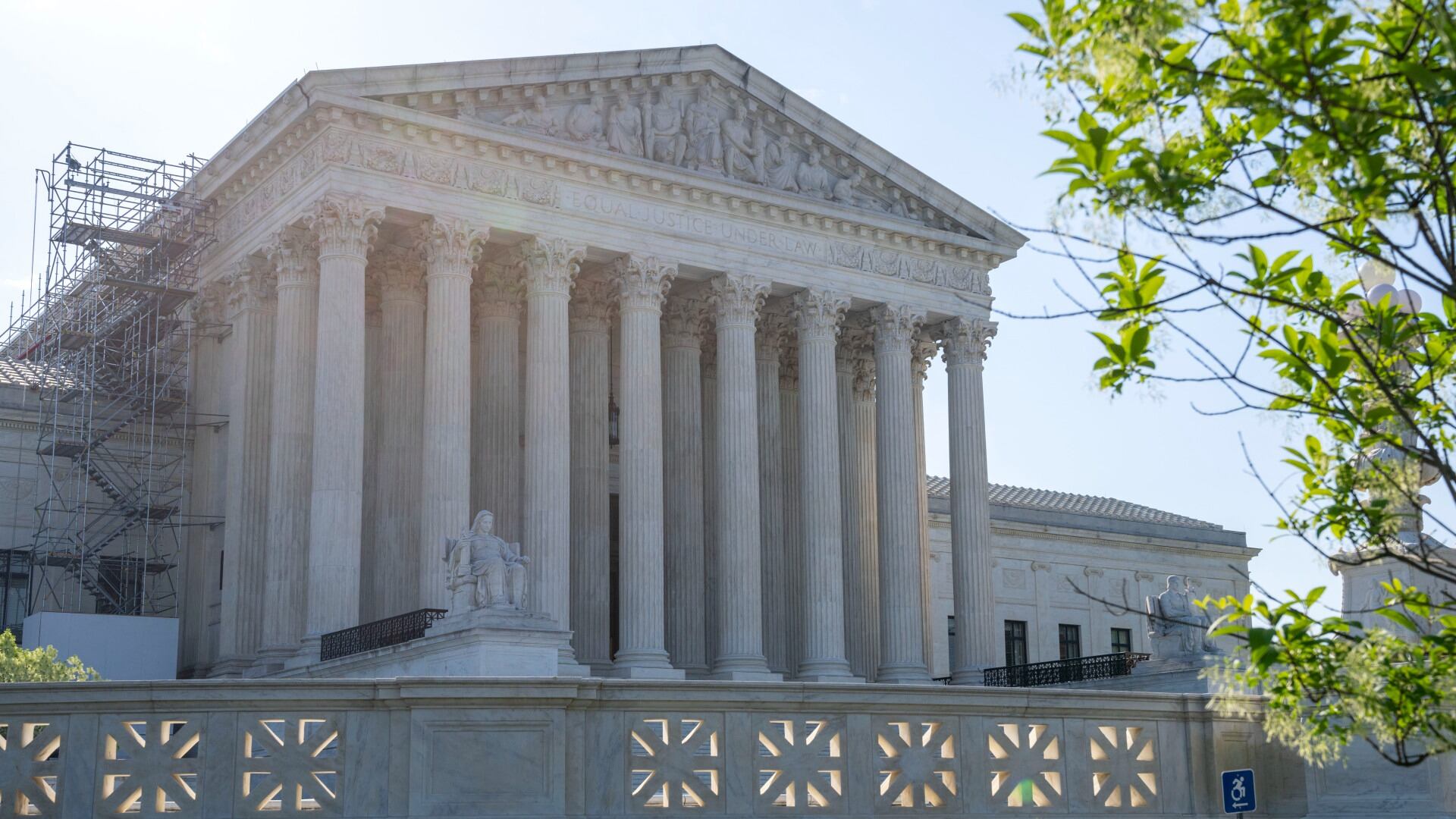
The Supreme Court is seen, Friday, April 21, 2023, ahead of an abortion pill decision in Washington. (AP Photo/Jacquelyn Martin)
By Jessica Gresko
The Supreme Court said Monday it won't review North Carolina's decision to stop issuing specialty license plates with the Confederate flag.
As is typical, the court did not comment in declining to hear the case, which challenged the state's decision. The dispute was one of many the court said Monday it would not hear. It was similar to a case originating in Texas that the court heard in 2015, when it ruled the license plates are state property.
The current dispute stems from North Carolina's 2021 decision to stop issuing specialty license plates bearing the insignia of the North Carolina chapter of the Sons of Confederate Veterans. The chapter sued, claiming that the state's decision violated state and federal law. A lower court dismissed the case, and a federal appeals court agreed with that decision.
North Carolina offers three standard license plates and more than 200 specialty plates. Civic clubs including the Sons of Confederate Veterans can create specialty plates by meeting specific requirements.
In 2021, however, the state Department of Transportation sent the group a letter saying it would "no longer issue or renew specialty license plates bearing the Confederate battle flag or any variation of that flag" because the plates "have the potential to offend those who view them."
The state said it would consider alternate artwork for the plates' design if it does not contain the Confederate flag.
The organization unsuccessfully argued that the state's decision violated its free speech rights under the Constitution's First Amendment and state law governing specialty license plates.
In 2015, the Sons of Confederate Veterans’ Texas chapter claimed Texas was wrong not to issue a specialty license plate with the group's insignia. But the Supreme Court ruled 5-4 that Texas could limit the content of license plates because they are state property.
Back in 2010, several large companies pledged to work towards stopping deforestation by 2020. Companies like Nestle and Carrefour even went further to say that they would eliminate deforestation from their supply chains altogether. However, fast forward to 2020, many of these companies have failed to reach that goal. Associate Director of Forest at the CDP Nadia Bishai, joined Cheddar to discuss more.
Instagram Chief Executive Adam Mosseri is set to testify before Congress for the first time. Mosseri’s appearance follows reports that showed Facebook and Instagram are aware of the harms their apps and services cause, including to teen mental health. Nicole Gill, co-founder and executive director of Accountable Tech joins Cheddar News to preview the hearing.
Chamber of Progress CEO Adam Kovacevich joined Wake Up With Cheddar to break down what to expect from the cryptocurrency executives appearing on Capitol Hill and how it could impact future crypto regulation. "I think what most people want to see from regulation is essentially channeling the good and the potential and putting in place guardrails to minimize the bad," he said.
Markets opened higher as investors shrugged off weaker-than-expected job growth and Omicron fears. George Seay, CEO, Annandale Capital joined Cheddar's Opening Bell to discuss.
Less than six months after making its public debut on the NYSE, Chinese ride-hailing giant Didi says it will delist in the U.S. and pivot to Hong Kong instead. Chinese regulators are citing cybersecurity and data concerns. Shehzad Qazi, Managing Director, China Beige Book International joined Cheddar's Opening Bell to discuss.
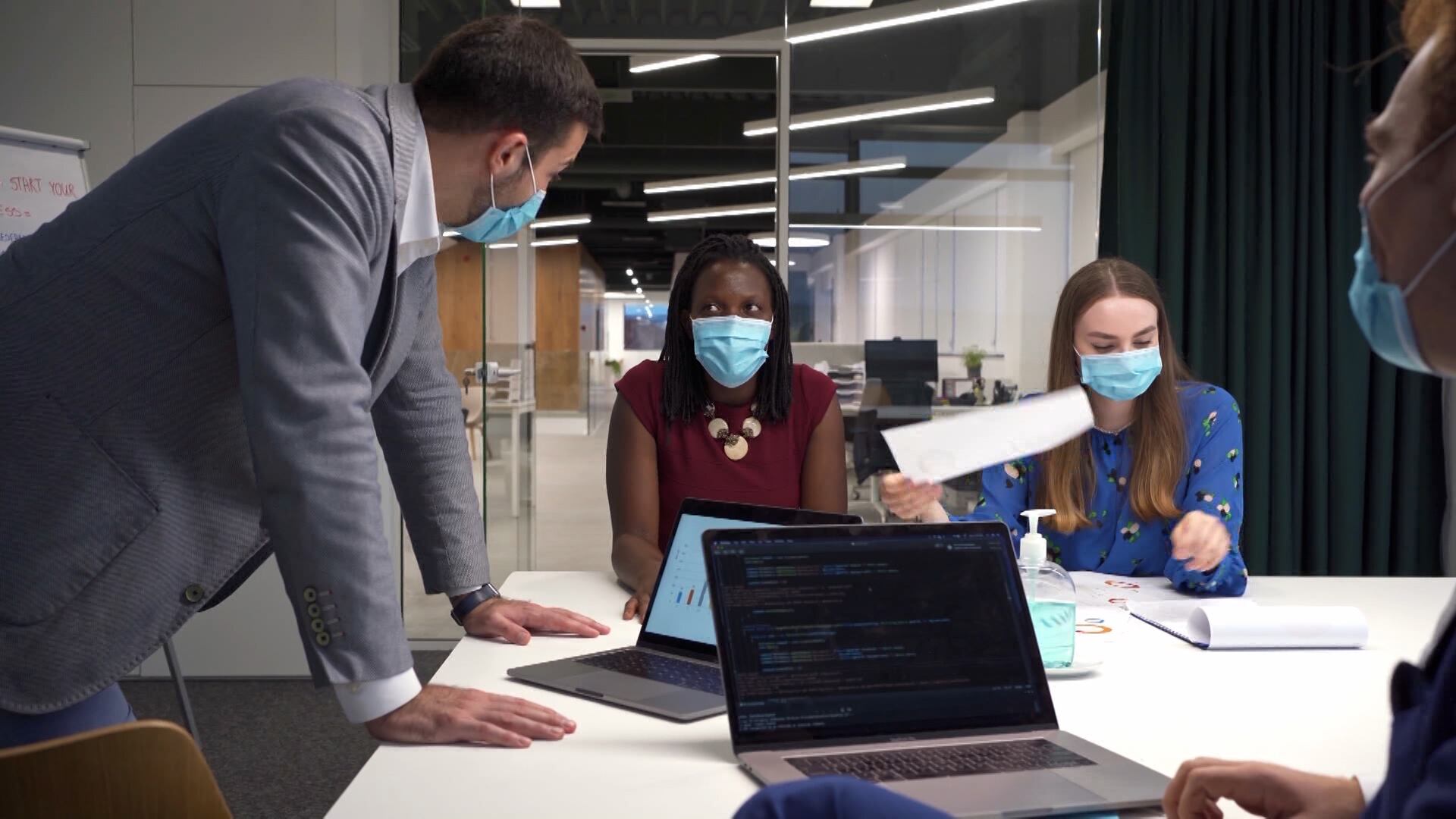
While the World Health Organization strongly advises against a COVID-19 vaccine mandate, national and local governments are moving to make inoculations compulsory. Cheddar News speaks with Dr. Joel Zinberg of the Competitive Enterprise Institute on the issue.