By Mark Sherman

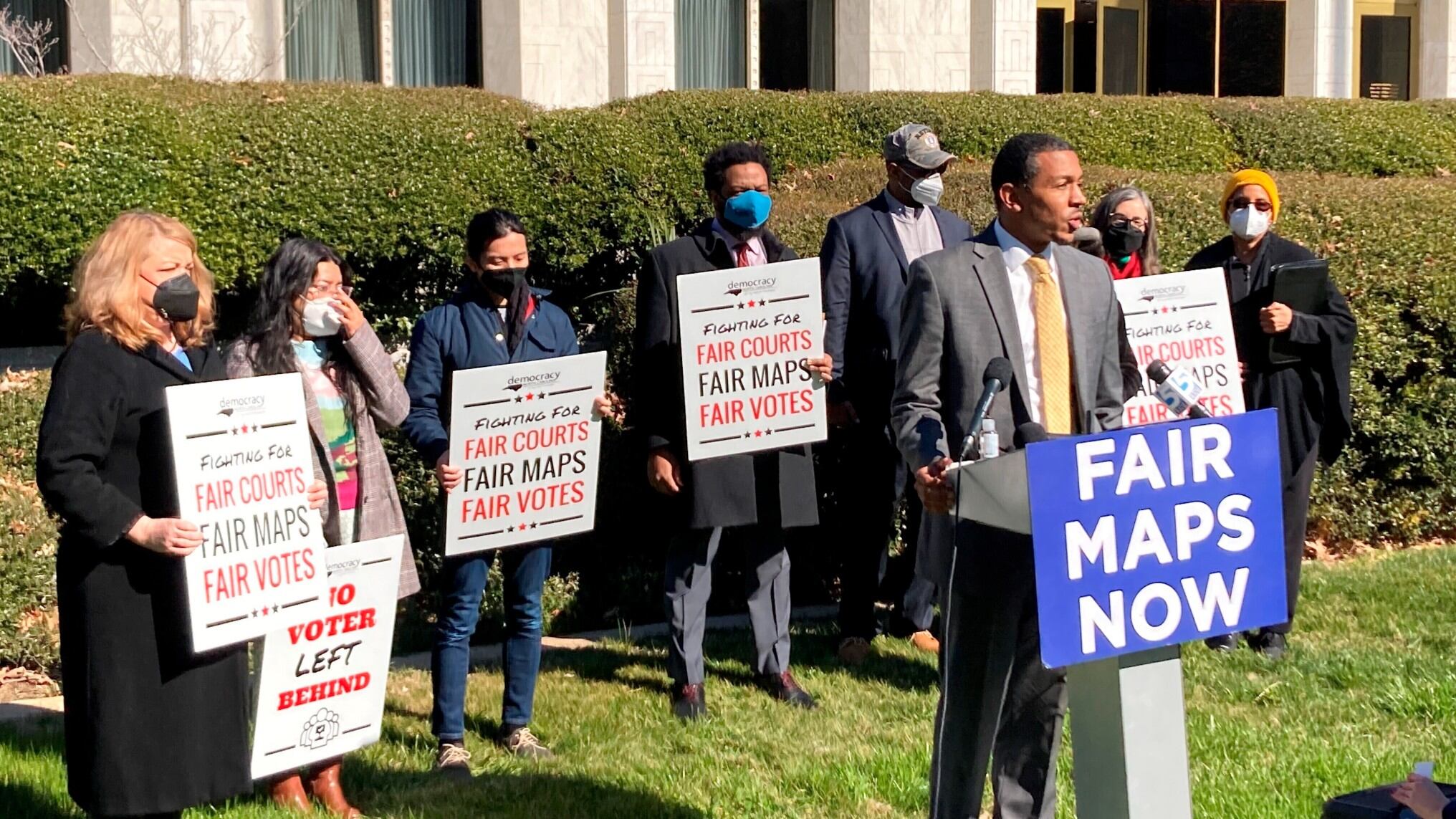
The Supreme Court ruled Tuesday that state courts can act as a check on their legislatures in redistricting and other issues affecting federal elections, rejecting arguments by North Carolina Republicans that could have transformed contests for Congress and president.

The justices by a 6-3 vote upheld a decision by North Carolina’s top court that struck down a congressional districting plan as excessively partisan under state law.

The high court did, though, suggest there could be limits on state court efforts to police elections for Congress and president.

Chief Justice John Roberts wrote for the court that “state courts retain the authority to apply state constitutional restraints when legislatures act under the power conferred upon them by the Elections Clause. But federal courts must not abandon their own duty to exercise judicial review.”

The practical effect of the decision is minimal in that the North Carolina Supreme Court, under a new Republican majority, already has undone its redistricting ruling.

Justices Samuel Alito, Clarence Thomas and Neil Gorsuch would have dismissed the case because of the intervening North Carolina court action.

Another redistricting case from Ohio is pending, if the justices want to say more about the issue before next year’s elections.

Former President Barack Obama applauded the outcome. “This ruling is a resounding rejection of the far-right theory that has been peddled by election deniers and extremists seeking to undermine our democracy. And it makes clear that courts can continue defending voters’ rights — in North Carolina and in every state,” Obama said in a statement.

Derek Muller, a University of Iowa law professor and elections expert, said Tuesday's decision leaves some room to challenge state court rulings on federal election issues, “but these are likely to be rare cases”

"The vast majority of state court decisions that could affect federal elections will likely continue without any change,” Muller said.

The North Carolina case attracted outsized attention because four conservative justices had suggested that the Supreme Court should rein in state courts in their oversight of elections for president and Congress.

Opponents of the idea, known as the independent legislature theory, had argued that the effects of a robust ruling for North Carolina Republicans could be much broader than just redistricting and could exacerbate political polarization.

Potentially at stake were more than 170 state constitutional provisions, over 650 state laws delegating authority to make election policies to state and local officials, and thousands of regulations down to the location of polling places, according to the Brennan Center for Justice at the New York University School of Law.

The justices heard arguments in December in an appeal by the state’s Republican leaders in the legislature. Their efforts to draw congressional districts heavily in their favor were blocked by a Democratic majority on the state Supreme Court because the GOP map violated the state Constitution.

court-drawn map produced seven seats for each party in last year’s midterm elections in highly competitive North Carolina.

The question for the justices was whether the U.S. Constitution’s provision giving state legislatures the power to make the rules about the “times, places and manner” of congressional elections cuts state courts out of the process.

Former federal judge Michael Luttig, a prominent conservative who has joined the legal team defending the North Carolina court decision, said in the fall that the outcome could have transformative effects on American elections. “This is the single most important case on American democracy — and for American democracy — in the nation’s history,” Luttig said.

Leading Republican lawmakers in North Carolina told the Supreme Court that the Constitution’s “carefully drawn lines place the regulation of federal elections in the hands of state legislatures, Congress and no one else.”

During nearly three hours of arguments, the justices seemed skeptical of making a broad ruling in the case. Liberal and conservative justices seemed to take issue with the main thrust of a challenge asking them to essentially eliminate the power of state courts to strike down legislature-drawn, gerrymandered congressional district maps on grounds that they violate state constitutions.

In North Carolina, a new round of redistricting is expected to go forward and produce a map with more Republican districts.

The state's Democratic governor, Roy Cooper, praised Tuesday's decision, but also implicitly acknowledged that it does nothing to inhibit Republicans who control the legislature from drawing a congressional map that is more favorable to them.

Cooper, who by state law can't block redistricting plans approved by lawmakers, said that "Republican legislators in North Carolina and across the country remain a very real threat to democracy as they continue to pass laws to manipulate elections for partisan gain by interfering with the freedom to vote.”

Share:
More In Politics
Putin Will 'Run Rings Around' Trump
President Donald Trump and Russian President Vladimir Putin started their heavily scrutinized one-on-one meeting in Helsinki, Finland, on Monday. "[Putin] has been in power for a very long time, almost 20 years now, he is a former KGB officer, and he's not interested in playing nice," says Natalia Antonova, former editor of The Moscow News. The meeting comes just days after the U.S. Justice Department indicted 12 Russian military officers for trying to influence the 2016 presidential election. Before the meeting, Trump described the federal investigation as a "Rigged Witch Hunt!"
Trump Calls Sun's Recorded Interview 'Fake News'
The president denied that he criticized British Prime Minister Theresa May's handling of Brexit in an interview with The Sun newspaper, calling it "fake news." His comments come just a day after The Sun posted its recorded interview online. Trump and May held a joint press conference on Friday where they both confirmed that the UK and the U.S. would strike up a special trade deal after Brexit.
Trump and May to Hold Joint News Conference, Chaos Erupts in Congress, Serena Rolls Into Wimbledon Finals, and More
These are the headlines you Need2Know: *President Trump is in England preparing for a joint news conference with Theresa May. While the duo dined last night, The Sun newspaper published a sit-down interview with the president where he criticized May’s handling of Brexit. Trump warned trade deals with England could be nixed if Brexit isn’t handled properly. *FBI agent Peter Strzok was removed from working on the Hillary Clinton email probe and the Trump-Russia investigation after text messages were discovered in which he criticized the president. *Stormy Daniels made an encore appearance at the same strip club she was arrested at the night prior. *A Kansas City water park will not reopen after a 10-year-old boy died on a water slide. *Serena Williams beat Julia Görges of Germany yesterday to reach her 10th Wimbledon final. Cheddar Big News's Jill Wagner gives us the details.
Trump Inspires Confusion at NATO and Anger in London
President Trump, on his last day at the NATO summit in Brussels, declared that other members of the alliance had agreed to increase defense spending. Minutes later, however, French president Emmanuel Macron disputed those claims, saying that all members had committed to the previous spending target. Trump is now in London for his first visit to the British capital since winning the White House.
Tensions Rise at NATO Summit, Stormy Daniels Arrested, Senate Votes on Tariff Resolution, and More
These are the headlines you Need2Know: * Confusion at the NATO summit after President Trump said allies will add billions of dollars to defense spending. But French president Emmanuel Macron rebuffed those claims. * Stormy Daniels was arrested after an alleged misdemeanor at a Columbus, Ohio, strip club. Her lawyer, Michael Avenatti, has also been working to reunite families at the southern border. * The U.S. Senate voted yesterday on a non-binding resolution giving it a say on what tariffs are levied and against whom. * New evidence prompted the Department of Justice reopened the case of Emmett Till, a 14-year-old boy who was killed in 1955 in Money, Miss. * John Schnatter, founder and former CEO of Papa John’s, has resigned his chairman role after a racially-charged comment on a conference call. * Americans made it to both the men’s and women’s Wimbledon semifinals, the first time since 2009. Cheddar Big News' Jill Wagner tells us the latest.
Trump's Demands Bring Relationships With Allies to 'Lowest Point'
President Donald Trump's aggressive stance at the two-day NATO summit in Brussels, on top of his antagonizing trade policies, have "brought the transatlantic alliance to the lowest point,” says Joshua Meltzer, senior fellow of global economy and development at the Brookings Institute.
Reasons to Buy the Next Market Dip
Stocks dipped today after the White House threatened to impose a new set of tariffs on China on $200 billion worth of goods. However, Kate Warne, investment strategist at Edward Jones, says this could be an opportunity for investors. "Put money to work today."
NATO Summit Kicks Off, White House Misses Immigration Deadline, Deadly Gas Explosion in Midwest, and More
These are the headlines you Need2Know: The NATO Summit got off to a heated start as President Trump already criticized member countries for not paying their fair share of defense spending. The Trump administration also missed its promised deadline to reunite dozens of migrant families. A natural gas leak in Sun Prairie, Wisc., turned deadly when an explosion erupted for several hours. Brett Kavanaugh, the president's pick for the open Supreme Court seat, met on Capitol Hill with the vice president and senators yesterday. The NFL Players Association is challenging the anti-kneeling policy, which requires players to remain in the locker room if they choose to protest the national anthem. Hurricane Chris makes its way up the East Coast, but shouldn't make a major impact on land. Cheddar Big News' Jill Wagner gives us the details.
Load More