By Mark Sherman and Jessica Gresko
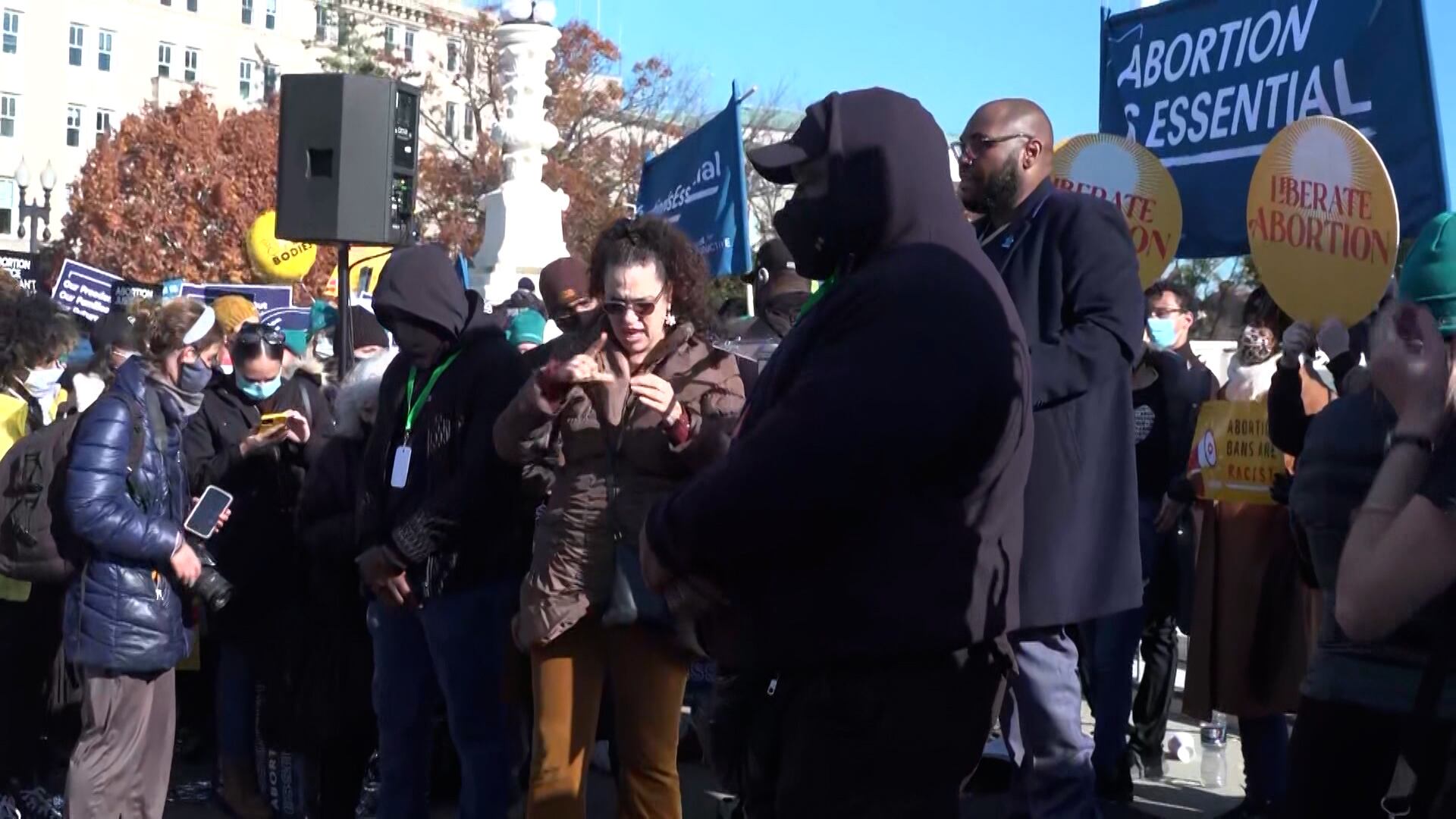
A majority of the Supreme Court signaled Monday they would allow abortion providers to pursue a court challenge to a Texas law that has virtually ended abortion in the nation’s second-largest state after six weeks of pregnancy.
But it was unclear how quickly the court would rule and whether it would issue an order blocking the law that has been in effect for two months, or require providers to ask a lower court put the law on hold.
Justices Brett Kavanaugh and Amy Coney Barrett, two conservative appointees of former President Donald Trump, voted in September to allow the law to take effect, but they raised questions Monday about its novel structure. The law, written to make it difficult to mount legal challenges, subjects clinics, doctors and any others who facilitate abortions to large financial penalties.
“Millions and millions retroactively imposed, even though the activity was perfectly lawful under all court orders and precedent at the time it was undertaken, right?" Kavanaugh asked, one of several skeptical questions he put to Judd E. Stone II, representing Texas.
Barrett, too, pressed Stone about provisions of the law that force providers to fight lawsuits one by one and, she said, don't allow their constitutional rights to be “fully aired.”
The justices heard three hours of arguments Monday in two cases over whether abortion providers or the Justice Department can mount federal court challenges to the law, which has an unusual enforcement scheme its defenders argue shields it from federal court review.
The Biden administration filed its lawsuit after the justices voted 5-4 to refuse a request by providers to keep the law on hold. Justice Neil Gorsuch, also a Trump appointee, and two other conservative justices joined Barrett and Kavanaugh in the majority to let the law take effect. Chief Justice John Roberts joined the court’s three liberal justices in dissent.
The justices sounded less convinced that the Justice Department lawsuit should go forward, and Justice Elena Kagan suggested that a ruling instead in favor of the providers would allow the court to avoid difficult issues of federal power.
In neither case argued Monday is the right to an abortion directly at issue. But the motivation for the lawsuits is that the Texas law conflicts with landmark Supreme Court rulings that prevent a state from banning abortion early in pregnancy.
Arguing for the United States, Solicitor General Elizabeth Prelogar told the justices that Texas’ law was enacted in “open defiance” of Supreme Court precedent. “It enacted a law that clearly violates this court’s precedents,” she said.
Under the Supreme Court's 1973 Roe v. Wade decision and 1992 Planned Parenthood v. Casey decision, states are prevented from banning abortion before viability, the point at which a fetus can survive outside the womb, around 24 weeks of pregnancy.
The justices will hear a separate challenge to those decisions in a case over Mississippi's ban on abortion after 15 weeks. Those arguments are set for Dec. 1.
The most direct reference to the Mississippi case came from Justice Samuel Alito, who asked if the decision by providers to stop doing abortions in Texas “is attributable to the fear of liability if Roe or Casey is altered?”
But most questions focused on the Texas law and how it has altered abortion in the state even before the high court has made any change in abortion law. Kagan told Stone that until Texas passed its law, "no state dreamed" of trying to make an end-run around Supreme Court precedent in the same way.
If the Supreme Court doesn't do anything about that, she said, it would be inviting states to try to flout precedent: “Guns. Same-sex marriage. Religious rights. Whatever you don't like: go ahead,” she said. Kagan, who disagreed with her colleagues' decision to let the law take effect, said Texas' law has prevented women in Texas “from exercising a constitutional right.”
Kavanaugh also raised concerns about laws that might affect other constitutional rights.
The Texas law has been in effect since September when the Supreme Court declined to intervene, except for a 48-hour period in early October when it was blocked by a lower court. The high court got involved again less than two weeks ago, moving at extraordinary speed. The court offered no explanation for its decision to hear the cases so quickly.
If the court allows the providers to continue their lawsuit, it would still take a separate order from the justices or a lower court to put the law on hold.
Amy Hagstrom Miller, chief executive of Whole Woman's Health, said her four clinics would resume abortion services if they get a favorable court order.
The Texas ban, signed into law by Gov. Greg Abbott in May, prohibits abortion after cardiac activity is detected in a fetus, usually around six weeks and before some women know they are pregnant.
The law makes exceptions for medical emergencies but not for rape or incest.
A study published by researchers at the University of Texas found that the number of abortions statewide fell by 50% after the law took effect in September, compared to the same month in 2020. The study was based on data from 19 of the state’s 24 abortion clinics, according to the Texas Policy Evaluation Project.
At least 12 other states have enacted bans early in pregnancy, but all have been blocked from going into effect.
Rather than have state officials enforce the law, Texas deputizes private citizens to sue anyone who performs or aids and abets an abortion. If someone bringing suit is successful, they are entitled to at least $10,000. Women who obtain abortions can’t be sued under the law.
During arguments Monday, Roberts at one point asked whether the law could be challenged if Texas had made the entitlement much higher, $1 million. Texas' lawyer told him no.
The structure of the law threatens abortion providers with huge financial penalties if they violate it. Clinics throughout the state have stopped performing abortions once cardiac activity is found.
The result, both the providers and the Biden administration said, is that women who are financially able have traveled to other states and those without the means must either continue their pregnancies against their will or find other, potentially dangerous ways to end them.
Stone and Jonathan Mitchell, an architect of the law who also argued Monday, defended the law and its unusual structure. They said both the providers and the Justice Department lack the right to go into federal court, and should be asking Congress, not the justices, to expand court access.
Updated on November 1, 2021, at 4:39 p.m. ET with additional details.