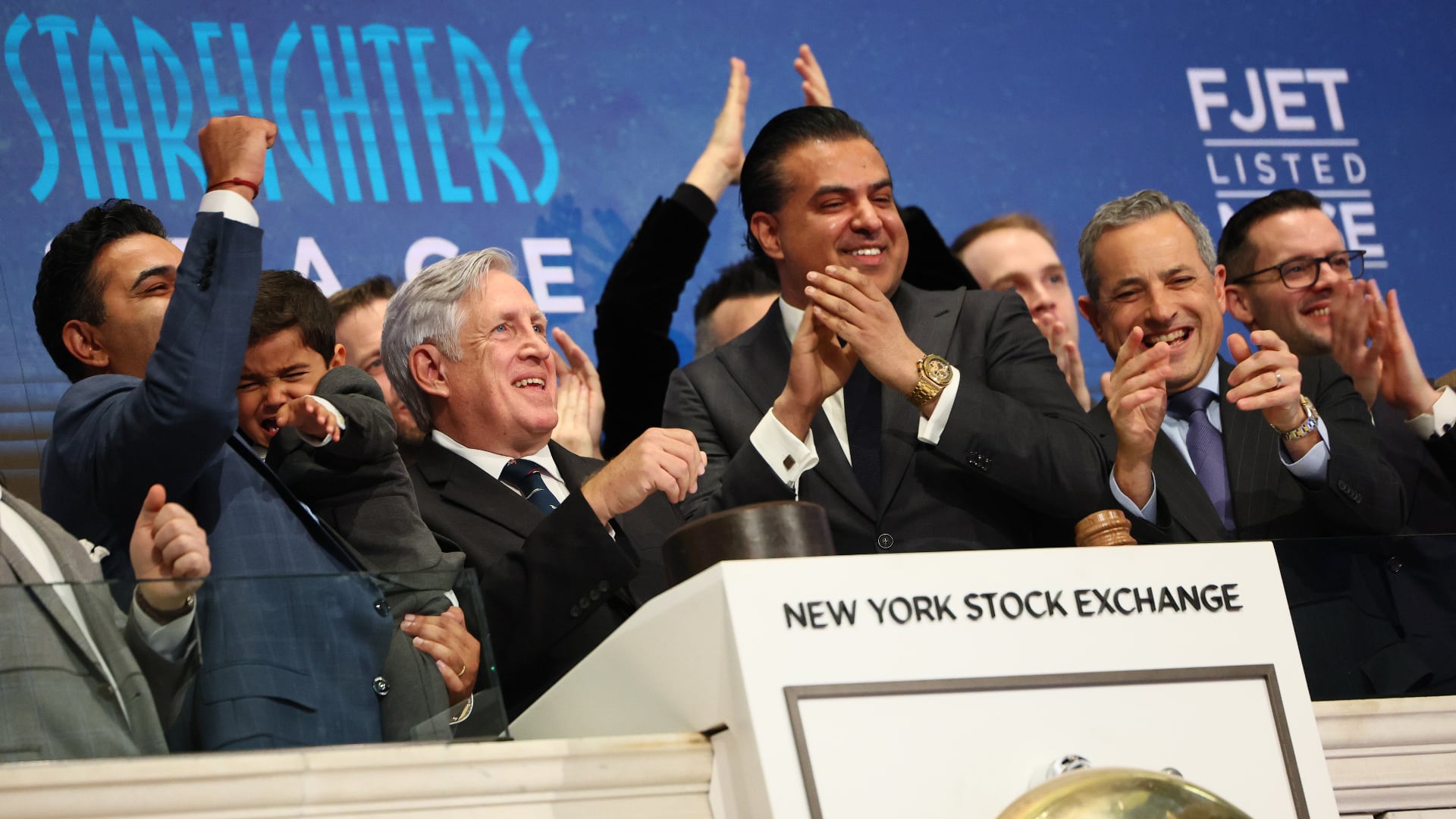
The raging coronavirus will close the New York Stock Exchange's floor operations on Monday, after employees tested positive for the coronavirus. (Photo by Luiz Roberto Lima-ANB/Pacific Press/LightRocket via Getty Images)
Stocks around the world rallied Tuesday amid expectations that Congress is nearing a deal to pump nearly $2 trillion of aid into the coronavirus-ravaged economy.
Top congressional and White House officials said they expect to reach an agreement Tuesday, though some issues remain. Investors have been frustrated waiting for the U.S. government to do what it can to help the economy, which is increasingly shutting down by the day after the Federal Reserve has done nearly all it can.
Signs of optimism radiated around the world. Beyond the better than 5 percent gain for the S&P 500 within the first few minutes of trading, South Korean stocks surged 8.6 percent and Germany's market returned 7 percent. Treasury yields rose in a sign that investors are feeling less fearful. Even crude oil, which has more than halved this year, rose.
The market has seen rebounds like this before, only for them to wash out immediately. Since the market began selling off on Feb. 20, the S&P 500 has had six days where it's risen, and all but one of them were big gains of more than 4 percent. After every one of them, stocks fell again the next day.
Ultimately, investors say they need to see the number of new infections peak before markets can find a bottom. The increasing spread is forcing companies to park airplanes, shut hotels, and close restaurants to dine-in customers. Altogether, estimates suggest at least 10 percent of the U.S. economy is shutting down, according to Rob Sharpe, head of investments and group chief investment officer at T. Rowe Price.
The S&P 500 was up 5.4 percent, as of 9:43 a.m. Eastern time. The Dow Jones Industrial Average rose 1,130 points, or 6.1 percent, to 19,722 and the Nasdaq was up 4.9 percent.
Economists are topping each other's dire forecasts for how much the economy will shrink this spring due to the closures of businesses, and a growing number say a recession seems inevitable.
To support the economy while health experts work to corral the virus, the Federal Reserve on Monday pledged to buy as many Treasurys and mortgage-backed securities as it takes to keep lending markets working smoothly. It's the latest in a string of extraordinary moves by the U.S. central bank.
Investors are waiting for Congress and the White House to also do what they can. They debated through the weekend and Monday on a plan to send cash to households and help support the hard-hit travel industry, among other things.
Governments and central banks in other countries around the world are also unveiling unprecedented levels of support for their economies in an attempt to limit the scale of the upcoming virus-related slump. Germany, a bastion of budgetary discipline, also approved a big fiscal boost.
Markets rose even as more dismal data came in about the global economy.
"Everyone was prepared for a set of shockers, and that is precisely what we got, but they are not a surprise," said Chris Beauchamp, chief market analyst at IG. "It is at times like this that the market's propensity to look forward is demonstrated most effectively."
A further boost to sentiment has come from the news that China is preparing to lift the lockdown in Wuhan, the epicenter of the outbreak, and from Italy reporting a reduction in the number of new cases and coronavirus-related deaths.
"It's still early days, of course — perhaps investors can start to envisage life beyond the coronavirus," said Craig Erlam, senior market analyst at OANDA Europe. "That could make stocks look a little more attractive, although anyone jumping back in now will need to have nerves of steel."
For most people, the coronavirus causes only mild or moderate symptoms, such as fever and cough. Those with mild illness recover in about two weeks. Severe illness including pneumonia can occur, especially in the elderly and people with existing health problems. Recovery could take six weeks in such cases.
Roundhill Investments is investing in the metaverse, and it wants consumers to as well. The firm launched a metaverse exchange-trade fund called Meta back in June - the first ETF in the U.S. targeting investments in the next era of the internet. The fund's launch came months before the company formerly known as Facebook changed its name to Meta Platforms. Since the launch of Roundhill Investments' Meta ETF, it has grown significantly, reaching $500 million in assets. Roundhill Investments Vice President Mario Stefanidis joined Cheddar News to discuss.
The U.S. Justice Department has filed a lawsuit against Uber after it was discovered that disabled people were being disproportionately affected by extra “wait time” fees. Attorney Jonathan Bell joined Cheddar to discuss.
Things are expensive: both the important and the not-so-important stuff. October saw the largest year-to-year increase in the consumer price index in over 30 years. Inflation remains a top concern for the average American consumer as some stress over the price of everyday essentials like milk, beef, and gasoline.
But that doesn't seem to be affecting overall retail shopping.
U.S. retail sales rose by 1.7% in October, a sign that consumers are willing to spend more heading into the holidays despite rising inflation. The elevated spending levels suggest solid holiday sales this month and next. On top of that, major retailers like Target and Walmart have come out this week and said they're set to be fully stocked for the holiday season, easing any concerns customers might have about supply chain issues leaving empty shelves before the holidays.
Brittain Ladd, retail strategist and consultant, joins None of the Above to discuss.
Tanya Snyder, transportation reporter at Politico, joins None of the Above with J.D. Durkin to discuss the bipartisan infrastructure law, what it means for the electric vehicle industry and whether Democrats will be able to capitalize on the legislative victory ahead of the 2022 midterms.
Twitter announced a partnership with S&P Dow Jones Indices on Thursday to build the S&P 500 Sentiment Index for monitoring the performance of 200 S&P members based on tweets with company $cashtags. Jared Podnos, strategic market development lead at Twitter, and Peter Roffman, global head of innovation and strategy at S&P Dow Jones Indices, joined Cheddar to provide some background on the partnership and to explain exactly how monitoring companies through public opinion will work. "[The S&P] taps into this conversation. They understand the real-time conversation as well as the historical trends, and then we can analyze that and understand the consumer sentiment and really build these innovative products around that conversation," Podnos added.
Cognitive healthcare platform BrainCheck recently raised $10 million in a Series B round. The platform offers neurologists a new way to detect and care for brain disorders like Alzeheimer's, and brain injuries like concussions. BrainCheck CEO Yael Katz joined Cheddar News' Closing Bell to discuss.
Stocks closed mixed today, with the S&P 500 and the Nasdaq both notching record closing highs. Veronica Willis, investment strategy analyst at the Wells Fargo Investment Institute, joins Cheddar News' Closing Bell to discuss today's close, recent inflation data, rising oil prices, and more.
Jean-Denis Mariani, the chief digital officer at COTY, the parent company for major brands like Bottega Veneta, Burberry, and Kylie Skin, joined Cheddar to talk about the impact of the pandemic on the beauty industry and the rapid shift to e-commerce sales. "There is no digital strategy anymore, only strategy in a digital world," he said. Mariani also talked about personalized makeup selection for consumers as the beauty sector begins to incorporate technology like artificial intelligence.
Amid an ongoing global semiconductor chip shortage, American automaker Ford has decided to open up supply chains of its own. Karl Brauer, an executive analyst at iSeeCars.com, joined Cheddar to discuss Ford's new partnership with multinational semiconductor maker GlobalFoundries to build those chips domestically. Brauer praised Ford for the move both for ongoing supply woes and the future of automobile manufacturing. "It's not just the supply chain," he said. "It's not just about getting chips, but maybe getting chips that are more customized and specific to your needs."