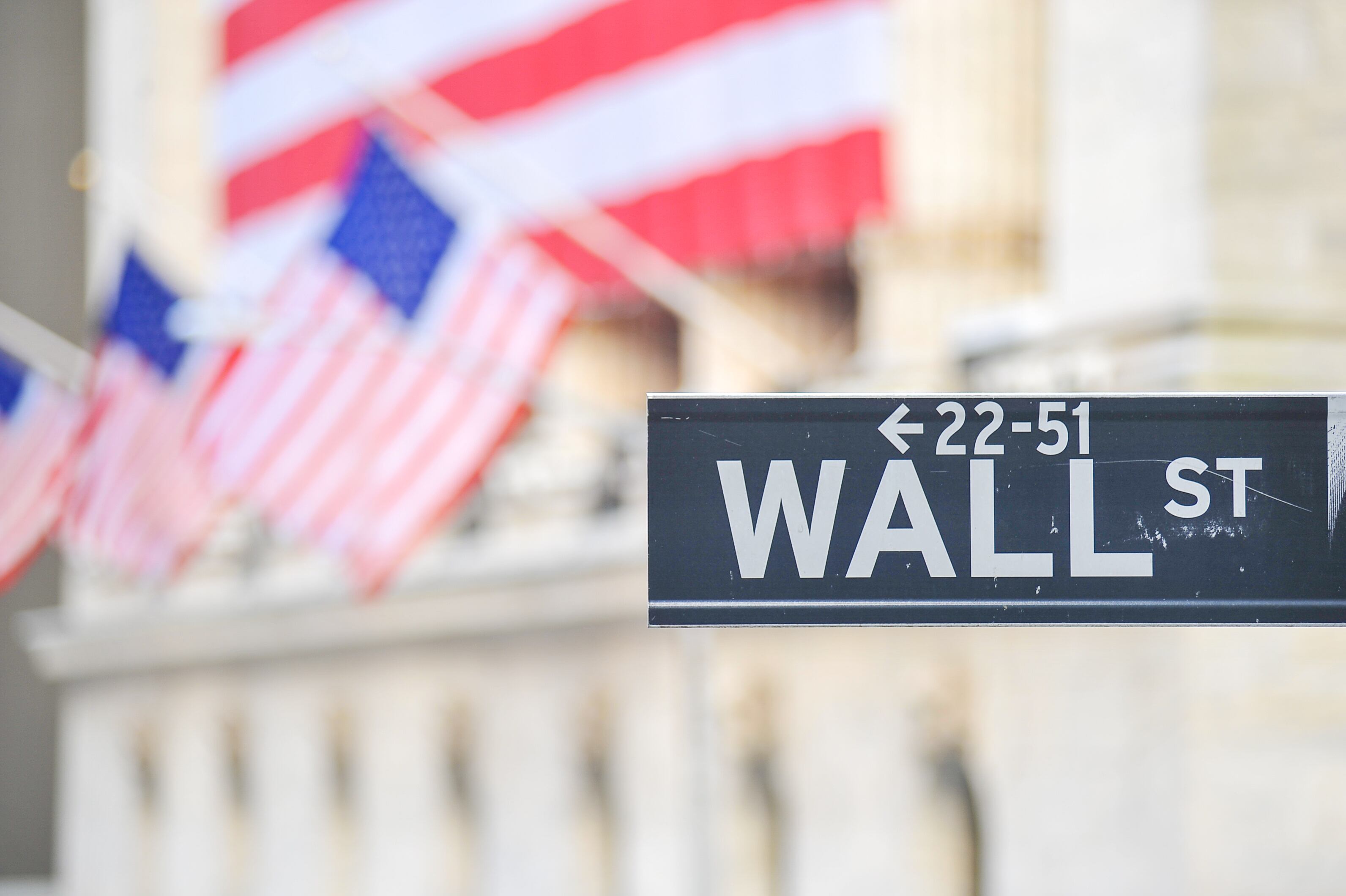
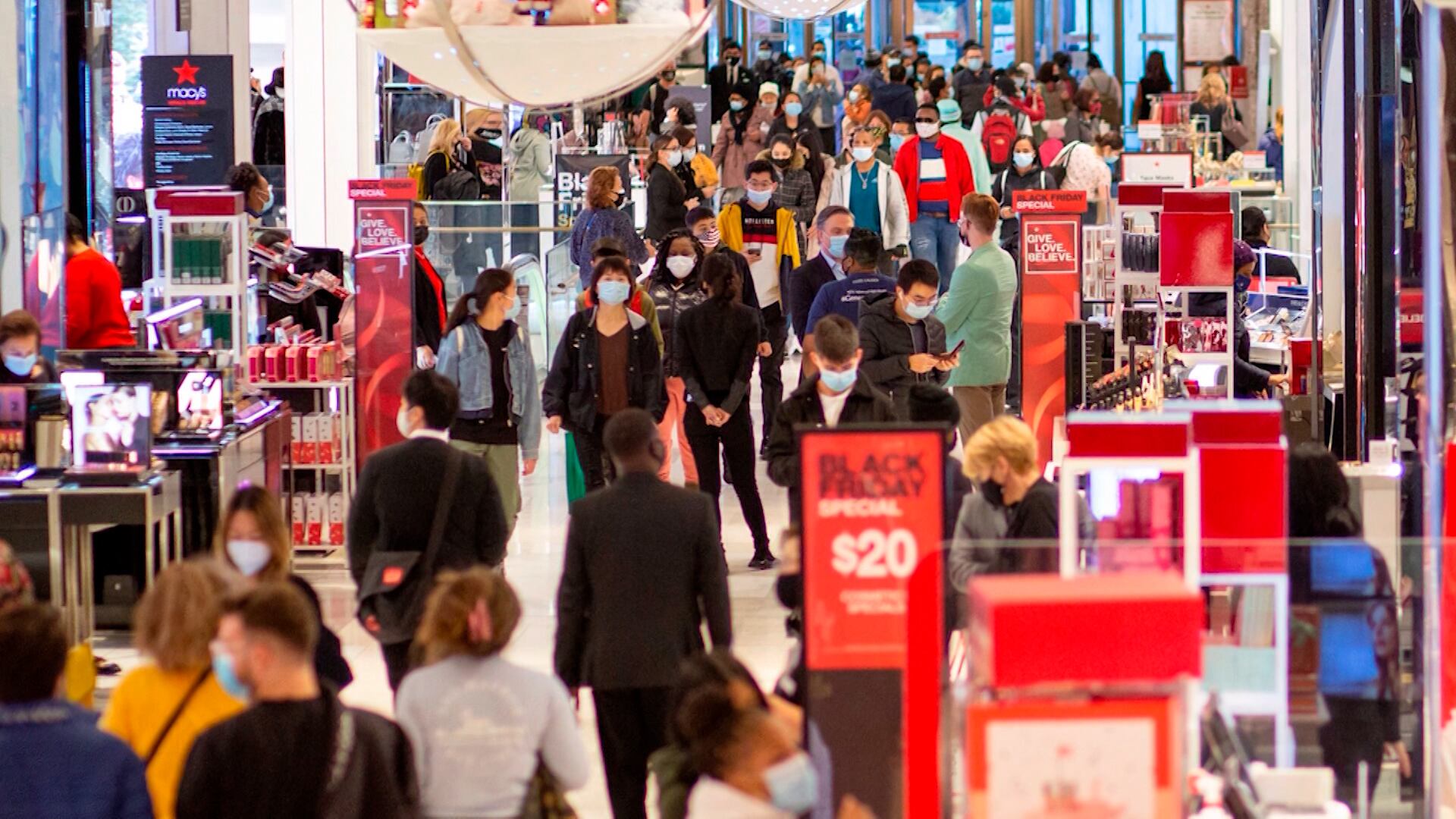
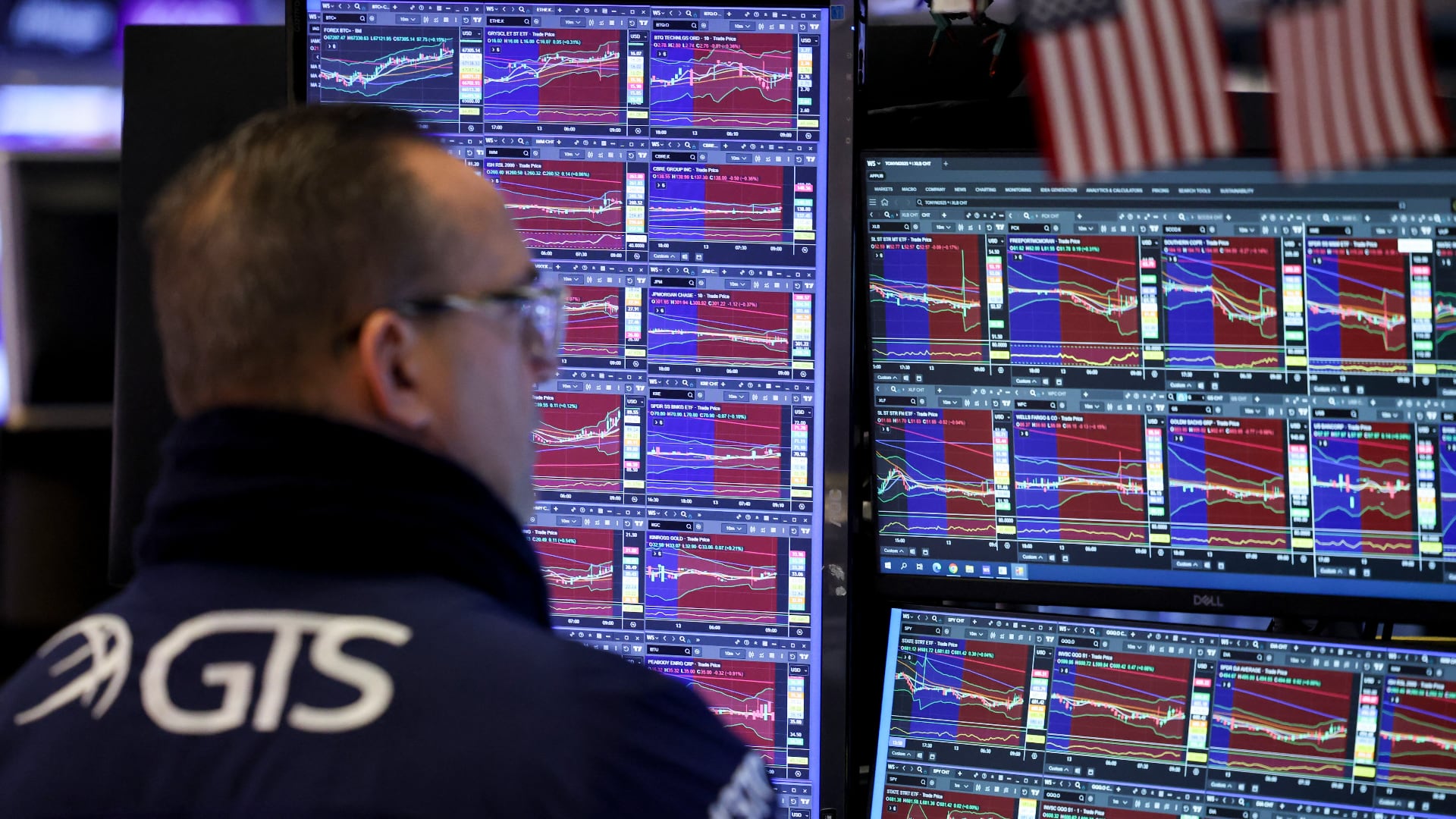
The raging coronavirus will close the New York Stock Exchange's floor operations on Monday, after employees tested positive for the coronavirus. (Photo by Luiz Roberto Lima-ANB/Pacific Press/LightRocket via Getty Images)
Stocks around the world rallied Tuesday amid expectations that Congress is nearing a deal to pump nearly $2 trillion of aid into the coronavirus-ravaged economy.
Top congressional and White House officials said they expect to reach an agreement Tuesday, though some issues remain. Investors have been frustrated waiting for the U.S. government to do what it can to help the economy, which is increasingly shutting down by the day after the Federal Reserve has done nearly all it can.
Signs of optimism radiated around the world. Beyond the better than 5 percent gain for the S&P 500 within the first few minutes of trading, South Korean stocks surged 8.6 percent and Germany's market returned 7 percent. Treasury yields rose in a sign that investors are feeling less fearful. Even crude oil, which has more than halved this year, rose.
The market has seen rebounds like this before, only for them to wash out immediately. Since the market began selling off on Feb. 20, the S&P 500 has had six days where it's risen, and all but one of them were big gains of more than 4 percent. After every one of them, stocks fell again the next day.
Ultimately, investors say they need to see the number of new infections peak before markets can find a bottom. The increasing spread is forcing companies to park airplanes, shut hotels, and close restaurants to dine-in customers. Altogether, estimates suggest at least 10 percent of the U.S. economy is shutting down, according to Rob Sharpe, head of investments and group chief investment officer at T. Rowe Price.
The S&P 500 was up 5.4 percent, as of 9:43 a.m. Eastern time. The Dow Jones Industrial Average rose 1,130 points, or 6.1 percent, to 19,722 and the Nasdaq was up 4.9 percent.
Economists are topping each other's dire forecasts for how much the economy will shrink this spring due to the closures of businesses, and a growing number say a recession seems inevitable.
To support the economy while health experts work to corral the virus, the Federal Reserve on Monday pledged to buy as many Treasurys and mortgage-backed securities as it takes to keep lending markets working smoothly. It's the latest in a string of extraordinary moves by the U.S. central bank.
Investors are waiting for Congress and the White House to also do what they can. They debated through the weekend and Monday on a plan to send cash to households and help support the hard-hit travel industry, among other things.
Governments and central banks in other countries around the world are also unveiling unprecedented levels of support for their economies in an attempt to limit the scale of the upcoming virus-related slump. Germany, a bastion of budgetary discipline, also approved a big fiscal boost.
Markets rose even as more dismal data came in about the global economy.
"Everyone was prepared for a set of shockers, and that is precisely what we got, but they are not a surprise," said Chris Beauchamp, chief market analyst at IG. "It is at times like this that the market's propensity to look forward is demonstrated most effectively."
A further boost to sentiment has come from the news that China is preparing to lift the lockdown in Wuhan, the epicenter of the outbreak, and from Italy reporting a reduction in the number of new cases and coronavirus-related deaths.
"It's still early days, of course — perhaps investors can start to envisage life beyond the coronavirus," said Craig Erlam, senior market analyst at OANDA Europe. "That could make stocks look a little more attractive, although anyone jumping back in now will need to have nerves of steel."
For most people, the coronavirus causes only mild or moderate symptoms, such as fever and cough. Those with mild illness recover in about two weeks. Severe illness including pneumonia can occur, especially in the elderly and people with existing health problems. Recovery could take six weeks in such cases.
Web3 software startup Thirdweb has raised $5 million in a funding round, coming from a group of high-profile investors, including Gary Vaynerchuk and Mark Cuban. Thirdweb says it is paving the way for the revolution surrounding the new iteration of the internet known as web3, by offering users free tools to build their own web3 projects. Thirdweb's co-founders Steven Bartlett and Furqan Rydhan join Cheddar News' Closing Bell to discuss.
Decentralized talent network Braintrust recently closed an atypical equity deal that involved investors buying $100 million in Braintrust tokens, the company's cryptocurrency. Braintrust's talent network is built on blockchain technology, which the company says allows it to be owned and built by users, instead of a centrally-controlled corporation. Braintrust users can also earn tokens for their contributions to the network and its growth. Braintrust co-founder Adam Jackson joins Cheddar News' Closing Bell to discuss.
Blue Origin launched its third manned mission over the weekend with 'Good Morning America' host Michael Strahan and Laura Shepard Churchley, daughter of astronaut Alan Shepard on board, alongside several Blue Origin investors.
This comes after the spaceflight firm launched two successful missions to the edge of space earlier this year. How will these missions set up Blue Origin for success as it competes with SpaceX and other companies for space tourism domination and more? Joey Roulette, space reporter at The New York Times, joins Cheddar News' Closing Bell to discuss.
If there's any question about whether inflation is here to stay, today's November consumer price index data gives us an answer. This is the second month in a row we've seen a hot inflation reading — CPI last month rose to 6.8%, after jumping to 6.2% in October. Amid the holiday shopping season, what does this mean for consumers? And how will the Federal Reserve move forward after previously announcing it would speed up its asset taper timeline? Art Hogan, Chief Market Strategist at National Securities, joins Cheddar News' Closing Bell to discuss November's CPI jump, where consumers are hurting the most, what the Fed could do to help ease inflation, and more.
Editorial and stock photo provider Getty Images is gearing up to make its public debut via a SPAC merger with CC Neuberger Principal Holdings II bringing it to a $4.8 billion valuation. CEO Craig Peters joined Cheddar to break down the decision to go public and noted that the merger will help to pay down debt. "That's going to really enable a lot of additional free cash flow and financial flexibility into the business," he noted. "That's just going to allow us to just invest more aggressively into the business to accelerate what is already accelerating growth." Peters also discussed the legacy image platform's place going forward in the expanding world of digital assets like NFTs and the metaverse.
Ben Schiller, the managing editor for features and opinion at CoinDesk, breaks down how the year's top 10 crypto influencers were selected and what to expect from the blockchain ecosystem, especially the growth of NFTs, in 2022. "This whole crypto story has become not just a story about money or the future of money," he said. "It's also become a cultural story where it's getting into gaming, it's getting into artwork, into collectibles, and all kinds of cultural categories it wasn't in before." Schiller noted that he expects the U.S. and other world governments to establish crypto regulations in the coming year.
Ford said it will ramp up production for its Mustang Mach-E as demand for the electric vehicle surges. The automaker expects to sell upwards of 200,000 annually by 2023.
Mina Makar, senior vice president of respiratory and immunology, Astrazeneca, joined Cheddar to discuss the FDA's decision to give emergency use authorization to the pharma giant's COVID-19 antibody treatment called Evusheld for immunocompromised patients For about 2 percent of the U.S. Makar noted that the injection is supposed to provide antibody protection for those who can't generate their own adequate immune response via the vaccines for a minimum of six months, though long-term trials are underway.
The pandemic has forced corporate America to reshape itself to adapt, including onboarding doctors as chief medical officers to help maintain the health and safety of staff. Dr. Geeta Nayyar, chief medical officer at Salesforce, joined Cheddar to break down her role and how it has become relevant and necessary in the evolving workplace. "Every business today is now in the business of healthcare," she said. "It is a priority to empower employees to then serve your customers."