By Stan Choe, Alex Veiga, and Damian J. Troise
Updated 4:44 pm ET
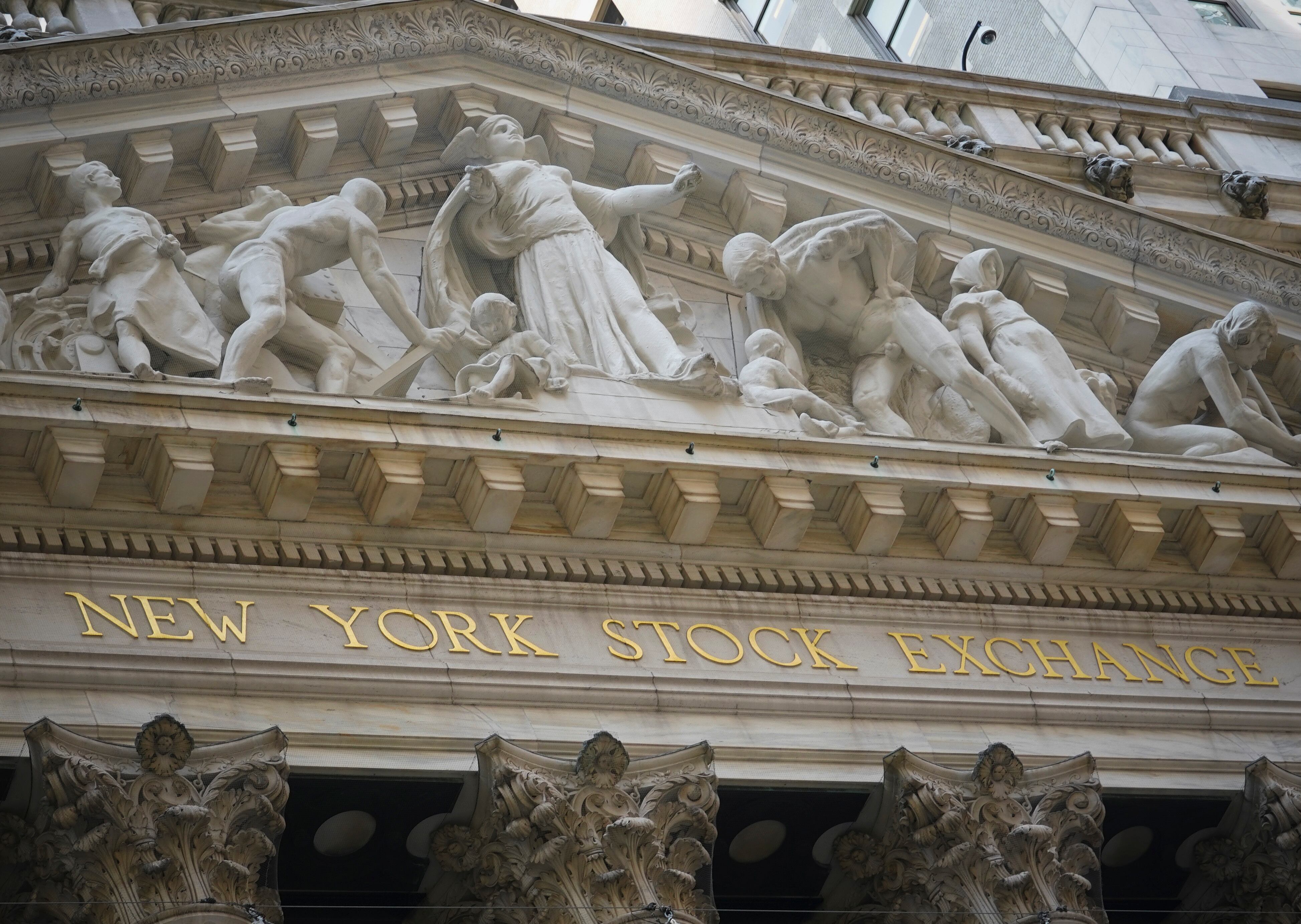
More blowout profit reports from big tech companies pushed the S&P 500 to an all-time high Wednesday.
The benchmark index rose 1 percent, even though most of the stocks within it closed lower. Technology stocks accounted for the lion's share of the gains, outweighing losses in health care, utilities, energy, and other sectors.
The S&P 500 has been notching record highs this month, adding to its remarkable turnaround this year from a nearly 34 percent skid this spring as the pandemic ravaged the economy. While the market's movements have remained almost relentlessly upward in recent weeks, powered largely by big technology stocks, its momentum has slowed. Recent data reports have shown a mixed picture on the economy, where activity has largely slowed following its initial rebound from its plummet into recession.
Still, the latest economic data provided more reason for investor optimism. The Commerce Department said Wednesday that orders for transportation equipment, computers, and other long-lasting goods jumped more in July from June than economists expected. One closely watched number in the report, which gives an indication of business investment plans, rose 1.9 percent in July.
"The economy continues to show signs of recovery," said Patrick Schaffer, global investment specialist at J.P. Morgan Private Bank. "Virus containment strategies seem more targeted and less blunt than they were in the initial phases." of the pandemic.
The S&P 500 gained 35.11 points to 3,478.73. The Dow Jones Industrial Average rose 83.48 points, or 0.3 percent, to 28,331.92. The Nasdaq composite, which is heavily weighted with technology stocks, climbed 198.59 points, or 1.7 percent, to 11,665.06, its third-straight record high. Smaller companies struggled. The Russell 2000 index of small-cap stocks fell 11.02 points, or 0.7 percent, to 1,560.19.
Much of the market's attention this week has been focused on Thursday when the Federal Reserve's chair will give a highly anticipated speech on monetary policy. Jerome Powell will be speaking as part of the Fed's annual economic symposium, which is usually held in Jackson Hole, Wyoming, where past Fed officials have made big market-moving announcements.
Many investors expect Powell to talk about inflation, as well as the importance of Congress delivering more aid for the economy after much of its last round of stimulus expired. Many investors are still assuming Congress will eventually reach a deal on such aid, but partisan disagreements have prevented one so far.
The Fed has been one of the primary reasons for the stock market's return to a record after it pledged to keep short-term interest rates at their record low and to continue to buy bonds to support the economy.
"I think the Fed is going to continue to go all in," said Brad McMillan, chief investment officer for Commonwealth Financial Network, noting that the central bank is also increasingly serious about wanting to boost inflation.
"The speculation is they'll move to an average inflation target, which will let inflation run hot for a while," he said.
The yield on the 10-year Treasury rose to 0.69 percent from 0.68 percent late Tuesday. It's been climbing in recent weeks, up from 0.53 percent at the end of July, and it tends to move with investors' expectations for the economy and inflation.
If yields move high enough, it could rattle the stock market because higher rates can draw investors back into bonds and away from stocks. The recent ultra-low rates have helped technology and other high-growth stocks in particular. But analysts say the 10-year Treasury yield would need to get closer to 1 percent to drive real concerns.
The latest tech stock to be minted a blue chip surged 26 percent, making it the biggest gainer in the S&P 500, after giving a profit report for its latest quarter that Wall Street analysts called "stupendous." Salesforce.com will join the Dow Jones Industrial Average when trading begins on Monday, replacing Exxon Mobil in the measure of 30 blue-chip stocks.
Other technology stocks also had a good day, with Adobe up 9.1 percent. Hewlett Packard Enterprise gained 3.6 percent following its own better-than-expected profit report.
Tech stocks in the S&P 500 accounted for more than 57 percent of the S&P 500's overall gain. It continues a longstanding run on Wall Street, where investors continue to pile into companies that can deliver strong growth even if the economy is weak or quarantined.
"The market is just reflecting how the world has changed and how these (tech) companies are better positioned to take advantage of it," McMillan said.
Cruise line operators were among the biggest decliners Wednesday. Norwegian Cruise Line fell 6.1 percent, while Carnival dropped 3.8 percent.
In European stock markets, the German DAX returned 1 percent, and the French CAC 40 rose 0.8 percent. The FTSE 100 in London added 0.1 percent. Asian markets made mostly modest moves. Japan's Nikkei 225 and Hong Kong's Hang Seng indexes were virtually flat, and South Korea's Kospi added 0.1 percent. Stocks in Shanghai fell 1.3 percent.
Benchmark U.S. crude oil for October delivery rose 4 cents to $43.39 a barrel Wednesday. Brent crude oil for October delivery fell 22 cents to $45.64 a barrel. Oil has been ticking higher as Hurricane Laura barrels toward the U.S. Gulf Coast, potentially putting energy production at risk.
___
AP Business Writer Yuri Kageyama contributed.