By Stan Choe, Alex Veiga, and Damian J. Troise
Updated 5:11 pm ET
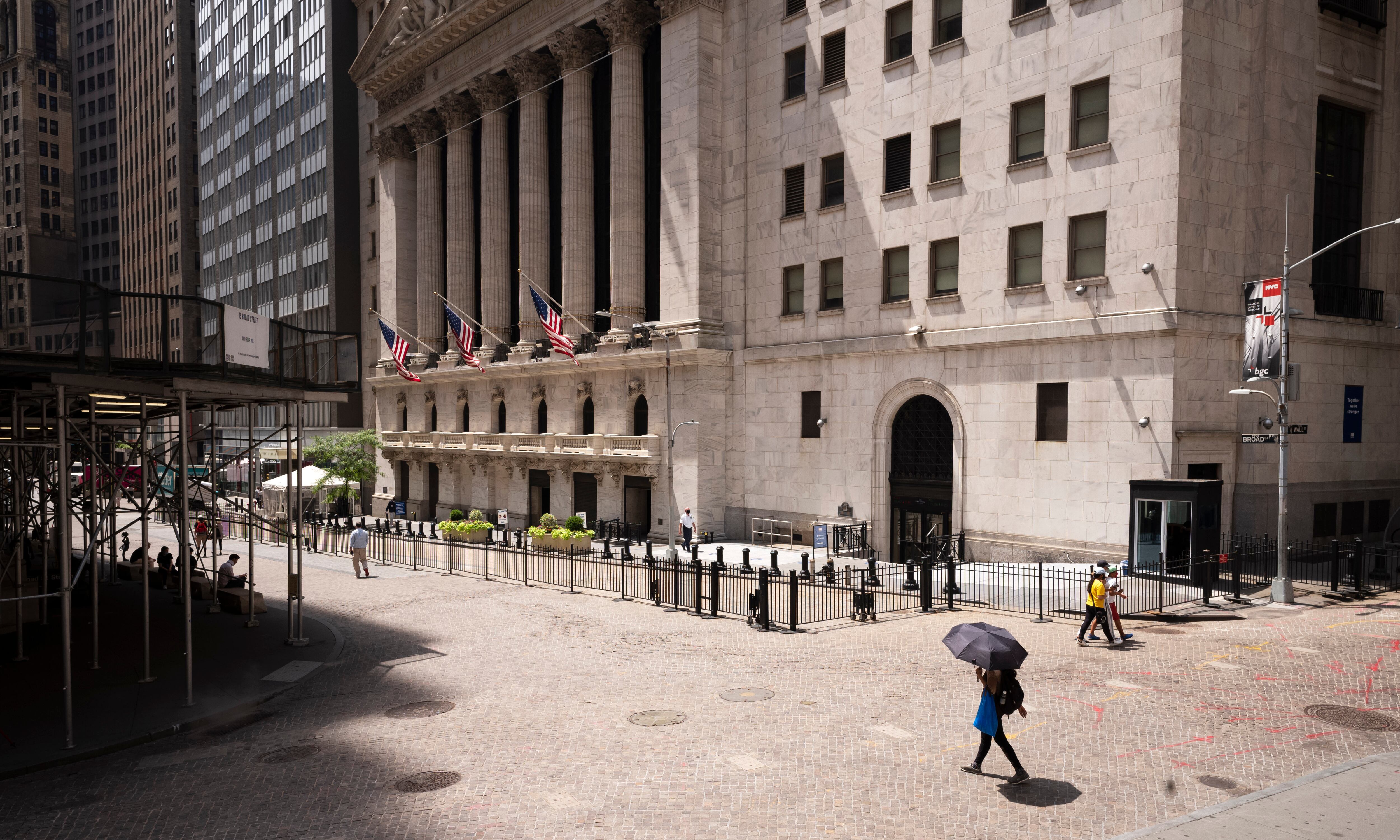
U.S. stock indexes closed mostly higher Monday, nudging the S&P 500 within striking distance of its all-time high set in February.
The S&P 500 rose 0.3 percent after wavering between small gains and losses in the early going. The benchmark index is now within 1 percent of its last record high.
The gains came on the first trading day since President Donald Trump announced several stopgap moves to aid the economy in response to the collapse of talks on Capitol Hill for a bigger rescue package.
Trump signed executive orders over the weekend to extend an expired benefit for unemployed workers, among other things. The orders were more limited than what investors hoped to see from a full rescue bill for the economy, but hopes remain that the White House and Congress can return to talks and find a compromise.
The S&P 500 gained 9.19 points to 3,360.47. The Dow Jones Industrial Average rose 357.96 points, or 1.3 percent, to 27,791.44. The Nasdaq composite lost 42.63 points, or 0.4 percent, to 10,968.36.
Most stocks across Wall Street rose, with hotels, cruise operators, and airlines — among the hardest-hit companies due to the pandemic — seeing the biggest gains. Smaller stocks also had a strong showing, pushing the Russell 2000 index up 15.49 points, or 1 percent, to 1,584.67. Losses in technology, health care, and communication services stocks, which have been among the biggest gainers this year, kept the market's gains in check.
"The more economically sensitive stocks are driving the market higher," said Brent Schutte, chief investment strategist of Northwestern Mutual Wealth Management. "The rest of the market today and over the past few days is doing better."
MGM Resorts International jumped 13.8 percent for the biggest gain in the S&P 500 after IAC disclosed that it had built a roughly $1 billion stake in the company. Like other businesses that depend on people feeling safe enough to travel, MGM Resorts has been pummeled by the pandemic, and its shares more than halved in March alone. Barry Diller, IAC's chairman, called it a "once in a decade" opportunity, citing its potential to move business online.
But losses for technology stocks weighed on the market. It's a continuation of their struggles from Friday when worries rose that worsening U.S.-China relations could mean retaliation against the U.S. tech industry. It's a relatively rare setback for the industry, which has been the year's biggest winner so far and cruised through much of the pandemic. Critics had already been calling tech stocks overpriced, even after accounting for their huge and resilient profits.
The S&P 500 extended its winning streak to seven days, its longest since the spring of 2019. The benchmark index has nearly reached the record high it set in February before the pandemic pancaked the economy into recession. It had been down nearly 34 percent in March.
Investors have been saying the economy needs another big lifeline from Washington, and quickly, after $600 in weekly unemployment benefits for workers from the federal government expired with July's end. But talks broke apart on Friday, and Trump issued his executive orders on Saturday. Both the White House and congressional Democrats indicated Sunday they wanted to resume negotiations, but no talks were scheduled.
Almost immediately after Trump signed the orders, critics said the moves did not go far enough to support the economy and questioned how they would work.
The economy has shown some signs of improvement since the spring but it is still struggling. Friday's jobs report showed a larger-than-expected increase in hiring across the economy during July, but also a slowdown in job growth amid worries that a resurgence in coronavirus infections could force the economy to backtrack.
The impasse on Capitol Hill is just one of several big forces pushing on markets, not even including the rising number of coronavirus counts around the world.
Rising toward the top of the list in recent weeks has been growing antagonism between the United States and China, the world's largest economies. The latest move in their escalating tensions was China's announcement of unspecified sanctions against 11 U.S. politicians and heads of organizations promoting democratic causes, including Senators Marco Rubio and Ted Cruz.
The two sides are scheduled to hold trade talks at the end of the week.
Chinese stocks rose earlier in the morning, along with many other markets around the world.
Stocks in Shanghai climbed 0.8 percent, and South Korea's Kospi added 1.5 percent. The Hang Seng in Hong Kong, though, dipped 0.6 percent after the authorities arrested pro-democracy media tycoon Jimmy Lai and some of his associates on suspicion of collusion with foreign powers.
In Europe, Germany's DAX returned 0.1 percent, and France's CAC 40 gained 0.4 percent. The FTSE 100 in London added 0.3 percent.
The yield on the 10-year Treasury rose to 0.58 percent from 0.56 percent late Friday.
Benchmark U.S. crude oil for September delivery rose 72 cents to settle at $41.94 a barrel. Brent crude oil for October delivery rose 59 cents to $44.99 a barrel.
Gold added 0.6 percent to $2,039.70 per ounce.
___
AP Economics Writer Paul Wiseman and AP Business Writer Elaine Kurtenbach contributed.