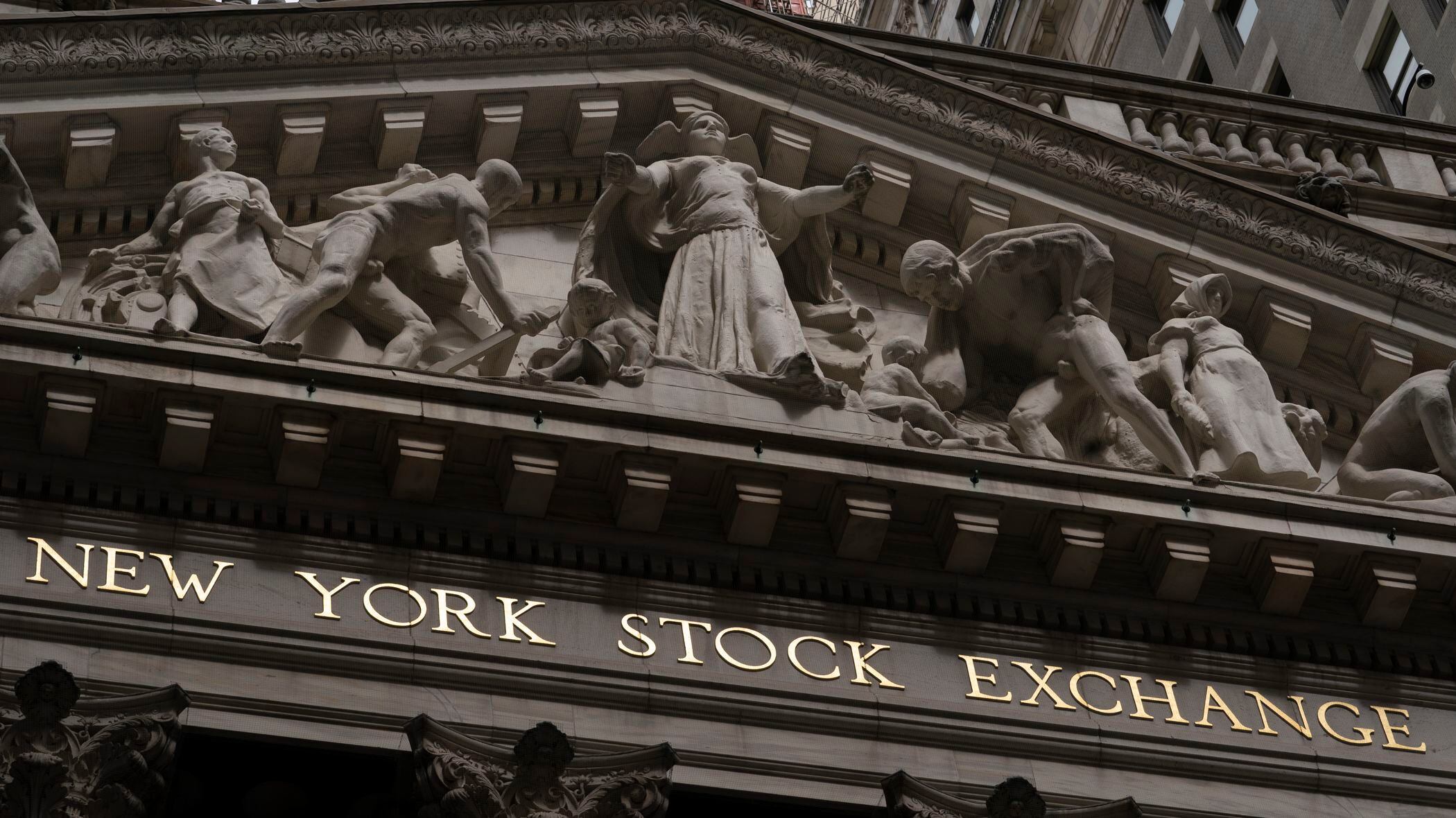
This May 24, 2021, file photo, shows the front of the New York Stock Exchange in New York. (AP Photo/Mark Lennihan, File)
By Damian J. Troise and Alex Veiga
Wall Street closed out a mostly listless week Friday with a wobbly day of trading that helped nudge the S&P 500 to its third straight weekly gain.
The benchmark index edged up 0.2% after spending much of the day in the red. The small uptick was enough to lift the S&P 500 to an all-time high for the second day in a row.
Technology companies and banks accounted for much of the upward move. The gains were offset by a broad slide in health care, energy and real estate stocks. Bond yields were mixed.
With the exception of select “meme” stocks like GameStop and AMC Entertainment hyped by individual investors in online forums, the broader market was relatively quiet this week. Investors remain in wait-and-see mode ahead of the Federal Reserve's upcoming meeting of policymakers Wednesday.
Wall Street is keen for clues about how much of a threat the central bank deems rising inflation as the economy emerges from its pandemic-induced recession, and whether the Fed has begun considering beginning to taper its support for the economy.
“No one is suggesting that it will be at this meeting, but the market is poised for the Fed to at least even tangentially suggest that they’re discussing" tapering, said Quincy Krosby, chief market strategist at Prudential Financial.
The S&P 500 rose 8.26 points to 4,247.44. The Dow Jones Industrial Average added 13.36 points, or less than 0.1%, to 34,479.60. The Nasdaq gained 49.09 points, or 0.4%, to 14,069.42. The tech-heavy index also notched a weekly gain.
Investors bid up shares in smaller company stocks. The Russell 2000 index picked up 24.40 points, or 1.1%, to 2,335.81. The index is up 18.3% this year, outgaining the S&P 500's advance of 13.1% and the Nasdaq's 9.2% gain.
Among the winning technology and financial stocks were chipmaker Nvidia, which rose 2.3%, and Wells Fargo, which gained 1.3%. Several retailers also rose. V.F. Corp., maker of Vans shoes and other apparel, climbed 4.7% for the biggest gain in the S&P 500, while Gap rose 3.2% and L Brands gained 2.3%.
Traders dumped shares in several health care companies after they issued disappointing development updates. Vertex Pharmaceuticals dropped 11% after telling investors it will end development of a potential treatment for a genetic condition that targets the liver. Incyte fell 5.7% as its potential eczema cream ruxolitinib faces a delayed regulatory review. The two stocks topped the list of decliners in the S&P 500.
Investors were relieved to see Thursday that a much-anticipated report showed that a big rise in consumer-level inflation last month was mostly attributed to temporary factors. That could mean less pressure on the Fed to pull back on its measures supporting the economy.
“You kind of have this notion that worries about inflation from the investor base might have peaked,” said Ross Mayfield, investment strategist at Baird.
A significant share of May’s rise in consumer prices was tied to the sale of used cars, which is largely attributed to purchases by rental car companies beefing up their fleets as people return to traveling.
Bond yields were mixed Friday, though the yield on the closely watched 10-year Treasury note was trading at 1.46%, down from 1.57% a week ago. Yields have been mostly headed lower this week despite reports showing more strength in the economy and possible signs of inflation.
The New York Times and President Donald Trump are fighting again. The news outlet said Wednesday it won't be deterred by Trump's “false and inflammatory language” from writing about the 79-year-old president's health. The Times has done a handful of stories on that topic recently, including an opinion column that said Trump is “starting to give President Joe Biden vibes.” In a Truth Social post, Trump said it might be treasonous for outlets like the Times to do “FAKE” reports about his health and "we should do something about it.” The Republican president already has a pending lawsuit against the newspaper for its past reports on his finances.
OpenAI has appointed Slack CEO Denise Dresser as its first chief of revenue. Dresser will oversee global revenue strategy and help businesses integrate AI into daily operations. OpenAI CEO Sam Altman recently emphasized improving ChatGPT, which now has over 800 million weekly users. Despite its success, OpenAI faces competition from companies like Google and concerns about profitability. The company earns money from premium ChatGPT subscriptions but hasn't ventured into advertising. Altman had recently announced delays in developing new products like AI agents and a personal assistant.
President Donald Trump says he will allow Nvidia to sell its H200 computer chip used in the development of artificial intelligence to “approved customers” in China. Trump said Monday on his social media site that he had informed China’s leader Xi Jinping and “President Xi responded positively!” There had been concerns about allowing advanced computer chips into China as it could help them to compete against the U.S. in building out AI capabilities. But there has also been a desire to develop the AI ecosystem with American companies such as chipmaker Nvidia.
U.S. sports betting is booming as NFL and college football fuel massive activity. BetMGM CEO Adam Greenblatt breaks down trends, growth, and what’s next.
President Donald Trump says a deal struck by Netflix last week to buy Warner Bros. Discovery “could be a problem” because of the size of the combined market share. The Republican president says he will be involved in the decision about whether federal regulators should approve the deal. Trump commented Sunday when he was asked about the deal as he walked the red carpet at the Kennedy Center Honors. The $72 billion deal would bring together two of the biggest players in television and film and potentially reshape the entertainment industry.
Disney's changes to a program for disabled visitors are facing challenges in federal court and through a shareholder proposal. The Disability Access Service program, which allows disabled visitors to skip long lines, was overhauled last year. Disney now mostly limits the program to those with developmental disabilities like autism who have difficulty waiting in lines. The changes have sparked criticism from some disability advocates. A shareholder proposal submitted by disability advocates calls for an independent review of Disney's disability policies. Disney plans to block this proposal, claiming it's misleading. It's the latest struggle by Disney to accommodate disabled visitors while stopping past abuses by some theme park guests.
With a merger this big, creators, studios, and theaters all face uncertain futures. Here’s what experts are worried about and what good could come from it.
With disengagement rising and hybrid work shifting, 'Everybody Matters' author Bob Chapman explains why treating people well could define the future of work.
We sat down with Ali Furman, U.S. Consumer Markets Industry Leader at consulting firm PwC to ask what trends she garnered from the initial data this year.