By Damian J. Troise and Alex Veiga

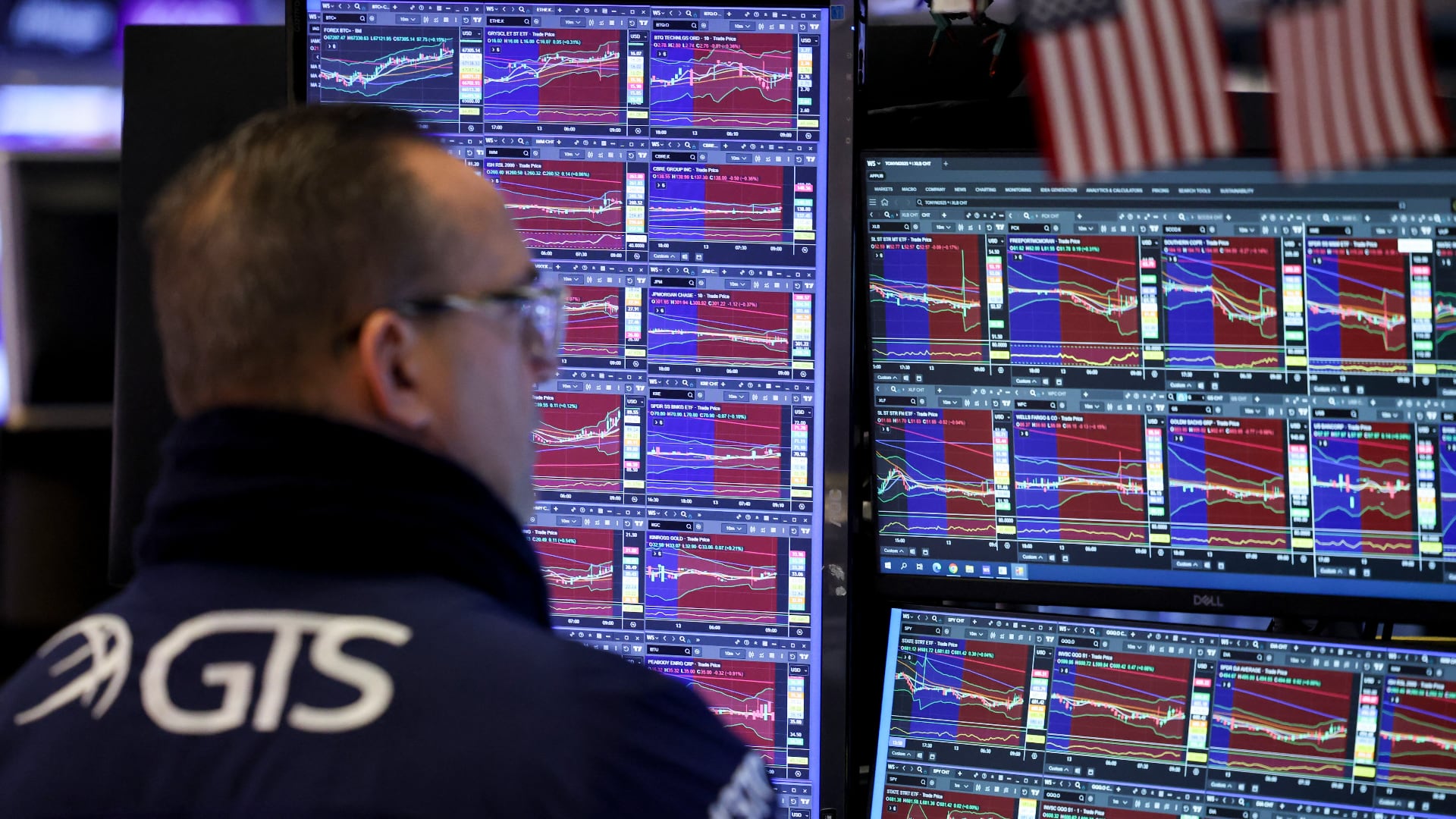
Stocks notched broad gains on Wall Street Monday, clawing back some of their losses following the market's worst weekly loss since October.

The S&P 500 rose 1.6%. The benchmark index was coming off a 3.3% slide last week, when volatility spiked as online traders hoping to inflict damage on hedge funds fueled a frenzy in GameStop and a few other stocks.

Investors large and small continued to focus those stocks Monday, and GameStop slumped 30.8% to $225 a share, the latest rocky ride for the stock, which ended last year at about $18.

Meanwhile, the price of silver jumped at one point to its highest level in eight years. Analysts said the precious metal became another target for online investors seeking to go up against big Wall Street players.

A measure of fear in the market, the VIX, fell Monday, suggesting some of last week's market jitters were easing, said Pauline Bell, analyst at CFRA Research.

“Today the market is sensing that the heightened volatility that we saw over the last week is reverting to a more settled type of volume,” Bell said. “The market is sensing the return to normalcy.”

The S&P 500 gained 59.62 points to 3,773.86. The Dow Jones Industrial Average rose 229.29 points, or 0.8%, to 30,211.91. The Nasdaq composite climbed 332.70 points, or 2.6%, to 13,403.39.

The gains were broad, with technology companies leading the way higher. Communication stocks and a variety of companies that rely on direct consumer spending such as Starbucks and AutoZone also helped lift the market.

Smaller companies also notched solid gains. The Russell 2000 index of small-cap stocks picked up 52.52 points, or 2.5%, to 2,126.16.

Monday's steep drop in GameStop echoed what has become a typical move for a company that has regularly seen double-digit swings most of the last two weeks. Trading of the retailer was still limited on trading platforms like Robinhood.

Silver for March delivery rose $2.50, or 9%, to settle at $29.42 an ounce. Some analysts called the price jump the latest assault by the smaller investors who sent GameStop soaring recently. But many of those same traders instead called it a trap set by hedge funds to divert their attention away from GameStop, as the saga captivating Wall Street gets even more dramatic.

While volatility eased Monday, analysts said the market is likely to remain choppy as small investors continue to play a bigger role in stock trading than they have in the past.

“Definitely having easy access to information, encouragement on social media and a very easy trading experience has gotten more people involved,” said Sunitha Thomas, national portfolio advisor at Northern Trust Wealth Management. “All of that combined is going to lead to more volatility as investors with a shorter outlook are a bigger part of the daily trading volume.”

Investors are watching negotiations in Washington over President Joe Biden’s proposed $1.9 trillion economic aid package. Hopes for aid, along with the Federal Reserve’s pledge to keep low-cost credit plentiful, have carried the S&P 500 and other major indexes to record highs.

“Ultimately, what’s going to drive this recovery is consumer spending coming back,” Thomas said.

Investors bid up stocks heading into 2021 in expectation the rollout of coronavirus vaccines would allow global business and travel to return to normal. That optimism has been dented recently by new infection spikes and disruptions in vaccine deliveries.

Markets were rattled last week by AstraZeneca’s announcement it would supply the European Union with fewer than half the promised doses, which prompted the EU to impose export controls. On Sunday, AstraZeneca promised to increase European supplies and start delivery earlier. This helped boost shares of European companies on Monday. Germany's DAX rose 1.4%, France's CAC-40 gained 1.2% and the U.K.'s FTSE-100 added 0.9%.

The yield on the 10-year Treasury rose to 1.08% from 1.07% late Friday.

Updated on February 1, 2021, at 5:17 p.m. ET.

Share:
More In Business
Can Democrats Capitalize on Infrastructure?
Tanya Snyder, transportation reporter at Politico, joins None of the Above with J.D. Durkin to discuss the bipartisan infrastructure law, what it means for the electric vehicle industry and whether Democrats will be able to capitalize on the legislative victory ahead of the 2022 midterms.
Twitter and S&P 500 to Monitor Bullish and Bearish Tweets on Sentiment Index
Twitter announced a partnership with S&P Dow Jones Indices on Thursday to build the S&P 500 Sentiment Index for monitoring the performance of 200 S&P members based on tweets with company $cashtags. Jared Podnos, strategic market development lead at Twitter, and Peter Roffman, global head of innovation and strategy at S&P Dow Jones Indices, joined Cheddar to provide some background on the partnership and to explain exactly how monitoring companies through public opinion will work. "[The S&P] taps into this conversation. They understand the real-time conversation as well as the historical trends, and then we can analyze that and understand the consumer sentiment and really build these innovative products around that conversation," Podnos added.
Stocks Close Mixed, S&P 500 and Nasdaq Close at Record Highs
Stocks closed mixed today, with the S&P 500 and the Nasdaq both notching record closing highs. Veronica Willis, investment strategy analyst at the Wells Fargo Investment Institute, joins Cheddar News' Closing Bell to discuss today's close, recent inflation data, rising oil prices, and more.
How Beauty Giant COTY Adapted as the Pandemic Accelerated E-Commerce
Jean-Denis Mariani, the chief digital officer at COTY, the parent company for major brands like Bottega Veneta, Burberry, and Kylie Skin, joined Cheddar to talk about the impact of the pandemic on the beauty industry and the rapid shift to e-commerce sales. "There is no digital strategy anymore, only strategy in a digital world," he said. Mariani also talked about personalized makeup selection for consumers as the beauty sector begins to incorporate technology like artificial intelligence.
Ford Partners With GlobalFoundries to Gain Control Over Semiconductor Chip Supply
Amid an ongoing global semiconductor chip shortage, American automaker Ford has decided to open up supply chains of its own. Karl Brauer, an executive analyst at iSeeCars.com, joined Cheddar to discuss Ford's new partnership with multinational semiconductor maker GlobalFoundries to build those chips domestically. Brauer praised Ford for the move both for ongoing supply woes and the future of automobile manufacturing. "It's not just the supply chain," he said. "It's not just about getting chips, but maybe getting chips that are more customized and specific to your needs."
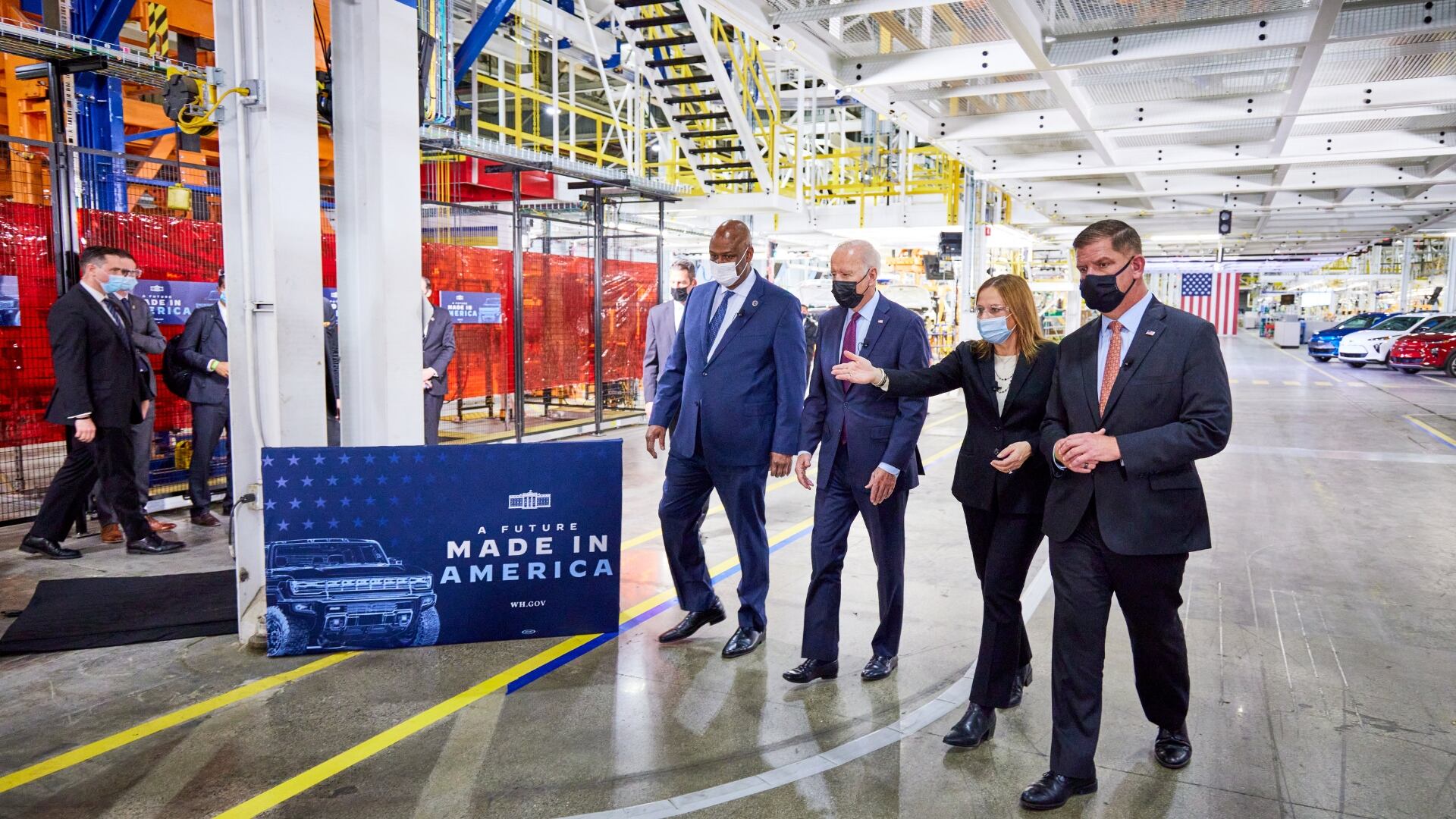
GM Expanding EV Manufacturing with Factory ZERO
Gerald Johnson, Executive VP, Global Manufacturing and Sustainability at General Motors, joins Cheddar News to break down what Factory ZERO signifies for GM's all-electric future and why the auto manufacturer will be a leader in the growing EV industry.
Founder of Best Buy on The State of Entrepreneurship in the U.S.
According to the U.S. Labor Department, a record 4.4-million people quit their job in September, with data showing there are seven unemployed workers for every ten job openings. However, Americans aren't just quitting their jobs for more suitable ones, many are embracing their entrepreneurial side, leaving to start their own business. Dick Schulze, founder of Best Buy joined Cheddar's Opening Bell to discuss.
Airlines Prepare For Holidays With Labor Shortage, High Demand
Airlines are gearing up for a busy winter season as they continue to rebound from the pandemic. But jet fuel prices combined with the ongoing labor shortage could put a damper on those holiday gains. Christian Vernet, president of La Compagnie, the only all business class airline in the world, joined Cheddar for an update on the state of the airline industry and how it's dealing with the surge in demand after the U.S. reopened its border to international visitors.
Load More