By Damian J. Troise, Stan Choe, and Paul Wiseman
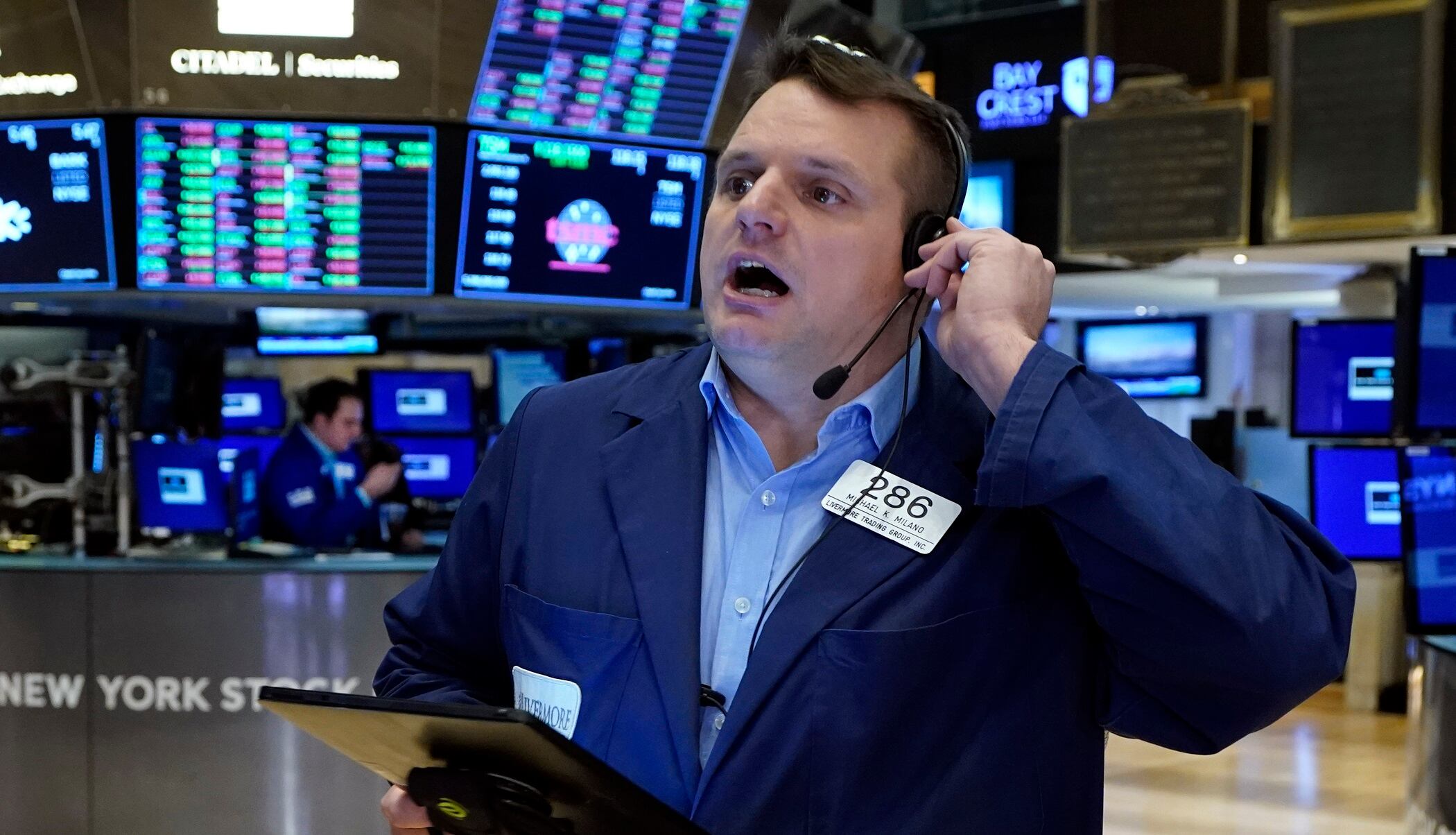
Wall Street steadied itself Monday after last week's stock market slide caused by the newest coronavirus variant, with investors now waiting for more clues about just how much damage it may do to the economy.
The S&P 500 rose 1.3% to recover more than half of its drop from Friday, which was its worst since February. Bond yields and crude oil also recovered chunks of what they lost in traders' knee-jerk reaction to run toward safety and away from risky investments.
With vaccines in hand — and with the benefit of a weekend to mull whether Friday’s sharp market moves were overdone — analysts said the world may be in better position to weather this newest potential wave. Plus, Friday’s tumble for markets may have been exacerbated by many traders taking the day off following Thanksgiving.
But while the market steadied itself, uneasiness still hangs over it due to the discovery of the variant now known as omicron. The variant appears to spread more easily, and countries around the world have put up barriers to travel in hopes of stemming it. Still to be seen is how effective vaccines currently available are for the variant, and how long it may take to develop new omicron-specific vaccines.
“There are still more questions than answers regarding the new variant,” said Ryan Detrick, chief market strategist for LPL Financial. “At the same time, we’ve been living with COVID-19 for almost 20 months now, and we’ve seen multiple variants.”
Given the uncertainty, the Dow Jones Industrial Average wavered between a loss of 3 points and a gain of 388 points through the day. It ended with a gain of 236.60 points, or 0.7%, at 35,135.94.
The most powerful lift for stocks came from those that have been able to grow strongly almost regardless of the economy’s strength or pandemic’s pall. Gains for five big tech-oriented stocks — Microsoft, Tesla, Apple, Amazon and Nvidia — alone accounted for more than a third of the S&P 500’s rise. The gains for tech-oriented stocks also helped to drive the Nasdaq composite up a market-leading 1.9%.
Moderna jumped 11.8% for the biggest gain in the S&P 500, adding to an even bigger gain from Friday, after it said it’s testing the effectiveness of its vaccine against omicron. Its CEO said in a televised interview on ABC that it could take two to three months for a vaccine developed specifically for the variant to begin manufacturing.
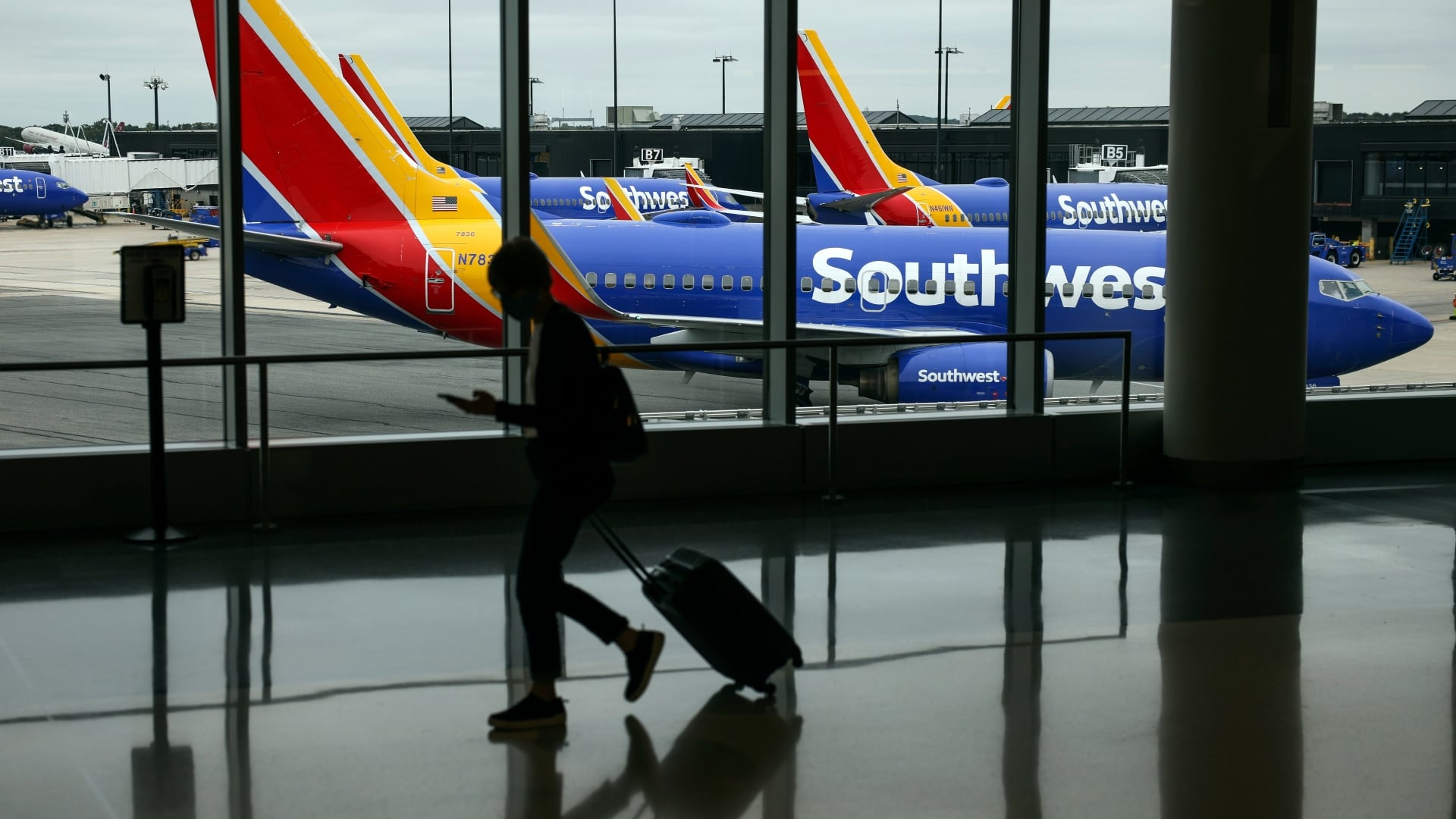
Travel-related stocks started the day with gains but fell back as more caution filtered into the market and as travel restrictions around the world remained in force. They ended mixed after President Joe Biden said he wasn't considering a widespread U.S. lockdown. He said the variant was a cause for concern and “not a cause for panic.” Delta Air Lines and American Airlines closed slightly lower, while cruise line operators Carnival and Norwegian Cruise Line notched gains.
All told, the S&P 500 rose 60.65 points to 4,655.27, while the Nasdaq added 291.18 points to 15,782.83. The Russell 2000 index of small companies was headed for its own rebound after climbing 1.6% in the early going, but its gains faded by late afternoon. The index slipped 3.96 points, or 0.2%, to 2,241.98.
“Because so much is still unknown about the omicron variant, it could take us a week or more to recover what we lost in a single day,” said Sam Stovall, chief investment strategist at CFRA.
The yield on the 10-year Treasury rose to 1.51% from 1.49% late Friday, recovering some of its steep slide from 1.64% that day. It tends to rise and fall with expectations for the economy’s strength and for inflation.
The VIX, an index that measures how worried investors are about upcoming drops for the S&P 500, also eased significantly. But it's not all the way back to where it was before omicron.
Besides waiting on more clues about how much economic damage omicron will ultimately do, the market has several big mileposts this week that could swing prices. The headliner is likely Friday's jobs report, where economists expect to see an acceleration in hiring by employers during November.
Omicron adds more risk to a global economy already contending with paralyzing uncertainty. Travel bans, including recent decisions by Japan and Israel to bar foreign visitors, threaten to disrupt global business. Global supply chains already gummed up by bottlenecks could be further ensnarled if outbreaks shut down factories, ports and freight yards.
Shipping problems would risk pushing prices higher, adding to inflation pressures. In response, the world’s central banks could raise interest rates and imperil the recovery from last year’s brief but intense coronavirus recession.
“Omicron reinforces that the economy remains tethered to the pandemic,’’ Mark Zandi, chief economist at Moody’s Analytics, said on Twitter Monday. “With each new wave of the pandemic, the economy will suffer slower growth and higher inflation.’’
The U.S. economic recovery lost significant momentum when the highly contagious delta variant hit over the summer. Economic growth slowed to an annual rate of 2.1% from July through September from 6.7% from April through June and 6.3% from January through March. The S&P 500 had its worst onth of the year in September, falling 4.8%.
Still, more Americans are vaccinated now, and the economy has shown resiliency, regaining speed after the summer slowdown. Zandi tweeted that “the most likely scenario is the economy will manage through each wave better than the one before it.’’
Of course, the only way to know which scenario will ultimately occur is to wait to see it through. And that uncertainty in the meantime could lead to more up-and-down swings for the stock market, which has surged more than 24% this year and set a record as recently as Nov. 18.
“We’re just going to be in the dark for several weeks here,” LPL's Detrick said.
___
AP Business Writer Alex Veiga in Los Angeles contributed.
Updated on November 29, 2021, at 4:59 p.m. ET.