By Stan Choe, Damian J. Troise, and Alex Veiga
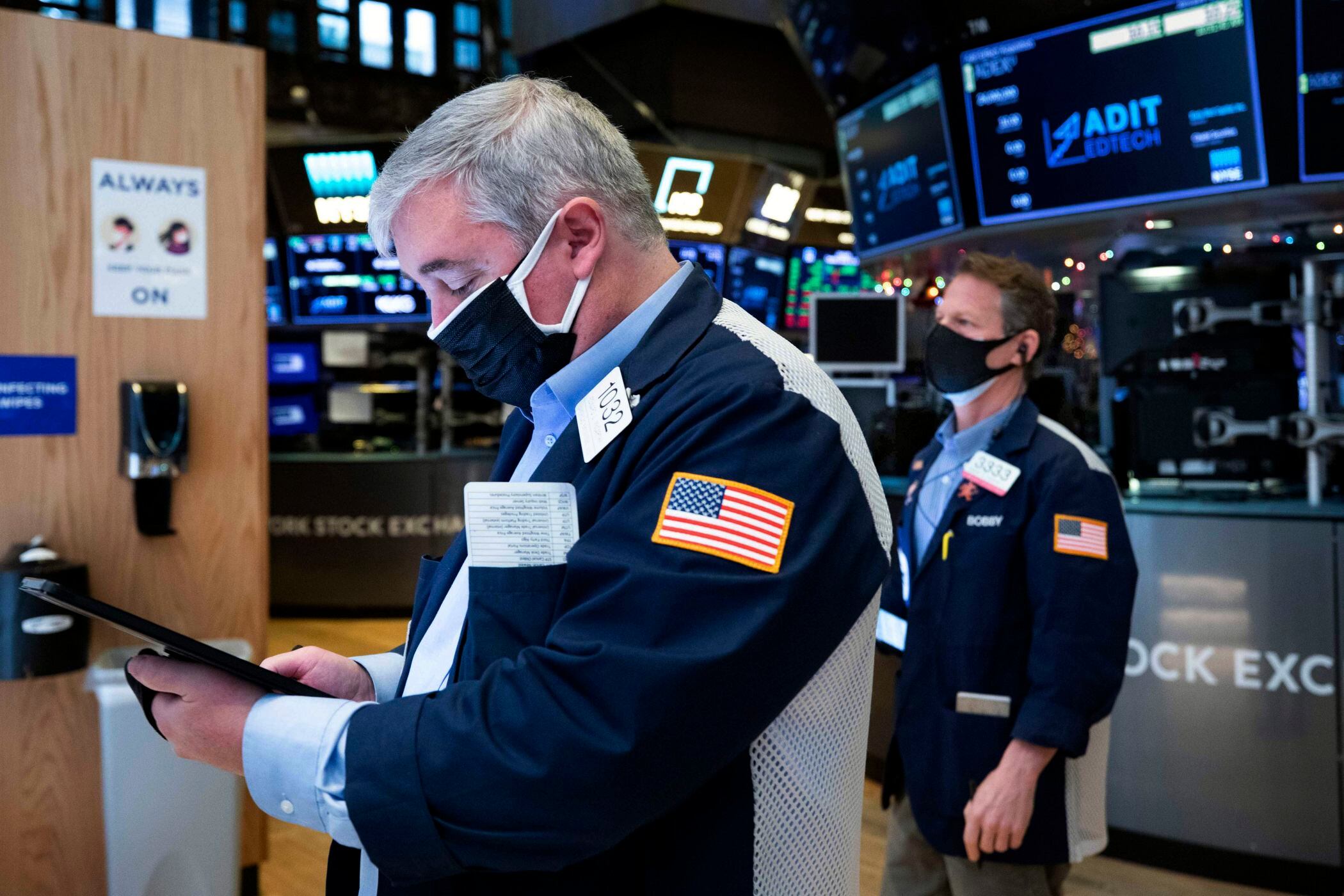
Wall Street capped a wobbly day of trading Tuesday with modest gains, while Treasury yields extended their recent rally.
The S&P 500 inched up less than 0.1% after flipping between small gains and losses for much of the day. About 62% of companies in the index rose, with energy sector stocks notching the biggest gain as crude oil prices rose. Companies that rely on consumer spending also helped lift the market, outweighing declines in health care, communications and technology stocks.
Small-company stocks continued to outpace the rest of the market by a wide margin, a sign that investors are becoming more optimistic about an economic rebound. The Russell 2000 small-cap index climbed to a record high.
Banks and other financial companies added to recent gains as Treasury yields marched higher for the sixth straight day amid expectations that the economy will pull out of its slump after a powerful recovery sweeps the globe later this year. Bond yields can influence interest rates on mortgages and other consumer loans, boosting bank revenue.
“The odds of additional stimulus have gone up and we’re seeing some of the sectors that are likely beneficiaries being rewarded in terms of price movement," said Sal Bruno, chief investment officer at IndexIQ.
The S&P 500 rose 1.58 points to 3,801.19. The Dow Jones Industrial Average gained 60 points, or 0.2%, to 31,068.69. The Nasdaq composite added 36 points, or 0.3%, to 13,072.43. The three indexes remain close to the all-time highs each set on Friday.
Markets have been charging higher recently amid a wave of optimism about the future. The rollout of coronavirus vaccines has Wall Street anticipating a big rebound for the economy and corporate profits as daily life starts to return toward normal later this year. Expectations are also rising for another round of stimulus coming for the economy because Democrats are set to soon have control of the White House, Senate, and House.
But the gains have been so big that critics say stocks and other investments simply look too expensive. Some measures of value in the stock market are at their priciest levels since 2000 when the dot-com bubble was popping. That includes how much investors are paying for each $1 in profits that a company produces.
Low interest rates and almost nonexistent inflation have been encouraging investors to keep piling into stocks, even though their prices are rising faster than their profits. But longer-term interest rates have begun to pull higher with expectations for more borrowing by the U.S. government, economic growth, and possibly inflation in the future. The yield on the 10-year Treasury briefly hit 1.18% Tuesday, before easing back to 1.14%. That’s up from 1.12% late Monday and from less than 0.90% at the start of the year.
“I wonder whether as the economy reopens and consumer confidence comes back does that further push rates up and challenge the justification of these values,” said Andrew Slimmon, portfolio manager at Morgan Stanley Investment Management.
Besides driving investors away from pricey stocks, higher interest rates can also make borrowing more expensive and hit the housing and other industries particularly hard. That could mean additional pressure on the Federal Reserve, which has been trying to keep interest rates low to jolt the economy out of its pandemic-caused weakness.
The Fed has held short-term interest rates at a record low of nearly zero and bought all kinds of bonds in its drive to help the economy. Its next policy meeting on interest rates is in two weeks.
And despite all the hopes for the future, the present remains bleak. The pandemic is accelerating around the world, particularly as new and potentially more contagious variants of the coronavirus spread. That helped force U.S. employers to cut more jobs than they added in December, the first month that’s happened since the economy was collapsing during the spring.
Energy stocks made broad gains as crude oil prices advanced. Occidental Petroleum climbed 12.6% for the biggest gain in the index, while Marathon Oil rose 9.8%.
General Motors jumped 6.2% amid excitement about a business unit it's creating to sell electric-powered delivery vehicles and equipment.
Stocks of smaller companies also rallied. The Russell 2000 index of small-caps gained 36.95 points, or 1.8%, to 2,127.96, a record high. They've been leading the market in recent weeks as investors see them benefiting much more from a healthier economy than behemoth stocks that managed to largely sustain themselves through the pandemic.
“You’re starting to see value stocks and financials putting in a consistent outperformance versus growth stocks,” Slimmon said. “But, as rates move higher that thesis becomes more challenged.”
On the losing end were several of those Big Tech stocks that cruised as work-from-home and other trends beneficial to them boosted their profits. Microsoft slipped 1.2%, Facebook fell 2.2% and Google's parent company dipped 1.1%.
Profits will be in focus on Wall Street in upcoming weeks as companies report how much they made during the last three months of 2020. Banks are among the first to report, with several scheduled for Friday. Across the S&P 500, analysts are forecasting a sharp drop in earnings of nearly 9% from a year earlier.
Also hanging over the market will be political uncertainty. Democrats are pushing for the removal of President Donald Trump after his words incited a mob of loyalists to storm the Capitol last week. The FBI is also warning of plans for armed protests across the country in the days leading up to President-elect Joe Biden’s inauguration next week. .
Investors for the most part have been looking past such acrimony and violence, though. They've chosen to focus instead on the economic recovery they see as on the way.
In Europe, stock markets were modestly lower. Asian markets were mixed.
___
AP Business Writer Joe McDonald contributed
Updated on January 12, 2021, at 5:15 p.m. ET.