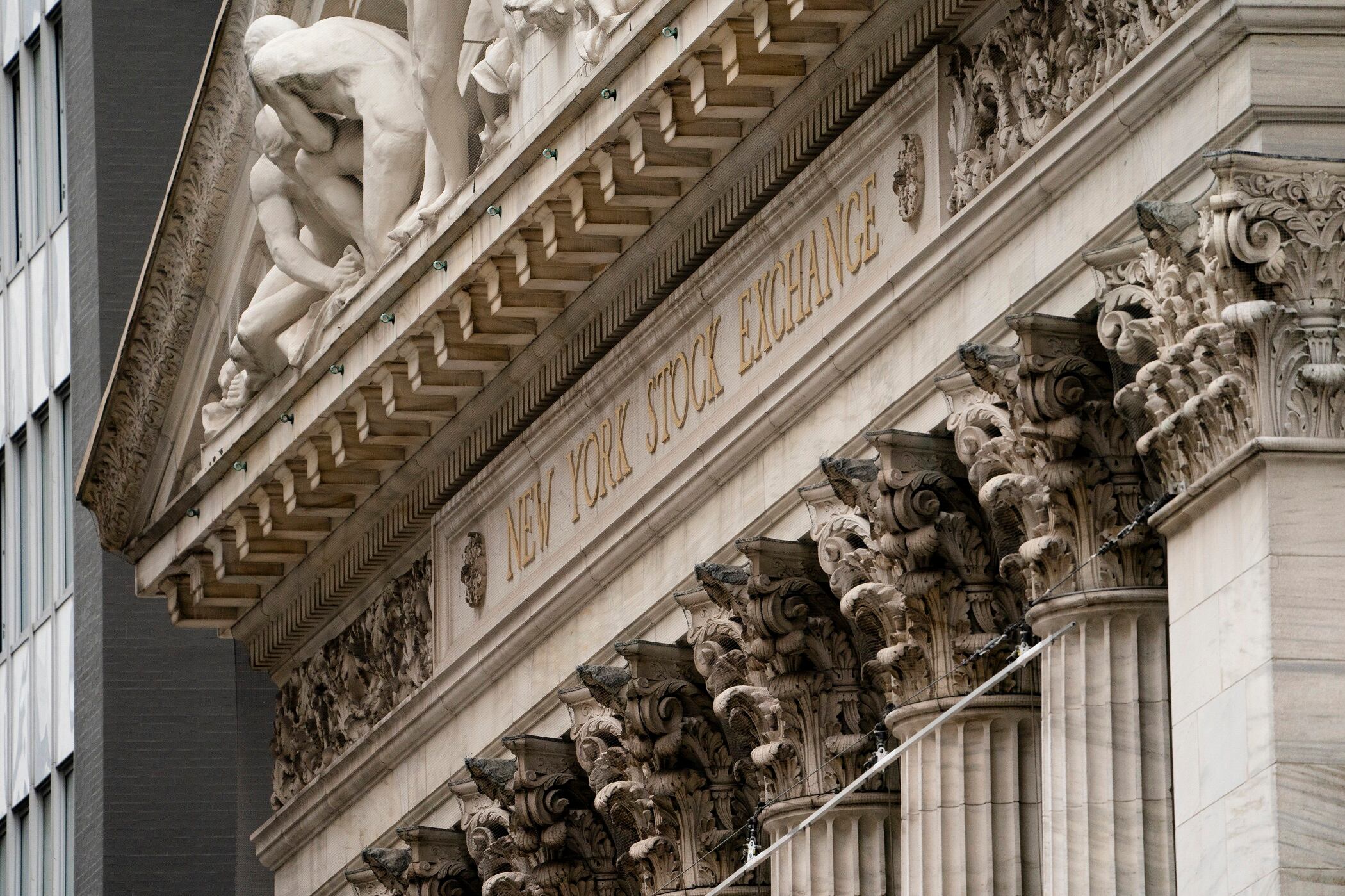
Logos the New York Stock Exchange adorn trading posts, on the floor, Wednesday, March 16, 2022. (AP Photo/Richard Drew)
By Stan Choe and Alex Veiga
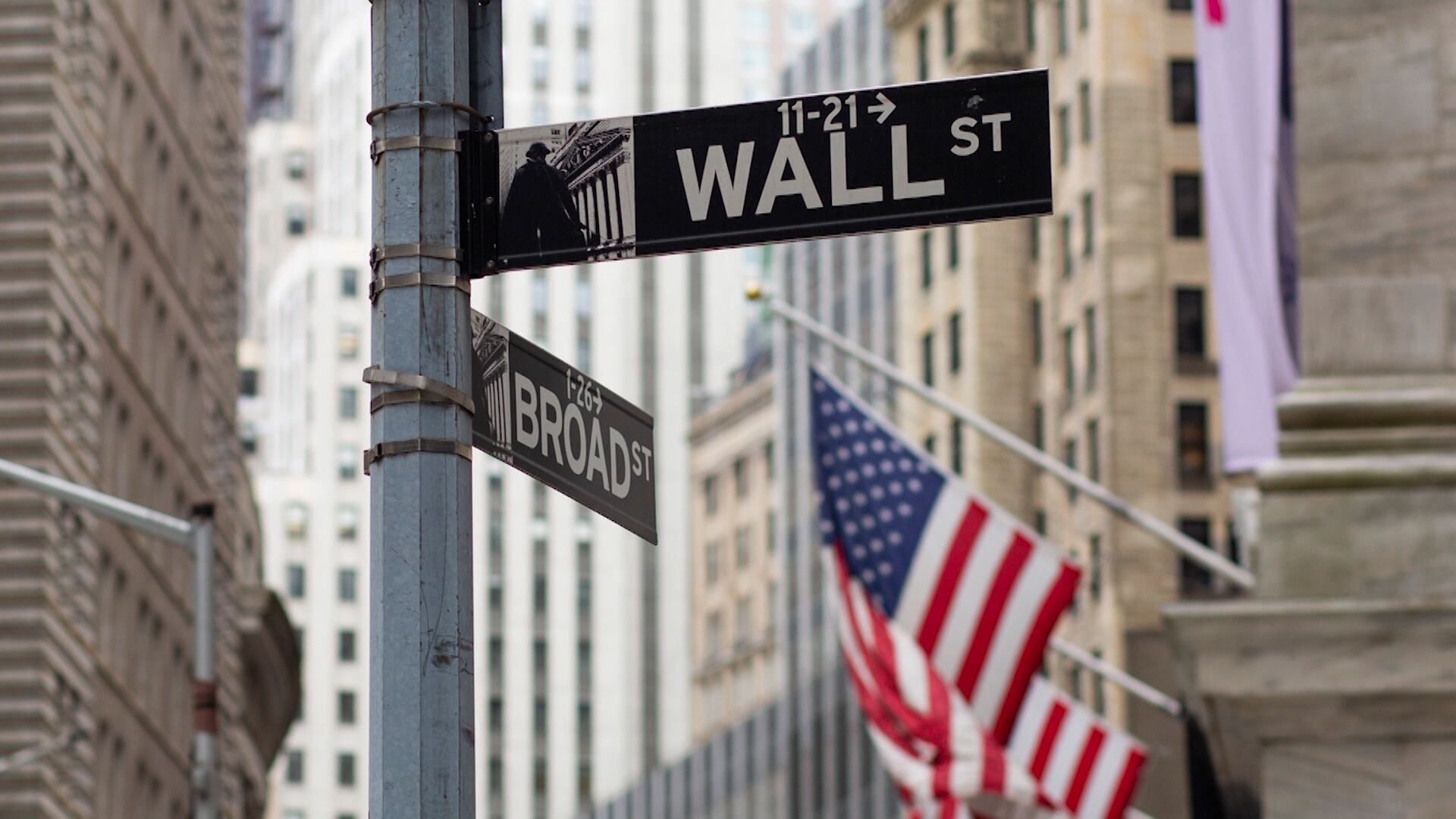
Stocks tumbled on Wall Street Friday, leaving the S&P 500 with its biggest one-day loss in almost seven weeks, as worries deepen about a surge in interest rates and the U.S. central bank’s efforts to fight inflation.
Several disappointing profit reports from companies also shook what’s been the market’s main pillar of support.
The S&P 500 sank 2.8% and marked its third losing week in a row. The Dow Jones Industrial Average slumped 2.8%, its biggest drop in 18 months, after briefly skidding more than 1,000 points. The Nasdaq also had its worst day in nearly seven weeks, closing 2.6% lower.
A day earlier, Wall Street seemed set for healthy gains for the week after American Airlines, Tesla and other big companies reported strong profits or better forecasts for future earnings than analysts expected. Such corporate optimism has helped stocks remain relatively resilient, even as worries swirl about the highest inflation in decades, the war in Ukraine and the coronavirus.
But markets buckled as the chair of the Federal Reserve indicated the central bank may indeed hike short-term interest rates by double the usual amount at upcoming meetings, starting in two weeks.
The Fed has already raised its key overnight rate once, the first such increase since 2018, as it aggressively removes the tremendous aid thrown at the economy through the pandemic. It's also preparing other moves to put upward pressure on longer-term rates.
By making it more expensive for businesses and households to borrow, the higher rates are meant to slow the economy, which should hopefully halt the worst inflation in generations. But they can also trigger a recession, all while putting downward pressure on most kinds of investments.
“After years of being very accommodative, the Fed has made it clear that policy is going to be tighter for the foreseeable future,” said Brian Price, head of investment management for Commonwealth Financial Network. “Their hawkish stance is giving investors pause as many are left to evaluate the impact on profit margins and (stock) multiples moving forward.”
The S&P 500 fell 121.88 points to 4,271.78. The Dow dropped 981.36 points to 33,811.40. The Nasdaq lost 335.36 points, closing at 12,839.29. The Dow and Nasdaq also posted losses for the week.
Smaller company stocks also fell sharply. The Russell 2000 slid 50.80 points, or 2.6%, to 1,940.66.
A preliminary report on Friday indicated the U.S. services industry's growth is slowing, hurt in particular by surging costs for fuel, wages and other expenses.
Treasury yields have soared as investors prepare for a more aggressive Fed, and stocks have often moved in the opposite direction of them. The yield on the 10-year Treasury slipped to 2.90% from 2.91% late Thursday, but remains close to its highest level since 2018. It began the year at 1.51%.
The two-year Treasury yield, which moves more on expectations for Fed action on short-term rates, has zoomed even more. It was at 2.69% late Friday after more than tripling from 0.73% at the start of the year.
Markets around the world are feeling similar pressure on rates and inflation, particularly in Europe as the war in Ukraine pushes up oil, gas and food costs.
On Wall Street, most stocks fell, including more than 95% of the companies in the S&P 500. Technology and health care companies were among the biggest weights. Apple fell 2.8% and Microsoft dropped 2.4%.
HCA Healthcare slumped 21.8% for the biggest decline in the S&P 500 after reporting weaker earnings per share for the latest quarter than analysts expected. The hospital operator also cut its forecasted ranges for revenue and earnings this year.
Verizon Communications slid 5.6% after it said it expects earnings for the year to fall at the lower end of the range it had previously forecast. The company also reported slightly weaker revenue than expected for the first three months of the year.
Retailer Gap sank 18% after it cut its forecast for sales for the current fiscal quarter and said the CEO of its Old Navy business will leave the company.
The disappointing company earnings and outlooks, plus Powell’s remarks Thursday, have ratcheted up worries for investors already trying to navigate economic uncertainty over the lingering global supply chain issues, the pandemic and the war in Ukraine, said Greg Bassuk, CEO of AXS Investments.
“Looking ahead, that’s putting a sour taste in investors’ mouths around the likelihood of corporate earnings being stronger for the balance of 2022,” he said.
___
AP Business Writer Yuri Kageyama contributed. Veiga reported from Los Angeles.
___
AP Business Writer Yuri Kageyama contributed. Veiga reported from Los Angeles.
At-home medical labs company Getlabs raised $20 million in a Series A round, led by Emerson Collective and the Minderoo Foundation. Getlabs aims to be the boots-on-the-ground partner to telehealth. The company says more than 70% of medical decisions still require collecting diagnostic tests in person, and that it fills that void by delivering health care directly to their patients' homes. Founder & CEO of Getlabs Kyle Michelson joined Cheddar News' Closing Bell to discuss.
The White House laid out plans for a $5 billion investment into a national network of charging stations to ease EV driving anxiety. Bruce Brimacombe, CEO of EV infrastructure GOe3 joined Cheddar News to discuss how much needs to be done for drivers to get over the fear of running out of energy. "People need to be able to do what they're doing now," he said. "But that is the way that if you're going to buy an electric car, you got to feel like you're not changing your world." Brimacombe noted that building out the infrastructure between cities was GOe3's own focus.
U.S. automakers are saying that the blockade of the Ambassador Bridge, a crucial border crossing between the U.S. and Canada, is affecting their production lines. Michelle Krebs of Cox Automotive warns that the disruption "couldn't come at a worst time," amid chip and labor shortages in Detroit.
AND DETROIT-BASED AUTO MAKERS SAY THEY ARE SHUTTING DOWN PLANTS OR SCALING BACK PRODUCTION BECAUSE OF PARTS SHORTAGES.
Sonos reported better than expected Q1 earnings amid chip shortage with the release of its Roam product. CFO Brittany Bagley joined Cheddar News to discuss the smart speaker maker's successful report and its plans to hit its 2024 targets as people leave their homes as pandemic restrictions ease. "Even as people head out in the world, it doesn't mean they don't like to listen to music at home or watch a streaming movie at home," she said. "So there's still a real role for us and our products in peoples lives, sort of, no matter what else they're doing."
Lynn Martin, president of the NYSE Group, explains why investors at the New York Stock Exchange should still feel confident despite the recent Wall Street volatility and discusses the landscape for 2022 when it comes to IPOs and retail investors.
The merger of WarnerMedia and Discovery received Justice Department approval on Wednesday, and Patty Hirsch, EVP of consumer and digital platforms at WarnerMedia, joined Cheddar News to discuss current and future offerings from the media conglomerate that will control both HBO Max and Discovery+. "Content really drives so much, and CNN has always had a very long history of creating an incredible documentaries, incredible content … and this service I think is going to ultimately provide the kind of content consumers want and the kind of content that consumers are going are going to pay for," she said. Hirsch also discussed NFTs in use through its Turner Sports and DC brands.
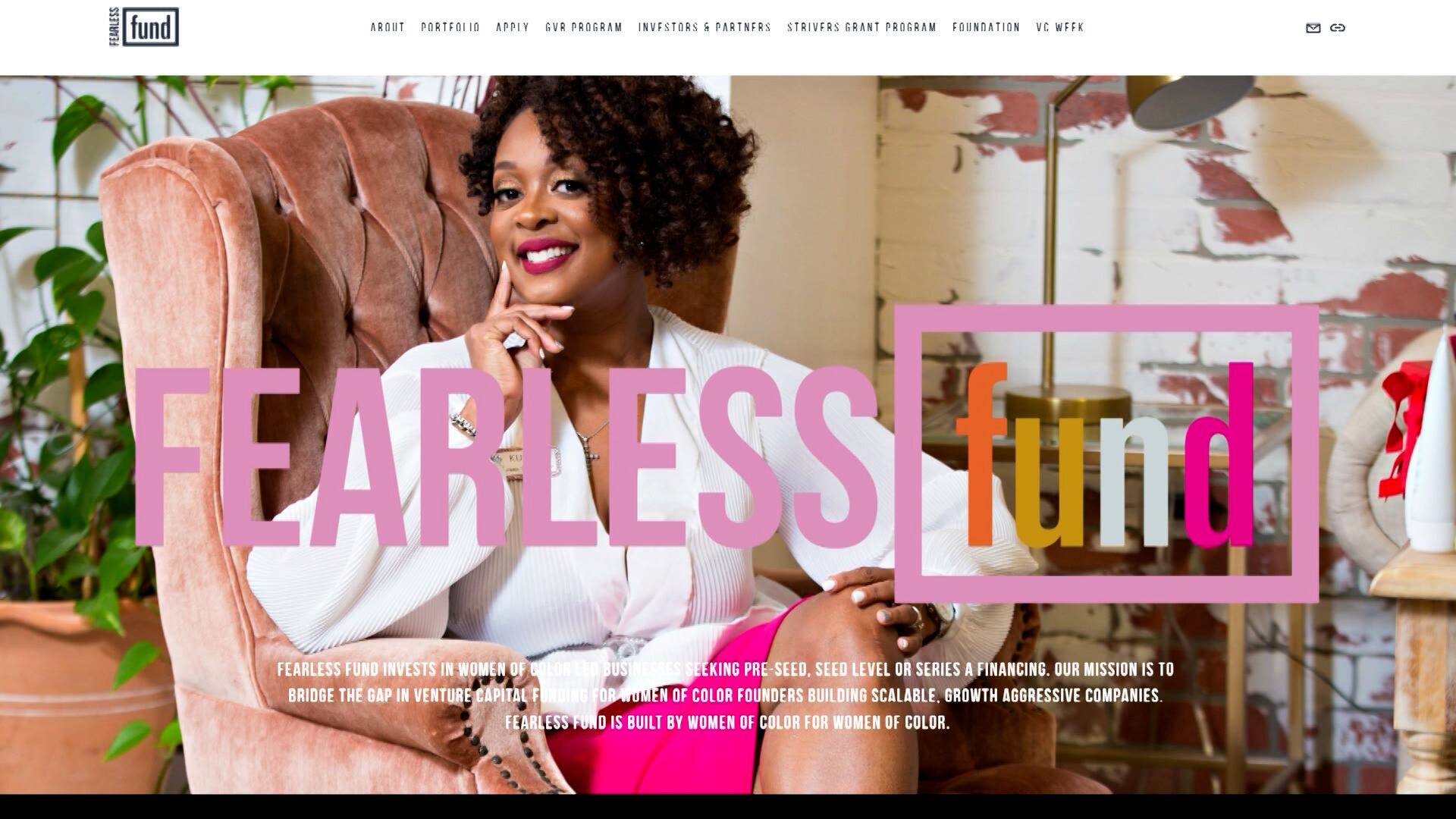
Black entrepreneurs lead the way in the creation of new businesses, but they often cannot get the necessary funding to get their business off the ground. The Fearless Fund is on a mission to change that, and help Black business owners get venture capital. The fund also offers a unique grant program meant to help entrepreneurs with growth, peer coaching, and more, including grants between $10,000 and $20,000. Arian Simone, Co-Founder and General Partner of Fearless Fund, joins Closing Bell to discuss the Fund's mission, how it helps Black entrepreneurs, and more.
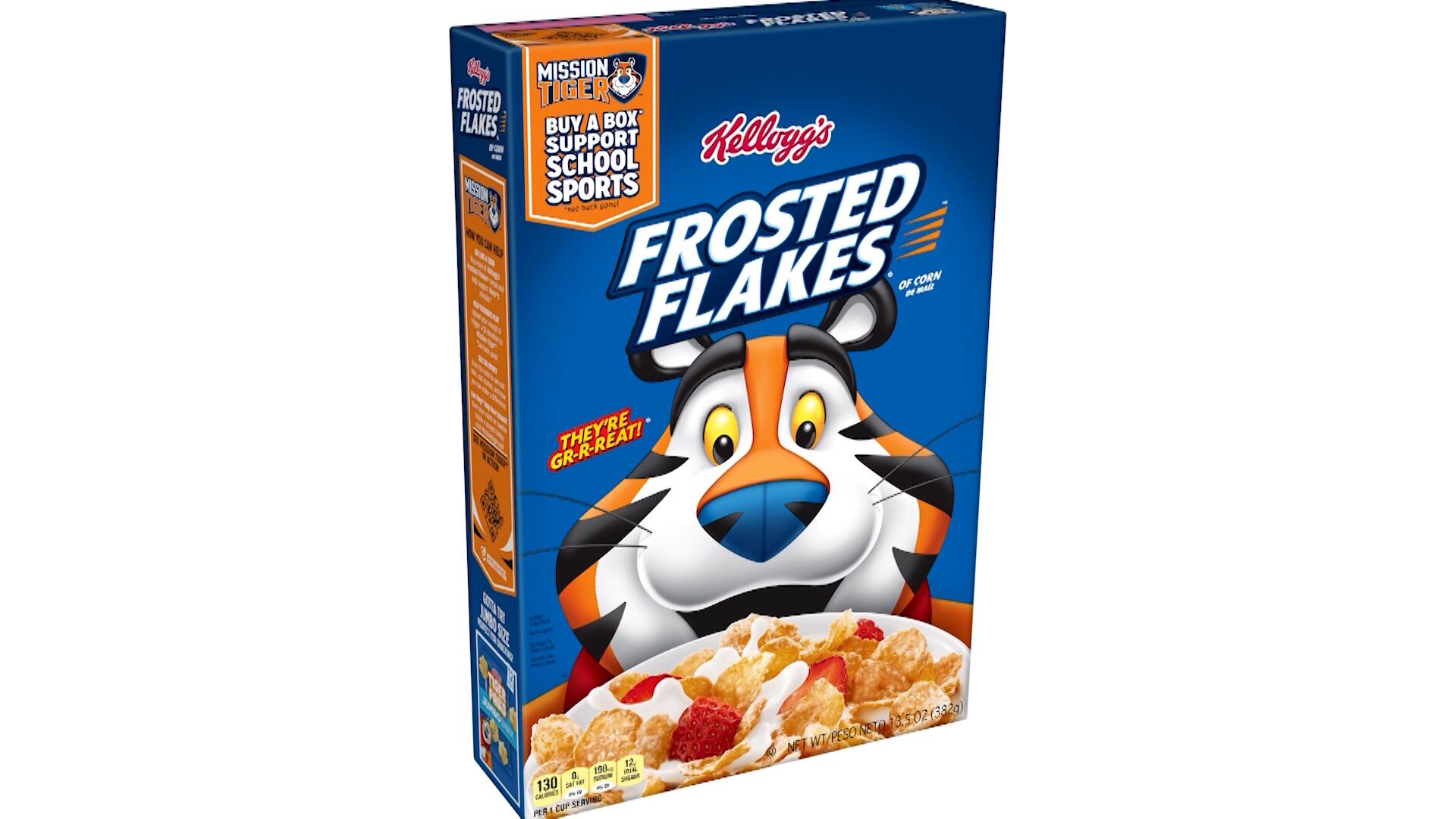
Multinational food company Kellogg’s reported an earnings beat amid supply chain issues and an extended labor strike. Kellogg’s Chairman and CEO c joined Cheddar News to discuss overcoming the obstacles and what's to come for the company. "The first half of the year is really going to be one about rebuilding inventory, and into the second quarter, starting to reestablish promotional activity for our customers and our consumers," Cahillane said. "And then the back half of the year, obviously, we're really much more back in business, and we expect to exit the year with our business in cereal being just as strong as it's ever been."
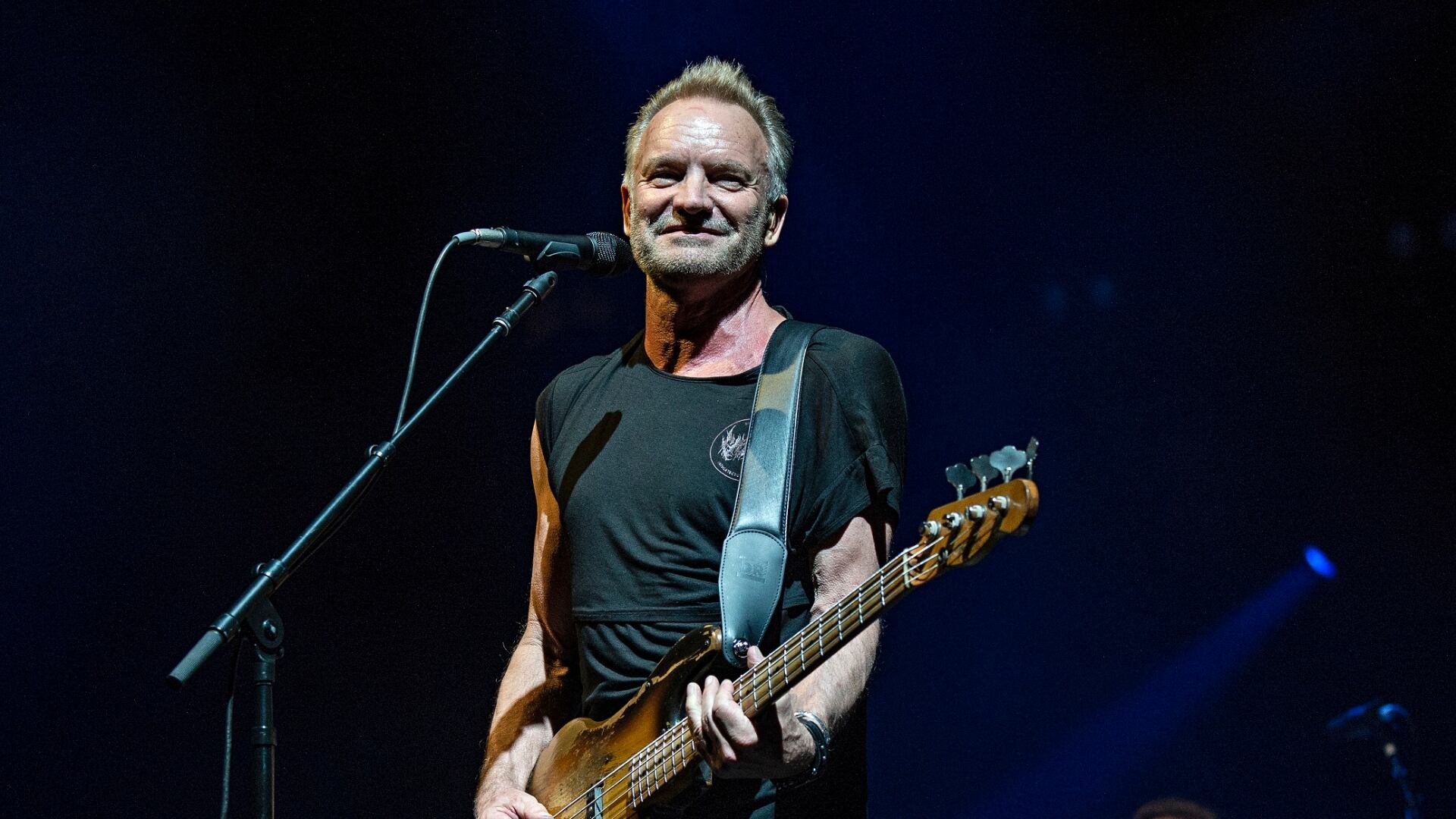
Sting has sold his catalog of more than 600 songs for $300 million to Universal Music. The deal gives the label the rights to all of his work, including “Every Breath You Take," as well as all future royalties.
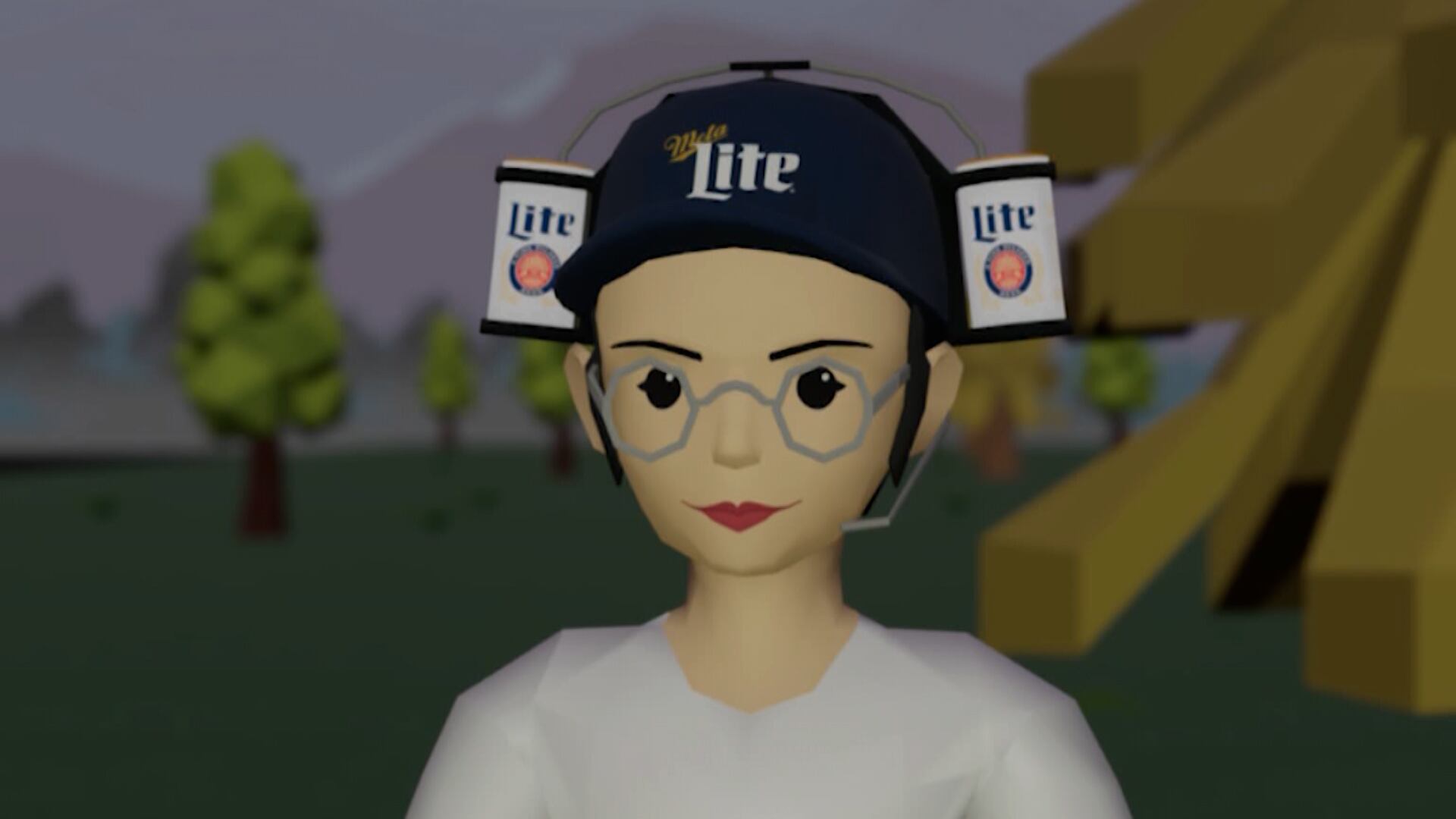
Miller Lite is opening the first branded bar in the metaverse, by way of Decentraland, as a way to advertise during the Super Bowl this year without buying an expensive TV commercial slot. Sofia Colucci, global vice president of Miller Family of Brands, joined Cheddar to talk about the new marketing concept. "We have a lot of great partnerships with NFL teams throughout the year but were shut out of advertising during the Super Bowl game, so this pushes us to think creatively and also think of what feels really relevant right now," Colucci said. "There's no question that there's a lot of excitement with the metaverse, and we wanted to participate but in a way that felt right for Miller Lite."