By Stan Choe

Stocks are pumping higher in early trading on Wall Street Tuesday, and the S&P 500 is cruising toward its first three-day winning streak in a month.

European stocks were also strong, as markets turned higher following a mixed Asian performance. The price of U.S. oil remained wild, though, and it swung through more extremes as storage tanks come closer to hitting their limits.

With massive aid in place for the economy from central banks and governments, stocks have been building higher in recent weeks on anticipation that stay-at-home orders will gradually lift. U.S. states and nations around the world are going at their own speeds, but the removal of restrictions would allow businesses to get back into some type of gear, even if it’s only first, after the global economy essentially slammed shut.

The S&P 500 was up 0.8%, as of 10:05 a.m. Eastern time. The Dow Jones Industrial Average gained 213 points, or 0.9%, to 24,347, and the Nasdaq was up 0.3.%

Companies that would benefit most from people being able to leave their houses again were among the market’s leaders. Harley-Davidson jumped 16% after laying out plans to slash costs and preserve cash, including a cut of its dividend and a halt to its stock buyback program. Kohl’s rose 12%, and Kimco Realty, which owns shopping centers, added 8.8%

Sectors of the stock market that are most closely tied to the strength of the economy were also leaders. Financial stocks rose 3% for the biggest gain among the 11 sectors that make up the S&P 500. Industrial stocks were close behind with a gain of 2.7%, and raw-material producers were up 2.1%.

Still, signs of caution are prevalent throughout the market. Merck reported a jump in revenue and profit for the first quarter, but the drugmaker also cut its financial forecast for the full year. It said prescription drug sales will likely fall because the pandemic is keeping many patients with chronic conditions away from their doctors. It’s also looking for sales of veterinary medicines to dip. Its shares fell 4.2%.

Treasury yields, which had sent warning signals about the disastrous economic effects of the pandemic long before the stock market did, were down slightly.

The yield on the 10-year Treasury dipped to 0.63% from 0.65% late Monday. Yields tend to fall when investors are downgrading expectations for the economy and inflation.

Inflation recently has gotten weighed down by a plunge in oil prices. With airplanes, autos, and factories around the world idled, demand has collapsed for energy, and producers have not cut back quickly enough. All the extra oil has flowed into storage tanks, which are close to hitting their limits. A barrel of U.S. oil for delivery in June was up 2% to $13.06, but it had dropped as low as $10.07 earlier in the morning.

Brent crude, the international standard, was up 1.3% at $23.37 per barrel.

In Europe, France’s CAC 40 gained 1.6% while Germany’s DAX rose 1.8%7. Britain’s FTSE 100 gained 2.1.

Japan’s benchmark Nikkei 225 edged 0.1% lower. A day before, it surged after Japan’s central bank lifted its ceiling on purchases of government bonds and other assets that it uses to pump more cash into the economy.

“Basically, the monetary spigots are wide open,” said Robert Carnell, regional head of research, Asia Pacific, at ING.

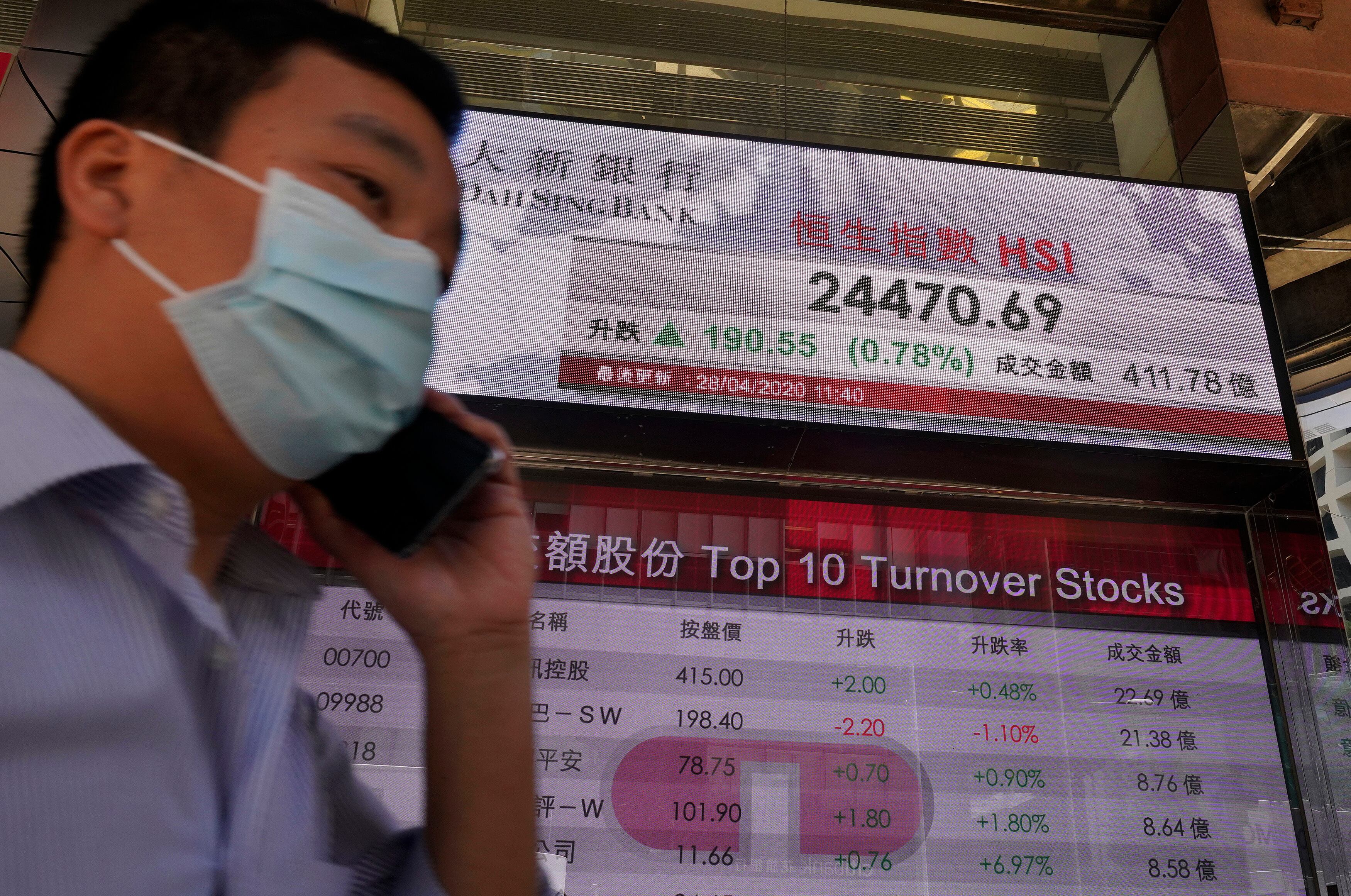
South Korea’s Kospi gained 0.6%, and Hong Kong’s Hang Seng rose 1.2%.

The U.S. Federal Reserve is holding its own monetary policy meeting Tuesday and Wednesday, though it is not expected to add to the huge amounts of stimulus it has already deployed.

The European Central Bank will hold its own meeting Thursday, and is likewise expected to mainly fill in details of its stimulus programs, or possibly tweak them.

Worries persist about new surges of coronavirus cases in places like China and South Korea, where they had declined as a result of social distancing, testing, and arduous efforts by medical workers.

A slew of corporate earnings announcements is lined up for this week.

Nearly a third of the companies in the S&P 500 are scheduled to report their results for the first three months of 2020 and, more importantly, perhaps talk about how they see future conditions shaking out. That includes Amazon, Apple, Facebook, Microsoft, and Google’s parent, Alphabet, which together make up about a fifth of the index.

___

AP Business Writer Yuri Kageyama contributed.

Share:
More In Business
This Year In Trivia
Hena Doba and Azia Celestino recap some of the biggest stories of the year, and learn a thing or two while they're at it. It's This Year in Trivia!
Stocks Close Lower on Last Trading Day of 2021
Stocks closed lower on the last trading day of 2021, but all three major indexes ended the year with double-digit growth. The S&P 500, in particular, marked its third straight positive year. What's in store for 2022 amid the Federal Reserve's plans to speed up asset tapering and raise interest rates, and how could COVID-19 continue to impact stocks? Steve Sosnick, Chief Strategist at Interactive Brokers, joins Cheddar News' Closing Bell to discuss movement on the last trading day of 2021, market predictions for 2022, and more.
As COVID-19 Pandemic Continues, How Will Omicron Variant Impact Economy in 2022?
As the pandemic continues to evolve, and cases of the omicron variant increase, how will this impact economic growth and movement in the new year? Consumer behavior continues to shift, labor issues linger, and questions about whether the pandemic will eventually become endemic are on economists' minds as we enter 2022. Jason Ware, Economist & Chief Investment Officer at Albion Financial Group, joins Cheddar News' Closing Bell to discuss.
Minimum Wage Hikes To Take Effect in 21 States
Mike Draper, Founder and Owner of Raygun, joins Cheddar News' Closing Bell, where he discusses how increases to the minimum wage in several states next year will help his company and explains why he advocates for it nationally.
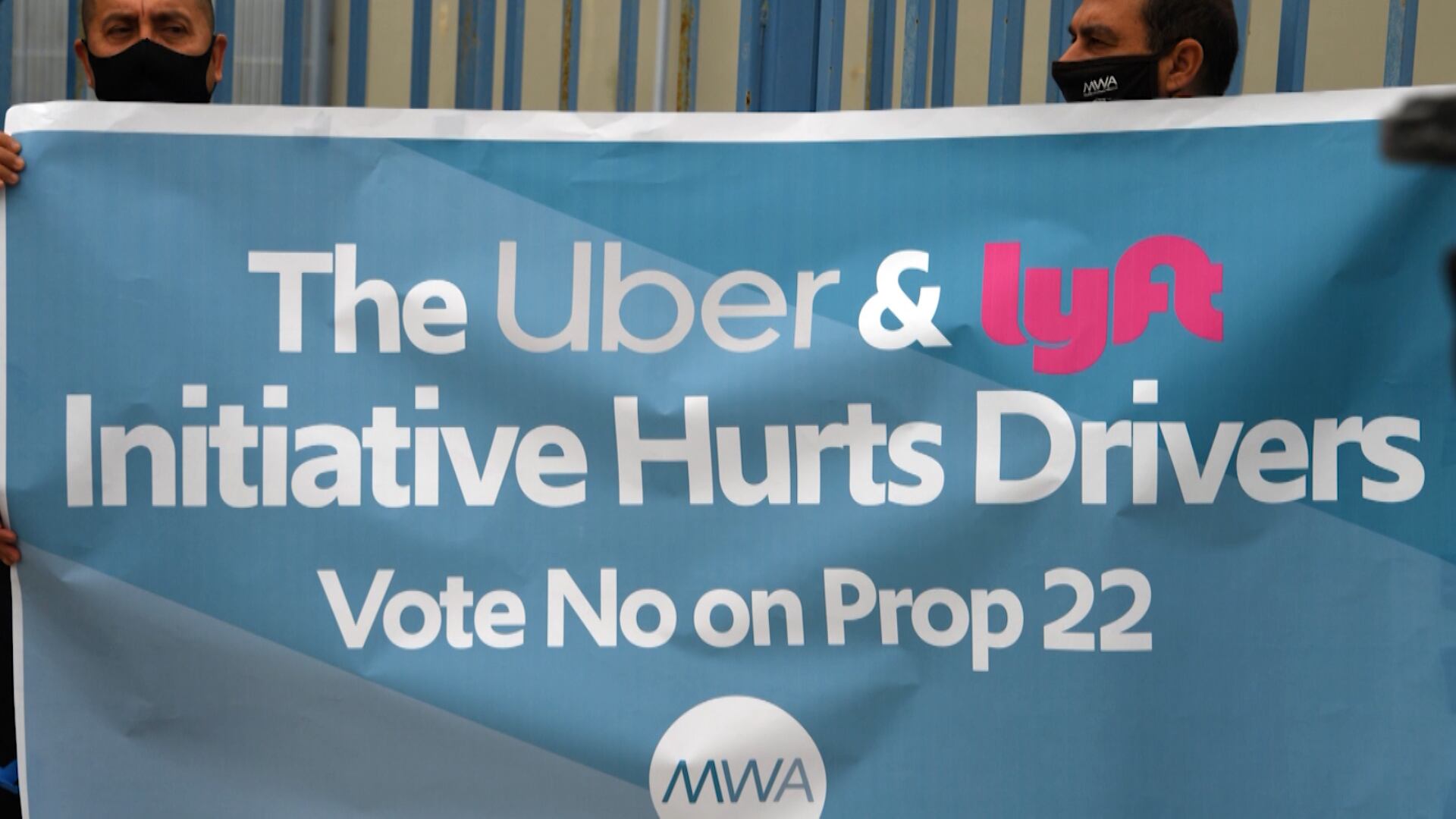
Looking Ahead to Regulating Uber, Lyft, and the Gig Economy in 2022
The push to regulate the gig worker economy is gaining steam as the share of workers who participate in freelancing through businesses like Uber and Lyft have also exponentially grown during the pandemic. Employment attorney Mark Kluger, founding partner at Kluger Healey, LLC, joined Cheddar to break down how the battle to reclassify gig workers will continue in the new year, and why the issue continues to generate conflict. "More and more workers are using gig work as their primary source of income and as a result of that they are not like employees in the sense that they don't have benefits like health insurance," Kluger noted.
Heliogen Goes Public to Scale Up the Renewable Energy Revolution
Renewable energy company Heliogen has gone public via a SPAC merger with blank check company Athena Technology Acquisition Corp. on the NYSE. Joining Cheddar, founder and CEO Bill Gross went into why he felt the end of 2021 was the best time to get into the public markets. "If you think of the Industrial Revolution and the digital revolution, this renewable revolution is probably going to be as big or larger than that," he said. "So we're going to use this capital to scale our business, to meet more customer demand, to do more projects in parallel, and to scale our research and development to continue to drive down the price to be competitive with fossil fuels."
Crypto Investor on Purchasing His $2 Million Bugatti in Dubai With Ether
Carl "The Moon" Runefelt, a Bitcoin investment expert, recently made a hefty purchase of a $2 million Bugatti sports car at a Dubai dealership. The Swedish crypto evangelist joined Cheddar to talk about how he made the big acquisition of a luxury item he had long had his eye on and why he chose the dealership, The Car Vault, to make the unprecedented transaction. "They accepted crypto directly, and that was important to me," he said. "I am not going to go to any car dealership that don't accept crypto, and that's kind of a principle I have today."
Pandemic Leads to Seismic Shift in Labor Market
Marjorie Mesidor, Partner at Phillips & Associates, joined Wake Up With Cheddar to break down the latest trends in the job market, as the demand for labor has recovered, but as the number of people willing to fill positions remains relatively low.
A Year of Highs and Lows for Crypto in 2021
2021 proved that crypto currency is here to stay. This year saw more and more adoptions of crypto, from top athletes looking to be paid in bitcoin, to Elon Musk even experimenting with bitcoin and dogecoin payments for a bit over at Tesla. And it wasn't all bitcoin either - other cryptos like Cardano and Solana saw some action in 2021 as well. Patrick McConlogue, CEO of Overline and former Citadel Investment Group Engineer explains why 2021 was such a good year for crypto, and what to expect in 2022.
Load More