By Stan Choe
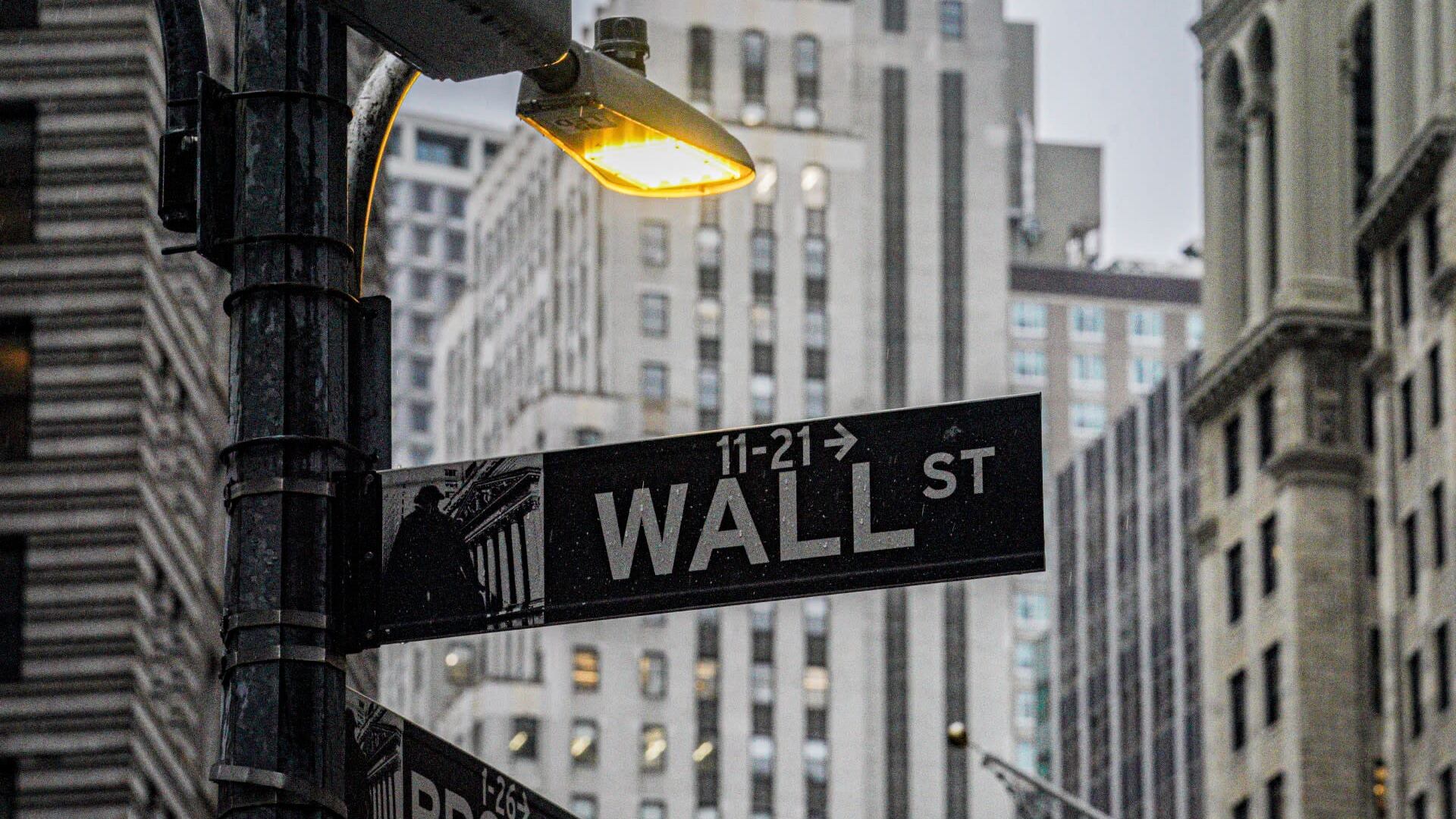
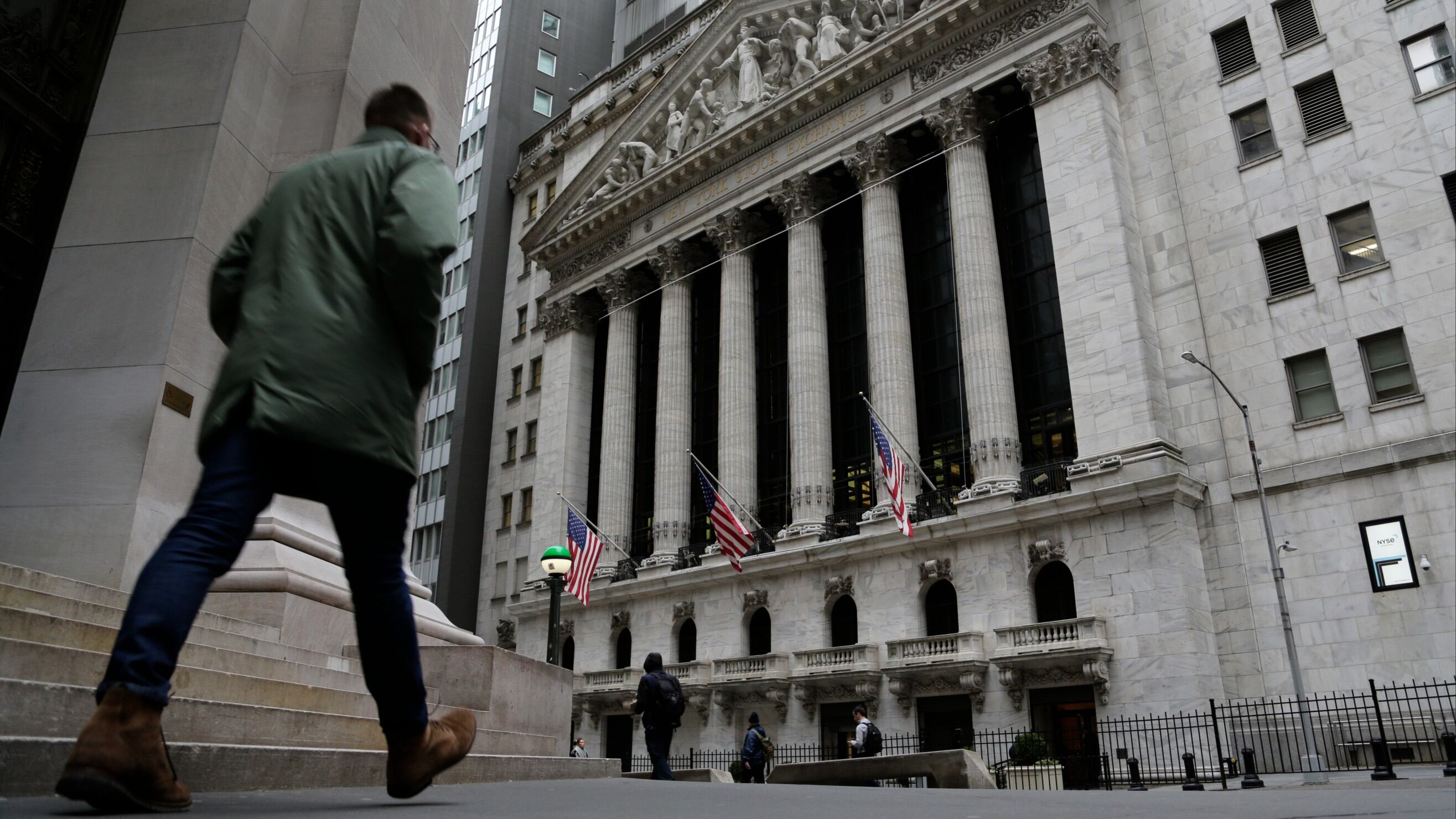
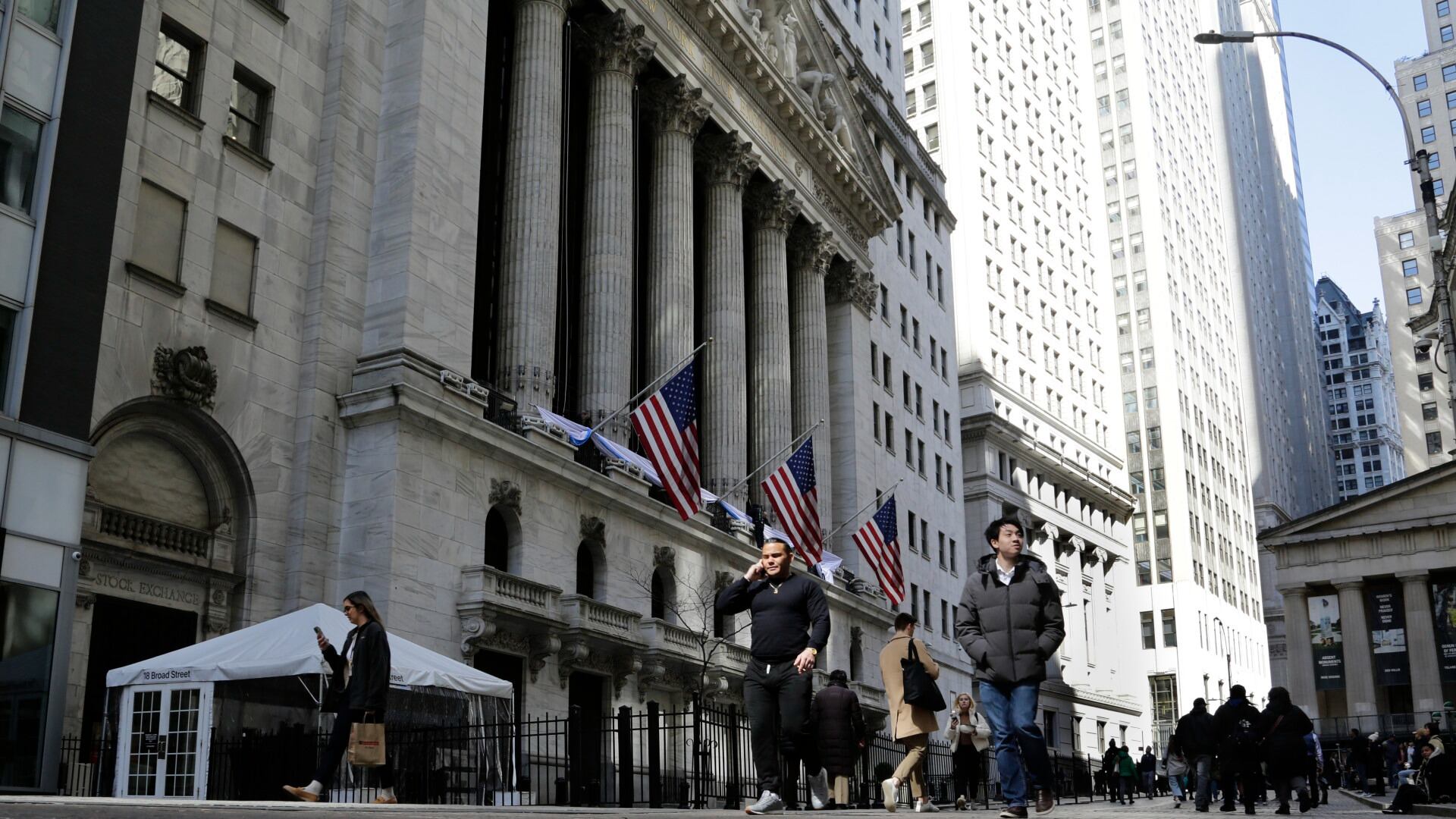
Stocks are pumping higher in early trading on Wall Street Tuesday, and the S&P 500 is cruising toward its first three-day winning streak in a month.
European stocks were also strong, as markets turned higher following a mixed Asian performance. The price of U.S. oil remained wild, though, and it swung through more extremes as storage tanks come closer to hitting their limits.
With massive aid in place for the economy from central banks and governments, stocks have been building higher in recent weeks on anticipation that stay-at-home orders will gradually lift. U.S. states and nations around the world are going at their own speeds, but the removal of restrictions would allow businesses to get back into some type of gear, even if it’s only first, after the global economy essentially slammed shut.
The S&P 500 was up 0.8%, as of 10:05 a.m. Eastern time. The Dow Jones Industrial Average gained 213 points, or 0.9%, to 24,347, and the Nasdaq was up 0.3.%
Companies that would benefit most from people being able to leave their houses again were among the market’s leaders. Harley-Davidson jumped 16% after laying out plans to slash costs and preserve cash, including a cut of its dividend and a halt to its stock buyback program. Kohl’s rose 12%, and Kimco Realty, which owns shopping centers, added 8.8%
Sectors of the stock market that are most closely tied to the strength of the economy were also leaders. Financial stocks rose 3% for the biggest gain among the 11 sectors that make up the S&P 500. Industrial stocks were close behind with a gain of 2.7%, and raw-material producers were up 2.1%.
Still, signs of caution are prevalent throughout the market. Merck reported a jump in revenue and profit for the first quarter, but the drugmaker also cut its financial forecast for the full year. It said prescription drug sales will likely fall because the pandemic is keeping many patients with chronic conditions away from their doctors. It’s also looking for sales of veterinary medicines to dip. Its shares fell 4.2%.
Treasury yields, which had sent warning signals about the disastrous economic effects of the pandemic long before the stock market did, were down slightly.
The yield on the 10-year Treasury dipped to 0.63% from 0.65% late Monday. Yields tend to fall when investors are downgrading expectations for the economy and inflation.
Inflation recently has gotten weighed down by a plunge in oil prices. With airplanes, autos, and factories around the world idled, demand has collapsed for energy, and producers have not cut back quickly enough. All the extra oil has flowed into storage tanks, which are close to hitting their limits. A barrel of U.S. oil for delivery in June was up 2% to $13.06, but it had dropped as low as $10.07 earlier in the morning.
Brent crude, the international standard, was up 1.3% at $23.37 per barrel.
In Europe, France’s CAC 40 gained 1.6% while Germany’s DAX rose 1.8%7. Britain’s FTSE 100 gained 2.1.
Japan’s benchmark Nikkei 225 edged 0.1% lower. A day before, it surged after Japan’s central bank lifted its ceiling on purchases of government bonds and other assets that it uses to pump more cash into the economy.
“Basically, the monetary spigots are wide open,” said Robert Carnell, regional head of research, Asia Pacific, at ING.
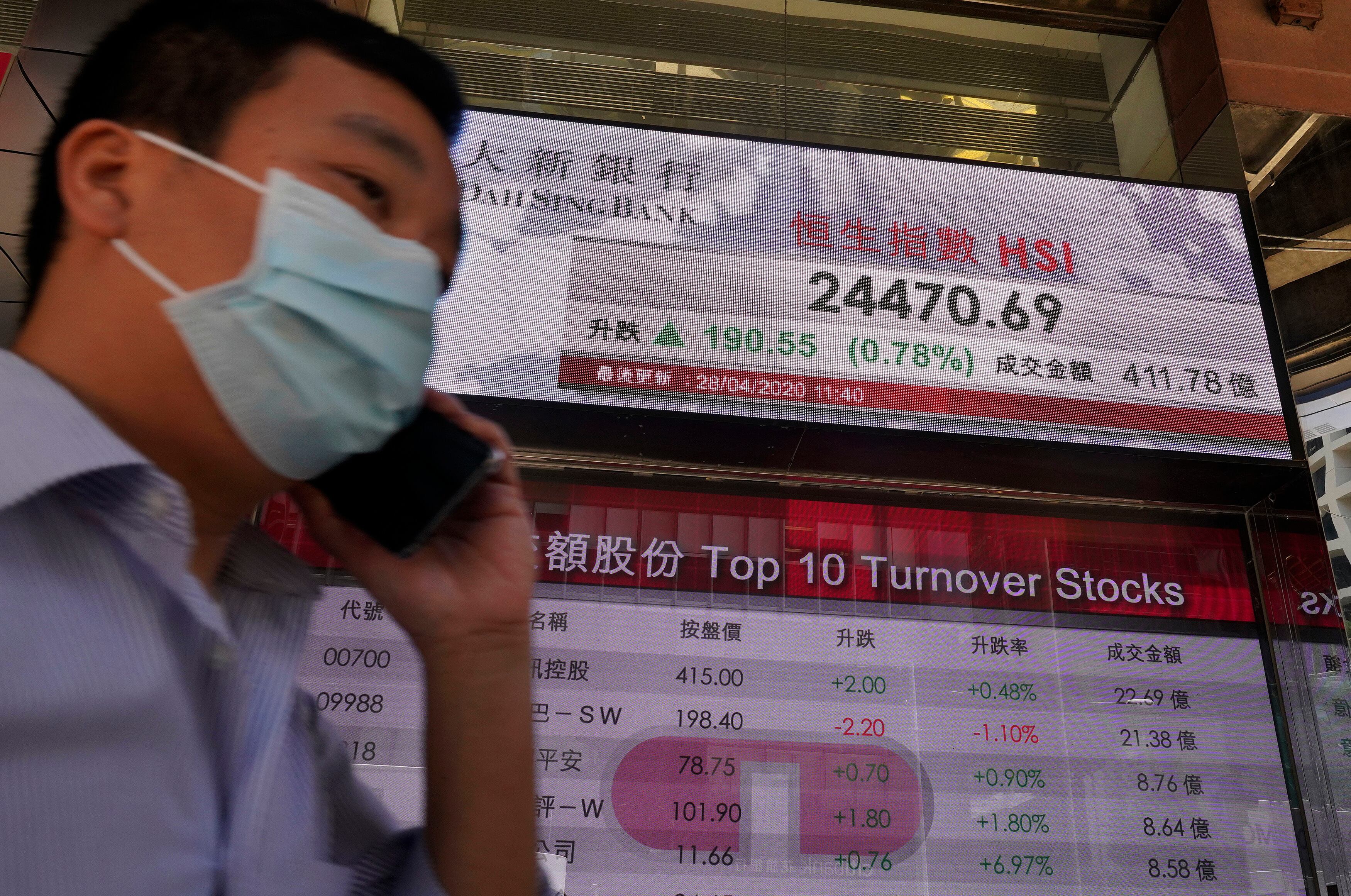
South Korea’s Kospi gained 0.6%, and Hong Kong’s Hang Seng rose 1.2%.
The U.S. Federal Reserve is holding its own monetary policy meeting Tuesday and Wednesday, though it is not expected to add to the huge amounts of stimulus it has already deployed.
The European Central Bank will hold its own meeting Thursday, and is likewise expected to mainly fill in details of its stimulus programs, or possibly tweak them.
Worries persist about new surges of coronavirus cases in places like China and South Korea, where they had declined as a result of social distancing, testing, and arduous efforts by medical workers.
A slew of corporate earnings announcements is lined up for this week.
Nearly a third of the companies in the S&P 500 are scheduled to report their results for the first three months of 2020 and, more importantly, perhaps talk about how they see future conditions shaking out. That includes Amazon, Apple, Facebook, Microsoft, and Google’s parent, Alphabet, which together make up about a fifth of the index.
___
AP Business Writer Yuri Kageyama contributed.