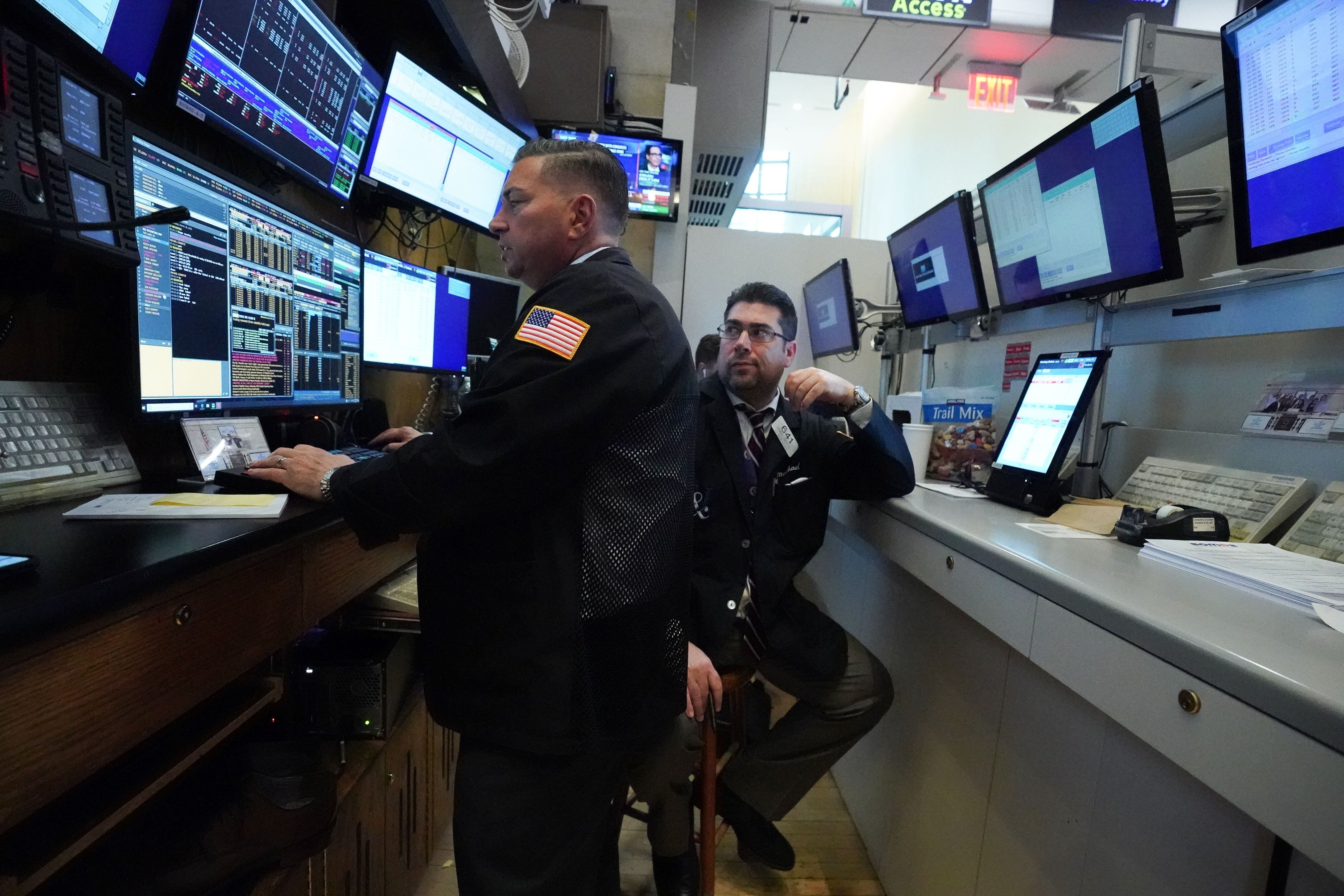
Traders work and watch president Donald Trump speak on television on the floor at the New York Stock Exchange on March 18, 2020 in New York. (Photo by Bryan R. Smith / AFP) (Photo by BRYAN R. SMITH/AFP via Getty Images)
By Stan Choe
Stock trading has been halted for the fourth time this month Wednesday as S&P 500 drops 7%. Trading will resume in 15 minutes. The automatic circuit-breaker was triggered around 1 p.m. Eastern time as President Donald Trump and other officials were updating reporters on measures to combat the coronavirus. Markets have been highly volatile in recent weeks as the outbreak seems increasingly likely to cause a global recession. The price of crude oil dropped another 18% as traders anticipate a sharp pullback in demand for energy. Even prices for longer-term U.S. Treasurys fell as investors sold what they could to raise cash.
THIS IS A BREAKING NEWS UPDATE. AP’s earlier story is below:
U.S. stocks sank close to 6% in midday trading Wednesday, part of another worldwide sell-off, and wiped out the big gains and optimism that Washington had sparked the prior day with promises for massive aid for the economy.
Markets have been incredibly volatile for weeks as Wall Street and the White House acknowledge an increasing risk of a recession due to the coronavirus outbreak. The typical day this month has seen the stock market swing up or down by 4.9%. Over the last decade, it was just 0.4%.
The selling pressure swept markets around the world. Benchmark U.S. oil fell 14% after dropped below $25 per barrel for the first time since 2002. European stock indexes lost more than 4% following broad losses in Asia. Even prices for longer-term U.S. Treasurys, which are seen as some of the safest possible investments, fell as investors sold what they could to raise cash.
The S&P 500, which dictates how 401(k) accounts perform much more than the Dow, is down nearly 30% from its record set last month.
It was just a day ago that the S&P 500 surged 6% after President Donald Trump said he’s “going big” in plans to aid an economy that’s increasingly shutting down by the day. The program could approach $1 trillion, and it would follow a spate of emergency actions by the Federal Reserve and other central banks to get financial markets running more smoothly.
Despite all that, investors are struggling with how much to pay for anything — stocks, bonds, oil — when it’s so uncertain how badly the economy is getting hit, how much profit companies will make and how many companies may go into bankruptcy due to a cash crunch.
“These are truly unprecedented events with no adequate historical example with which to precisely anchor our forecast,” Deutsche Bank economists wrote in a report Wednesday.
With all the uncertainty and early evidence that China’s economy was hit much harder by the virus than earlier thought, they now see “a severe global recession occurring in the first half of 2020.”
But they also are still forecasting a relatively quick rebound, with activity beginning to bounce back in the second half of this year in part because of all the aid promised from central banks and governments.
Investors say they need to see the number of infections slow before markets can find a bottom. The number of new cases reported in China, where the virus emerged in December, is declining but infections in the United States, Europe and elsewhere are increasing.
The number of infections has topped 200,000 worldwide, and the virus has killed more than 8,000.
For most people, the coronavirus causes only mild or moderate symptoms, such as fever and cough, and those with mild illness recover in about two weeks. Severe illness including pneumonia can occur, especially in the elderly and people with existing health problems, and recovery could take six weeks in such cases.
The Dow Jones Industrial Average was down 1,280 points, or 6%, as of 11:38 a.m. Eastern time. after being down as many as 1,365 shortly after trading began. If stays there, it would be the eighth straight day the Dow has moved by that much.
All the uncertainty has pushed many people toward safety. Last month, investors pulled $17.5 billion out of stock mutual funds and exchange-traded funds, even though stocks set all-time highs in the middle of the month. Money-market funds, meanwhile, drew $25.5 billion, according to Morningstar.
That was all before the market's sell-off accelerated this month, as broad swaths of the economy shut down in hopes of better containing the outbreak. Restaurants have closed to dine-in customers, planes are parked and sports arenas have been dimmed. Goldman Sachs strategists describe this month as “March Sadness.”
Jason Moser, Senior Analyst at The Motley Fool, breaks down AMC's third quarter earnings and discusses the future of the theater chain despite low ticket sales.
IBM's spinoff, Kyndryl, is officially an independent public company. The $19 billion business is now listed on the NYSE under the ticker KD, becoming one of the largest players in the IT services market. David Wyshner, CFO of Kyndryl, joined Cheddar to discuss what this milestone means for the company moving forward.
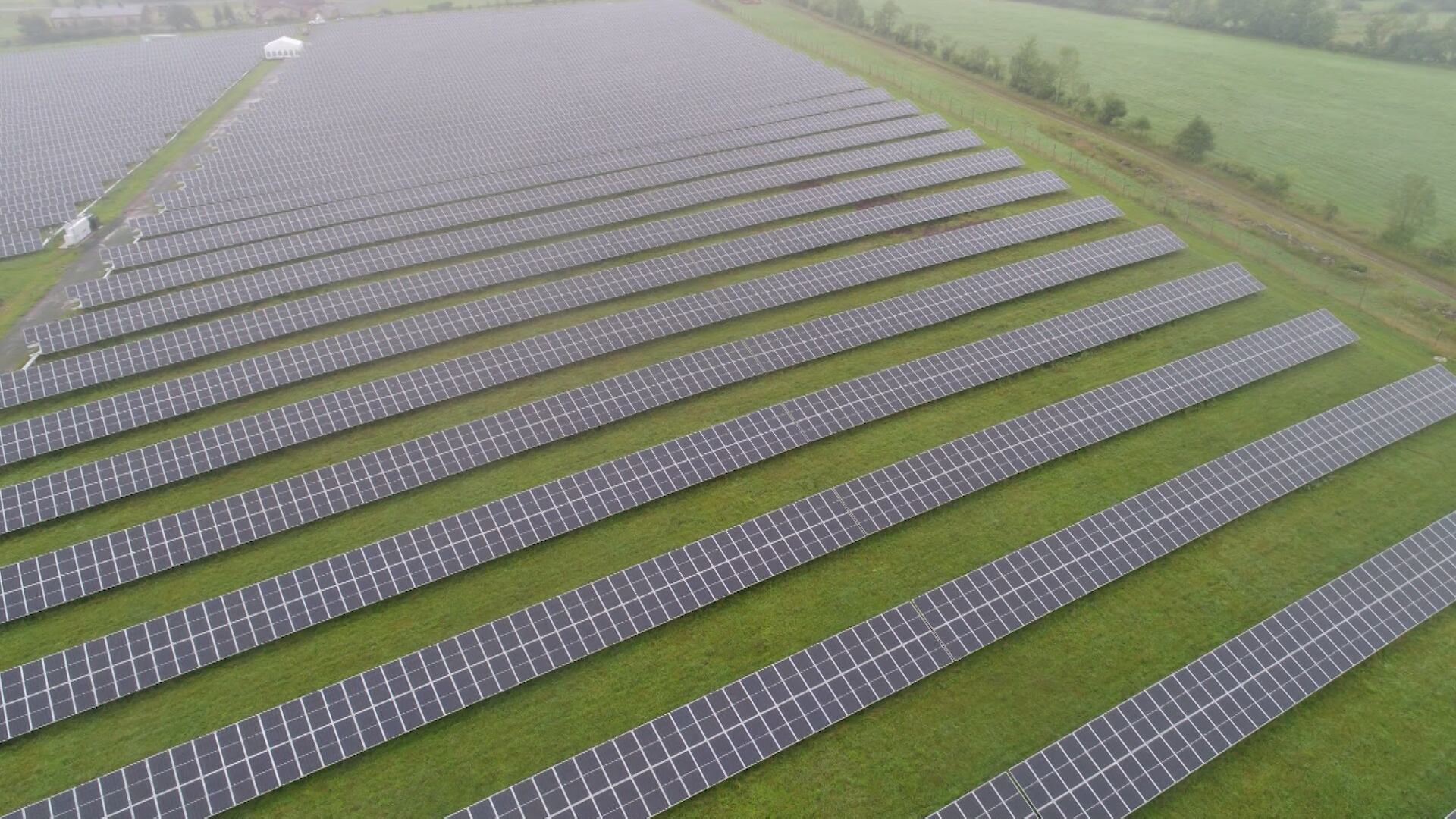
Emma Searson, an author on the just-released Renewables on the Rise report and the director, 100% Renewable Campaign at Environment America, joined Cheddar to discuss the rapidly growing renewable energy sector. Between 2011 and 2020, the report shows that wind, solar, and geothermal energy production grew about 15 percent annually and that wind and solar alone account for 11 percent of electricity in the country. "There are a few really important drivers of the renewable energy progress that we're seeing all across the country," Searson said, highlighting falling prices, technology improvements, and supportive policies.
Wendy O, host of 'The O Show' joins Cheddar News to discuss the recent rally from cryptocurrency, Ether. She also discussed incoming New York City mayor Eric Adams wanting to teach kids crypto in schools.
Professional sports is facing a reckoning right now over several stories painting an ugly picture of a toxic work environment, encompassing multiple teams in multiple leagues and dealing with different issues.
This week, the NHL's Chicago Blackhawks ousted their general manager and senior director of hockey operations after an investigation confirmed former player Kyle Beach's claims that the team's former video coach Brad Aldrich sexual assaulted him back in 2010, with upper management ignoring his claims until after the team won the Stanley Cup that season. Last night, Joel Quenneville, now the coach of the Florida Panthers but Chicago's coach that season, stepped down from his post.
This comes just a few weeks after the NFL was rocked by leaked emails showing now-former Las Vegas Raiders Head Coach Jon Gruden using racist, sexist and homophobic language. He resigned soon after the emails came to light. We can't forget, though, that those emails come from a much broader investigation of the toxic work environment in the offices of the Washington Football Team. NFL Commissioner Roger Goodell said this week the league wouldn't publicly release anything from its investigation of the team, but lawyers for many of the women interviewed in the case say they want a public report.
And last January, just one month after hiring him, the New York Mets had to fire then-General manager Jared Porter, who admitted to sending explicit, unsolicited texts and images to a female reporter in 2016 when he worked for the Chicago Cubs. ESPN had been in possession of the texts since 2017, but the woman in question asked the network not to run the story out of fear her career would be harmed. She only reached back out to ESPN after she left the field of journalism altogether. Porter has been banned from the sport through next season.
If you believe in the phrase "where there's smoke, there's fire," professional sports is a five-alarm blaze.
Julie DiCaro, senior writer and editor at Deadspin, joins None of the Above to discuss.
Curaleaf CEO Joe Bayern joined Cheddar's "Closing Bell" to discuss the cannabis company's Q3 earnings report, which came in under expectations and included widening losses. Bayern discussed taking a hit on profitability based on the slower-than-expected expansion in some Northeast markets. While the company reduced its fiscal guidance for 2021 due to a general slowing of the cannabis market, he did note that he still sees much room for growth in 2022 and beyond.
Online consignment and thrift shop thredUP reported a Q3 earnings beat on Monday, and CEO James Reinhart joined Cheddar to discuss exceeding expectations and the state of the business overall. Reinhart said the company is thriving while other businesses may face supply chain issues due to the convenience of its system of acquiring secondhand clothing. "In a world where most consumers are feeling squeezed by prices and seeing apparel shortages, everything we have on thredUP is 100 percent in stock and ready to ship," he said. "And so I think it speaks to real opportunity for resale and a company like thredUP during the holiday season and into 2022."
Former NBA star, commentator, and entrepreneur Baron Davis and Deluxe Corporation Chief Brand Officer Amanda Brinkman, joined Cheddar to discuss Season 6 of the reality show "Small Business Revolution," premiering Tuesday. The season will focus on helping six Black-owned businesses in the Twin Cities, Minneapolis and St. Paul. Davis noted learning about the lack of resources, connections, and opportunities for Black business owners during the show. "There are so many things we need to do as a society to address racial injustice and inequity, however, one of the ways for it is economic empowerment," Brinkman added.
Katia Beauchamp, strategic advisor for FemTec Health and former Birchbox CEO, joined Cheddar to discuss the health and beauty sciences company's recent acquisition of subscription beauty supply provider Birchbox. She noted that FemTec wants to change the perception of the brand to include health as well as beauty. "This is something where we are reimagining how can we help consumers discover beauty products that really help them take great care of themselves, have beautiful underlying health that is shown on the exterior too," she added.