U.S. stocks drifted to a mixed finish Wednesday, as drops for Microsoft and other big-name tech stocks overshadowed gains across much of the rest of Wall Street.
The S&P 500 fell 16.33, or 0.4%, to 4,267.52 even though the majority of stocks within the index rose. The Dow Jones Industrial Average gained 91.74, or 0.3%, to 33,665.02, while the Nasdaq composite fell 171.52, or 1.3%, to 13,104.89.
Microsoft, Amazon, Nvidia and Alphabet all sank at least 3% and were the heaviest weights on the S&P 500. Because they're some of Wall Street's most valuable stocks, their movements pack extra punch on the index.
It's a reversal from much of this year, where a narrow group of high-growth stocks led the way on hopes for easier interest rates from the Federal Reserve and excitement around artificial intelligence. But tech stocks are seen as some of the hardest hit by higher interest rates, and yields were on the rise in the Treasury market.
Campbell Soup, meanwhile, sank 8.9% after reporting weaker revenue for the latest quarter than expected. It also gave a forecast for earnings that fell short of analysts’ expectations, as price increases push some customers to buy less.
But much of the rest of the market rose as the gains on Wall Street broaden out some. The Russell 2000 index of smaller stocks jumped 1.8% to continue its hot streak since a stronger-than-expected report on hiring last week suggested a recession may be further off than feared.
On the winning side of Wall Street was Dave & Buster’s, which jumped 18.3% after reporting stronger profit for the latest quarter than expected.
Brown-Forman rose 4% after the spirits company reported stronger profit than expected for the latest quarter, thanks in part to growth for its Woodford Reserve brand.
The market in general has climbed for months thanks to a resilient economy that’s managed to defy predictions for a recession. But the threat still looms, and Wall Street is questioning which will come first: a recession or inflation falling enough to get the Federal Reserve to cut interest rates?
That’s why much of Wall Street’s focus is on next week. The U.S. government is scheduled to release the latest monthly updates on inflation at the consumer and wholesale levels. The Federal Reserve will also announce its latest move on interest rates Thursday.
The dominant expectation among traders is for the Fed to leave rates steady next week. That would mark the first meeting in more than a year where it hasn’t hiked rates. But traders still expect the Fed to resume raising rates in July.
That’s key because the goal of high interest rates is to corral high inflation by slowing the entire economy and hurting prices for stocks, bonds and other investments. The Fed has hiked its benchmark overnight interest rate to the highest level since 2007.
Pressure from high rates have already caused cracks in the U.S. banking and manufacturing industries, though the job market has remained remarkably solid.
One expected boost to the global economy has not come through, which has added to the pressure. In China, trade data pointed to a further slowing of the world's second-largest economy.
China reported its exports fell 7.5% from a year earlier in May and imports were down 4.5%, adding to signs of a slowing of its economic recovery following the lifting in December of anti-COVID controls that disrupted travel and commerce.
The decline in exports was the first year-on-year drop in three months, with export volumes falling below their levels at the start of the year. “And with the worst yet to come for many developed economies, we think exports will decline further before bottoming out later this year,” Julian Evans-Pritchard of Capital Economics said in a commentary.
Stocks in Shanghai gained 0.1%, while Hong Kong's Hang Seng rose 0.8%.
Tokyo’s Nikkei 225 index lost 1.8%, the sharpest decline in 12 weeks. Analysts said investors were selling to lock in recent gains since prices have risen to their highest level since the early 1990s.
In the bond market, the yield on the 10-year Treasury rose to 3.78% from 3.68% late Tuesday. It helps set rates for mortgages and other important loans.
The two-year yield, which moves more on expectations for the Fed, rose to 4.55% from 4.50%.
AP Business Writers Matt Ott and Elaine Kurtenbach contributed.
Decentralized talent network Braintrust recently closed an atypical equity deal that involved investors buying $100 million in Braintrust tokens, the company's cryptocurrency. Braintrust's talent network is built on blockchain technology, which the company says allows it to be owned and built by users, instead of a centrally-controlled corporation. Braintrust users can also earn tokens for their contributions to the network and its growth. Braintrust co-founder Adam Jackson joins Cheddar News' Closing Bell to discuss.
Blue Origin launched its third manned mission over the weekend with 'Good Morning America' host Michael Strahan and Laura Shepard Churchley, daughter of astronaut Alan Shepard on board, alongside several Blue Origin investors.
This comes after the spaceflight firm launched two successful missions to the edge of space earlier this year. How will these missions set up Blue Origin for success as it competes with SpaceX and other companies for space tourism domination and more? Joey Roulette, space reporter at The New York Times, joins Cheddar News' Closing Bell to discuss.
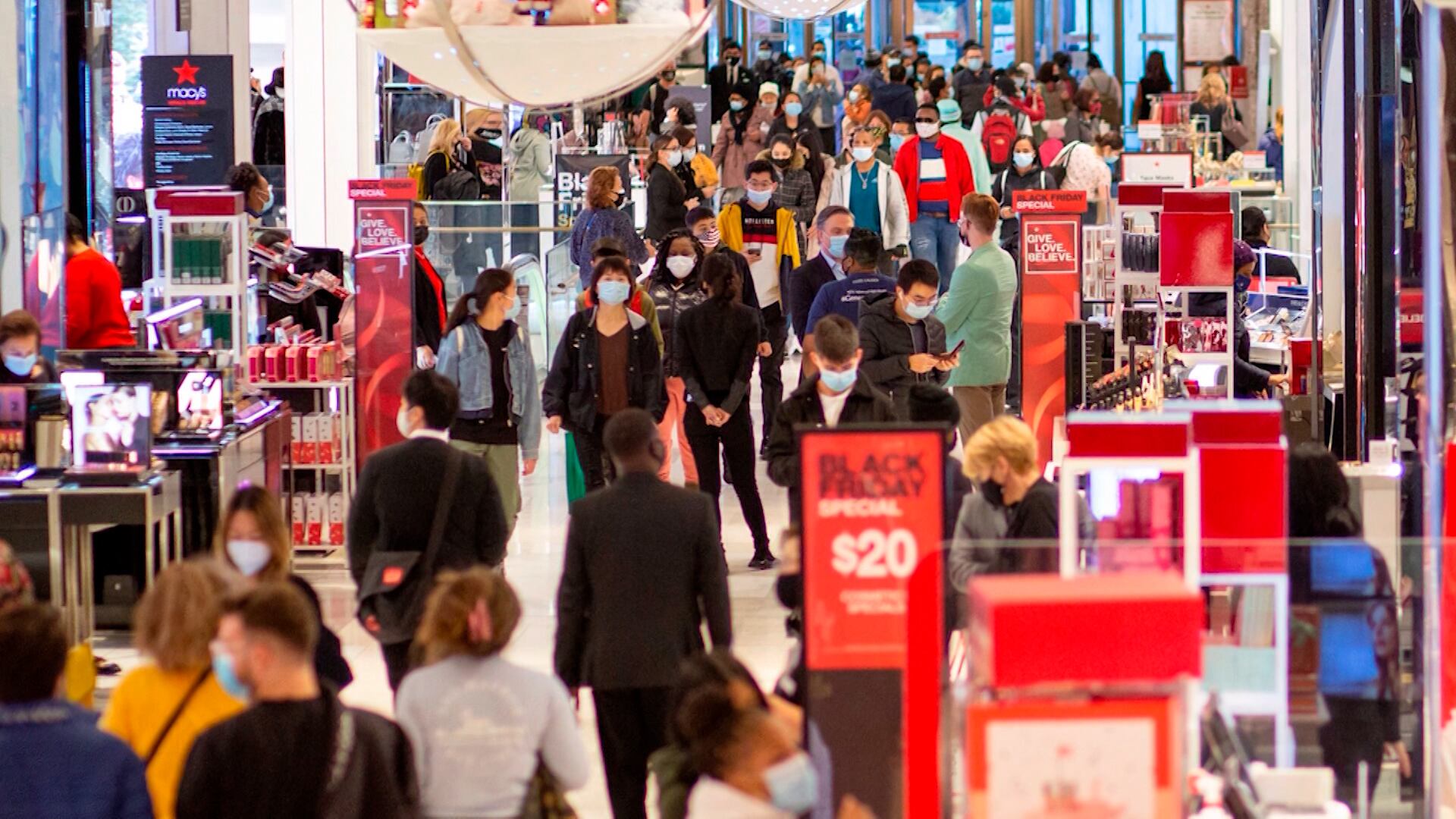
If there's any question about whether inflation is here to stay, today's November consumer price index data gives us an answer. This is the second month in a row we've seen a hot inflation reading — CPI last month rose to 6.8%, after jumping to 6.2% in October. Amid the holiday shopping season, what does this mean for consumers? And how will the Federal Reserve move forward after previously announcing it would speed up its asset taper timeline? Art Hogan, Chief Market Strategist at National Securities, joins Cheddar News' Closing Bell to discuss November's CPI jump, where consumers are hurting the most, what the Fed could do to help ease inflation, and more.
Editorial and stock photo provider Getty Images is gearing up to make its public debut via a SPAC merger with CC Neuberger Principal Holdings II bringing it to a $4.8 billion valuation. CEO Craig Peters joined Cheddar to break down the decision to go public and noted that the merger will help to pay down debt. "That's going to really enable a lot of additional free cash flow and financial flexibility into the business," he noted. "That's just going to allow us to just invest more aggressively into the business to accelerate what is already accelerating growth." Peters also discussed the legacy image platform's place going forward in the expanding world of digital assets like NFTs and the metaverse.
Ben Schiller, the managing editor for features and opinion at CoinDesk, breaks down how the year's top 10 crypto influencers were selected and what to expect from the blockchain ecosystem, especially the growth of NFTs, in 2022. "This whole crypto story has become not just a story about money or the future of money," he said. "It's also become a cultural story where it's getting into gaming, it's getting into artwork, into collectibles, and all kinds of cultural categories it wasn't in before." Schiller noted that he expects the U.S. and other world governments to establish crypto regulations in the coming year.
Ford said it will ramp up production for its Mustang Mach-E as demand for the electric vehicle surges. The automaker expects to sell upwards of 200,000 annually by 2023.
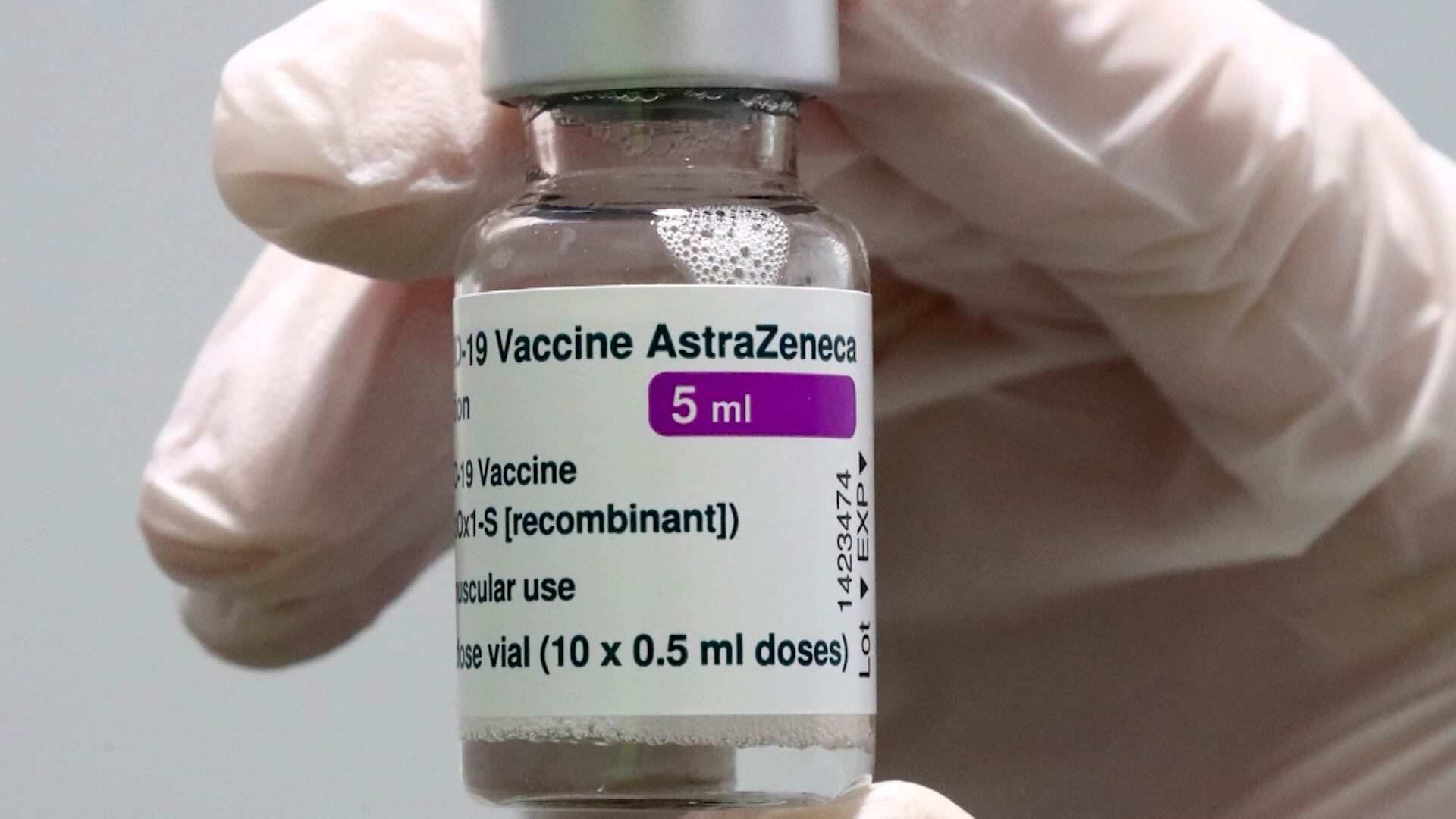
Mina Makar, senior vice president of respiratory and immunology, Astrazeneca, joined Cheddar to discuss the FDA's decision to give emergency use authorization to the pharma giant's COVID-19 antibody treatment called Evusheld for immunocompromised patients For about 2 percent of the U.S. Makar noted that the injection is supposed to provide antibody protection for those who can't generate their own adequate immune response via the vaccines for a minimum of six months, though long-term trials are underway.
The pandemic has forced corporate America to reshape itself to adapt, including onboarding doctors as chief medical officers to help maintain the health and safety of staff. Dr. Geeta Nayyar, chief medical officer at Salesforce, joined Cheddar to break down her role and how it has become relevant and necessary in the evolving workplace. "Every business today is now in the business of healthcare," she said. "It is a priority to empower employees to then serve your customers."
Sustainable consumer products maker Grove Collaborative is gearing up to launch an IPO via a SPAC merger with Richard Branson's Virgin Group Acquisition Corp II. Stuart Landesberg, CEO and co-founder of Grove Collaborative, talked to Cheddar's Kristen Scholer about going public through the merger and aligning with a partner he felt also prioritizes climate. "What this partnership will mean is that we're able to expand the assortment and innovations that we bring to market in products that work just as well as the conventionals and market leaders but have a significantly different environmental profile," Landesberg said.