U.S. stocks drifted to a mixed finish Wednesday, as drops for Microsoft and other big-name tech stocks overshadowed gains across much of the rest of Wall Street.
The S&P 500 fell 16.33, or 0.4%, to 4,267.52 even though the majority of stocks within the index rose. The Dow Jones Industrial Average gained 91.74, or 0.3%, to 33,665.02, while the Nasdaq composite fell 171.52, or 1.3%, to 13,104.89.
Microsoft, Amazon, Nvidia and Alphabet all sank at least 3% and were the heaviest weights on the S&P 500. Because they're some of Wall Street's most valuable stocks, their movements pack extra punch on the index.
It's a reversal from much of this year, where a narrow group of high-growth stocks led the way on hopes for easier interest rates from the Federal Reserve and excitement around artificial intelligence. But tech stocks are seen as some of the hardest hit by higher interest rates, and yields were on the rise in the Treasury market.
Campbell Soup, meanwhile, sank 8.9% after reporting weaker revenue for the latest quarter than expected. It also gave a forecast for earnings that fell short of analysts’ expectations, as price increases push some customers to buy less.
But much of the rest of the market rose as the gains on Wall Street broaden out some. The Russell 2000 index of smaller stocks jumped 1.8% to continue its hot streak since a stronger-than-expected report on hiring last week suggested a recession may be further off than feared.
On the winning side of Wall Street was Dave & Buster’s, which jumped 18.3% after reporting stronger profit for the latest quarter than expected.
Brown-Forman rose 4% after the spirits company reported stronger profit than expected for the latest quarter, thanks in part to growth for its Woodford Reserve brand.
The market in general has climbed for months thanks to a resilient economy that’s managed to defy predictions for a recession. But the threat still looms, and Wall Street is questioning which will come first: a recession or inflation falling enough to get the Federal Reserve to cut interest rates?
That’s why much of Wall Street’s focus is on next week. The U.S. government is scheduled to release the latest monthly updates on inflation at the consumer and wholesale levels. The Federal Reserve will also announce its latest move on interest rates Thursday.
The dominant expectation among traders is for the Fed to leave rates steady next week. That would mark the first meeting in more than a year where it hasn’t hiked rates. But traders still expect the Fed to resume raising rates in July.
That’s key because the goal of high interest rates is to corral high inflation by slowing the entire economy and hurting prices for stocks, bonds and other investments. The Fed has hiked its benchmark overnight interest rate to the highest level since 2007.
Pressure from high rates have already caused cracks in the U.S. banking and manufacturing industries, though the job market has remained remarkably solid.
One expected boost to the global economy has not come through, which has added to the pressure. In China, trade data pointed to a further slowing of the world's second-largest economy.
China reported its exports fell 7.5% from a year earlier in May and imports were down 4.5%, adding to signs of a slowing of its economic recovery following the lifting in December of anti-COVID controls that disrupted travel and commerce.
The decline in exports was the first year-on-year drop in three months, with export volumes falling below their levels at the start of the year. “And with the worst yet to come for many developed economies, we think exports will decline further before bottoming out later this year,” Julian Evans-Pritchard of Capital Economics said in a commentary.
Stocks in Shanghai gained 0.1%, while Hong Kong's Hang Seng rose 0.8%.
Tokyo’s Nikkei 225 index lost 1.8%, the sharpest decline in 12 weeks. Analysts said investors were selling to lock in recent gains since prices have risen to their highest level since the early 1990s.
In the bond market, the yield on the 10-year Treasury rose to 3.78% from 3.68% late Tuesday. It helps set rates for mortgages and other important loans.
The two-year yield, which moves more on expectations for the Fed, rose to 4.55% from 4.50%.
AP Business Writers Matt Ott and Elaine Kurtenbach contributed.
This year's worldwide semiconductor shortage limited the supply of everything from new cars to smartphones; and now, many in the chip industry expect the shortage to continue deep into 2022, and maybe even 2023. Semiconductor senior research analyst for Robert W. Baird & Co., Tristan Gerra, joins Cheddar News' Closing Bell to discuss.
Direct health care company Nomi Health recently raised $110 million in a Series A round. Nomi Health lets public and private organizations directly purchase healthcare at reduced costs, and pay providers in real-time. It also delivers healthcare directly to under-served communities via its fleet of mobile care units, which the company says is the largest in the country. Nomi Health says its mission is to improve the health care experience for all Americans. Nomi Health CEO Mark Newman joined Cheddar News' Closing Bell to discuss.
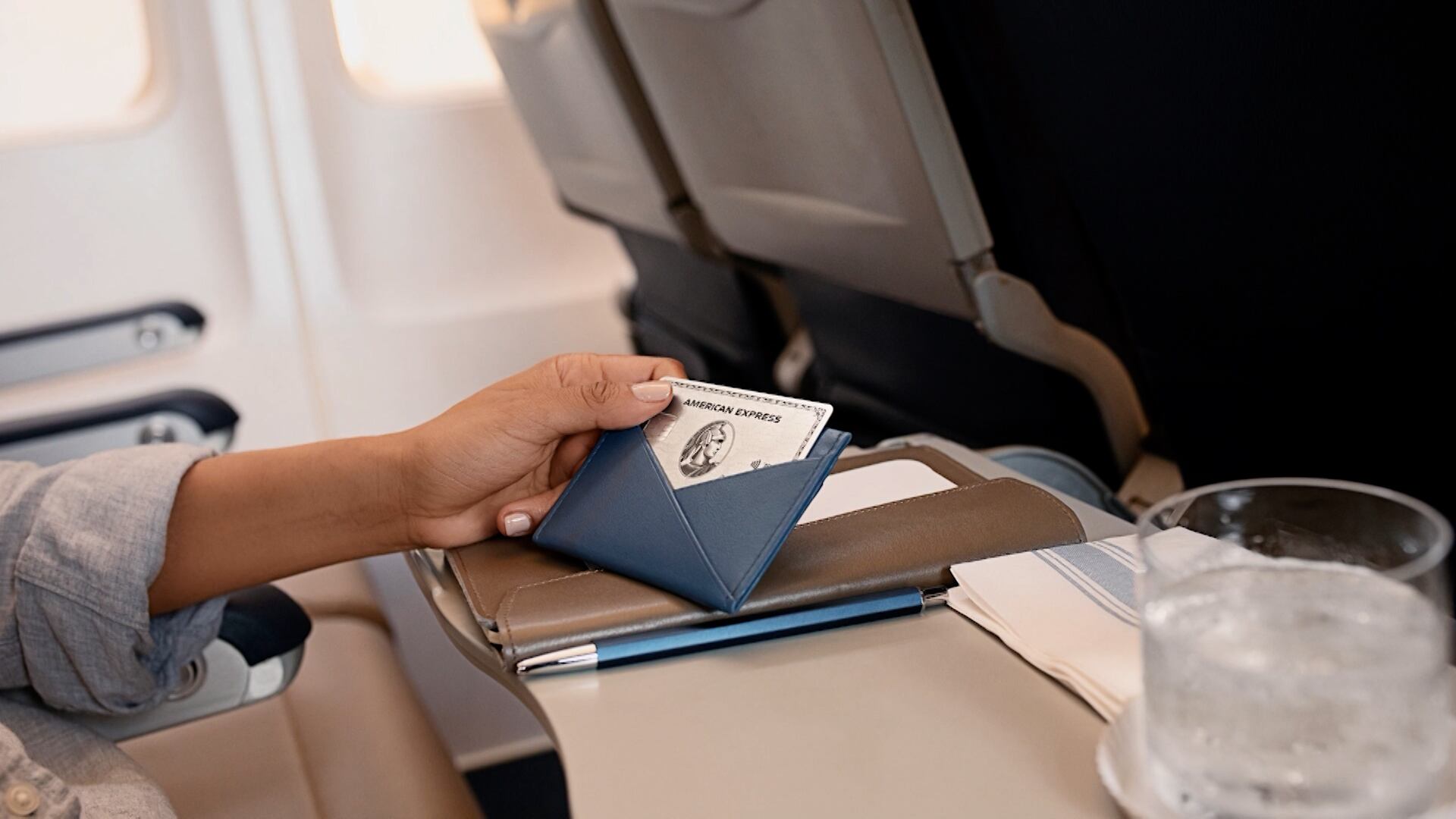
American Express and Nova Credit have partnered the credit passport program aimed at expanding access to credit for immigrants from the Dominican Republic, Nigeria, Kenya, and Brazil. Misha Esipov, co-founder and CEO of Nova Credit, joined Cheddar's Ken Buffa to talk about the program's benefits for immigrants who have to start over in the U.S. and are looking to establish a credit history. "If you were a good borrower in your home country — and you can prove you were a borrower in your home country — when you first arrive here, you can use that information to continue to be a good borrower," he said of the service.
Despite the rising cost of a home in the U.S., sales rose 1.9 percent in November, and according to Zillow, prices are expected to climb even higher in 2022. M. Ryan Gorman, president and CEO of Coldwell Banker Real Estate, told Cheddar's "Closing Bell" that while median prices are high, demand for a new home is just as high, particularly in "tax and weather favorable" destinations like Florida, Tennessee, and Texas. Gorman also said he sees buyer demand remaining high next year even if interest rates rise somewhat, noting that the already tight housing inventory is expected to slim down even more and foreign purchasers return to the market. "As we get past the holidays and those foreign buyers are able to come back and actually acquire homes and go shopping, I think that may be a bigger driver of some of that increase in buyer demand," he said.
The airline industry says it is contending with staff shortages that threaten to hamper operations amid the COVID resurgence, andDelta Airlines CEO Ed Bastian called on the CDC to revise its guidance for vaccinated workers who test positive from a 10-day quarantine to just five. Chuck Liberman, chief investment officer and managing partner at Advisors Capital Management LLC, joined Cheddar to talk about the current guidance on isolation and why he believes the omicron variant calls for more relaxed guidance given its reportedly mild symptoms.
A new series is looking to advance Black founders who have disruptive ideas and companies. 'Bet on Black' is a new series that allows black entrepreneurs to pitch their businesses in the hopes of securing $200,000 in funding. Revolt TV and Target teamed up to create the show. Detavio Samuels, CEO of Revolt, joins Cheddar News to discuss.
Bitcoin's rise to the mainstream has been a wild ride this year. The cryptocurrency is trading a little under $49,000 Wednesday morning and is set to finish the year sharply higher than where it began earlier this year. Ether prices also soared this year, rising from $730 per coin to nearly $4,000. Ben Armstrong, founder of Bitboy Crypto, joins us to discuss what's in store for crypto in 2022.
The fitness industry was one of the most severely impacted at the start of the pandemic. As the omicron variant of COVID-19 threatens fitness centers and gyms, the Global Health and Fitness Association, along with the Community Gyms Coalition, are calling on the federal government to provide pandemic relief before the close of 2021. Crunch Fitness Franchise CEO Ben Midgely joined Cheddar to talk about proactive steps gyms are taking to maximize business as COVID resurges. "It should be a little bit easier," he said. "We hate to have to deal with it again, but it's what businesses in this country have to work with."
According to the FAA, airlines have reported over 5,000 incidents involving unruly passengers this year, with more than 3,600 of those involving people who refused to wear face masks. As a result of all this, airline crews are calling on the federal government to step in to implement protocols to help ensure safety on the ground and while in flight. President of the Association of Flight Attendants- CWA Sara Nelson, joined Cheddar to discuss more.