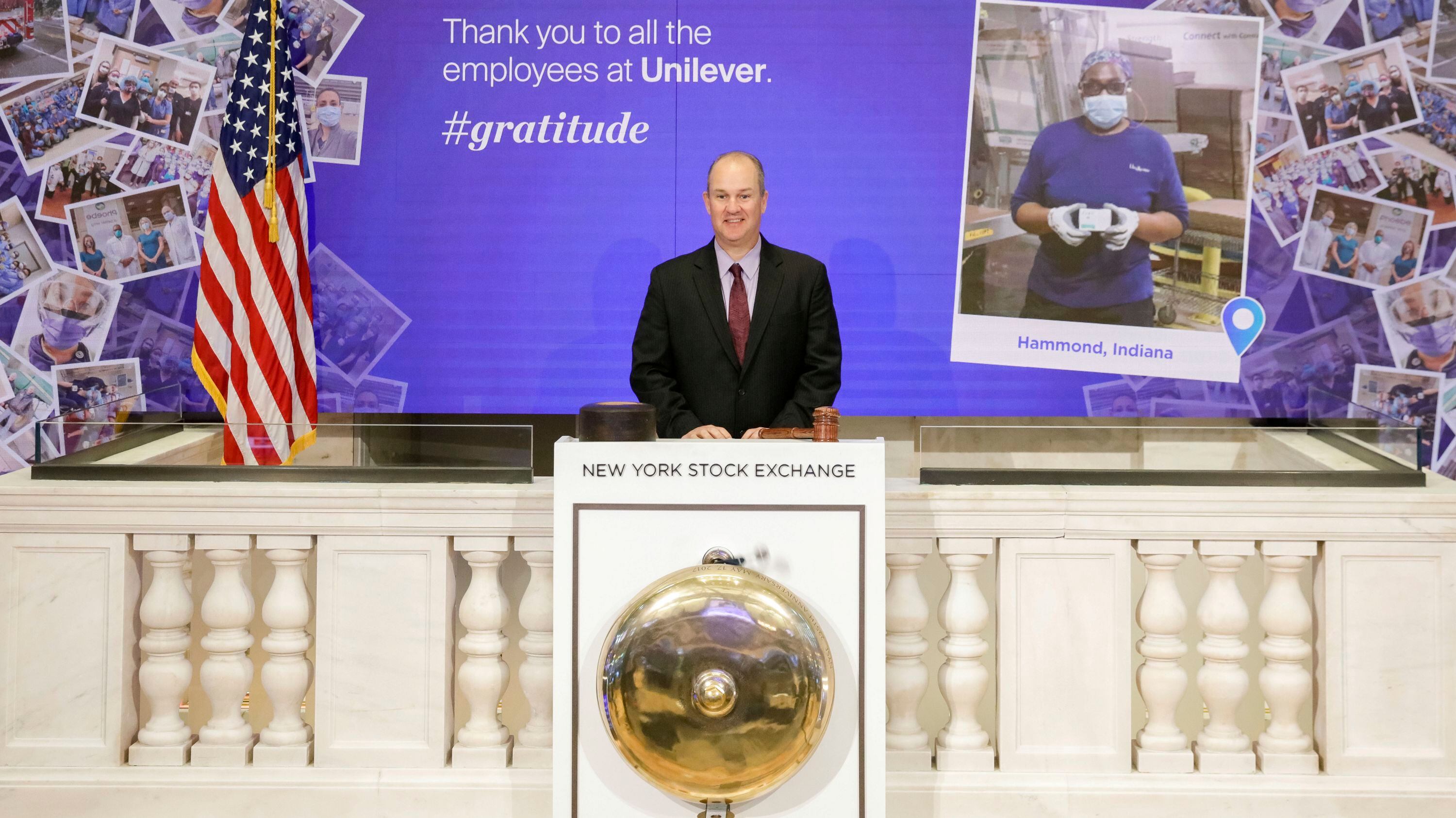
Stocks ended broadly lower on Wall Street Tuesday as trading turned wobbly a day after the market notched its biggest jump in more than five weeks.
The S&P 500 fell 1% after having been up by 0.4% in the early going. Losses in banks, health care stocks, and household goods companies accounted for a big portion of the selling. A late-day slide erased early strength in technology stocks and companies that rely on consumer spending.
Bond yields mostly fell and the price of gold rose, signs that investors were feeling cautious.
“Today is a little bit of a pause day after a significant rally,” said Eric Freedman, chief investment officer at U.S. Bank Wealth Management.
Investors are betting that the economy and corporate profits will begin to recover from the coronavirus pandemic as the U.S. and countries around the world slowly open up again. However, concerns remain that the relaxing of stay-at-home mandates and the reopening of businesses could lead to another surge in infections, potentially ushering in another wave of shutdowns.
The S&P 500 lost 30.97 points to 2,922.94, snapping a three-day winning streak. The Dow Jones Industrial Average fell 390.51 points, or 1.6%, to 24,206.86. The Nasdaq composite dropped 49.72 points, or 0.5%, to 9,185.10. The Russell 2000 index of small-company stocks gave up 25.97 points, or 1.9%, to 1,307.72.
Wall Street kicked off the week with a bang, as optimism about a potential vaccine for COVID-19 and hopes for a U.S. economic recovery in the second half of the year pushed stocks sharply higher Monday, reversing all of the market's losses so far this month. Tuesday's selling cut into some of those gains. The S&P 500 is now down 13.7% from its all-time high in February.
Investors are focused on gauging the risk for a second or third wave of coronavirus cases as more swaths of the U.S. reopen for business.
“As long as we have a supportive Fed, a responsive legislative branch that is at least open to considering more stimulus, and we see openings occur on a measured, but consistent basis, we still think there’s still basis for this market to be propelled higher,” Freedman said.
Still, quarterly results from big retailers Tuesday underscore the challenges companies face as long as the outbreak weighs on consumers and compels government officials to mandate restrictions on commerce. Companies that have been able to remain open or effectively amplify their e-commerce business have been able to fare far better than those that have had to temporarily close doors.
Walmart reported a 74% surge in fiscal first-quarter sales as people stocked up on crucial supplies while sheltering in place due to the coronavirus. Its earnings fell as it spent $900 million in additional compensation for workers, but still topped Wall Street's forecasts. Its shares initially headed higher but finished 2.1% lower.
Meanwhile, Kohl’s, whose stores have been closed during the outbreak, fell 7.7% after reporting that it swung to a $541 million quarterly loss as its revenue sank more than 40%.
Traders also hammered shares in Home Depot after the home improvement supply chain reported quarterly results that fell short of Wall Street's estimates. While the company benefited from a surge in homeowners rushing to buy essential supplies, increased spending on employee compensation and other costs related to the coronavirus dragged on its profits. The stock fell 3%.
“Investors have been looking for companies and sectors that could do well in the current environment,” said Sal Bruno, chief investment officer of IndexIQ. “Looking forward, where does that continued leadership come from?”
The Commerce Department said residential construction ground breakings fell in April to their lowest level in five years. But building permits, a gauge of potential future construction activity, fell less than analysts had expected. That helped push several homebuilder stocks higher. Beazer Homes USA led the pack, surging 5.9%.
Oil prices ended mixed, though they remained above $30 a barrel. Benchmark U.S. crude oil for June delivery rose 68 cents, or 2.1%, to settle at $32.50 a barrel. July delivery of Brent crude oil, the international standard, fell 16 cents, or 0.5%, to $34.65 a barrel.
Prices have firmed up as oil-producing nations cut back on output and as the gradual reopening of the economies around the globe helps spur demand, which crashed earlier this year due to widespread travel and business shutdowns related to the coronavirus. Crude oil started the year at about $60 a barrel.
Bonds yields mostly fell. The yield on the 10-year Treasury note, a benchmark for interest rates on many consumer loans, slid to 0.68% from 0.74% late Monday.
France’s CAC 40 lost 0.9%, while Germany’s DAX inched up 0.1%. Britain’s FTSE 100 dropped 0.8%. Markets in Asia finished higher.
Scott Clemons, Partner and Chief Investment Strategist at Brown Brothers Harriman, joins Cheddar News' Closing Bell, where he discusses the factors leading to the sell-off on Wall Street today and explains why uncertainty is worse than bad news for the investors.
U.S. stocks rebounded to end higher on Thursday after President Biden announced new sanctions against Russia following the country's attack on Ukraine. The Dow was down 859 points at its lowest point of the session, before ultimately finishing the day in the green. Melissa Armo, founder and owner of the Stock Swoosh, joins Cheddar News' Closing Bell to discuss.
Professional golfer Phil Mickelson issued an apology this week after facing backlash over comments he made in support of a golf tour backed by Saudi Arabia. The proposed golf league is called the Super Golf League and is funded by the Public Investment Fund, the financial arm of the Saudi government. Mickelson faced criticism after seeming to imply that he was willing to overlook the Middle Eastern country's human rights record in order to create a league that would rival the PGA Tour. David Salituro, PGA sportswriter for fansided.com, joins Cheddar News' Closing Bell to discuss.
HearHere bills itself as a mobile audio entertainment app for road trips. The company just announced $3.2 million in seed funding led by Camping World, a retail company that sells recreational vehicles and camping supplies. HearHere's GPS-powered app offers over 8,880 stories across the continental U.S. and serves up the stories based on a users' geographic location and interests. The stories are narrated by some big-name celebrities including actor Kevin Costner, who is a co-founder of the company. Woody Sears, co-founder and CEO of HearHere, joins Cheddar News' Closing Bell to discuss.
On December 25, 2021, NASA got into the holiday spirit by launching the James Webb Space Telescope, the largest and most powerful space science observatory in history.
It is intended to succeed the Hubble Space Telescope as NASA's flagship mission in astrophysics and is able to view objects too old and distant for Hubble. Gregory Robinson, director of NASA's James Webb Space Telescope program, joins Cheddar News' Closing Bell to discuss the mission. "I think a lot of what we don't know today is what I'm expecting to find and certainly really understand what took place more than 13.5 billion years ago and see the formation of some of the first galaxies in our universe," said Robinson.
Prices at the pump have escalated severely during the Russian invasion of Ukraine. Paul Christopher, head of global market strategy, Wells Fargo Investment Institute, joined Cheddar News to explain how he sees the gas prices continuing to spiral despite the International Energy Agency announcing the release of 60 million barrels of oil from the strategic reserves of 31 countries. "We think you could see oil and gas prices continue to rise. Oil prices maybe could hit $140 a barrel. That's possible. And that would add another 50-60 cents on top of the gasoline prices you already have," he said.
YouTube creator platform Spotter recently announced $200 million in Series D financing at a valuation of $1.7 billion, led by SoftBank Vision Fund 2. Spotter allows YouTubers to license the rights to their video catalogs in exchange for large sums of cash paid upfront. The company's clients include some of YouTube's most popular personalities, with a combined total of more than 1.2 billion subscribers. Aaron Debevoise, founder and CEO of Spotter, joins Cheddar News' Closing Bell to discuss.
President Joe Biden is set to give his first State of the Union address amid both international and domestic crises: the Russia-Ukraine conflict and continued rising inflation and economic worries at home. He's expected to focus on a four-point plan to reduce everyday costs, and promote economic competition, among other key tenets. But will it be enough to persuade Americans that his administration will be able to get rising prices and foreign policy moves under control? Eugene Scott, national politics reporter at The Washington Post, joins Closing Bell to discuss Biden's expected focus, how he will aim to ease Americans' concerns, and more.
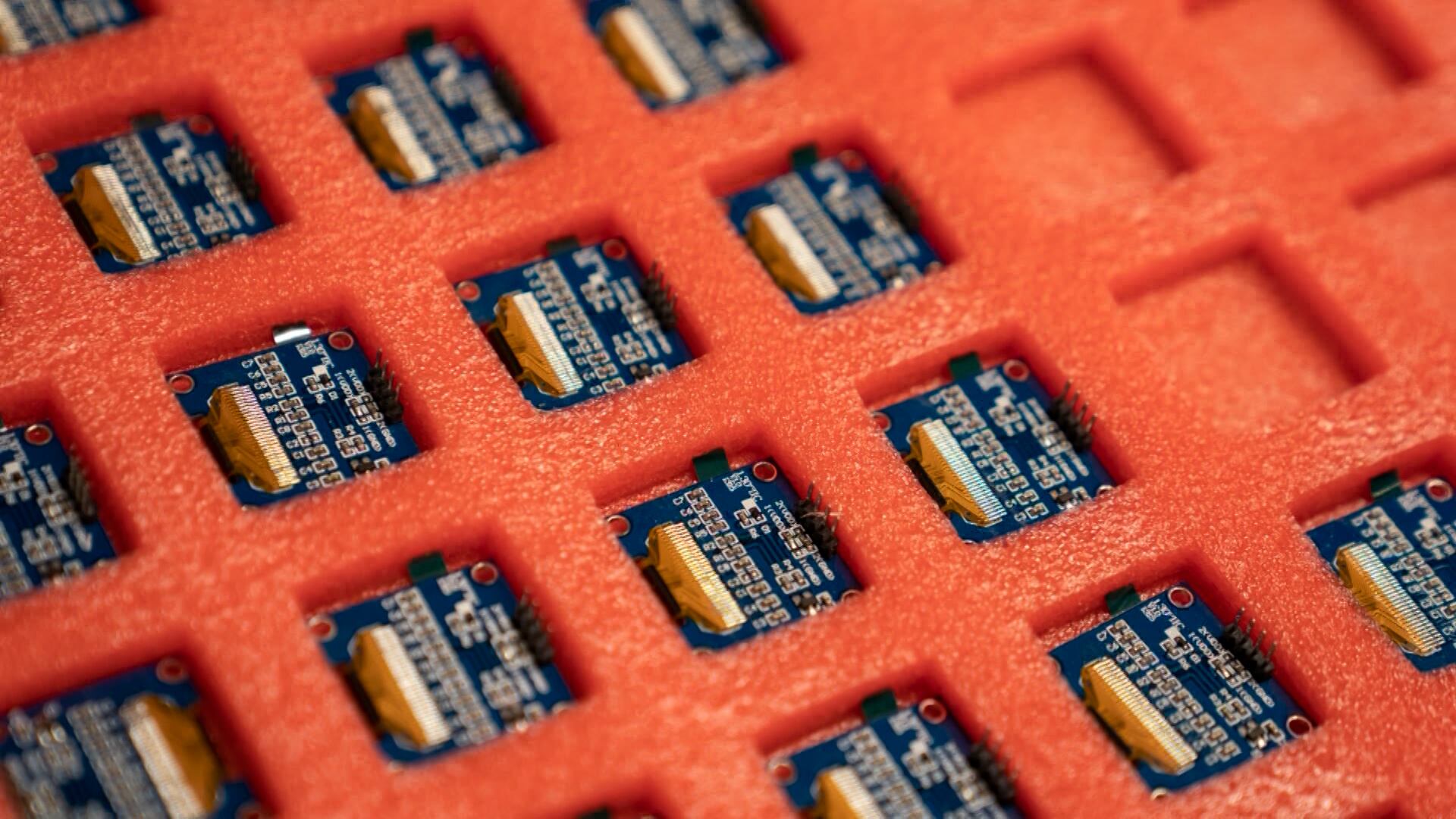
The Russia-Ukraine conflict drags on — and global economies could see pandemic-era prices and supply chain issues come back full force. Both countries supply key commodities and materials, including semiconductor production. That sector, in particular, was hit hard by the pandemic and was just beginning to see a recovery when the invasion began. What happens next? Do companies have enough to fall back on and can they rely on pandemic-era measures to stay afloat? Everett Millman, Chief Market Analyst at Gainesville Coins, joins Closing Bell to discuss which sectors are being hit the hardest, rising prices, how consumers could feel the impact, and more.