By Alex Veiga and Damian J. Troise

Updated 5:04 pm ET

Stocks ended broadly lower on Wall Street Tuesday as trading turned wobbly a day after the market notched its biggest jump in more than five weeks.

The S&P 500 fell 1% after having been up by 0.4% in the early going. Losses in banks, health care stocks, and household goods companies accounted for a big portion of the selling. A late-day slide erased early strength in technology stocks and companies that rely on consumer spending.

Bond yields mostly fell and the price of gold rose, signs that investors were feeling cautious.

“Today is a little bit of a pause day after a significant rally,” said Eric Freedman, chief investment officer at U.S. Bank Wealth Management.

Investors are betting that the economy and corporate profits will begin to recover from the coronavirus pandemic as the U.S. and countries around the world slowly open up again. However, concerns remain that the relaxing of stay-at-home mandates and the reopening of businesses could lead to another surge in infections, potentially ushering in another wave of shutdowns.

The S&P 500 lost 30.97 points to 2,922.94, snapping a three-day winning streak. The Dow Jones Industrial Average fell 390.51 points, or 1.6%, to 24,206.86. The Nasdaq composite dropped 49.72 points, or 0.5%, to 9,185.10. The Russell 2000 index of small-company stocks gave up 25.97 points, or 1.9%, to 1,307.72.

Wall Street kicked off the week with a bang, as optimism about a potential vaccine for COVID-19 and hopes for a U.S. economic recovery in the second half of the year pushed stocks sharply higher Monday, reversing all of the market's losses so far this month. Tuesday's selling cut into some of those gains. The S&P 500 is now down 13.7% from its all-time high in February.

Investors are focused on gauging the risk for a second or third wave of coronavirus cases as more swaths of the U.S. reopen for business.

“As long as we have a supportive Fed, a responsive legislative branch that is at least open to considering more stimulus, and we see openings occur on a measured, but consistent basis, we still think there’s still basis for this market to be propelled higher,” Freedman said.

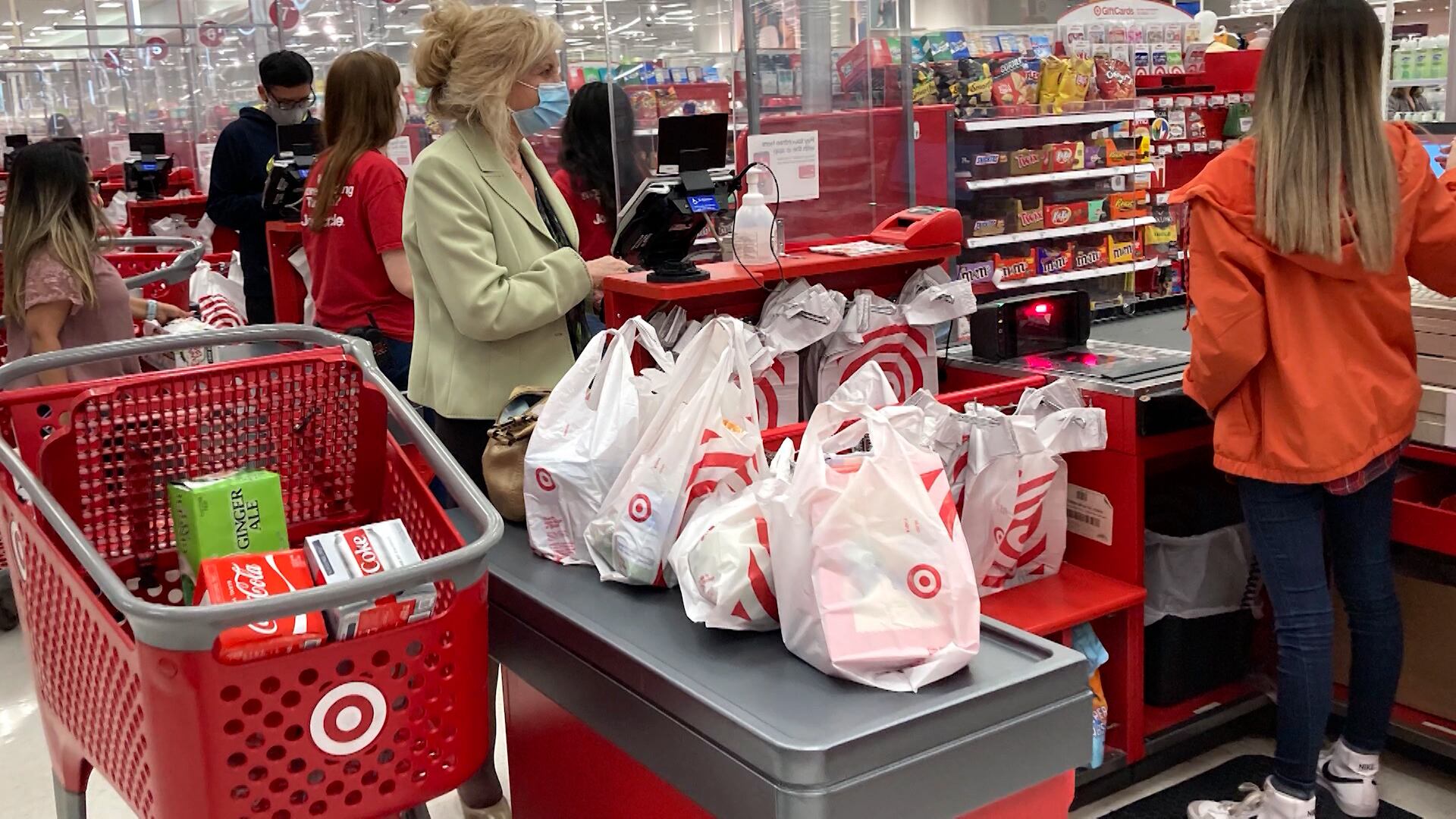
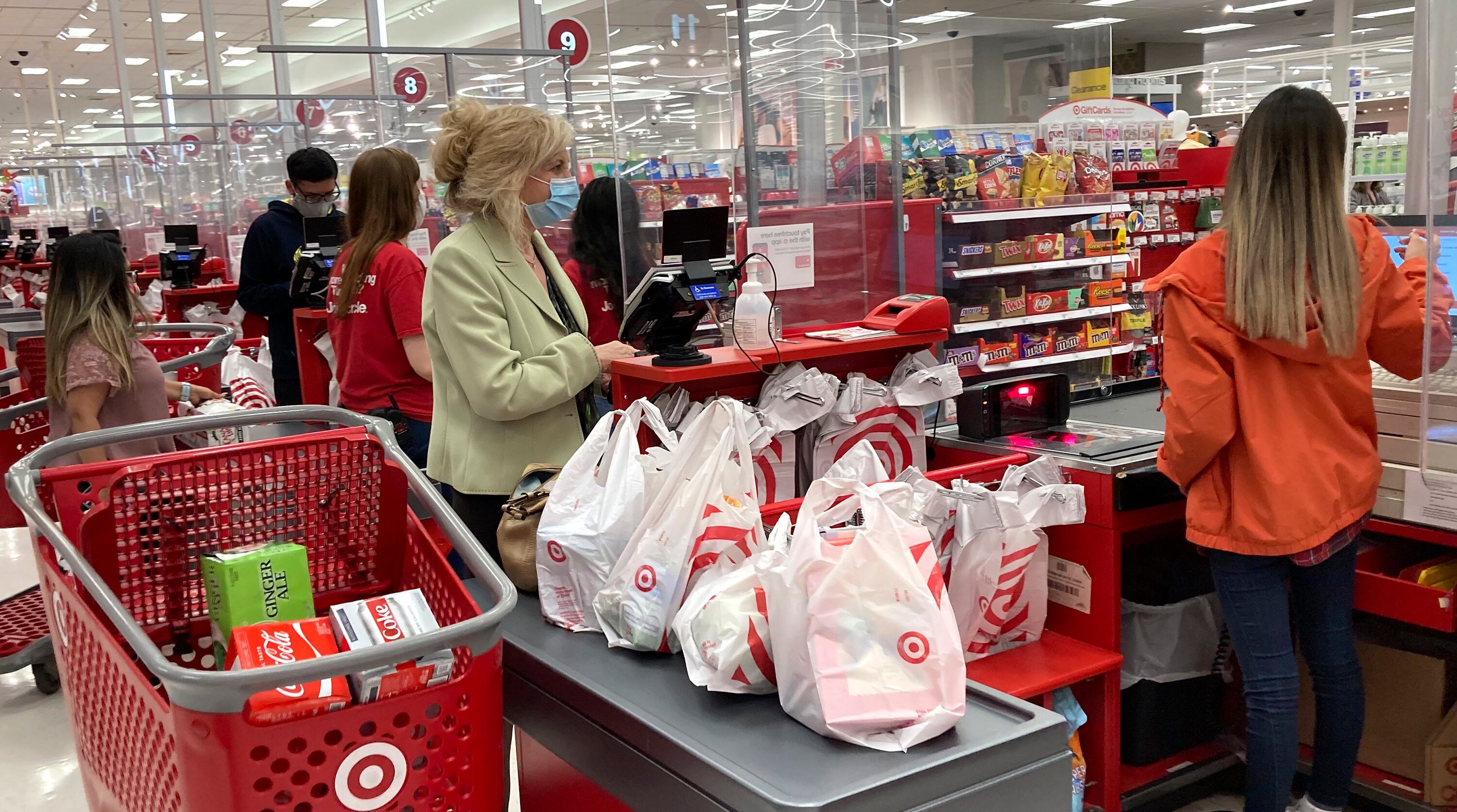
Still, quarterly results from big retailers Tuesday underscore the challenges companies face as long as the outbreak weighs on consumers and compels government officials to mandate restrictions on commerce. Companies that have been able to remain open or effectively amplify their e-commerce business have been able to fare far better than those that have had to temporarily close doors.

Walmart reported a 74% surge in fiscal first-quarter sales as people stocked up on crucial supplies while sheltering in place due to the coronavirus. Its earnings fell as it spent $900 million in additional compensation for workers, but still topped Wall Street's forecasts. Its shares initially headed higher but finished 2.1% lower.

Meanwhile, Kohl’s, whose stores have been closed during the outbreak, fell 7.7% after reporting that it swung to a $541 million quarterly loss as its revenue sank more than 40%.

Traders also hammered shares in Home Depot after the home improvement supply chain reported quarterly results that fell short of Wall Street's estimates. While the company benefited from a surge in homeowners rushing to buy essential supplies, increased spending on employee compensation and other costs related to the coronavirus dragged on its profits. The stock fell 3%.

“Investors have been looking for companies and sectors that could do well in the current environment,” said Sal Bruno, chief investment officer of IndexIQ. “Looking forward, where does that continued leadership come from?”

The Commerce Department said residential construction ground breakings fell in April to their lowest level in five years. But building permits, a gauge of potential future construction activity, fell less than analysts had expected. That helped push several homebuilder stocks higher. Beazer Homes USA led the pack, surging 5.9%.

Oil prices ended mixed, though they remained above $30 a barrel. Benchmark U.S. crude oil for June delivery rose 68 cents, or 2.1%, to settle at $32.50 a barrel. July delivery of Brent crude oil, the international standard, fell 16 cents, or 0.5%, to $34.65 a barrel.

Prices have firmed up as oil-producing nations cut back on output and as the gradual reopening of the economies around the globe helps spur demand, which crashed earlier this year due to widespread travel and business shutdowns related to the coronavirus. Crude oil started the year at about $60 a barrel.

Bonds yields mostly fell. The yield on the 10-year Treasury note, a benchmark for interest rates on many consumer loans, slid to 0.68% from 0.74% late Monday.

France’s CAC 40 lost 0.9%, while Germany’s DAX inched up 0.1%. Britain’s FTSE 100 dropped 0.8%. Markets in Asia finished higher.

Share:
More In Business
A New-Age Twist on Millenia-Old Remedies
William Li and Danielle Chang, co-founders of The Hao Life, join Cheddar Innovates to discuss how they're shaking up the $71 billion supplement industry by putting a modern spin on traditional natural Chinese remedies.
Stocks Close at Session Lows as Investors Digest Inflation, Earnings
Stocks closed at session lows Thursday, with the major indexes falling slightly for the shortened trading week. The S&P 500 fell 2.1% for the week, the Dow Jones Industrial Average fell 0.8%, and the tech-heavy Nasdaq fell 2.6%. Investors continue to keep a close eye on inflation data, as well as earnings. Nancy Tengler, Chief investment Officer at Laffer Tengler Investments, joins Closing Bell to discuss today's close, inflation, how the Fed will handle rising prices, earnings, and more.
U.S. Stocks Close Lower After Consumer Prices Jump 8.5%
The major U.S. indexes closed Tuesday off of session lows as investors digest the latest read on inflation, showing it remains hot. Wall Street is also preparing for earnings from big banks and monitoring potential policy moves from the Federal Reserve. Peter Tuchman, a stock trader at TradeMas, joins Cheddar News' Closing Bell and highlighted tech stocks in particular. 'The tech sector, which led us to record highs before the 1st of this year, are now the ones that are leading us lower,' he said.
Streaming Services Score Big with Live Sports — But Will Viewers Win Too?
The competition between streaming platforms is heating up as Apple TV+, HBO Max, and others acquire the rights to air live sports, oftentimes behind an exclusive paywall. While this is likely to entice some viewers, it also presents a risk that viewership will become fractured. Customers might steer away from subscription overload as content streaming options become seemingly endless. Jeff Agrest, deputy sports editor and media columnist at the Chicago Sun-Times, joins Closing Bell to discuss what it means for the live sports industry when content is put behind a paywall on streaming platforms, how it could impact viewership, impact on sports betting, potential acquisition targets, and more.
Coca-Cola Teams With Bill Nye for Its World Without Waste Initiative
The Coca-Cola Company is teaming up with science education personality Bill Nye as part of its World Without Waste Initiative to describe the bottle-to-bottle plastic recycling process through a vividly animated, stop-motion short film. Christine Yeager, director of sustainability at The Coca-Cola Company, North America, joined Cheddar News to talk about their initiative and the partnership. "We really wanted to partner with someone who can help us make recycling relatable, but also has a very um respected voice in the climate change space," she said.
Dan Ives Foresees That Elon Musk 'Ultimately Ends Up Owning Twitter'
Billionaire Elon Musk made waves after revealing he's making an attempt at a hostile takeover of the social media platform Twitter. The Tesla CEO is offering $43 billion to buy the social media platform outright with "freedom of speech" allegedly at the forefront of his agenda. Dan Ives, managing director of equity research at Wedbush Securities, is taking the tech entrepreneur seriously. "I think through many twists and turns over the coming months, he ultimately ends up owning Twitter because Twitter's board, their back is going to be against the wall," he said.
Consumers Dig Deeper Into Wallets as Retail Sales Rise Amid High Gas Prices
Retail sales grew 0.5 percent in March, largely being attributed to the rise in gas prices. Jharonne Martis, director of consumer research at Refinitiv, joined Cheddar News to discuss why consumer confidence has remained strong despite high prices. "What's holding on the consumer is the strong employment market that we have right now in the United States, which is one of the strongest we had in a very long time. If consumers feel that they are secure in their job, they're going to continue to spend," she said. However, Martis noted that signs that consumer spending is slowing down are already visible as well.
Absolut Vodka Brings Coachella to the Metaverse
Ann Mukherjee, the chairman and CEO of Pernod Ricard North America, joined Cheddar News to talk about Absolut Vodka’s decade-long partnership with the music festival Coachella. Perno Ricard's vodka brand has built the virtual world Absolutland in the Decentraland metaverse for users to explore. "We actually have a vending machine where you can actually purchase the cocktails that will be delivered right to your home," she said. The brand will also be featuring festival headliner Swedish House Mafia.
Here's What to Do if You Miss the Tax Day Deadline
The tax deadline in the U.S. is on April 18 this year, and some filers may still not be able to complete their return by then. Cheddar has partnered with Jackson Hewitt to let you know what you can do should you blow the deadline.
Load More