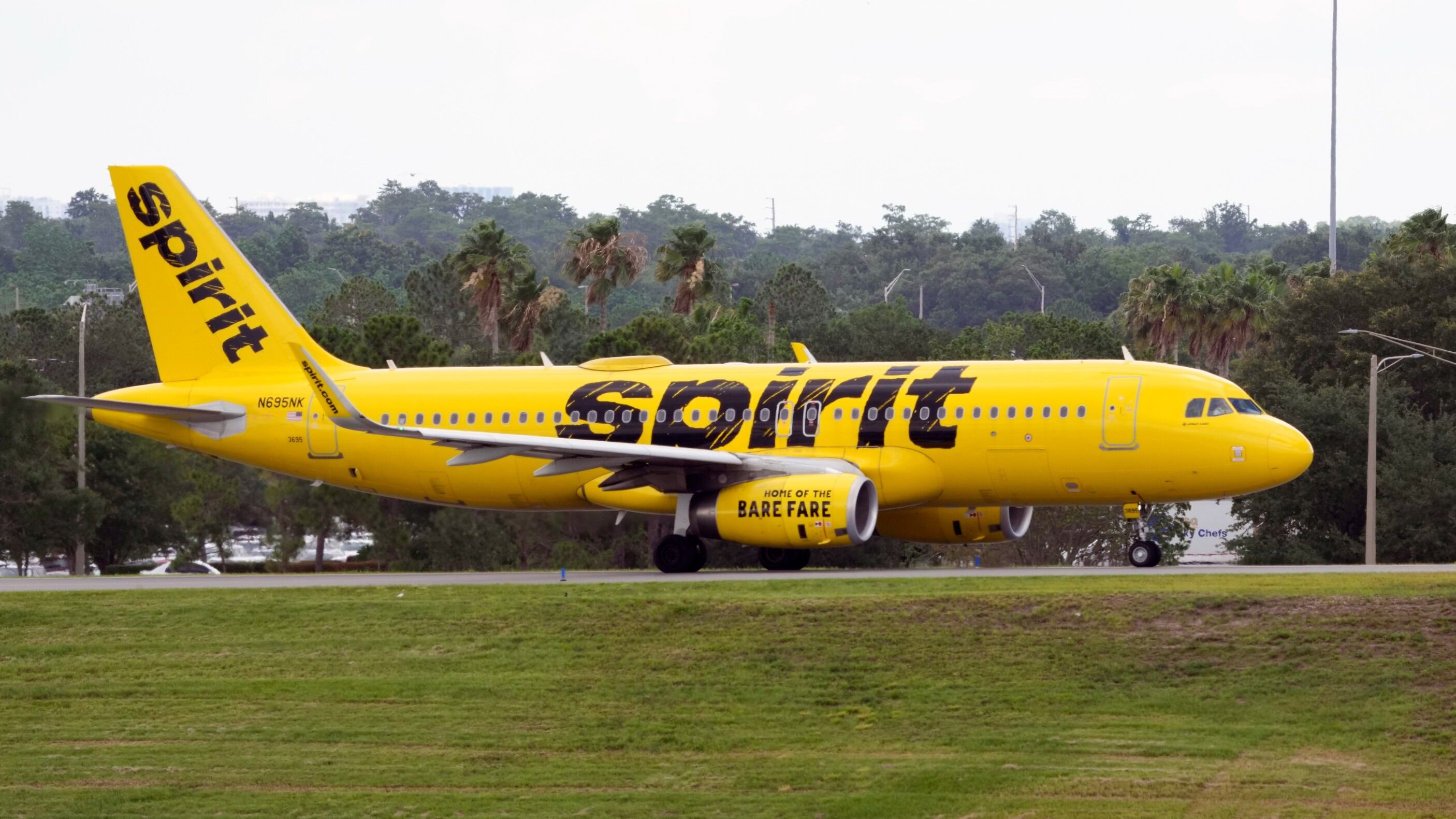
Spirit Airlines canceled about 100 flights on Friday after pulling some planes out of service for inspections, and the airline expects the disruptions to last several days.
Spirit did not describe the nature of the inspections and did not respond when asked for further information.
By Friday afternoon, Spirit had canceled 11% of its schedule for the day, easily the highest percentage of scrubbed flights among leading U.S. carriers, according to tracking service FlightAware.
“We’ve cancelled a portion of our scheduled flights to perform a necessary inspection of a small section of 25 of our aircraft,” Spirit said in a statement. “The impact to our network is expected to last several days as we complete the inspections and work to return to normal operations.”
The Federal Aviation Administration said it was aware of Spirit's decision to pull the planes from service for a “mandatory maintenance inspection." The FAA did not describe the inspections either, but said it "will ensure that the matter is addressed before the airplanes are returned to service.”
Spirit had 198 planes as of June 30, all of them variants of the Airbus A320 family, according to a company regulatory filing.
The airline told customers to check the status of their flight before going to the airport.
About half of the Spirit cancellations were at Florida’s Orlando International Airport, where Spirit is the second-largest carrier.
Spirit, which is based in Miramar, Florida, has canceled more than 3,600 flights this year, or 1.5% of its schedule. That is lower than the 2% cancellation rate at Frontier Airlines, a similar budget carrier, and rates for JetBlue Airways and United Airlines.