A Southwest Airlines executive apologized for the company's holiday season meltdown in front of a panel of senators on Thursday.
The airline company canceled nearly 17,000 flights and stranded more than two million customers between December 21 and December 31 following a winter storm, far more than any other airline. The Senate Commerce Committee questioned executives in a hearing that focused on those disruptions.
"Let me be clear, we messed up," Southwest Chief Operating Officer Andrew Watterson told senators. "I want to sincerely and humbly apologize to those impacted by the disruption,"
"In hindsight, we did not have enough winter operational resiliency," Watterson explained.
The Southwest executive assured the committee that the company has been working to improve its systems.
"We are doing a system-wide review of our preparedness for winter operations and will implement any measures necessary to mitigate the risk of an event like this occurring in the future," Watterson said.
The company has budgeted $1.3 billion for 2023 investments, upgrades, and maintenance of their IT systems.
Democratic Senator Ed Markey, unsatisfied with the executive's explanation, demanded the airline company give a "cash hardship payment" to those affected.
Some Republicans, however, were more sympathetic with the airline company.
"I've had multiple conversations with senior leadership at Southwest. I'm confident they understand it was an epic screw-up and that they are committed to doing everything possible to prevent its recurrence," Sen.Ted Cruz of Texas said.
Watterson testified the airline had reimbursed 273,406 customers, and that every impacted customer had been emailed flyer points, along with an apology.
But, the airline company would not pay customers directly for their inconvenience unless it was "reimbursement of a flight they took in the disruption," Watterson said.
The U.S. Transportation Department is also investigating Southwest for its flight scheduling throughout the disruption.
Bence Jendruszak, COO and Co-Founder of SEON, joined Cheddar News' Closing Bell, where he says his platform sees more victims of online fraud during economic downturns, but explains why his company's solution can stop that trend.
Andrew Miller, Chief Operating Officer at Benchmark Mineral Intelligence, joined Closing Bell to discuss the warning from Rivian's CEO about a possible EV battery shortage due to lack of access to key metals like lithium.
While the push for sustainable fashion has been gaining traction, traditional swimwear is often still made with toxic plastic fibers. Natalie Herzig joins Cheddar News to explain how her brand Argot Swim is sustainable from sourcing to shipping.
Mike Gauyo, writer and founder of Black Boy Writes Media, joins Cheddar News to talk about the new class of mentees for his Black Boy Writes/Black Girl Writes Mentorship Initiative.
Ron Carson, CEO and Founder of Carson Wealth, sits down with Cheddar's Hena Doba to share why he prioritizes giving back to his community and the world and to share the work being done by his charitable 'Dreamweaver Foundation.'
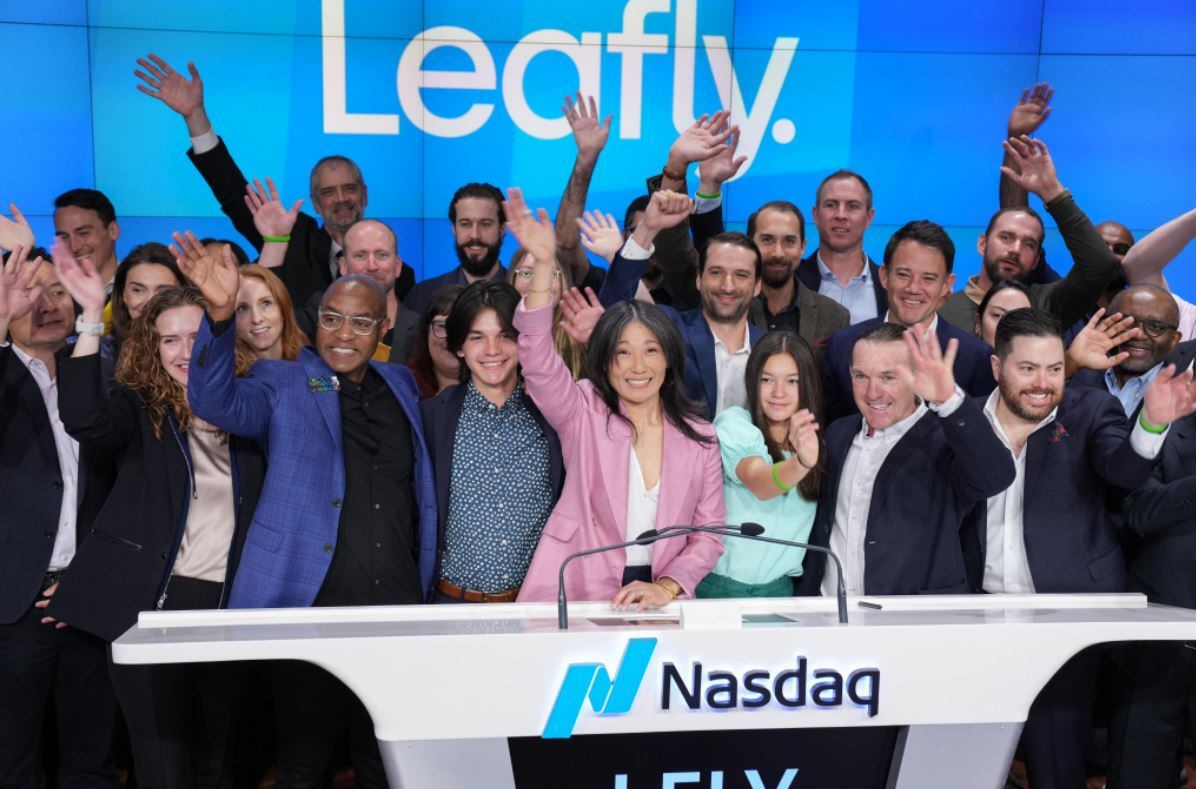
Fresh off of ringing the opening bell on the Nasdaq on the marijuana holiday, 4/20, Yoko Miyashita, CEO of cannabis website Leafly, joined Cheddar News to discuss the future of cannabis in the U.S. and the growth of her company going forward. "I think this is a new a new high, pardon the pun, but really elevating 4/20 from what used to be sort of an insider cultural moment to something that we're recognizing across the industry, really memorials the impact that this industry has," she said.
Fathom Digital Manufacturing, one of the largest on-demand digital manufacturing platforms in North America, went public late last year and serves the product development and manufacturing needs of companies such as Google, Amazon, Tesla, Johnson & Johnson, and more. CEO Ryan Martin joined Cheddar's Opening Bell to discuss what the IPO means to the company and how he thinks digital manufacturing can help mitigate supply chain issues seen throughout the pandemic. "We can take parts that would take 4-6 weeks condense that down into just days using additive manufacturing in many cases. And so it's all about speed," he said.