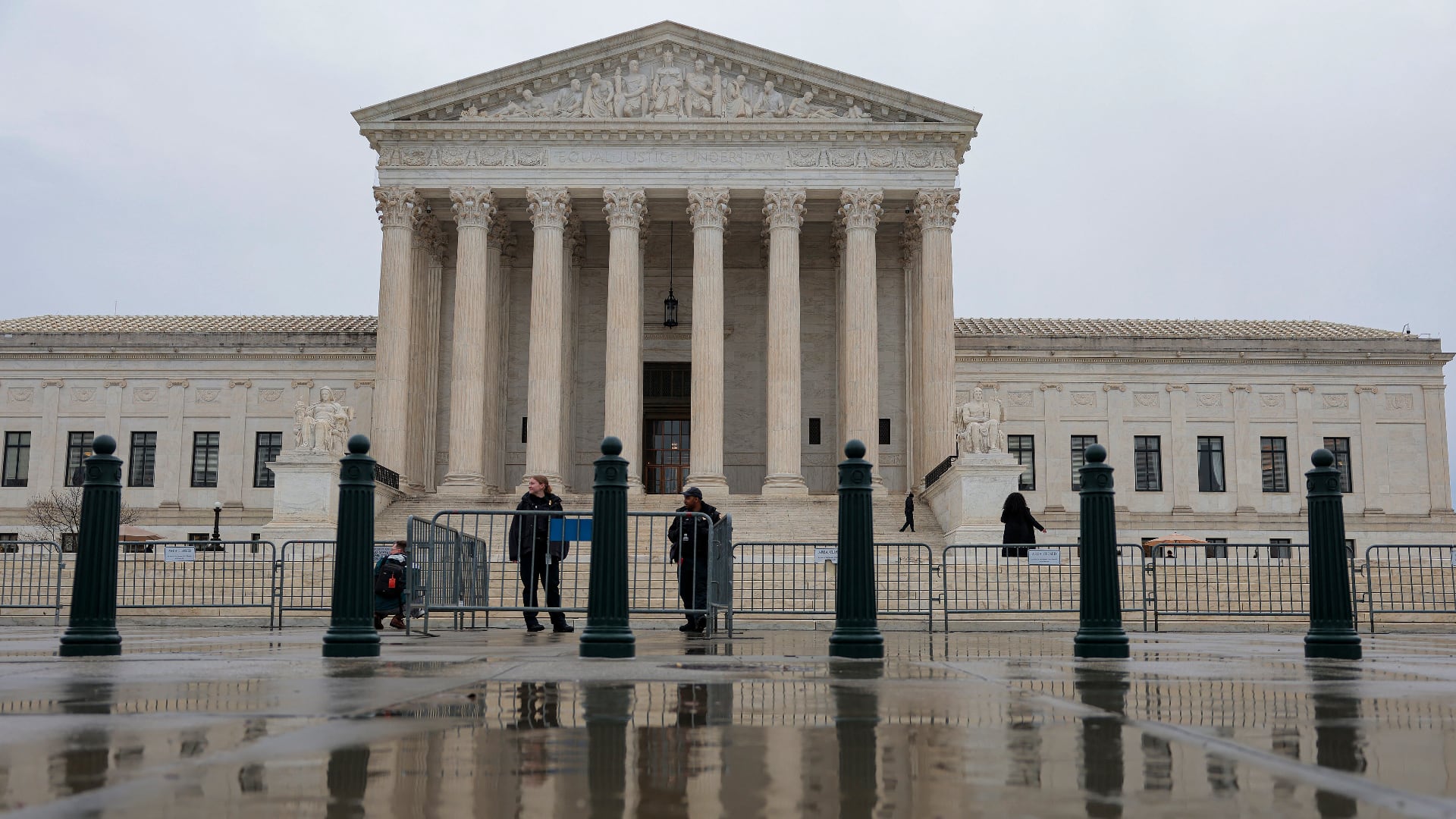
A Southwest Airlines executive apologized for the company's holiday season meltdown in front of a panel of senators on Thursday.
The airline company canceled nearly 17,000 flights and stranded more than two million customers between December 21 and December 31 following a winter storm, far more than any other airline. The Senate Commerce Committee questioned executives in a hearing that focused on those disruptions.
"Let me be clear, we messed up," Southwest Chief Operating Officer Andrew Watterson told senators. "I want to sincerely and humbly apologize to those impacted by the disruption,"
"In hindsight, we did not have enough winter operational resiliency," Watterson explained.
The Southwest executive assured the committee that the company has been working to improve its systems.
"We are doing a system-wide review of our preparedness for winter operations and will implement any measures necessary to mitigate the risk of an event like this occurring in the future," Watterson said.
The company has budgeted $1.3 billion for 2023 investments, upgrades, and maintenance of their IT systems.
Democratic Senator Ed Markey, unsatisfied with the executive's explanation, demanded the airline company give a "cash hardship payment" to those affected.
Some Republicans, however, were more sympathetic with the airline company.
"I've had multiple conversations with senior leadership at Southwest. I'm confident they understand it was an epic screw-up and that they are committed to doing everything possible to prevent its recurrence," Sen.Ted Cruz of Texas said.
Watterson testified the airline had reimbursed 273,406 customers, and that every impacted customer had been emailed flyer points, along with an apology.
But, the airline company would not pay customers directly for their inconvenience unless it was "reimbursement of a flight they took in the disruption," Watterson said.
The U.S. Transportation Department is also investigating Southwest for its flight scheduling throughout the disruption.
Jharonne Martis, director of consumer spending at Refinitiv, joined Wake Up With Cheddar's Brad Smith to break down positive earnings results from Home Depot and Walmart. Martis also discussed what October's retail sales data means for the upcoming holiday season.
The housing market is hot right now - so hot it was too much for Zillow to handle. While the pandemic is playing a major part in that, now it has reached a point where houses on average are only on the market for about a week before being sold. Cheddar News was joined by Tushar Garg, CEO and Co-Founder of Flyhomes to talk about how this came to be and what comes next.
Markets were pointing to a higher open to kick off the third trading week in November. It comes as stocks come off a losing week in reaction to October's consumer price index--which showed inflation at its highest point in over 30 years.
Ryan Detrick, Chief Market Strategist for LPL Financial joined Wake Up with Cheddar to discuss.
Harvard Business School Professor Ranjay Gulati joined Wake Up With Cheddar to break down the massive challenge the Biden Administration faces in ensuring projects in the $1.2 trillion infrastructure bill are completed on time and on budget.
Jill is joined by Baker Machado to talk all things infrastructure: where will the money go and who’s in charge? Plus, Sesame Street has its first Asian-American muppet. And a trailer for the trailer for Spiderman. Huh?
New York has always been home to some of the world’s tallest towers, but in the last 10 years the city has seen an influx of super skinny buildings towering over Central Park, built exclusively for the ultra-rich. With demand for luxury high-rise vistas being higher than ever, building developers are using every zoning opportunity they can to push height limits – and there’s one loophole that’s helping make that happen.