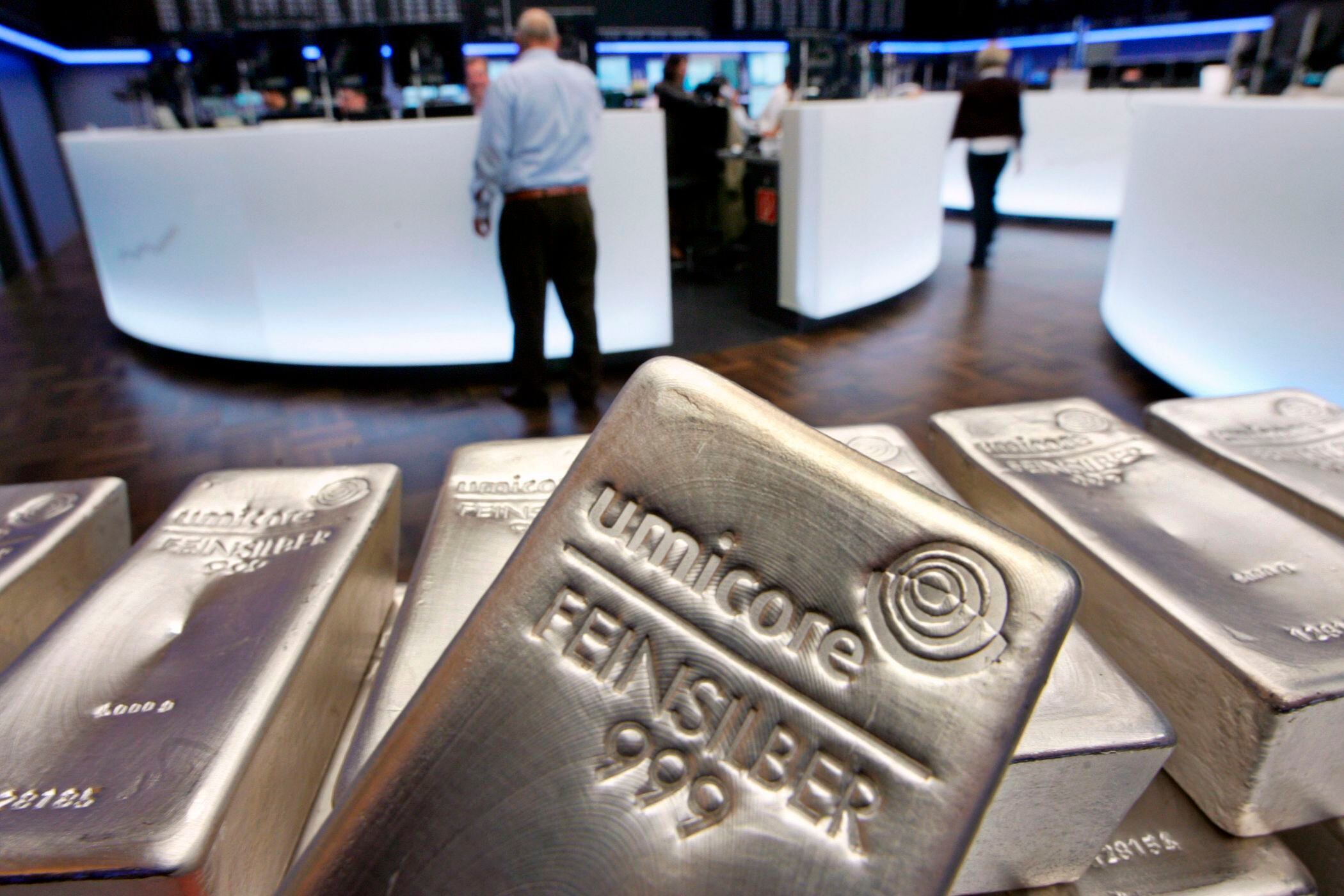
In this file photo dated Wednesday, May 9, 2007, Silver bullion, bars weighing five kilograms each, are displayed in the trading room of the stock exchange in Frankfurt, Germany. Silver futures jumped more than 10% on Monday Feb. 1, 2021, following strong gains over the weekend. (AP Photo/Michael Probst, FILE)
The erratic trading in shares of underdog companies like GameStop that turned markets combustible last week appears to have migrated to commodities, sending silver prices surging to an eight-year high.
Silver futures jumped more than 9% on Monday to $29.42 per ounce with #silversqueeze trending on Twitter. That exuberance spread to companies that mine precious metals, especially silver. Shares of Pan American Silver surged more than 9%, First Majestic Silver rose 18.7%, Hecla Mining spiked 21.8%, and Coeur Mining soared 17.6%.
Some analysts called price jump the latest assault by the smaller investors who sent GameStop soaring recently. But many of those same traders instead called it a trap set by hedge funds to divert their attention away from GameStop, as the saga captivating Wall Street gets even more dramatic.
An online army of Reddit traders banded together for the past week to snap up thousands of shares of GameStop, AMC and other struggling chains, stocks that have been heavily shorted (bets that the stock will fall) by a number of hedge funds. In the process, they've done heavy damage to those hedge funds in a stunning reversal of financial power on Wall Street.
Some of these smaller traders believe the hedge funds that were pillaged last week are behind the surge in silver. Communications on messaging boards claim hedge funds have now become active on Reddit anonymously, attempting to drive them out of GameStop bets and into silver, but only after hedge funds had taken huge positions.
“IT’S A TRAP!” one Redditor warned, though no one really seemed certain.
Meanwhile, GameStop shares dropped 28% to $233 but the stock price has been tremendously volatile of late. Last week a 44% drop on Thursday was followed by a 68% jump Friday.
The number of GameStop shares that have been shorted (bets that the stock will fall), were slashed by more than half in recent days, according to a report Monday by the analytics firm S3 Partners.
Last week’s turmoil caused hedge funds to pull back on their investments by the sharpest degree since February 2009, during the market collapse caused by the financial crisis, according to Goldman Sachs, which provides services such as clearing and consulting to hedge funds.
Goldman says hedge funds have have been getting out of both short sales, where they’re betting a stock will fall, and more traditional investments that bank on rising prices “in every sector,” according to a Goldman Sachs report Monday.
Even so, hedge funds' exposure to the stock market remains close to record levels. That means there’s still risk for more sell-offs by hedge funds.
The narrative has burst from financial pages, reaching even the White House, where President Joe Biden and Treasury Secretary Janet Yellen were peppered with questions about it last week.
On Monday, White House press secretary Jen Psaki was asked about GameStop and said that the incident/market volatility raises “an important set of policy issues.”
“We think congressional attention to these issues is appropriate,” Psaki adds.
The story has also moved out of Reddit chatrooms and into places where silver actually trades hands. Coin dealers are being overwhelmed by orders Monday.
The Silver Mountain, a Netherlands-based bullion dealer, said on its website that, “Due to extreme market volatility we cannot accept any new orders at this moment,” adding it hoped to reopen by the afternoon.
____
Jonathan Lemire contributed to this story from Washington.
Updated on February 1, 2021, at 3:42 p.m. ET with the latest details.
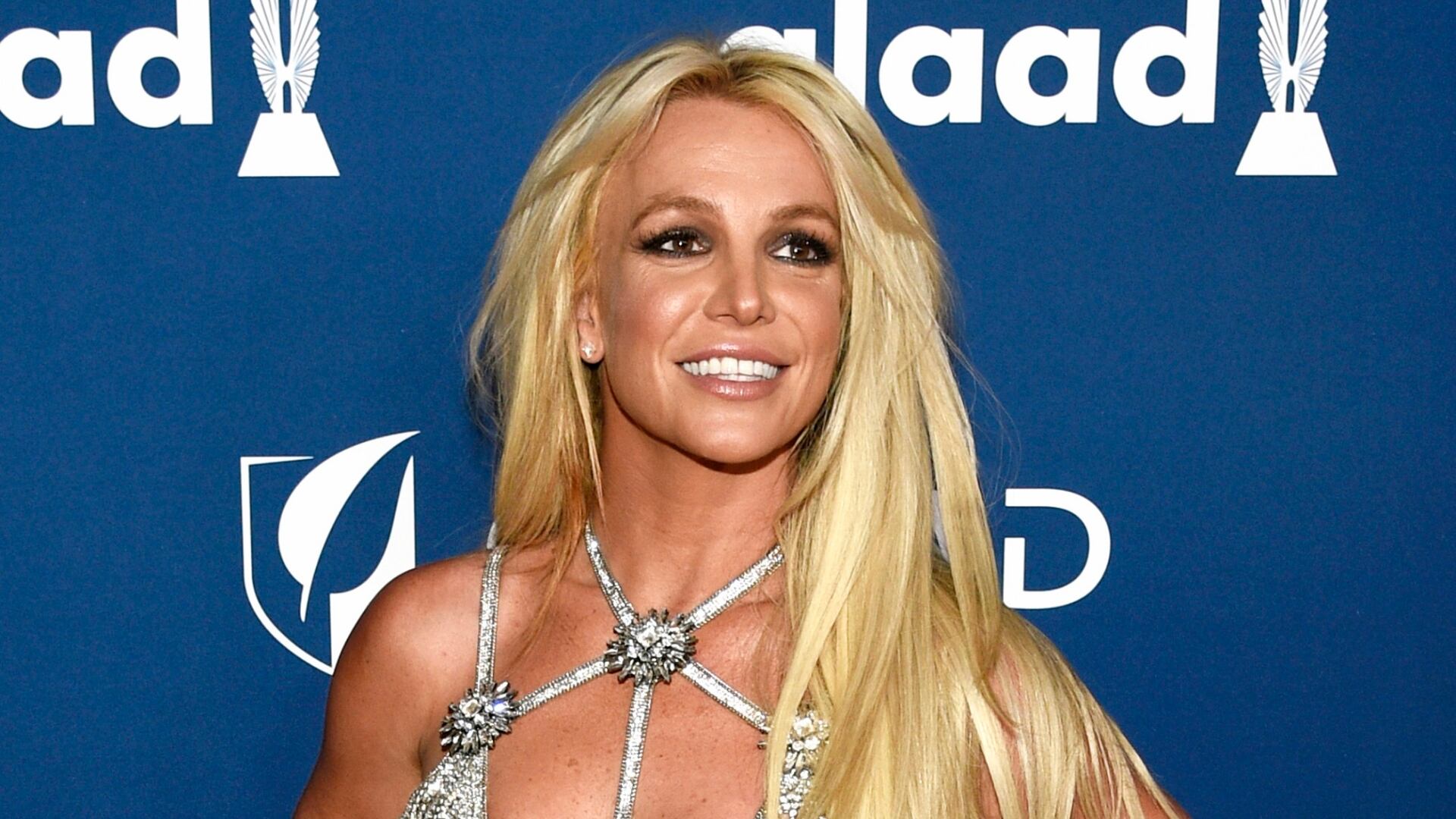
A judge has granted Britney Spears the right to begin executing documents on her own behalf. For the last 14 years, Spears was unable to sign off on her own paperwork due to her recently terminated conservatorship.
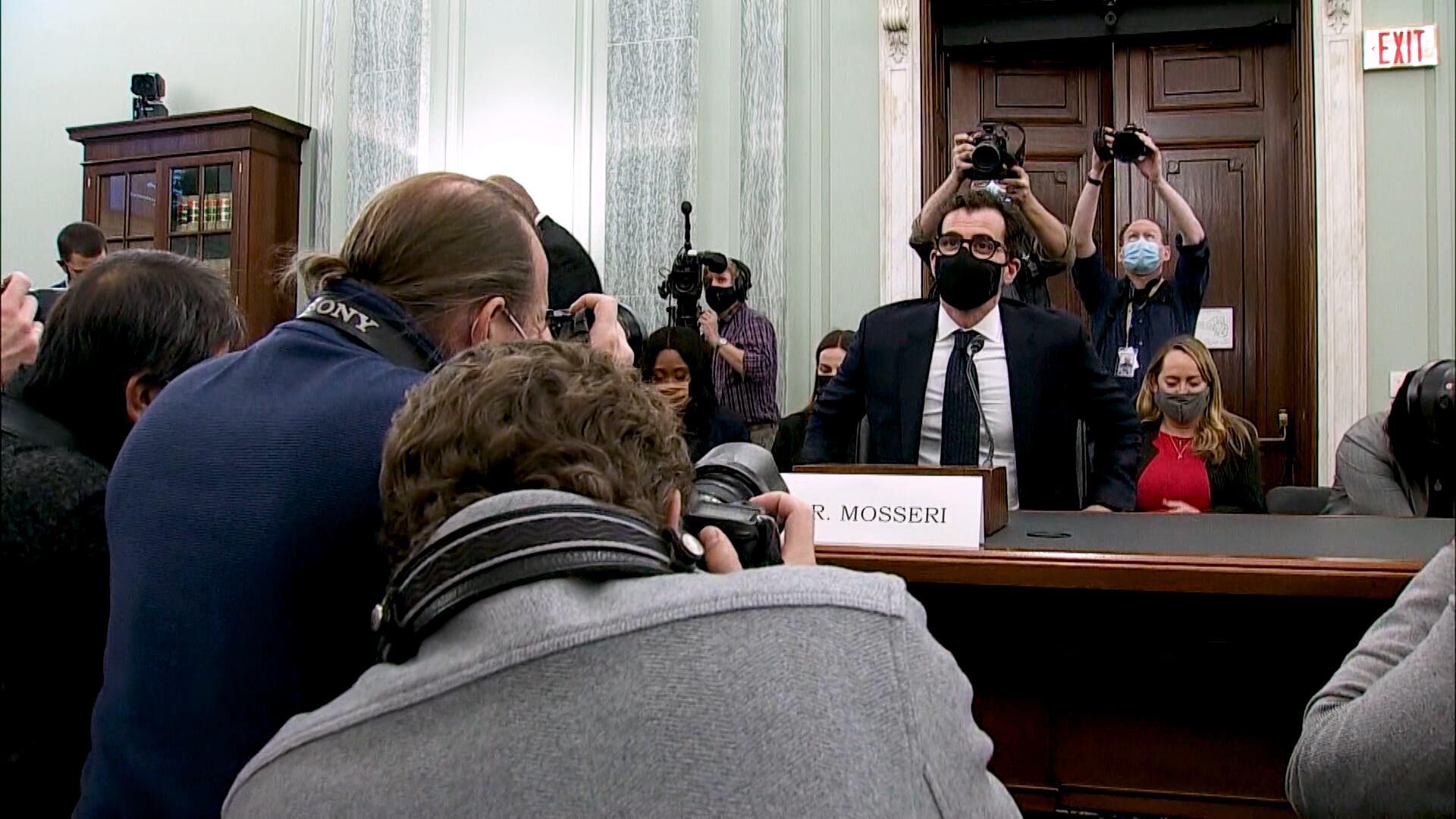
Instagram CEO Adam Mosseri faced a bipartisan Congressional grilling this week as the Senate inquired about safety practices for protecting the mental wellbeing of young people on the platform. Sen. Marsha Blackburn (R-Tenn.) joined Cheddar to talk about the hearing and how she was disappointed in Instagram coming unprepared with relevant information or documents. Blackburn also offered concern that the platform could continue with building a kids-only version despite having drawn significant opposition from the public.
Cheddar Innovates gets a look at the satellite that's searching for the earliest light from the big bang, plus a former Nike executive breaks down what the new era of sportswear looks like.
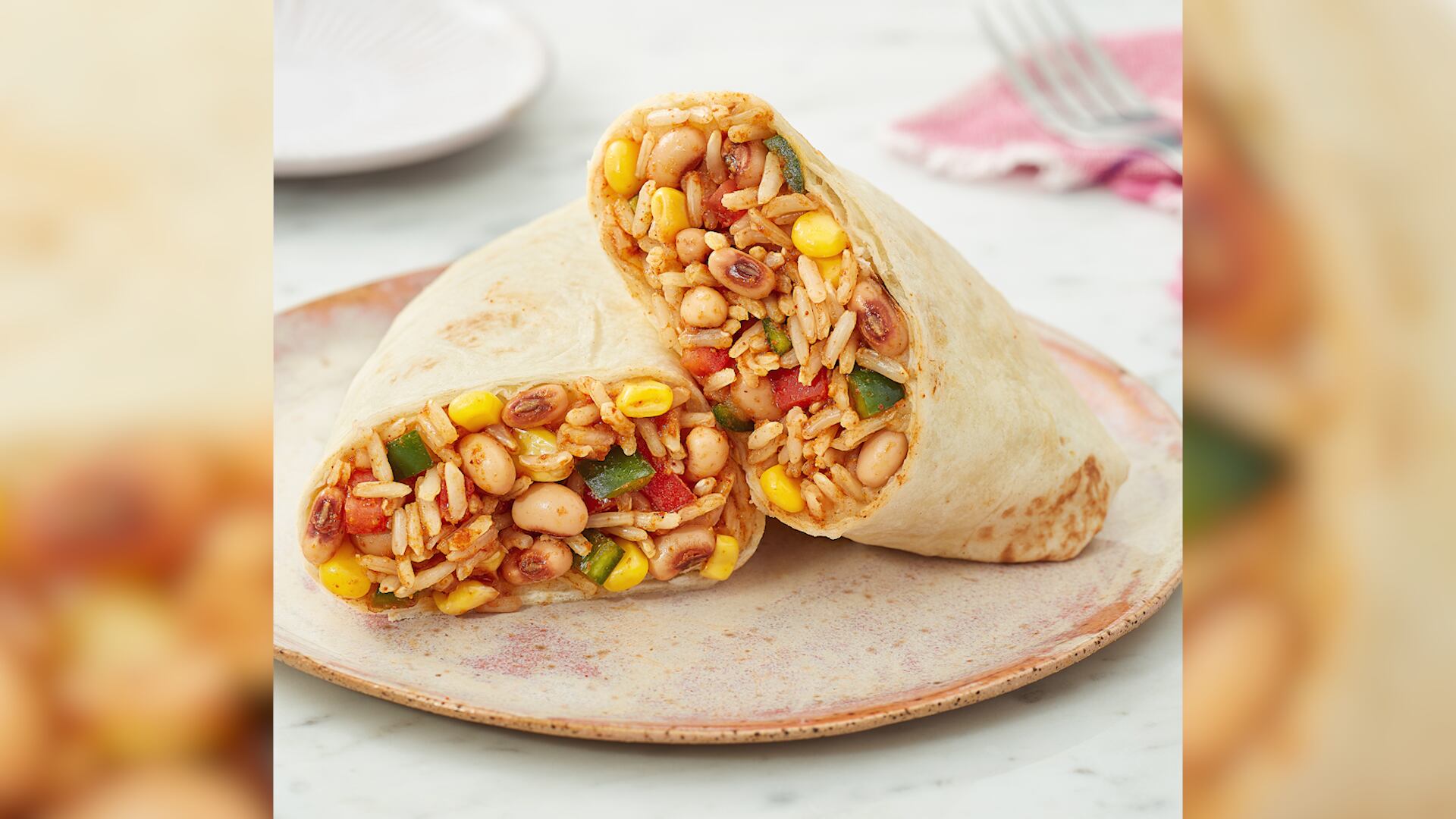
Research finds that the market for plant-based foods is worth $7 billion, but a lot of the plant-based and vegan options on our shelves aren't as healthy as they seem. Enter 'Cool Beans.' Tyler Mayoras joins Cheddar Innovates to talk about his whole-food, plant-based burrito brand.
Dominique Broadway, CEO and founder of Finances Demystified, joined Cheddar to talk about the rising number of buy now, pay later (BNPL) services that are available to online shoppers. She noted that the desire for instant gratification among younger shoppers is at least one driver behind these services but said that without restraint it can be easy to fall into a mountain of debt. However, Broadway said this reverse layaway concept could be a huge opportunity for small and medium-sized businesses to increase their sales.
Ford Pro has teamed up with Salesforce to launch 'VIIZR.' a new software service designed to help small businesses and tradespeople succeed. The newly launched tool will help small businesses simplify commercial activities including invoicing, scheduling and managing requests, from one integrated, cloud-based platform. Ted Cannis, CEO, Ford Pro, joined Cheddar to discuss.
The Great Resignation has shown some signs of slowing in October with the number of those who quit their jobs falling by 4.7 percent to 4.16 million. This comes as worker strikes and calls for unionization ramp up. Jane Oates, president at WorkingNation joined Cheddar's "Opening Bell" to discuss the implications.
Cresco, a publicly traded, vertically integrated cannabis and medical marijuana company, recently reported its third quarter earnings. The company met expectations for EDITDA, but slightly missed on revenue, and reported a pretty significant widening of losses this year compared to the same time last year. Charlie Bachtell, CEO of Cresco Labs, joined Cheddar to explain what happened and his hopes for the future of the company.
a new study by The Buy Safe America Coalition shows retail theft has ballooned to over $68 billion per year. Most of these thefts are the result of something called organized retail crime. Those stolen goods are resold to unsuspecting consumers, often on popular online marketplaces like Facebook marketplace, eBay, OfferUp, and letgo. Mike Combs, Director of Organized Retail Crime Investigations at The Home Depot, joined Cheddar to discuss organized retail crime, how to identify it, and what can be done to stop it.
MARLOWE., the men's skincare and grooming brand, has announced 23-year-old professional boxer Ryan Garcia as "Chief Marlowe Officer" and co-owner of the brand. In this role, Ryan will help boost brand awareness, oversee product design, and strategize digital marketing content for his signature products. Ryan joined Cheddar to discuss the partnership and his boxing career.