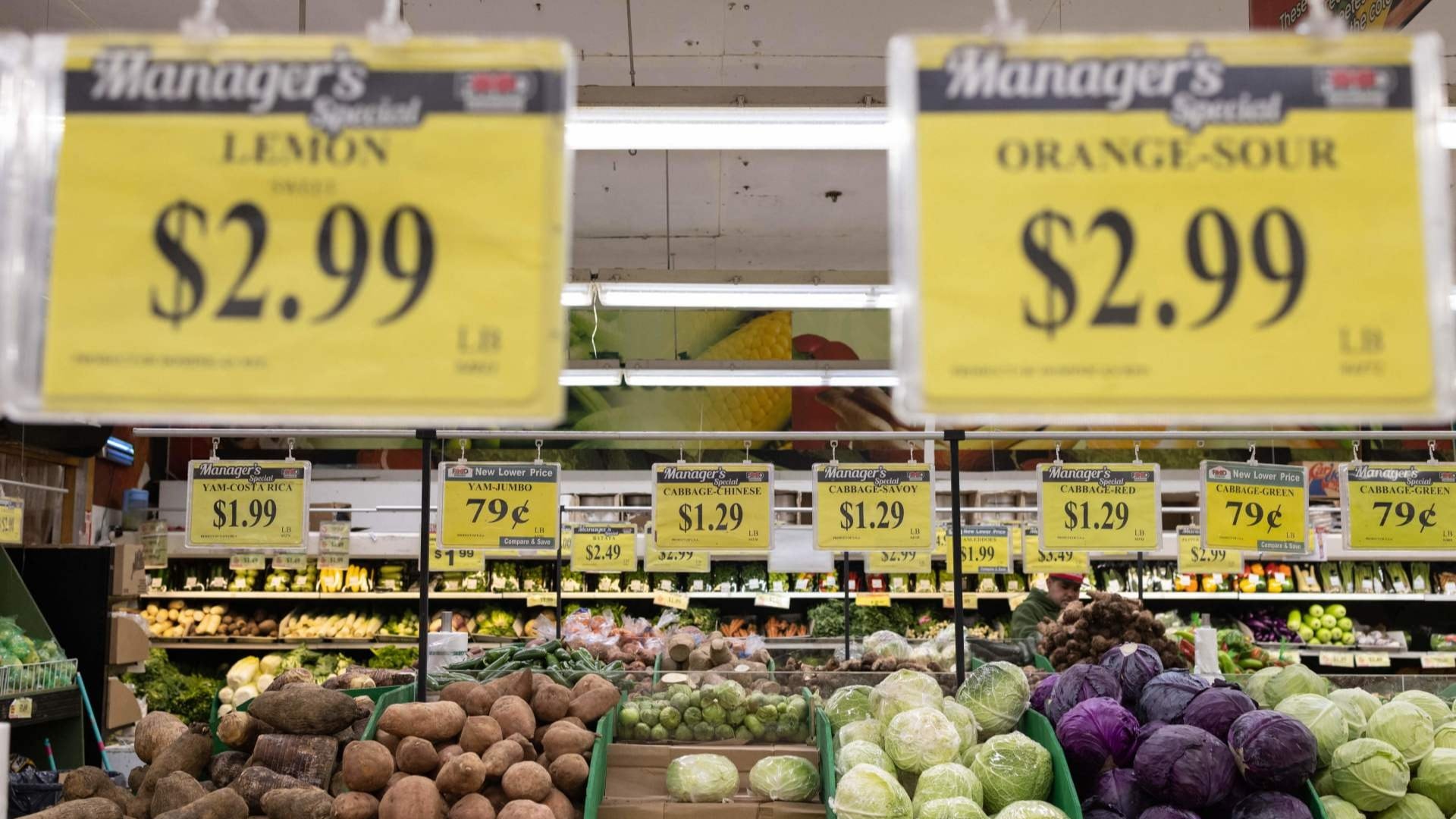
Prices rose half a percent in January, according to the latest consumer price index. That is up from a 0.1 percent decline in December, and five times the 0.1 percent increase in November.
The monthly uptick was in line with expectation, though the year-over-year rate came in higher than expected 6.4 percent, a marginal drop from a 6.5 percent rate in December.
Shelter (i.e. housing) contributed the largest share to the monthly increase, rising 0.7 percent.
Energy costs were also up across the board. The price of piped gas shot up 6.7 percent, while energy overall was up 2 percent after two straight months of declines.
Food prices, meanwhile, were up 0.5 percent. That is up from 0.4 percent in December, but still low relative to the last six months.
Used car prices also continued their steady decline, dropping 1.7 percent month-over-month and 11.6 percent year-over-year.
Despite the month-over-month drop, the annual rate has slowed for seven straight months.
Stocks gave up an early gain and turned lower Friday, remaining on track for weekly losses in this holiday-shortened week.
A bulk carrier vessel became wedged Thursday in Egypt’s Suez Canal, briefly blocking traffic in one lane of crucial global waterway, Egyptian authorities said.
While the notoriety of the Coyote Ugly Saloon chain has always ensured customers, it is facing a new issue: service industry worker shortages.
Stocks on Wall Street lost more ground Thursday after a small early gain faded, keeping the S&P 500 and the Nasdaq headed for their first weekly decline in three weeks.
The number of Americans seeking unemployment benefits fell last week to 310,000, a pandemic low and a sign that the surge in COVID-19 cases caused by the delta variant has yet to lead to widespread layoffs.
Stocks are closing lower on Wall Street Wednesday following a Federal Reserve report that shows U.S. economic activity slowed this summer amid rising worries over resurgent coronavirus cases and mounting supply chain problems and labor shortages.
Solar energy has the potential to supply up to 40% of the nation’s electricity within 15 years — a 10-fold increase over current solar output, but one that would require massive changes in U.S. policy and billions of dollars in federal investment to modernize the nation's electric grid, a new federal report says.
The company overseeing the response to a large oil spill spurred by Hurricane Ida said Tuesday that a containment dome has been placed over a broken undersea pipeline, stemming the flow into the Gulf of Mexico.
Amazon to Open 2 Cashier-less Whole Foods Stores Next Year
Tech stocks lead Wall Street indexes lower in early trading