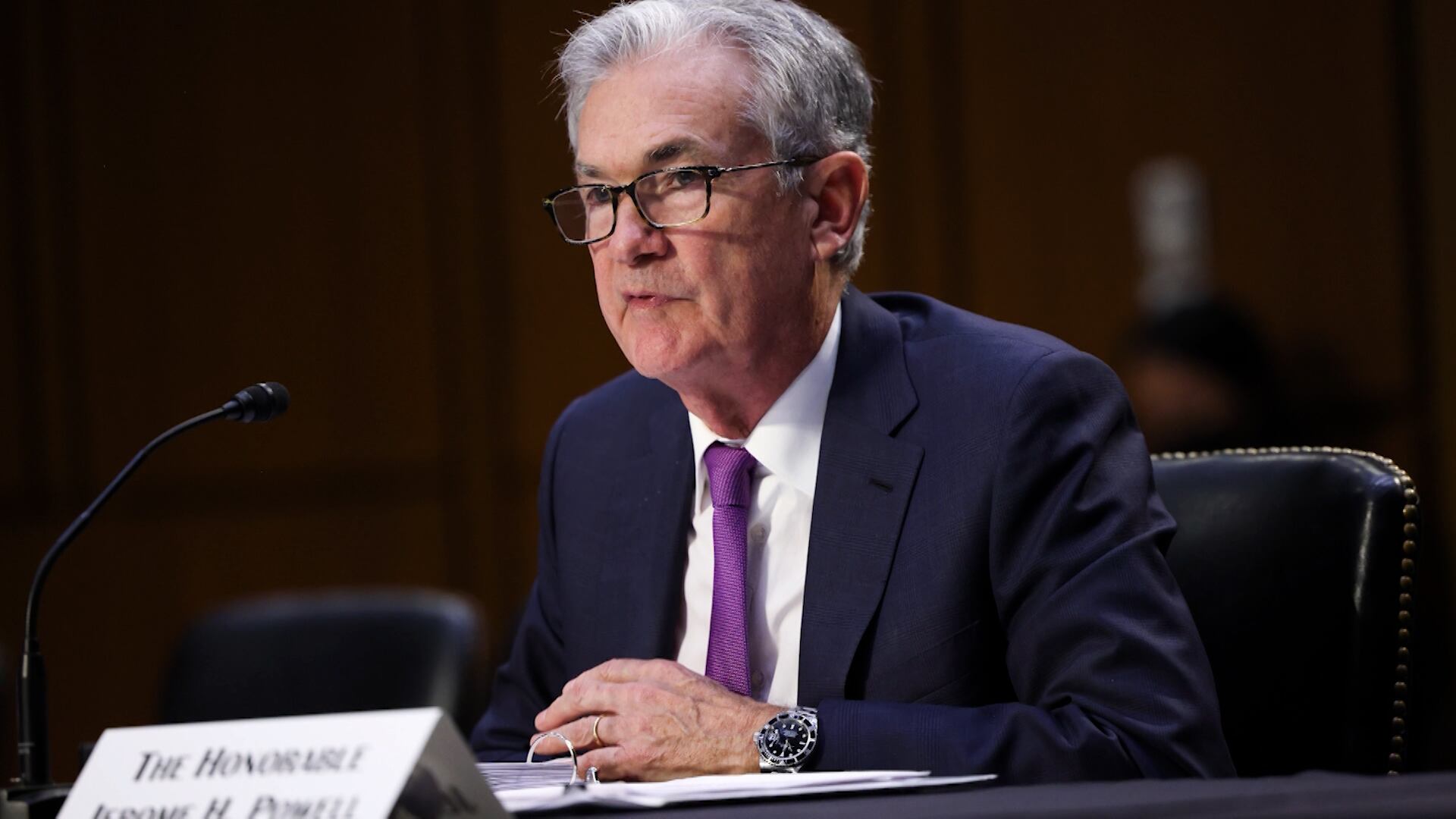
Surging inflation has eased in recent months, but more evidence is needed to show that price increases are coming down in the long term, Federal Reserve Chair Jerome Powell said Wednesday. (Photo by Yuki IWAMURA / AFP) (Photo by YUKI IWAMURA/AFP via Getty Images)
Prices rose half a percent in January, according to the latest consumer price index. That is up from a 0.1 percent decline in December, and five times the 0.1 percent increase in November.
The monthly uptick was in line with expectation, though the year-over-year rate came in higher than expected 6.4 percent, a marginal drop from a 6.5 percent rate in December.
Shelter (i.e. housing) contributed the largest share to the monthly increase, rising 0.7 percent.
Energy costs were also up across the board. The price of piped gas shot up 6.7 percent, while energy overall was up 2 percent after two straight months of declines.
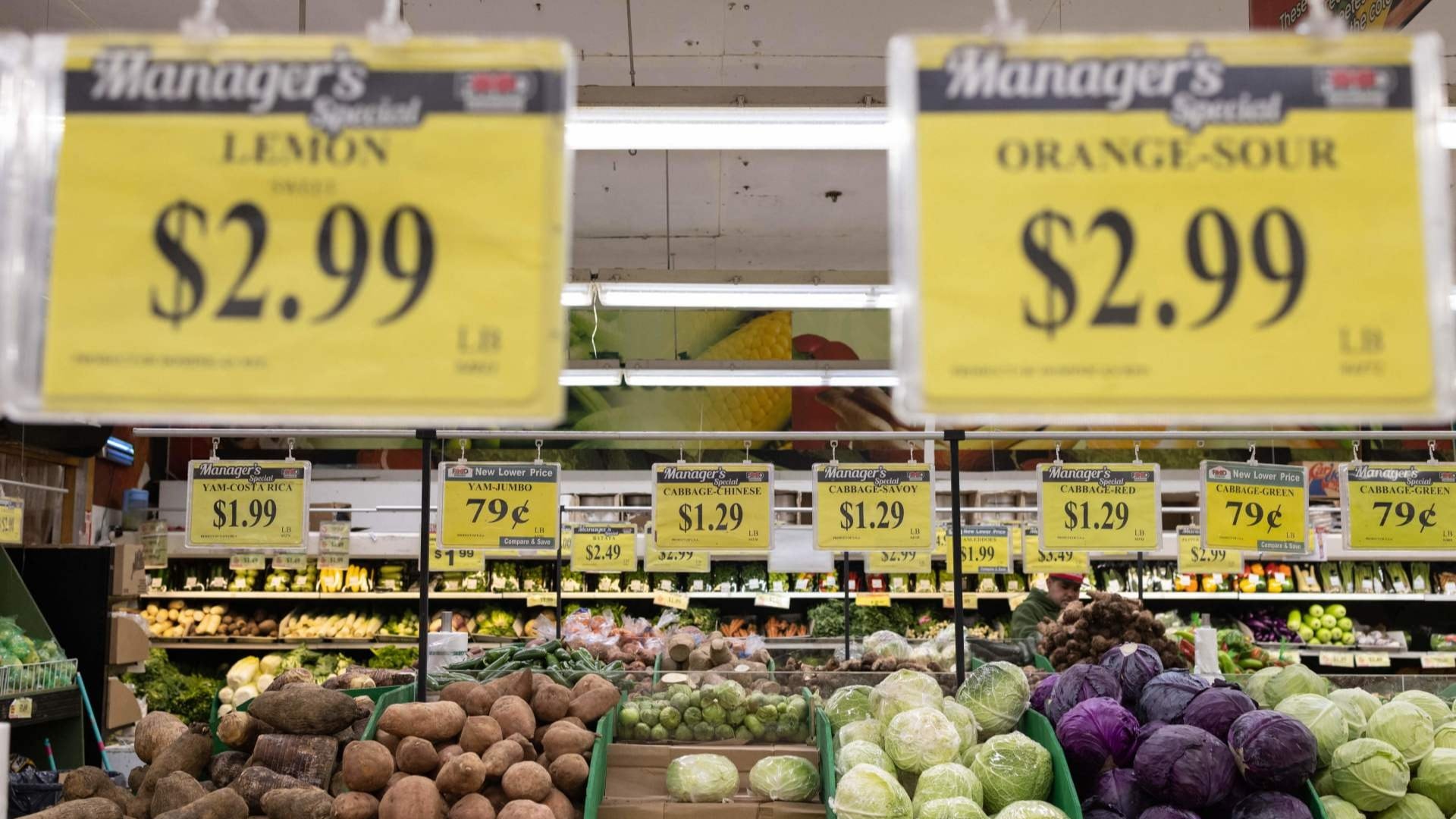
Food prices, meanwhile, were up 0.5 percent. That is up from 0.4 percent in December, but still low relative to the last six months.
Used car prices also continued their steady decline, dropping 1.7 percent month-over-month and 11.6 percent year-over-year.
Despite the month-over-month drop, the annual rate has slowed for seven straight months.
Markets opened higher this morning as oil prices fall and investors await a decision from the Federal Reserve. Keith Fitz-Gerald, Chief Investment Officer, Fitz-Gerald Group joined Cheddar's Opening Bell to discuss.
Tommy Mancuso, President & Co-Founder of the BAD Investment Company, talks about the likelihood of the Fed decision's decision triggering a recession and the war Ukraine is impacting U.S. investors.
Scott Ladner, CIO at Horizon Investments, breaks down the latest geopolitical risks for U.S. investors and how oil in the near term may push higher amid the commodity supply shock.
In another sign of the pandemic housing boom, a record number of homes are now worth at least $1 million. According to new data from Redfin, 8.2% of U.S. properties were valued at $1 million or more last month, nearly double the pre-pandemic share. Daryl Fairweather, Chief Economist at Redfin, breaks down the data and what it means for millions of American families.
Erik Lundh, Principal Economist at The Conference Board, discusses how the war in Ukraine impacts the Fed's decision on interest rates and what hikes could mean for the U.S. economy.
Angelo Zino, Vice President & Senior Industry Analyst at CFRA research, discusses Russia and Ukraine's role in semiconductor manufacturing and the factors impacting the global production on chips.
Catching you up on what you Need to Know on March 16, 2022, with updates on Ukraine and Russia, a container ship gets stuck in the Chesapeake Bay, Disney employees stage a walkout over the "Don't Say Gay" law in Florida, and NASA completes its first spacewalk of 2022.
U.S. chipmaker Intel unveiled plans on Tuesday to invest up to $88 billion across Europe as part of an ambitious expansion aimed at evening out imbalances in the global semiconductor supply chain.
With the Fed about to the announce a 25 basis point interest rate hike on Wednesday, what exactly does this mean for investors, consumers, and businesses?
Longtime Starbucks CEO Howard Schultz is returning to lead the company on an interim basis after the coffee giant’s current CEO announced his retirement.