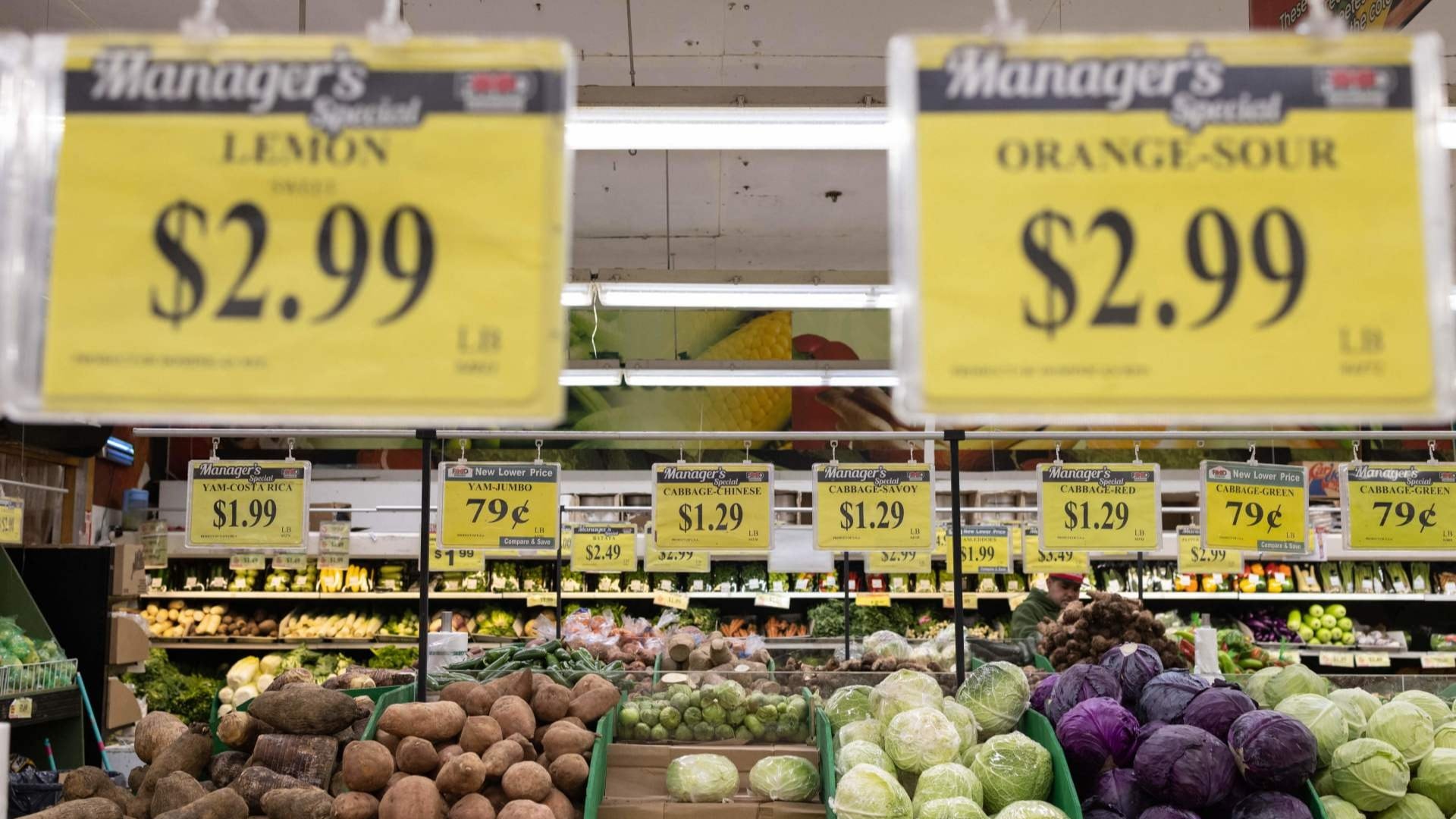
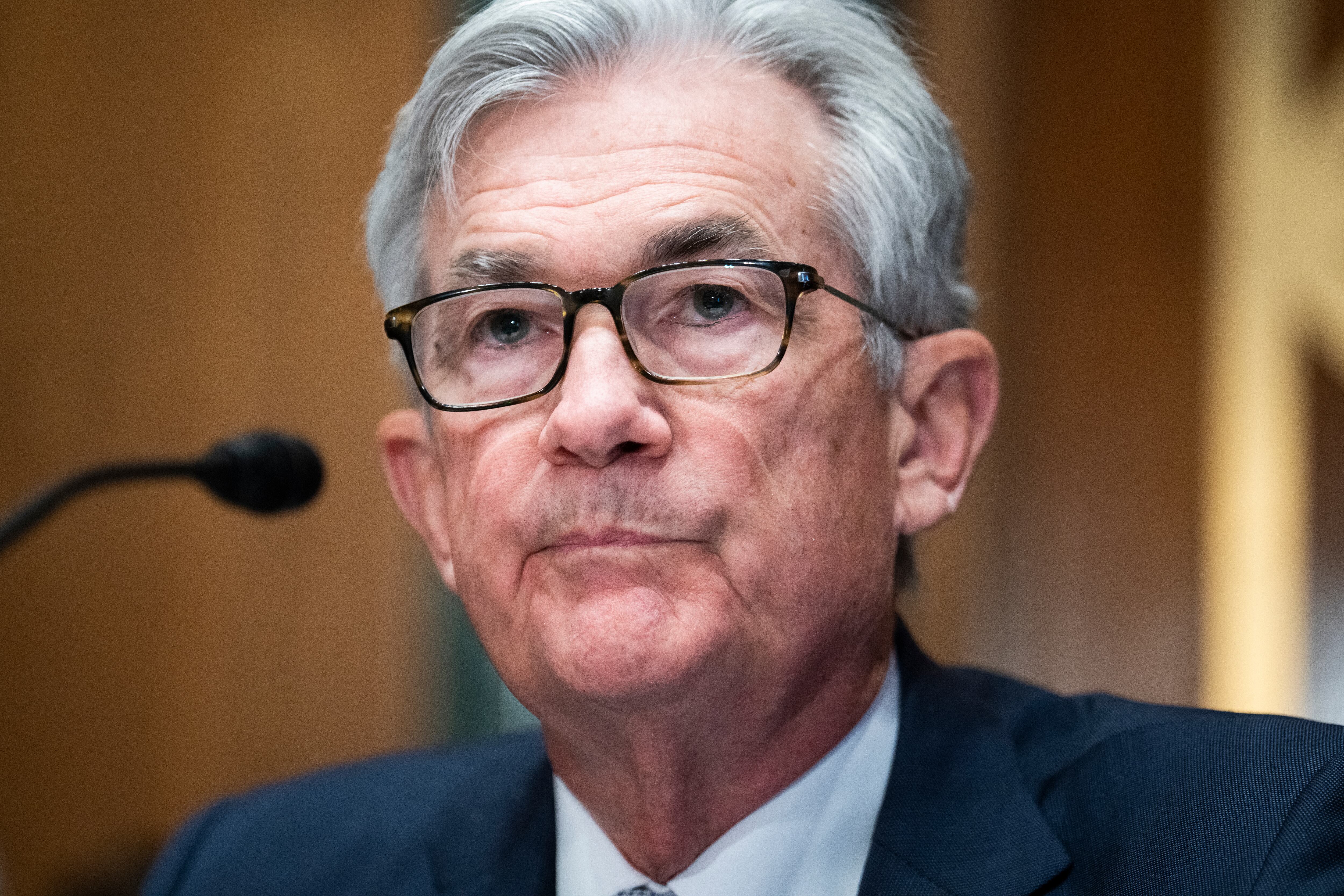
Surging inflation has eased in recent months, but more evidence is needed to show that price increases are coming down in the long term, Federal Reserve Chair Jerome Powell said Wednesday. (Photo by Yuki IWAMURA / AFP) (Photo by YUKI IWAMURA/AFP via Getty Images)
Prices rose half a percent in January, according to the latest consumer price index. That is up from a 0.1 percent decline in December, and five times the 0.1 percent increase in November.
The monthly uptick was in line with expectation, though the year-over-year rate came in higher than expected 6.4 percent, a marginal drop from a 6.5 percent rate in December.
Shelter (i.e. housing) contributed the largest share to the monthly increase, rising 0.7 percent.
Energy costs were also up across the board. The price of piped gas shot up 6.7 percent, while energy overall was up 2 percent after two straight months of declines.
Food prices, meanwhile, were up 0.5 percent. That is up from 0.4 percent in December, but still low relative to the last six months.
Used car prices also continued their steady decline, dropping 1.7 percent month-over-month and 11.6 percent year-over-year.
Despite the month-over-month drop, the annual rate has slowed for seven straight months.
Reva Shakkottai, Senior Vice President and financial advisor at RBC Wealth Management, joins Cheddar News' Closing Bell, where she elaborates on factors besides Wednesday's Fed decision that led to gains across the major indexes on Thursday, including new home construction and jobless claims data.
March Nadness is officially underway, and betting on this year's tournament has the potential to reach record levels. About 45 million Americans are expected to wager a total of $3.1 billion on just the men's tournament alone, according to a new survey from the American Gaming Association. Prince Grimes, Senior Writer for USA Today's sports betting media property, BetFTW, joins Cheddar News' Closing Bell to discuss how betting could play into this year's tournament and other storylines surrounding March Madness.
Netflix is testing out a way to charge users who share their passwords with friends and family, and while it's not being introduced in the U.S. yet, it might one day. The streaming giant is under pressure to grow membership numbers after lackluster fourth-quarter guidance, and anticipated pressures as people return to work and face higher costs elsewhere, thanks to rising inflation. Will Netflix see increased customer cancellations if it implements a price hike for password sharing? Is the company only focusing on the investor, and not the subscriber? Seth Schachner, Managing Director at StratAmericas and Digital Business Executive, joins Closing Bell to discuss Netflix's plans to charge for password sharing, why the company is doing so, how it might hurt subscriber numbers and more.
Simeon Hyman, Chief Investment Strategist at ProShares, joins Cheddar News' Closing Bell, where he explains why his firm launched the Proshares Metaverse ETF today and how this portfolio offers the opportunity for success both now and in the future.
Medical cannabis company Akanda went public this week in what was the first traditional IPO of the month. Shares jumped about 163% in the stock's first day of trading. The London-based company says it hopes to supply medical cannabis products to wholesalers in international markets. Tej Virk, CEO of Akanda, joins Cheddar News' Closing Bell to discuss.
Art Hogan, Chief Market Strategist at National Securities, joins Cheddar News' Closing Bell, where he breaks down Fed Chair Jerome Powell's speech following the U.S. central bank's decision to raise rates and explains why Powell's comments move the markets more than the Fed decision itself.
Software company Akeneo CEO Fred De Gombert joined Closing Bell to discuss its recently closed Series D funding round raising $135 million in its quest to redefine product information management. De Gombert said the company is set out to improve the product information category by harnessing the power of data, which comes at a time where customer behavior has shifted in the pandemic era. "We are more and more demanding as consumers when we are shopping online or even offline. We are looking for more and more information," De Gombert said.