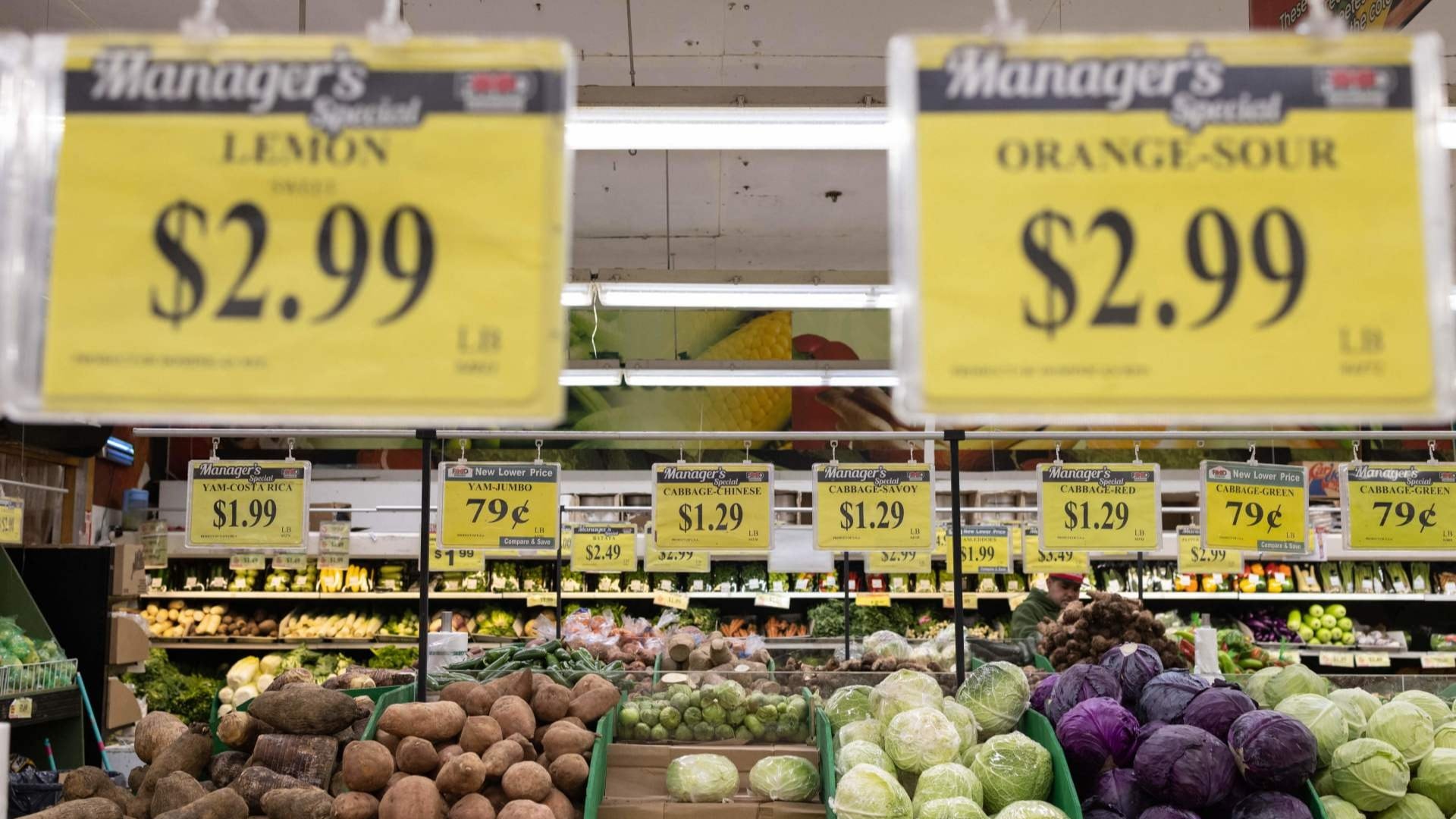
Surging inflation has eased in recent months, but more evidence is needed to show that price increases are coming down in the long term, Federal Reserve Chair Jerome Powell said Wednesday. (Photo by Yuki IWAMURA / AFP) (Photo by YUKI IWAMURA/AFP via Getty Images)
Prices rose half a percent in January, according to the latest consumer price index. That is up from a 0.1 percent decline in December, and five times the 0.1 percent increase in November.
The monthly uptick was in line with expectation, though the year-over-year rate came in higher than expected 6.4 percent, a marginal drop from a 6.5 percent rate in December.
Shelter (i.e. housing) contributed the largest share to the monthly increase, rising 0.7 percent.
Energy costs were also up across the board. The price of piped gas shot up 6.7 percent, while energy overall was up 2 percent after two straight months of declines.
Food prices, meanwhile, were up 0.5 percent. That is up from 0.4 percent in December, but still low relative to the last six months.
Used car prices also continued their steady decline, dropping 1.7 percent month-over-month and 11.6 percent year-over-year.
Despite the month-over-month drop, the annual rate has slowed for seven straight months.
Around 4.4 Million Americans have either quit their jobs or changed them this past February. The high turnover comes as the Bureau of Labor reported that there were more than 11.3 million job openings despite 6.7 million people getting hired.
The office real estate market might be in trouble, as vacancy rates in major cities remain across the country, even as COVID restrictions continue to fall away. Ryan Severino, the chief economist for real estate and investment management firm JLL, joined Cheddar's Opening Bell to discuss the latest office trends and why some may be concerning for the broader economy. "There are knock-on ramifications for a lot of the ancillary industries that support office workers," he said. "If you think about coffee shops, places that someone might go out to get lunch or a drink or dinner after work, those are obviously still feeling the brunt of people not being physically back in office spaces the way that they were before the pandemic."
Catching you up on what you need to know on March 30, 2022, with updates on what is happening in Kyiv, the FDA releases plans for a fourth dose of COVID vaccines, COVID subvariant BA.2 becomes dominant variant in the U.S., employees at Conde Nast form a union, and more.