Sen. Marsha Blackburn, (R-Tenn.) is joining the Republican-led fight to change internet regulations that she said allow social media platforms to "disadvantage conservative thought."
The senator is getting behind an effort to reform Section 230 of the 1996 Communications Decency Act, which protects online services from legal liability for what users publish on their platforms.
"We are working on legislation that would address reforms that would put a threshold in place," she said. "Users that are 50 million and less, you would have Section 230 protections. The bigger users would not have those safe harbors."
Blackburn framed the reforms as an effort to stop censorship of conservative voices.
"They suggestively manipulate their algorithms," she alleged of social media platforms. "You look at what's happening on YouTube, and it's the wild west. You can put up anything, say anything, and it's there, except when it comes to conservatives. Conservative filmmakers, conservative entertainers, people in Christian music have had their movie trailers, their videos, their songs removed from some of these platforms."
Democrats have argued that removing this protection will have the opposite effect, leading to more censorship and legal complications for online service providers.
The Trump administration has signaled its support for overhauling the legislation as well. On May 28, the president issued an executive order ordering the Commerce Department to petition the Federal Communications Commission to refine the current regulations. The Justice Department has since urged Congress to revise Section 230.
Sen. Josh Hawley (R-Mo.) introduced a bill on Wednesday that would, among other things, allow users to sue an online platform for $5,000 plus attorneys' fees if they feel the provider is not "operating in good faith" and unfairly applying their respective content rules.
"If they want to say they're the public square, where people have free speech and public debate, you can't do that," Blackburn said.
She added that current regulations' lack of clarity has led to abuses.
"The definitions in 230 are overly broad," she claimed. "Things that are abusive or unlawful, we need to be more specific in those definitions. We need to also say that political speech is free speech.
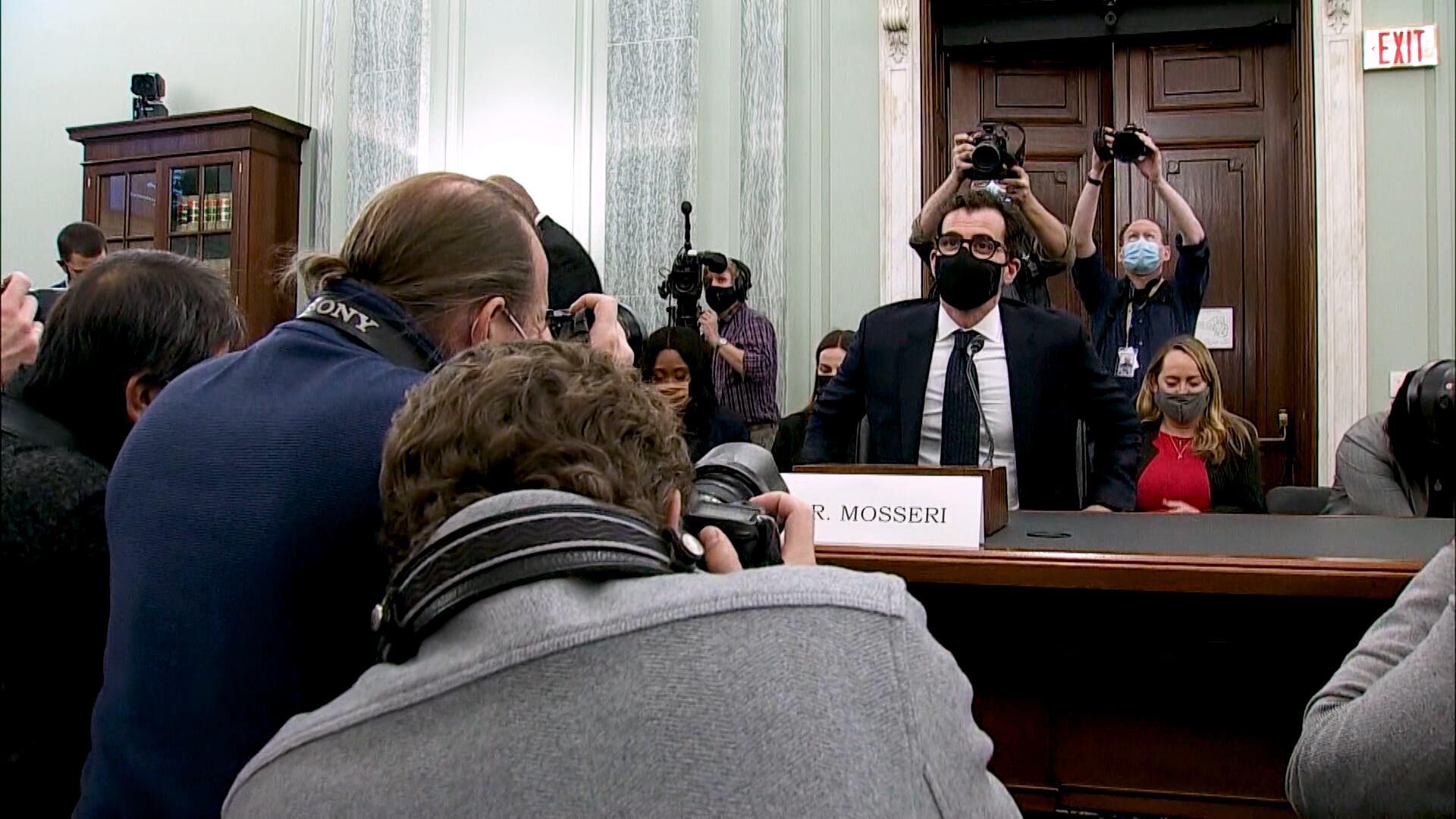
Instagram CEO Adam Mosseri faced a bipartisan Congressional grilling this week as the Senate inquired about safety practices for protecting the mental wellbeing of young people on the platform. Sen. Marsha Blackburn (R-Tenn.) joined Cheddar to talk about the hearing and how she was disappointed in Instagram coming unprepared with relevant information or documents. Blackburn also offered concern that the platform could continue with building a kids-only version despite having drawn significant opposition from the public.
The Great Resignation has shown some signs of slowing in October with the number of those who quit their jobs falling by 4.7 percent to 4.16 million. This comes as worker strikes and calls for unionization ramp up. Jane Oates, president at WorkingNation joined Cheddar's "Opening Bell" to discuss the implications.
U.S. markets opened lower despite positive jobs data, which saw weekly claims drop to a 52-year low. Kevin Nicholson, Co-CIO Global Fixed Income, RiverFront Investment Group joined Cheddar's Opening Bell to discuss the labor market, inflation, and the impact of the Omicron variant on global markets.
A packed Thursday pod: Carlo and Baker cover the latest developments in the Ghislaine Maxwell, Jussie Smollett and Elizabeth Holmes trials. Plus, Dems are losing the Hispanic vote, Boris Johnson in trouble again, and is it possible that Adele has peaked?
Jim Bruderman, Vice Chairman at 1879 Advisors, joins Cheddar News' Closing Bell, where he says investors experienced a 'panic attack' last week with the spread of the Omicron variant and the Fed's tapering plans. As a result, he says we're now seeing stocks climb due to a growing comfort level toward both developments.
Adam Mosseri, head of Instagram, faced withering questions on Capitol Hill about the reports the social media app was aware of the severe mental health impacts it was having on teenage girls. Karen Kornbluh, the director of digital innovation and democracy for the German Marshall Fund, joined Cheddar to discuss the rare show of bipartisan outrage on display at the Senate hearing. "The senators came really loaded for bear on both sides of the aisle," she said. Kornbluh explained how senators like Richard Blumenthal (D-Conn.) set up fake Instagram accounts with teen girl profiles in order to research the effects firsthand.
The Biden administration will not send an official U.S. delegation to the 2022 Winter Olympics in Beijing as a statement against China's "ongoing genocide and crimes against humanity in Xinjiang." Weifeng Zhong, senior research fellow at George Mason University's Mercatus Center, joins Cheddar News to discuss the boycott.