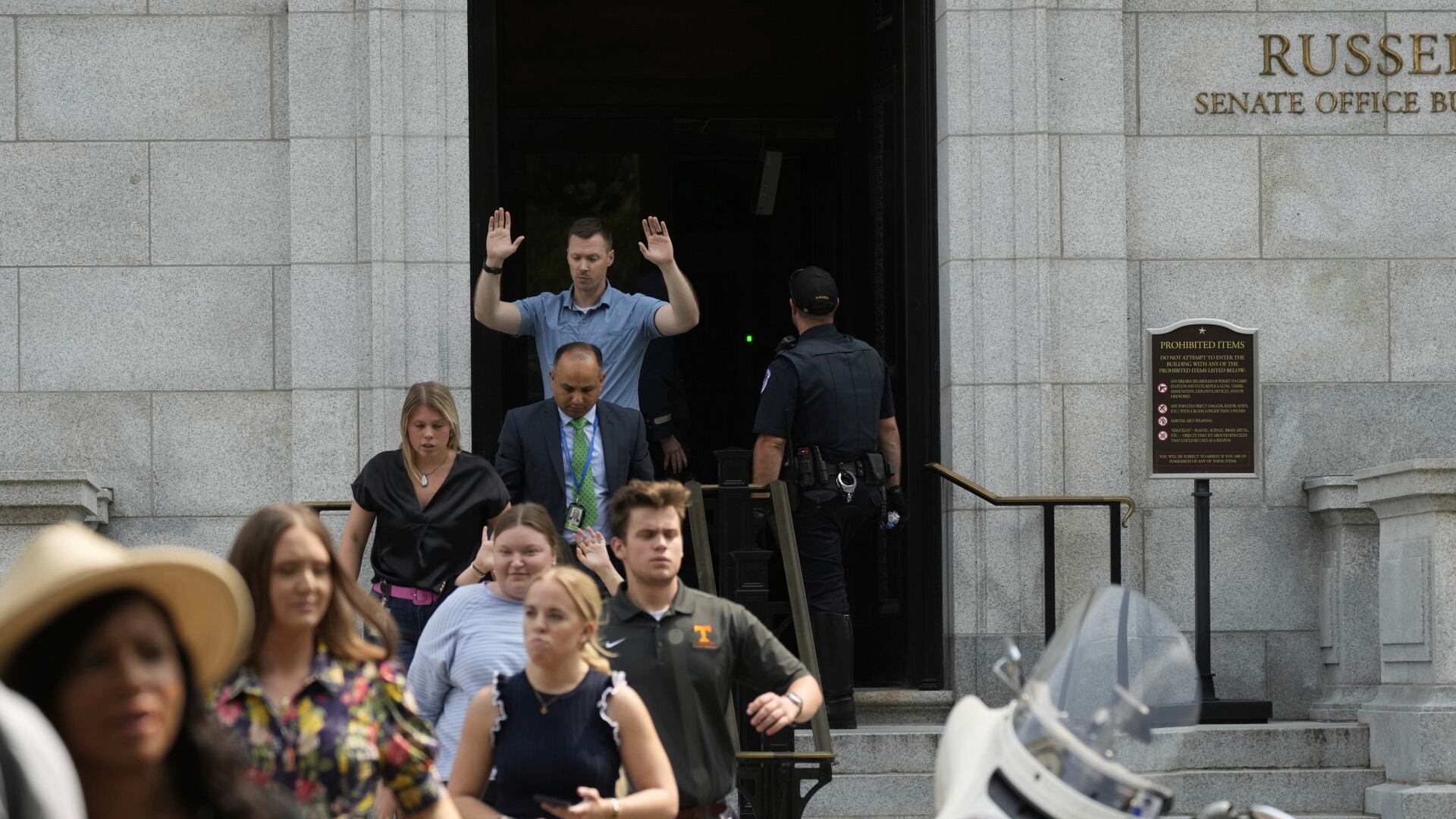
Government staffers walk out of the Russell Senate Office Building, Wednesday, Aug. 2, 2023, on Capitol Hill in Washington. Authorities issued a shelter-in-place order and began searching Senate office buildings near the U.S. Capitol Wednesday afternoon amid reports of an active shooter. (AP Photo/J. Scott Applewhite)
Authorities issued a shelter-in-place order and searched Senate office buildings near the U.S. Capitol Wednesday afternoon after a 911 call warned of a possible active shooter. But a floor-by-floor search of the three buildings found nothing, and Capitol Police Chief Tom Manger said the cause of the security scramble “may have been a bogus call.”
“We found nothing concerning,” he said. “We got nobody who actually heard shots and certainly no victims.”
The incident comes amid heightened security concerns created by former President Donald Trump’s indictment on charges relating to his attempts to overturn the results of the 2020 presidential election. Trump is due in federal court Thursday just a few blocks from the Capitol.
Manger said Washington's multiple law enforcement agencies had been planning “for a couple weeks now” for a possible indictment and had “a security plan in place” in case Trump supporters attempt to disrupt the legal proceedings.
The lockdown Wednesday started when local police received a call around 2:30 Wednesday afternoon warning of a “heavyset Hispanic male wearing body armor” inside the Hart Senate Office Building, one of three structures near the Capitol housing offices for senators and their staffs.
Capitol Police began a search, going floor by floor through the massive buildings.
Inside the Russell Senate Office Building, officers evacuated the hallways and shouted at people to run outside and away from the building. Outside, tourists watched as dozens of police cars surrounded the area. Staff and journalists working in the building received an email instructing them to take shelter in a locked room, remain quiet and silence all electronics.
Manger said about 90 minutes later that all three Senate office buildings had been cleared and the call appeared to have been false.
Both the House of Representatives and the Senate are currently on recess and the office buildings are generally less crowded than usual.
Liana Guzmán, CEO of FOLX Health, joins Cheddar News to discuss the company launching billboards across the country in response to anti-LGBTQ+ legislation.
President Biden has announced an additional $800 million in military assistance to Ukraine, including artillery, armored personnel carriers, and helicopters. It comes as Russian forces appear to be preparing for a new, aggressive offensive in the eastern part of Ukraine. Paul McLeary, defense reporter for Politico, joined Cheddar to discuss this new round of aid and what it means for the U.S. commitment to arming the embattled country.
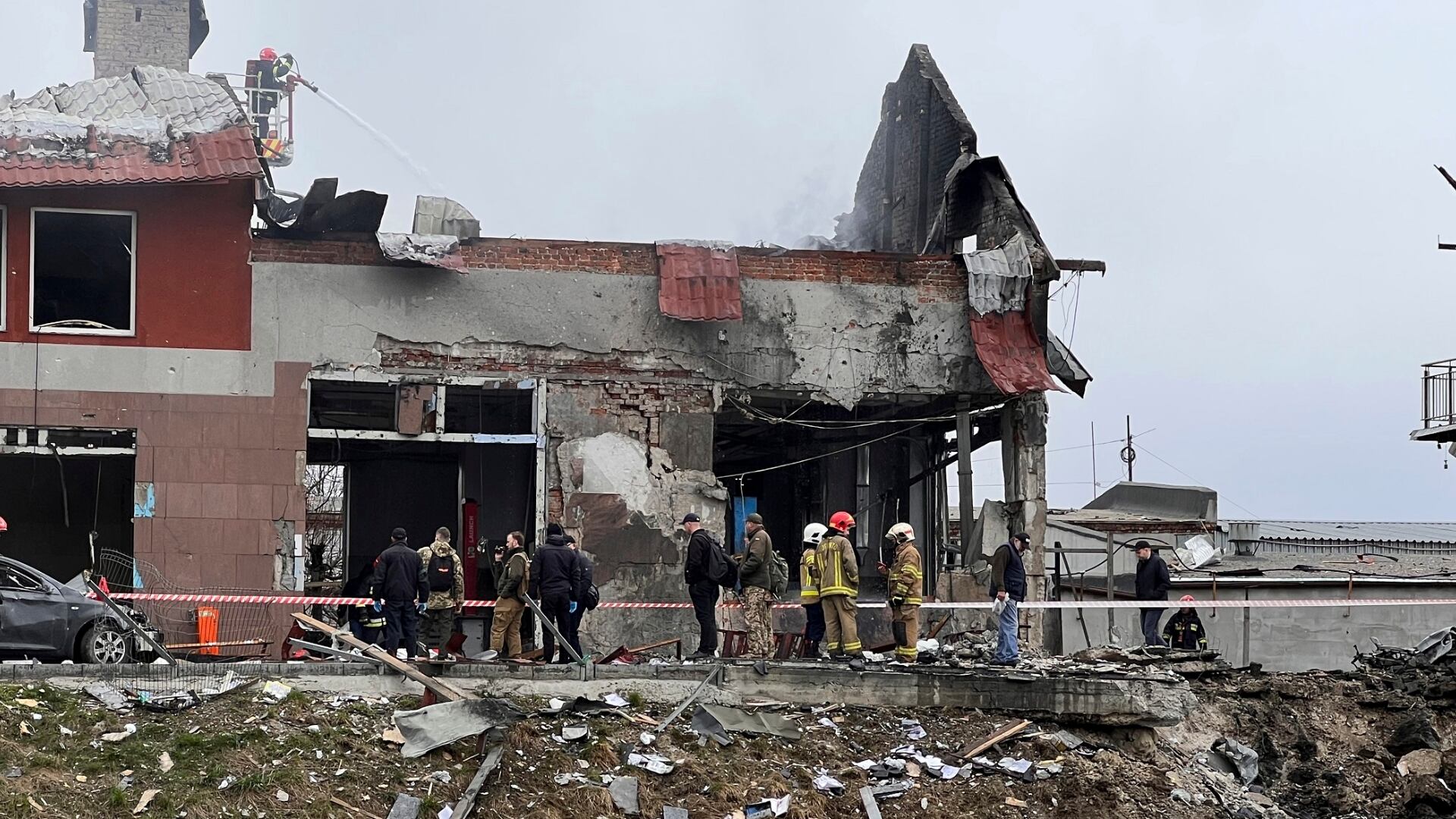
Catching you up on what you need to know on April 18, 2022, with Russian missile attacks on the Ukrainian city of Lviv killing seven, mass shootings in South Carolina and Pittsburgh, Lucky Charms cereal under official investigation by the FDA, and more.
Activism is growing around the country in response to school boards banning books from shelves that focus on sexuality, gender, identity, or race. Jen Cousins, co-founder of The Florida Freedom to Read Project, joins Cheddar News to discuss.
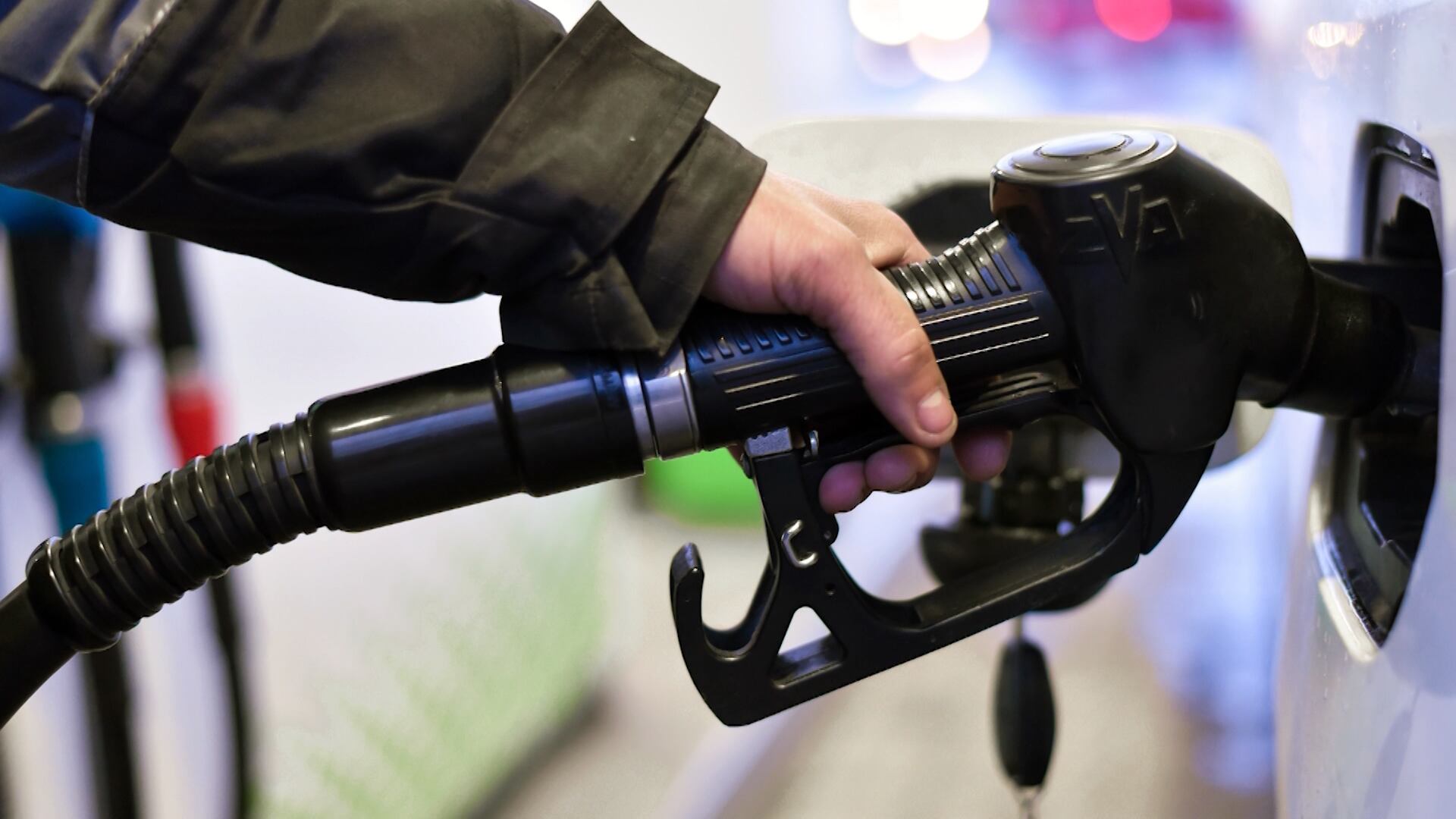
As the Russian invasion of Ukraine intensifies, President Biden has announced a ban on importing Russian oil, gas, and energy. To discuss how this ban will impact the war and Americans, Amir Handjani, non-resident fellow at Quincy Institute, joins Cheddar News.
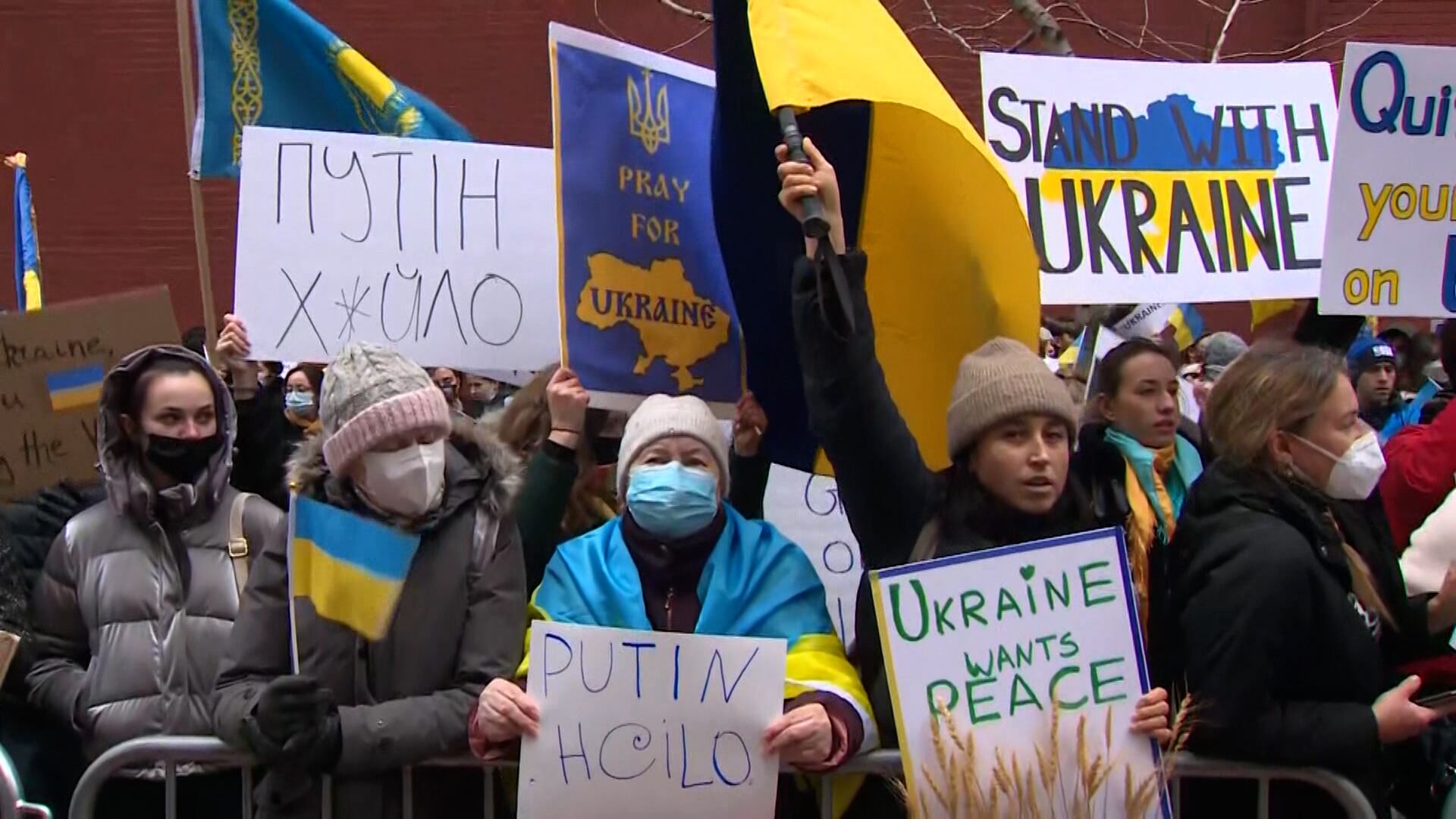
Thousands of protesters around the world are expressing their solidarity with Ukraine against Russia's invasion.
Jason Beardsley, national executive director of the Association of the U.S. Navy and national security expert, joins Cheddar News to discuss.
As gas prices surge amid the Russian invasion of Ukraine, other nations could potentially transition faster to using clean energy than previously expected. Philip K. Verleger, a senior fellow at the Niskanen Center, joined Cheddar News to explain how this could be a possibility in the near future. "Part of the reason I think we have this invasion and the tantrum that's being thrown by Russia, terrible tantrum, is because the Russians were trying to slow down the transition," he said. "Ironically they speeded it up."
Following the invasion of Ukraine, a multitude of Western companies have paused doing business with Russia. PepsiCo, Coca-Cola, McDonald's, and Starbucks are the most recent companies to temporarily cease operations in Russia. Dean of Miami Herbert Business School at the University of Miami, John Quelch, joined Cheddar News to discuss what message this sends to Russia and the Russian consumer. “I would not underestimate the collective strength of all of these multinational companies, essentially coming together to make their collective statement in support of the political statements that have come out of Washington," he said.
The war in Ukraine continues to reveal heartbreaking gut-wrenching stories. The war in itself is not only devastating but also expensive. Experts estimate that Russia is draining nearly $20 million dollars each day to continue occupying and invading Ukraine. All this could force the country to turn to cryptocurrencies. It's a major turn for the country that briefly considered outlined digital assets entirely, but it could also have serious implications for cryptos. Managing Director at Quantum Fintech Group, Harry Yeh, joined Cheddar to discuss more.