Supreme Court Upholds Trump's Travel Ban on Muslim Countries
*By Alisha Haridasani*
The Supreme Court on Tuesday upheld President Trump’s temporary ban on immigrants and refugees from several mostly Muslim countries, rejecting the arguments that the policy went beyond presidential powers and discriminated against one religion.
“The president has lawfully exercised the broad discretion granted to him,” said Chief Justice John Roberts, [writing](http://cdn.cnn.com/cnn/2018/images/06/26/travel.ban.pdf) for the majority.
The 5-4 ruling fell along partisan lines, and the difference between the two sides fundamentally boiled down to a close reading of the Constitution as it applied to the travel policy versus a broader approach to the case.
"Certainly the conservative block of the Supreme Court was looking very narrowly at the president's power," said Joe Williams, senior news editor at U.S. News. "The opposing side was looking more at whether or not this was the right thing to do."
The justices who dissented pointed to Trump's campaign promise to ban Muslims from entering the U.S. as potentially motivating the policy, in which case it would be unlawful.
“The United States of America is a nation built upon the promise of religious liberty,” wrote Justice Sonia Sotomayor in a strongly-worded dissent. “The court’s decision today fails to safeguard that principle.”
Judge Sotomayor even went so far as to compare Trump's policy to the internment of Japanese people during the second World War.
But the majority of conservative judges concluded that the president's campaign rhetoric was irrelevant and didn't negate his right to determine immigration policies.
The president responded jubilantly, describing the ruling as “a tremendous victory for the American people and for our Constitution.”
Trump, in one of his first acts as commander-in-chief, signed an executive order last year that banned travel from Iraq, Syria, Iran, Libya, Somalia, Sudan, and Yemen for national security reasons. The policy, which many opponents perceived as thinly veiled religious bias, set off a national backlash and widespread protests.
After two lower courts decided that the policy was both unconstitutional and [unlikely to protect the country](https://www.cnn.com/2017/02/09/politics/travel-ban-9th-circuit-ruling-full-text/index.html) from terrorism, the administration drew up a version that excluded Iraq and Sudan, added Chad, Venezuela, and North Korea, and contained waivers for green card holders or students. It didn't single out any religion in the text.
A federal judge in Hawaii halted the implementation of that modified policy nationwide in October, and the Supreme Court ruling is related to that ruling.
In December, the Supreme Court allowed the current version of the ban, weakened from its controversial initial form, to take effect while the case worked its way through the legal system.
For the full segment, [click here.](https://cheddar.com/videos/scotus-upholds-trumps-travel-ban-2)
Concerns over inflation have become one of the biggest worries for executives. A survey from The Conference Board shows that more than 900 CEOs consider inflation a top tier concern, a major shift from last year's survey that had it as a low-level concern. Rebecca Ray, Executive Vice President, Human Capital, The Conference Board joined Cheddar's Opening Bell for more.
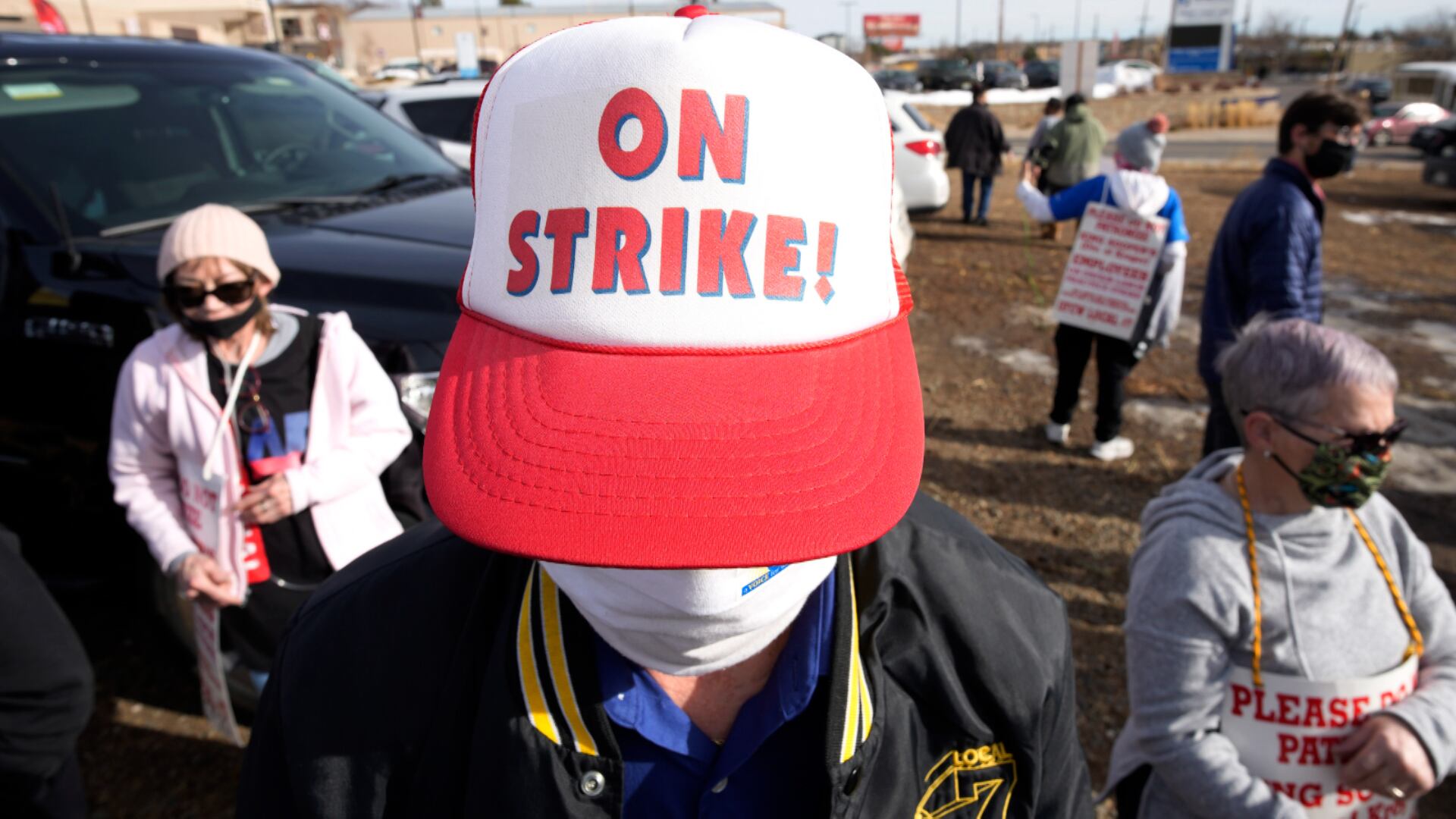
Jordan Zakarin, Media Producer at A More Perfect Union, joined Cheddar News to break down the latest from Colorado, where at least 8,700 Kroger employees walked off the job in demand of increased benefits and wages.
With the 2022 Winter Olympics in Beijing rapidly approaching, clouds of controversy continue to swirl around China's treatment of the Uyghur Muslim minority population, its surveillance state, and security for visiting athletes. Phelim Kine, China correspondent for Politico, joined Cheddar to break down the big storylines surrounding the Beijing Games and highlight what he saw as the complete disregard by top corporate sponsors like P&G, Airbnb, Intel, Visa, and Coca-Cola, for the controversies. "They spend $100 million for every Olympics that they sponsor, and they have frankly shown absolute willful indifference to any type of entreaty to essentially be more vocal about their concerns about human rights in China," he said. Kine also touched on the data privacy fears for athletes as visiting contingents are being told to carry burner phones to avoid security risks.
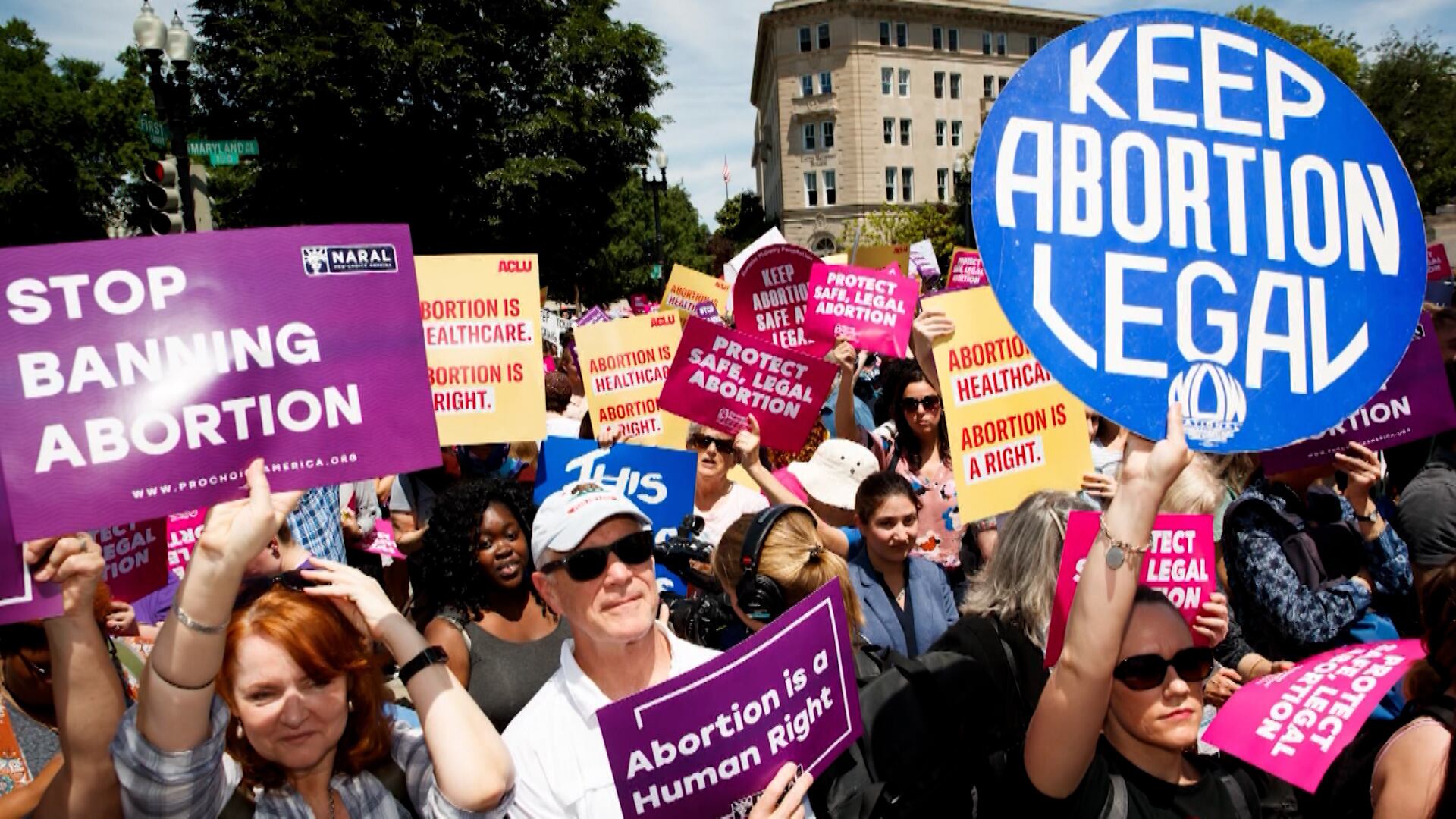
Texas's six-week abortion ban remains in effect after a federal appeals court ruling on Monday. The U.S. court of appeals for the fifth circuit temporarily transferred the case to the Texas Supreme Court, which is expected to leave the dispute in limbo for months to come. Katie Barlow, attorney and media editor of SCOTUSblog, joins Cheddar News to discuss.
Hugh Odom, founder and president of Vertical Consultants, shared his expertise on telecommunications with Cheddar on the safety issue raised about 5G deployment by airlines. The installation was partially delayed again on Tuesday as the airlines warned of potentially catastrophic delays in a letter to the Biden administration. Later, both Verizon and AT&T relented and put a pause on some of the implementations. "The first thing the Biden administration needs to do is get everybody in the room and say, look, aviation industry, identify the problem — wireless industry, come up with a solution," said Odom.
Dave Levinthal, deputy Washington Bureau chief at Insider, joins Cheddar News to discuss Gallup's new survey that reveals more Americans leaned Republican by the end of 2021.
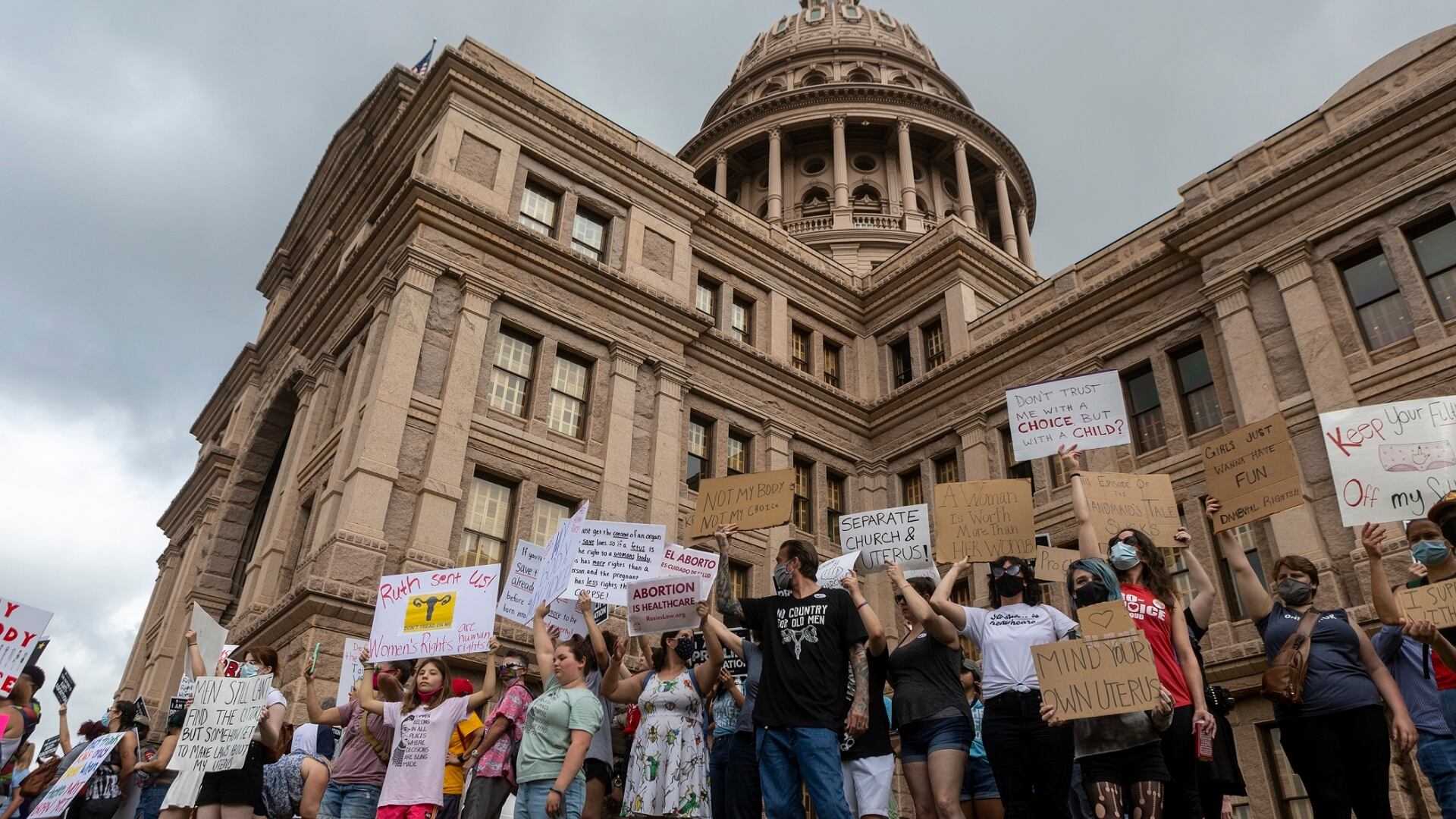
Women's March ATX rally, Saturday, Oct., 2, 2021, at the Texas State Capitol in Austin, Texas. An expected decision by the U.S. Supreme Court in the coming year to severely restrict abortion rights or overturn Roe v. Wade entirely is setting off a renewed round of abortion battles in state legislatures. (AP Photo/Stephen Spillman, File)
Inflation in the U.S. is only getting hotter. The 12-month inflation rate for December 2021 was the highest in nearly 40 years - continuing the trend seen at the close of 2021.
The Consumer Price Index increased 7% in the 12-month period ending in December, marking the fastest increase since 1982. Scott Wren, Senior Global Market Strategist at Wells Fargo Investment Institute, joined Cheddar's Movers for more.
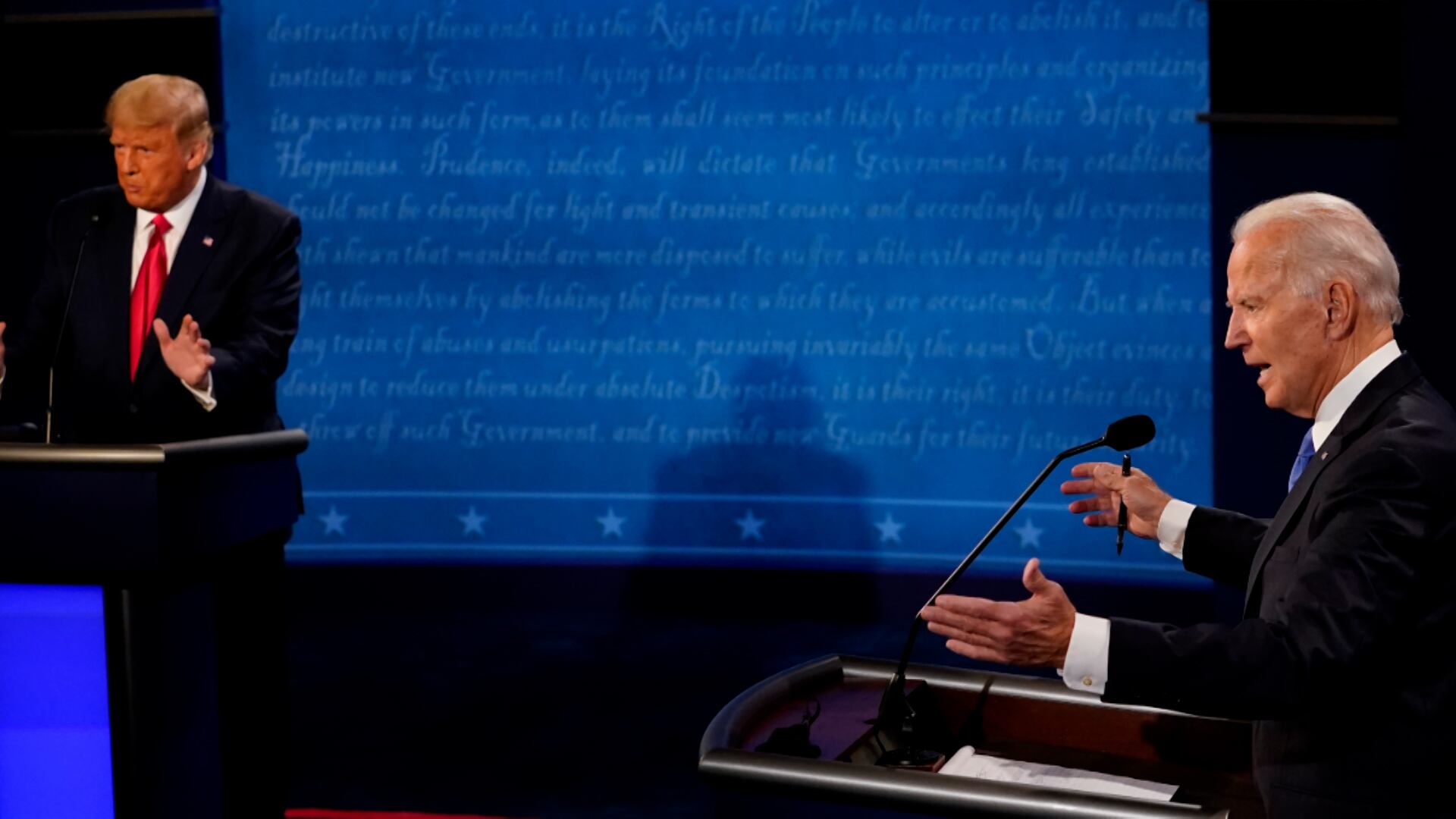
If President Biden runs for re-election in 2024, he may not have anyone to debate. The Republican National Committee sent a letter to the commission on presidential debates, saying the RNC will require candidates to pledge not to participate in those general election debates. Paris Dennard, RNC national spokesperson, joins Cheddar News to discuss.