By Susie Blann and Joanna Kozlowska
A rare drone attack jolted Moscow early Tuesday, causing only light damage but forcing evacuations as residential buildings were struck in the Russian capital for the first time in the war against Ukraine. The Kremlin, meanwhile, pursued its relentless bombardment of Kyiv with a third assault on the city in 24 hours.
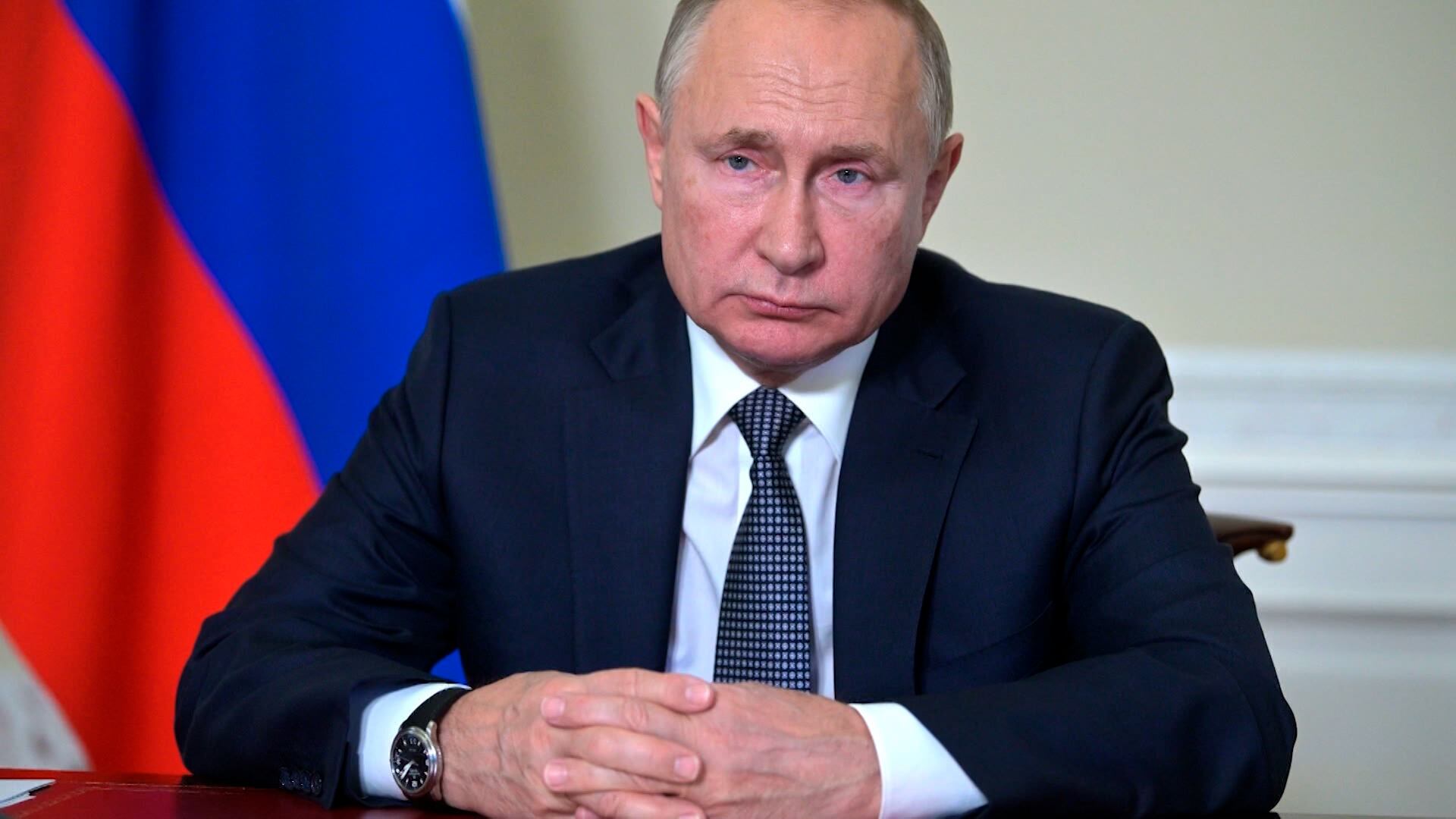
The Russian Defense Ministry said five drones were shot down in Moscow and the systems of three others were jammed, causing them to veer off course. President Vladimir Putin called it a “terrorist” act by Kyiv.
The attack, causing only what Moscow Mayor Sergei Sobyanin called “insignificant damage” to several buildings, brought the war home to civilians in Russia’s capital.
Two people received treatment for unspecified injuries but did not need hospitalization, he said in a Telegram post, adding that residents of two high-rise buildings damaged in the attack were evacuated.
Andrei Vorobyov, governor of the wider Moscow region, said some of the drones were “shot down on the approach to Moscow.”
Ukraine made no direct comment on the attack, which would be one of its deepest and most daring strikes into Russia since the Kremlin launched its full-scale invasion of Ukraine more than 15 months ago.
Putin said Moscow's air defense “worked in a satisfactory way,” but added it is “clear that our task is to plug the gaps" in the system.
“The Kyiv regime ... attempts to intimidate Russian citizens and strikes at civilian buildings," he said at a public event, responding to a question from the head of a Kremlin-allied think tank. "It is, of course, a clear indication of terrorist activity.”
Asked by The Associated Press whether there is high-level concern that the invasion of Ukraine is endangering Russian civilians, Kremlin spokesman Dmitry Peskov said only that attacks on Russia reinforce the need to prosecute the war.
Russian political analyst Tatiana Stanovaya, a senior fellow at the Carnegie Russia Eurasia Center, said the Kremlin’s policy is to play down the attacks.
“You ask, why is Putin behaving like this, does he really not understand and fear the consequences?” she wrote in a Telegram post. “Apparently he isn’t afraid, and everything is built on the idea that has been voiced more than once about a patient people who will understand everything and endure everything.”
Still, the attacks raised questions about the effectiveness of Russia’s air defenses.
A senior Russian lawmaker, Andrei Kartapolov, told Russian business news site RBC that “we have a very big country and there will always be a loophole where the drone can fly around the areas where air defense systems are located.”
Kartapolov said the purpose of the attacks was to unnerve the Russian people. “It’s an intimidation act aimed at the civilian population,” RBC quoted him as saying. “It’s designed to create a wave of panic.”
Moscow residents reported hearing explosions before dawn. Police were seen working at one site of a crashed drone in southwest Moscow. An area near a residential building was fenced off, and police put the drone debris in a cardboard box before carrying it away.
At another site, apartment windows were shattered and there were scorch marks on the building’s front.
It was the second reported attack on Moscow. Russian authorities said two drones targeted the Kremlin on May 3 in what they portrayed as an attempt on Putin’s life. Ukraine denied it was behind that attack.
Last week, the Russian border region of Belgorod was the target of one of the most serious cross-border raids since the war began, with two far-right pro-Ukrainian paramilitary groups claiming responsibility. Officials in the southern Russian city of Krasnodar near annexed Crimea said two drones struck there on Friday, damaging residential buildings.
Other drones have reportedly flown deep into Russia multiple times. In December, Russia claimed it had shot down drones at airfields in the Saratov and Ryazan regions in western Russia. Three soldiers were reported killed in the attack in Saratov, which targeted an important military airfield.
Before that, Russia reported downing a drone that targeted the headquarters of its Black Sea Fleet in the Crimean port of Sevastopol.
In Ukraine, Russia launched a pre-dawn air raid on Kyiv, killing at least one person, wounding 11 others and sending the capital’s residents again scrambling into shelters.
Ukrainian military analysts, though unable to confirm that Kyiv had launched the drones against Moscow, said the attack may have involved UJ-22 drones with a maximum range of about 1,000 kilometers (620 miles) and are produced in Ukraine.
Analyst Oleh Zhdanov said some UJ-22s are capable of reaching “Moscow and beyond,” although he noted they can fly only half as far and carry half the payload of the Iranian-made Shahed drones used in the war by Russia.
Even so, Zhdanov told AP that “the myth has been dispelled” of the Russian capital’s invulnerability.
Since February, when a UJ-22 crashed 100 kilometers (60 miles) from Moscow, Ukrainian drones repeatedly have repeatedly approached the Russian capital.
At least 20 Shahed drones were destroyed by air defense forces in Kyiv’s airspace in Russia’s latest attack on the Ukrainian capital. Overall, Ukraine shot down 29 of 31 drones, most of them in the Kyiv area, the air force said.
Before daylight, the buzzing of drones could be heard over the city, followed by loud explosions as they were taken down by air defense systems.
The heavier destruction in Kyiv contrasted with what was seen in Moscow in the aftermath of the strikes. In the Ukrainian capital, burned-out cars, glass and debris littered the street outside a building where apartments were wrecked; in Moscow, only a few broken windows and scorched outer walls were evident, with repairs and repainting being done quickly to the affected buildings.
A woman who was killed in Kyiv’s Holosiiv district died after she had “come out onto her balcony to look at drones being shot down,” Mayor Vitali Klitschko said in a Telegram post.
A high-rise building in the same district caught fire after being hit by debris either from drones being hit or interceptor missiles. The building’s upper two floors were destroyed, and people were feared to be under the rubble, the Kyiv Military Administration said. More than 20 people were evacuated.
Resident Valeriya Oreshko told AP that even though the immediate threat was over, the attacks had everyone on edge.
“You are happy that you are alive, but think about what will happen next,” the 39-year-old said.
A resident who gave only her first name, Oksana, said the whole building shook when it was hit.
“Go to shelters, because you really do not know where (the drone) will fly,” she advised others.
Associated Press writer Vasilisa Stepanenko in Kyiv, Ukraine; David Rising in Bangkok; and Yuras Karmanau in Tallinn, Estonia, contributed. Kozlowska reported from Tallinn.