Russian officials on Tuesday rejected accusations that they endangered astronauts aboard the International Space Station by conducting a weapons test that created more than 1,500 pieces of space junk.
U.S. officials on Monday accused Russia of destroying an old satellite with a missile in what they called a reckless and irresponsible strike. The debris could do major damage to the space station as it is orbiting at 17,500 mph (28,000 kph).
Astronauts now face four times greater risk than normal, NASA Administrator Bill Nelson told The Associated Press.
The test clearly demonstrates that Russia, “despite its claims of opposing the weaponization of outer space, is willing to ... imperil the exploration and use of outer space by all nations through its reckless and irresponsible behavior,” U.S. Secretary of State Antony Blinken said in a statement.
The Russian space agency Roscosmos wouldn't confirm or deny that the strike took place, saying only that “unconditional safety of the crew has been and remains our main priority” in a vague online statement released Tuesday.
Russia's Defense Ministry on Tuesday confirmed carrying out a test and destroying a defunct satellite that has been in orbit since 1982, but insisted that “the U.S. knows for certain that the resulting fragments, in terms of test time and orbital parameters, did not and will not pose a threat to orbital stations, spacecraft and space activities” and called remarks by U.S. officials “hypocritical.” Defense Minister Sergei Shoigu said that the strike was carried out “with surgical precision” and posed no threat to the space station.
Russia's Foreign Minister Sergey Lavrov also charged that it is “hypocrisy" to say that Russia creates risks for peaceful activities in space.
Once the situation became clear early Monday morning, the four Americans, one German and two Russians on board the International Space Station were ordered to immediately seek shelter in their docked capsules. They spent two hours in the two capsules, finally emerging only to have to close and reopen hatches to the station’s individuals labs on every orbit, or 1 1/2 hours, as they passed near or through the debris.
NATO Secretary-General Jens Stoltenberg agreed that Russia’s actions endangered the space station.
“This was a reckless act by Russia to actually shoot down and destroy a satellite as part of a test of an anti-satellite weapon system,” which created a lot of space debris, Stoltenberg told reporters in Brussels.
He said it was of additional concern “because it demonstrates that Russia is now developing new weapons systems that can shoot down the satellites, can destroy important space capabilities for basic infrastructure on Earth, like communications, like navigation, or like early warning of missile launches.”
NASA Mission Control said the heightened threat could continue to interrupt the astronauts’ science research and other work. Four of the seven crew members only arrived at the orbiting outpost Thursday night.
A similar weapons test by China in 2007 also resulted in countless pieces of debris. One of those threatened to come dangerously close to the space station last week. While it later was dismissed as a risk, NASA had the station move anyway.
Anti-satellite missile tests by the U.S. in 2008 and India in 2019 were conducted at much lower altitudes, well below the space station at about 260 miles (420 kilometers.)
___
Marcia Dunn in Cape Canaveral, Florida, and Lorne Cook in Brussels contributed to this report.
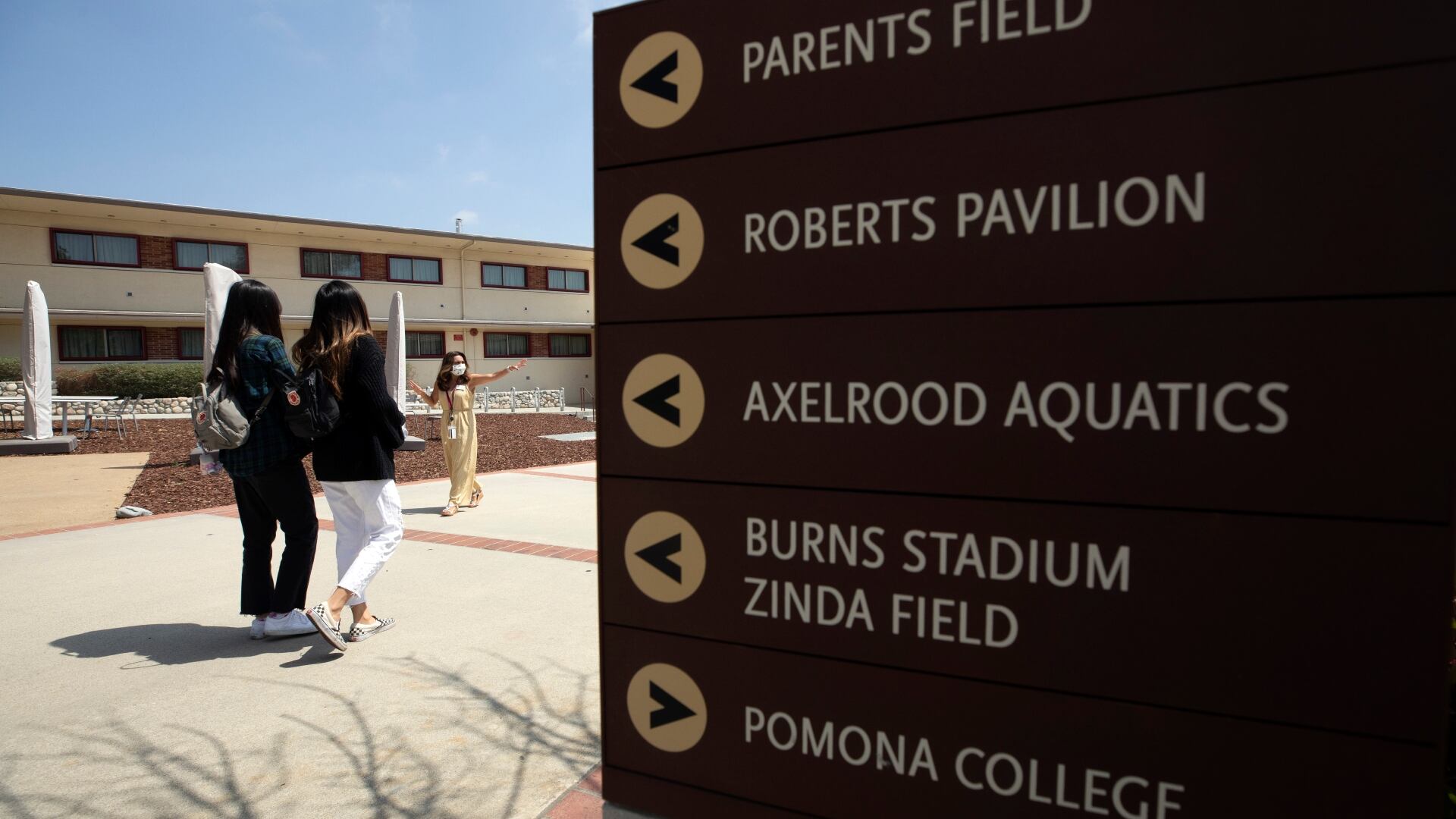
In February, Senator Jeff Merkley (D-Ore.) and Representative Jamaal Bowman (D-N.Y. 16th District) introduced the Fair College Admissions for Students Act. The bill looks to curb the admissions advantage given to the children of alumni and donors for colleges and universities. Sen. Merkley joined Cheddar news to discuss the push behind the legislation. "My dad was a mechanic. I was applying to schools around the country. I never thought about the fact that those students who came from the most privileged backgrounds also got a special advantage in applying to college," he said. "They take up 10-25 percent of the slots at many of our universities, and so this is kind of affirmative action for those who need it least rather than a level playing field for everyone else." If enacted, the law would amend the Higher Education Act of 1965 doing away with legacy or donor status admissions for any school participating in the federal student aid program.
Nancy Daoud, a private wealth adviser for Ameriprise Financial, joins Cheddar News' Closing Bell, where she discusses what led to a sharp spike on Wall Street during Tuesday's session and what she will be watching for most closely when the Fed announces it latest policy decision on Wednesday.
Russia's economy is effectively at a standstill after it was slapped with extensive western sanctions, and now it has to make the first of four monthly interest payments on dollar bonds. It's likely the country will not be able to pay — so what happens next? Major credit ratings agencies have downgraded Russian sovereign debt, with Fitch issuing a 'C' rating and S&P Global Ratings issuing a 'CCC-' rating. Caleb Silver, Editor in Chief of Investopedia, joins Closing Bell to discuss what a Russian debt default could mean for Russia's economy, U.S. consumers who have pensions with exposure to Russian assets, and whether this could create a global financial crisis.
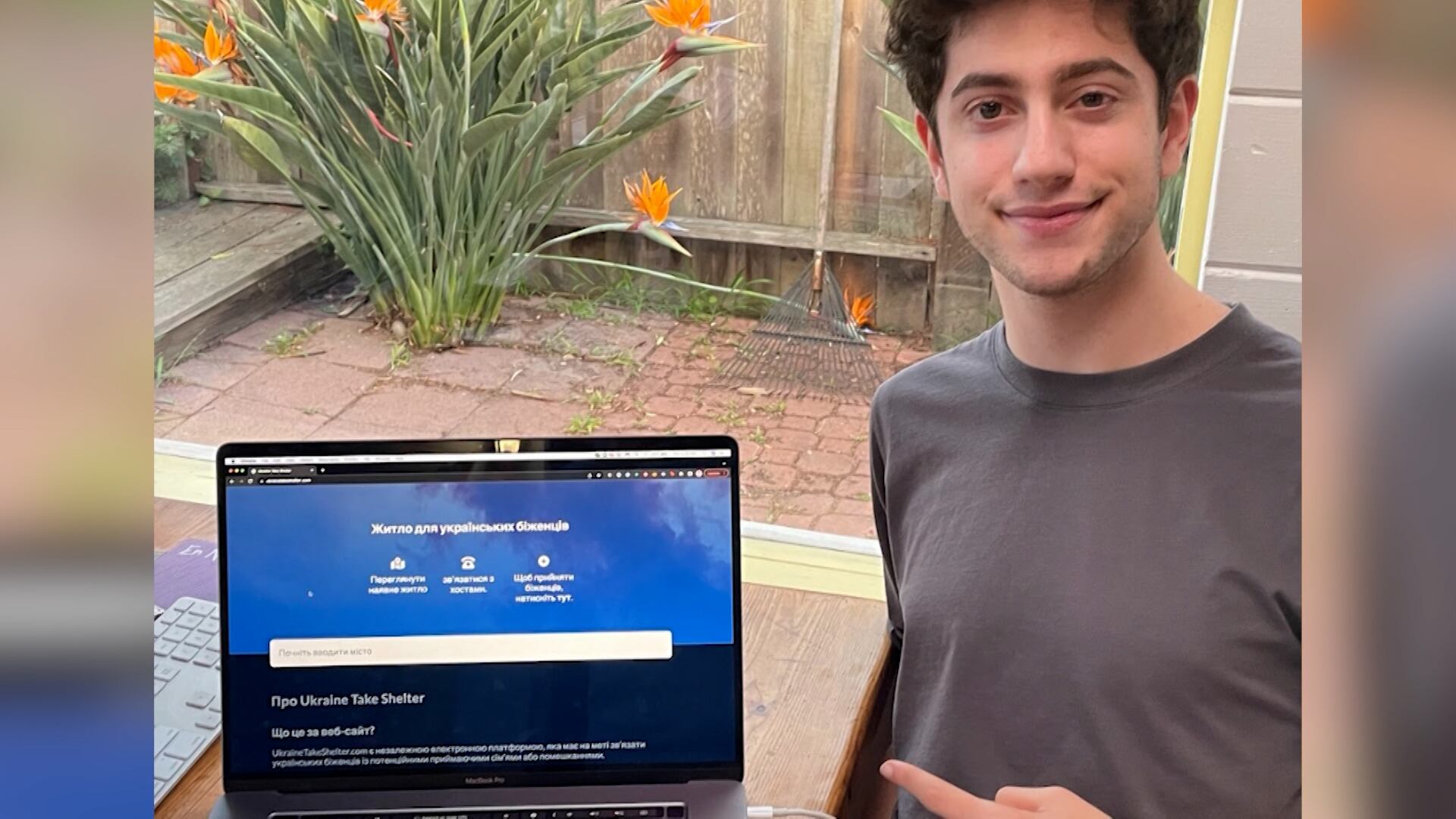
With the number of Ukrainians being displaced due to the Russian invasion surging, two students from Harvard took it on themselves to develop a website to help connect potential hosts with refugees seeking housing. The co-founder of the website Ukraine Takes Shelter, Marco Burstein, joined Cheddar news to discuss working together with fellow freshman Avi Schiffmann to streamline the effort to aid Ukrainian refugees. "We basically worked for three days straight developing the website, and since then the response has been pretty incredible," Burstein said.
Over three weeks ago, WNBA player Brittney Griner was arrested in Russia on drug charges. According to reports, the Star arrived at an airport near Moscow where authorities found Vape cartridges and hashish oil in her luggage. Grindr faces serious charges that could carry a possible sentence of 5-10 years in a Russian prison. Experts warn that Griner's arrest could be used as a bargaining chip. Partner at Stroock & Stroock & Lavan, Thomas Firestone, joined Cheddar to discuss more.
On a live broadcast, an employee on a Russian state news television channel held up a sign protesting propaganda about the war in Ukraine. Ruslan Deynychenko, executive director of the Ukrainian fact-checking organization StopFake, joined Cheddar News to discuss what he called the misinformation spread to the Russian people about the invasion. "They are not about informing people they are about brainwashing people," he said. "Russian government uses their media as an instrument, as a tool, of their foreign policy."
Student loan payments for millions of borrowers are set to resume on May 1st. However, signals from the Department of Education show that the date may be pushed back. Once again, it's been pushed back a few times. Initially, the Biden Administration stated loan payments would resume as the economy continues to show signs of recovery. Student Loan Expert and Author of "How to Appeal for More College Financial Aid", Mark Kantrowitz, joined Cheddar to discuss more.