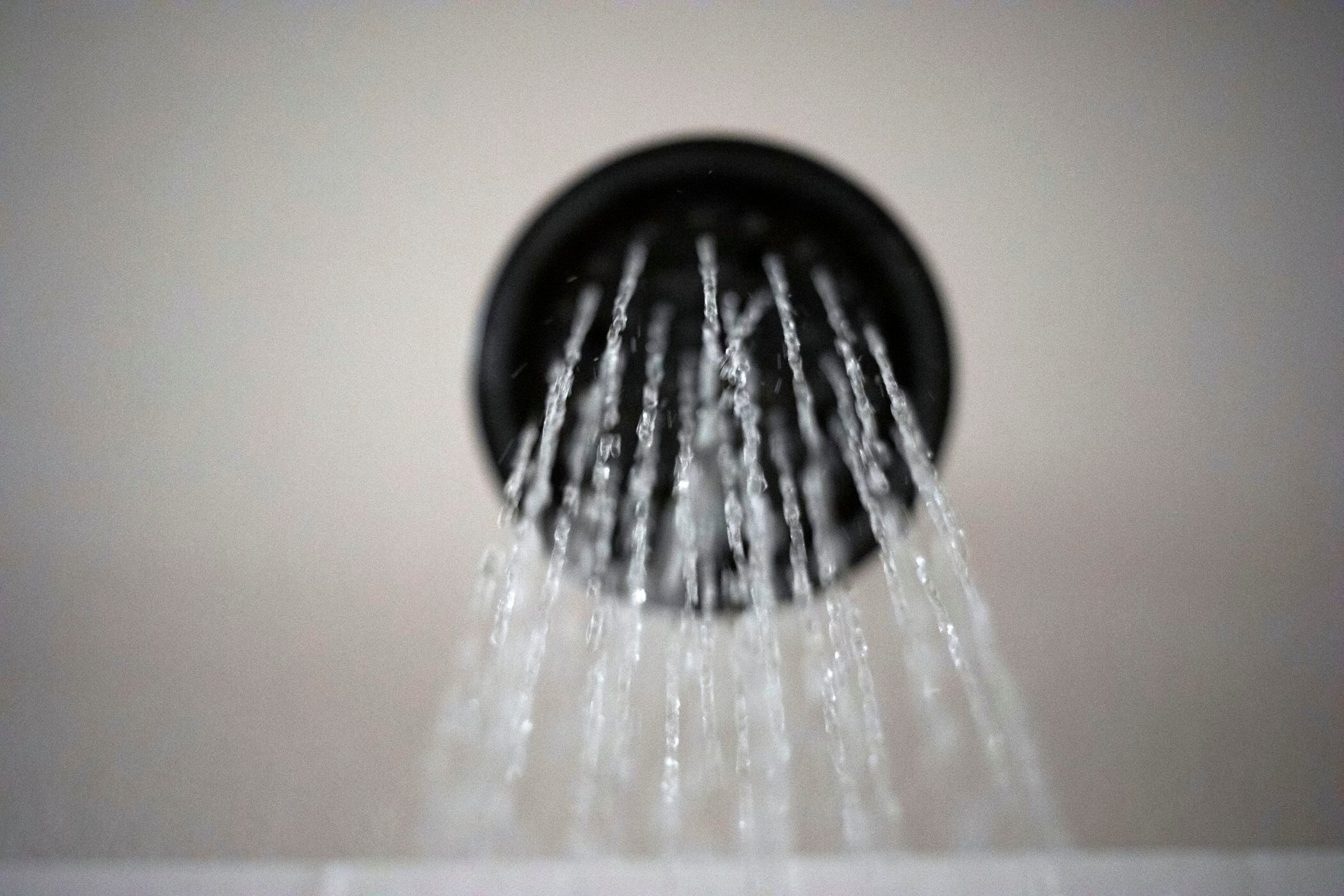
In this Aug. 12, 2020, file photo water flows from a showerhead in Portland, Ore. The Trump administration on Wednesday, Dec. 16, relaxed a regulation restricting water flow from showerheads, a pet peeve of President Donald Trump who complained that he needed more water to make his hair “perfect.” (AP Photo/Jenny Kane, File)
By Deb Riechmann
The Trump administration has relaxed a regulation restricting water flow from showerheads, a pet peeve of President Donald Trump, who complained that he wanted more water to make his hair “perfect.”
Since 1992, federal law has dictated that showerheads shouldn’t spew more than 2.5 gallons (9.5 liters) of water a minute. As newer shower fixtures came out with multiple nozzles, the Obama administration updated the ruling, stating that 2.5 gallons was still the limit regardless of how many nozzles were running. The new ruling, issued on Tuesday, now says each showerhead can emit 2.5 gallons a minute.
“So showerheads — you take a shower, the water doesn’t come out,” Trump said last summer. “You want to wash your hands? The water doesn’t come out. So what do you do? You just stand there longer or you take a shower longer? Because my hair — I don’t know about you, but it has to be perfect. Perfect.”
Also this week, the Energy Department issued a ruling that sets no limits on energy or water use for new washers and dryers with short cycle times in their “normal” setting. The rule sets up separate product classifications for residential clothes washers and dryers with cycle times of fewer than 30 minutes and 45 minutes for front-loading washers.
The Energy Department said the rule on washers and dryers lets manufacturers offer new products that meet consumer demand for products with shorter cycle times. Environmental advocates had a different response.
“With millions of washers and dryers sold in the United States every year, the rule announced today could lead to higher utility bills and additional carbon emissions from powering them,” said the Natural Resources Defense Council. “It also comes at a time when areas of the country are increasingly subject to extended droughts and can’t afford to waste water through unnecessary regulatory loopholes like the one just created by DOE.”
As commercial options tighten, more travelers are turning to private aviation. Wheels Up CEO George Mattson breaks down capacity and demand challenges.
Layoffs, hiring slowdowns, and shifting skill demands dominate this year’s job talk. LinkedIn’s Kory Kantenga explains what workers should watch for next.
Retailers face tariffs and cost challenges this holiday season. Wells Fargo's Lauren Murphy shares insights on pricing, promotions, and shopping trends.
Dateability, founded by sisters Jacqueline and Alexa Child, is the only dating app for disabled and chronically ill communities, fostering love without limits.
Some small grocery stores and neighborhood convenience stores are eager for the U.S. government shutdown to end and for their customers to start receiving federal food aid again. Late last month, the Trump administration froze funding for the SNAP benefits that about 42 million Americans use to buy groceries. The U.S. Department of Agriculture says about 74% of the assistance was spent last year at superstores like Walmart and supermarkets like Kroger. Around 14% went to smaller stores that are more accessible to SNAP beneficiaries. A former director of the United Nations World Food Program says SNAP is not only a social safety net for families but a local economic engine that supports neighborhood businesses.
Andy Baehr, Head of Product at CoinDesk Indices, breaks down crypto’s Black Friday crash, Bitcoin dipping under $100K, and what’s driving the market rout.