*By Hope King*
Roku is out with new hardware to help grow its...software business.
The streaming TV company launched two new wireless speakers Monday designed to work with pretty much only Roku TVs.
Roku says the speakers will only work with TVs made by its manufacturing partners ー such as TCL, Sharp, and Hisense ー and not with TVs plugged into a Roku box. But in reality, the company's VP of Product Management Mark Ely said they could be used with Bluetooth connected devices, such as a phone or tablet.
“They also include a Bluetooth radio…so you can stream and playback through the speaker,” he told me.
Pre-orders for the new Roku TV speakers began Monday with a promotional price of $150. The price will increase starting next week to $180. Shipping will begin in October when prices go up to $200. The wireless speakers also come with a TV remote and a touch remote, both with voice control only for Roku TV.
The announcement comes a few months after Roku saw its platform business surpass its device business, in term of percent of revenue, for the first time during the first quarter of this year.
The distinction of the speakers' compatibility may seem like a fine point, but for a company competing with evermore wireless speaker brands such as Sonos, and smart speakers from Amazon, Google, and Apple, it’s one that should be made. After all, how many connected speakers do people need in their homes, especially if they can’t all work together? To that end, Roku’s software inside the speakers could enable wider usage in the future.
“We’re always upgrading those systems,” said Ely. “Even the very first Roku TVs we shipped back in 2014 have the latest software.”
To be clear, Roku is not trying to compete directly with the growing smart speaker market here. The company instead is trying to make it easier for existing Roku customers to listen to music, shows, and movies through something other than their TV speakers.
“Our goal is to make Roku TVs the best TVs,” Ely said. “Sound is a critical part of that.” He went on to say that “great sound \[means\] a more immersive experience, and that drives our business overall.”
As of the end of the [first quarter,](https://ir.roku.com/static-files/8b04826b-95a6-49c4-82a6-c3e6ffa30f25) Roku saw platform revenue of $75.1 million ー about 55 percent of its total revenue and more than double what it was the year before.
Ely said he expects the new speakers to add to that growth because the company is focused on “delivering a great streaming experience \[through\] really innovative hardware products.”
“The better streaming experiences we can deliver, the more that drives platform engagement, and that drives the growth of our business,” said Ely.
Shares of Roku closed down about 1 percent Monday. The stock is up about 82 percent since it began trading on the NASDAQ last September.
For the full segment, [click here.] (https://cheddar.com/videos/roku-introduces-wireless-speakers-to-hardware-line-up)
As the Russia-Ukraine conflict continues to grow, so do concerns over the impact it could have on the international space community, and more specifically, the International Space Station. Those concerns come after Dmitry Rogozin, the director of Russia's state space agency, posted several tweets over the last few weeks in which he threatened to 'destroy Russia's cooperation on the ISS.' Olympia LePoint, rocket scientist and author of 'Answers Unleashed II: The Science of Attracting What You Want,' joined Cheddar News' Closing Bell to discuss.
U.S. markets closed the day at session lows as the Dow marked its fifth straight week of losses. Investors continue to weigh inflation and the ongoing Russia-Ukraine war and growing economic risk factors. George Seay, CEO of Annandale Capital, joins Cheddar News' Closing Bell to discuss.
Jarrod Loadholt, Partner at Ice Miller, joins Cheddar News' Closing Bell, where he calls President Biden's executive order on digital assets a 'home run' and explains the ways it benefits the greater cryptocurrency market.
Auction-based advertising infrastructure startup Topsort
raised $8 million in a seed funding round. Topsort says companies like Google and Amazon have been making huge profits from auction-based advertising for decades, but that the technology is complicated, exclusive, and hard to build. The company is trying to be a solution, by offering an auction-based advertising API to smaller retailers and marketplaces. Regina Ye, CEO and co-founder of Topsort, joins Cheddar News' Closing Bell to discuss.
Lance Ippolito, Head Trader at Future of Wealth, joins Cheddar News' Closing Bell, where he says the President's executive order on crypto is a step in the right direction even though investor sentiment cooled off on Thursday.
After a week of headlines that ranged from a potential criminal investigation by the Justice Department to a 20 for 1 stock split, Michael Pachter, the managing director of equity research at Wedbush Securities, joined Cheddar News to shake out what wild week means for the tech giant and what he thinks is behind possible government antipathy towards the company. "If you look at Amazon, Capitol Hill hates them," he said. "And maybe it's just because Bezos looks like Dr. Evil, but I think part of it is that a lot of constituents of these legislators just don't whine at Congress, 'leave my company alone,' the way they do with Disney or Microsoft."
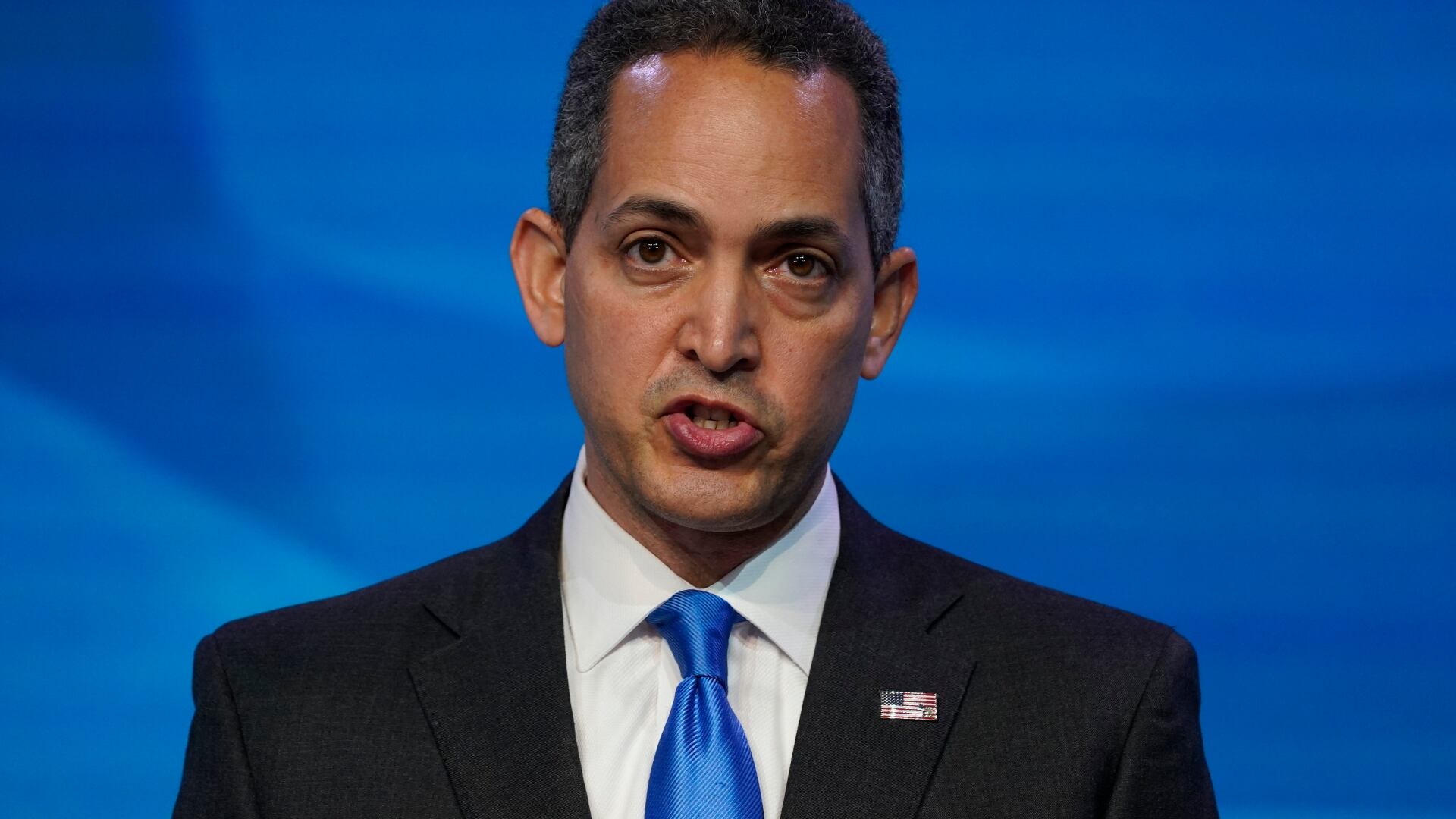
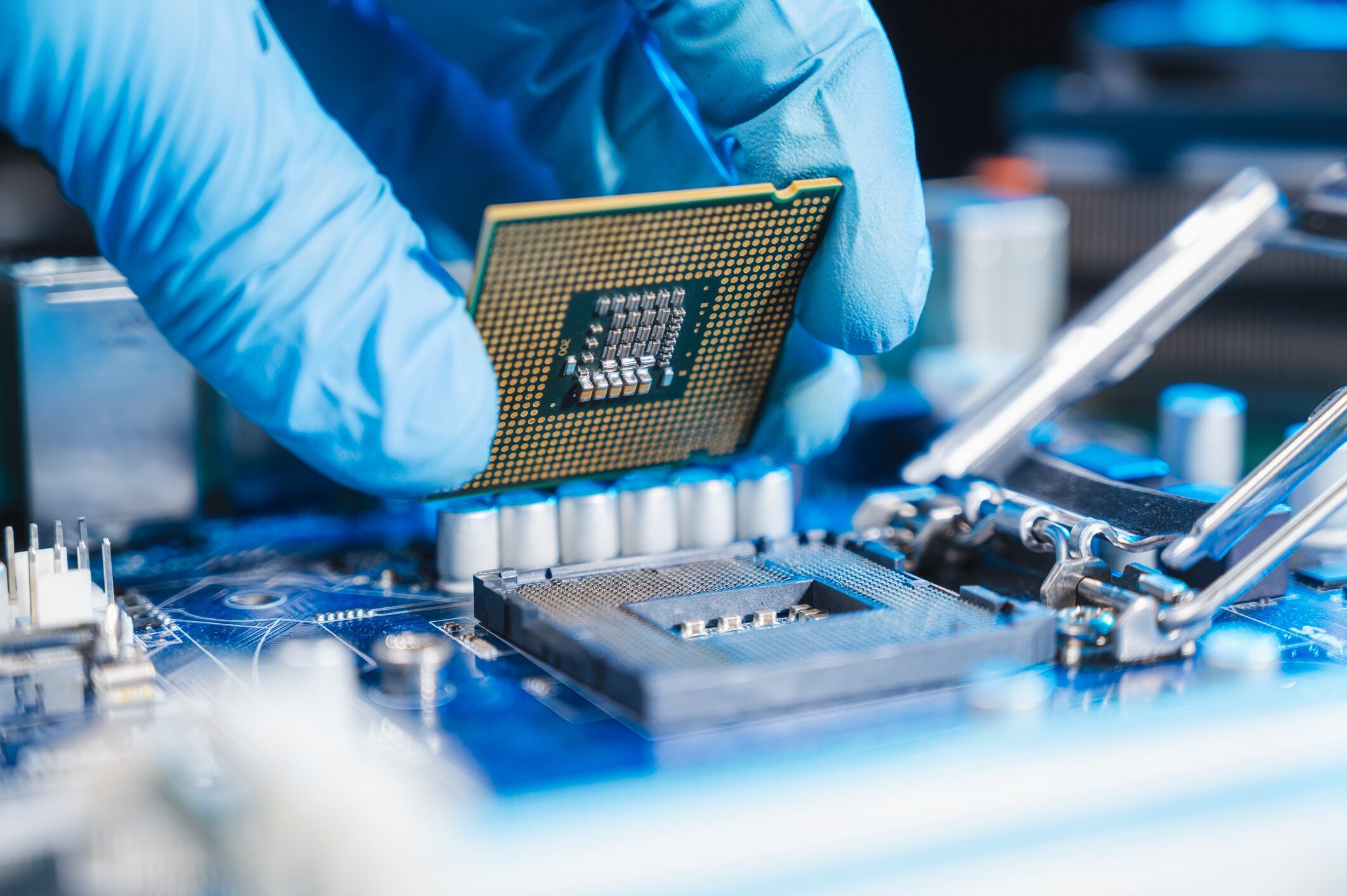
The ongoing semiconductor chip shortage has been impacting everything from the purchase of cars to smartphones. Deputy Commerce Secretary Don Graves spoke with Cheddar about the Biden administration's efforts to combat the issue and if the current crisis in Ukraine will have any impact on the global supply chain problems for semiconductors. "We're working very closely with all of our partners and allies around the globe, just as we have on the export controls and sanctions that we've applied to Russia to deal with that needless aggression," he said. "We're also working with them on the challenges of raw materials for a range of industries, including the semiconductor industry. We believe that we are going to be able to meet the demand for the for the near term."
Deputy Commerce Secretary Don Graves spoke to Cheddar's Alex Vuocolo about the ongoing semiconductor shortages and the push from the Biden administration to cover the supply chain problem as well as look ahead to future-proofing it.