*By Hope King*
Roku is out with new hardware to help grow its...software business.
The streaming TV company launched two new wireless speakers Monday designed to work with pretty much only Roku TVs.
Roku says the speakers will only work with TVs made by its manufacturing partners ー such as TCL, Sharp, and Hisense ー and not with TVs plugged into a Roku box. But in reality, the company's VP of Product Management Mark Ely said they could be used with Bluetooth connected devices, such as a phone or tablet.
“They also include a Bluetooth radio…so you can stream and playback through the speaker,” he told me.
Pre-orders for the new Roku TV speakers began Monday with a promotional price of $150. The price will increase starting next week to $180. Shipping will begin in October when prices go up to $200. The wireless speakers also come with a TV remote and a touch remote, both with voice control only for Roku TV.
The announcement comes a few months after Roku saw its platform business surpass its device business, in term of percent of revenue, for the first time during the first quarter of this year.
The distinction of the speakers' compatibility may seem like a fine point, but for a company competing with evermore wireless speaker brands such as Sonos, and smart speakers from Amazon, Google, and Apple, it’s one that should be made. After all, how many connected speakers do people need in their homes, especially if they can’t all work together? To that end, Roku’s software inside the speakers could enable wider usage in the future.
“We’re always upgrading those systems,” said Ely. “Even the very first Roku TVs we shipped back in 2014 have the latest software.”
To be clear, Roku is not trying to compete directly with the growing smart speaker market here. The company instead is trying to make it easier for existing Roku customers to listen to music, shows, and movies through something other than their TV speakers.
“Our goal is to make Roku TVs the best TVs,” Ely said. “Sound is a critical part of that.” He went on to say that “great sound \[means\] a more immersive experience, and that drives our business overall.”
As of the end of the [first quarter,](https://ir.roku.com/static-files/8b04826b-95a6-49c4-82a6-c3e6ffa30f25) Roku saw platform revenue of $75.1 million ー about 55 percent of its total revenue and more than double what it was the year before.
Ely said he expects the new speakers to add to that growth because the company is focused on “delivering a great streaming experience \[through\] really innovative hardware products.”
“The better streaming experiences we can deliver, the more that drives platform engagement, and that drives the growth of our business,” said Ely.
Shares of Roku closed down about 1 percent Monday. The stock is up about 82 percent since it began trading on the NASDAQ last September.
For the full segment, [click here.] (https://cheddar.com/videos/roku-introduces-wireless-speakers-to-hardware-line-up)
Jill and Carlo cover the latest developments with the Omicron variant that are spooking markets once again. Twitter's @Jack is leaving, SCOTUS takes up abortion rights and the world has a brand new republic.
Phyllis Newhouse, the first black woman to bring a company public via SPAC on the NYSE earlier this year, has launched her second SPAC, ShoulderUp Technology Acquisition.
Phyllis is a serial entrepreneur, retired military officer, and founder of the ShoulderUp movement, which educates and encourages women around the world to reach their greatest economic, political and cultural potential. Shawn Henry is part of the ShoulderUp team, bringing his expertise on cybersecurity to the new company. Both Phyllis and Shawn joined Cheddar to discuss this new venture and how it plans to tackle the issue of cybercrime.
Don Basile, CEO, Monsoon Blockchain & Founder of Bitcoin Latinum, joins Cheddar News' Closing Bell, where he explains why we're seeing major crypto investors look to purchase expensive pieces of art, and discusses what the NFT space could look like in the not-too-distant future.
Jack Constantine, chief digital officer and product inventor at Lush, joined Cheddar to talk about the cosmetic company's mass exodus from major social media platforms TikTok, Facebook, Instagram, and Snapchat, in the wake of recent reports that Instagram specifically had negative impacts on teen girls. He noted that with teenage girls being a large part of its consumer base and audience, Lush had a responsibility to market its company on outlets that prioritize mental wellbeing. "For us, we've always been a social brand, and it started to feel that social media was no longer offering what we felt we wanted to gain from it," he said. "And then obviously when you add that to the damage that it's causing, it just feels like a combination that we can't continue on with." The company also pulled out of social media platforms in 2019.
Jon Lowen, Co-Founder of Surfside, joined Wake Up With Cheddar's Baker Machado to discuss Uber's partnership with cannabis retailer Tokyo Smoke, as it's the first time a cannabis merchant has been listed on UberEats across all of its global markets.
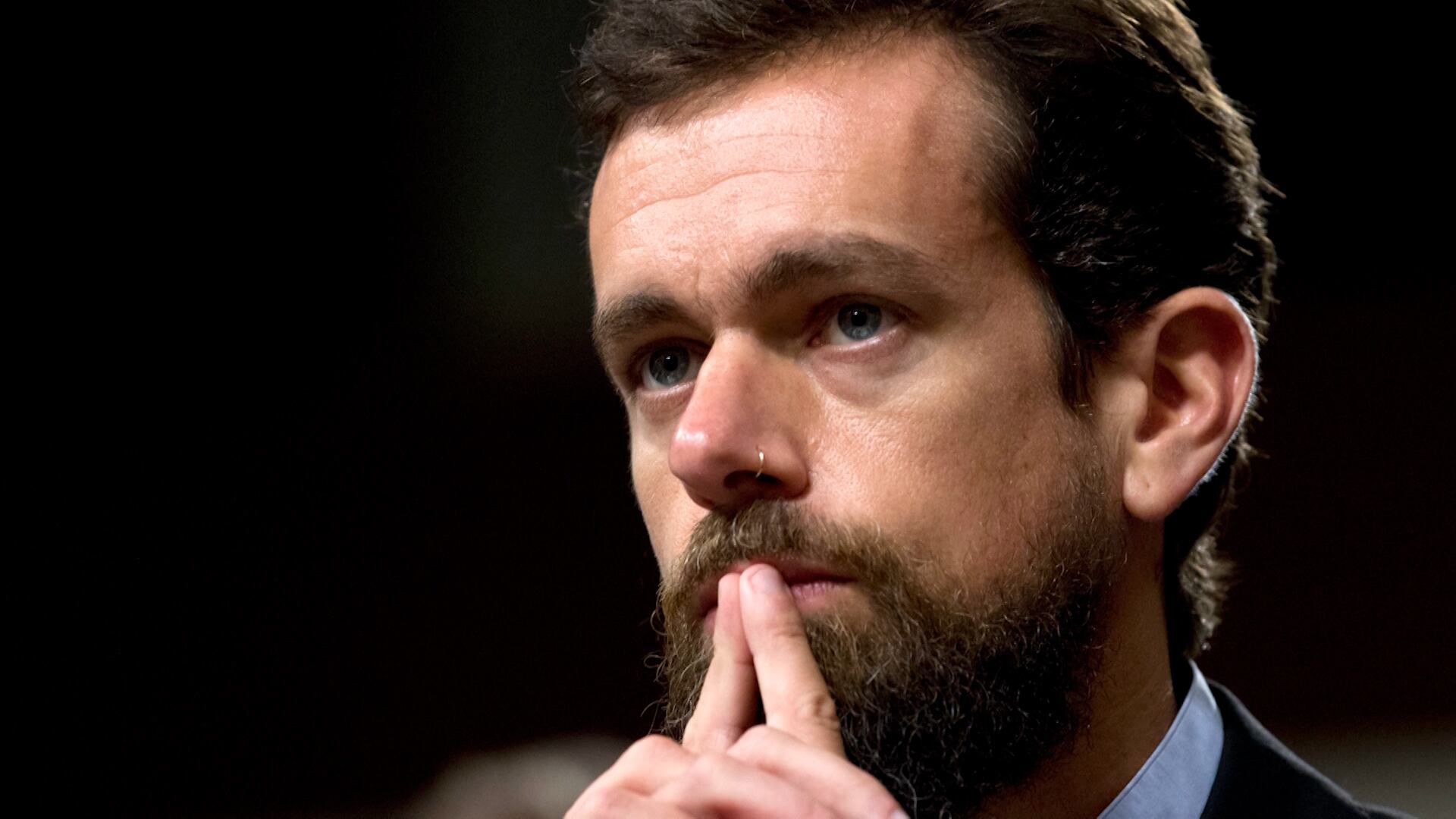
Jack Dorsey resigned from his post as CEO of the social media company on Monday and will be replaced by chief technology officer Parag Agrawal. Mitch Rubin, portfolio manager at RiverPark Long/Short Opportunity Fund, joined Cheddar to break down the move and what it means for investors in both Twitter and Square, the payment company that Dorsey also helms. "For the long-term, I think this is very positive news for both companies," he said. Rubin also talked about growing competition in the social media space and why Twitter continues to lag behind other major players.
Jack Dorsey is officially out as Twitter's CEO. Dorsey said in a statement that the platform is ready to move away from its founders and now will be led by current CTO Parag Agrawal.