Rep. Rashida Tlaib said on Friday that she will not visit her family in the West Bank due to the conditions required by the Israeli government. The decision follows a reversal by Israel, which first barred the Michigan Congresswoman from the country and later granted her entry on humanitarian grounds.
"Visiting my grandmother under these oppressive conditions meant to humiliate me would break my grandmother's heart," the freshman Democrat said in a statement. "Silencing me with treatment to make me feel less-than is not what she wants for me – it would kill a piece of me that always stands up against racism and injustice."
Tlaib had submitted a formal request to Israeli Interior Minister Aryeh Deri on Thursday requesting a visit to see family and her aging grandmother who lives outside Ramallah. "This could be my last opportunity to see her," the request letter read.
Deri had approved the request under the condition that Tlaib cease her support for the Boycott, Divestment, Sanctions (BDS) movement, a formal campaign aimed at curbing international support for Israel over its treatment and policies towards Palestinians. The movement also aims to pressure Israel to comply with international law on issues such as expanding Israeli settlements in Palestianian territories, which has been declared illegal by the United Nations.
Tlaib's request "was just a provocative request, aimed at bashing the State of Israel," Deri said on Twitter. "Apparently her hate for Israel overcomes her love for her grandmother."
The dual reversals come after Israeli Prime Minister Benjamin Netanyahu's government had originally announced that Tlaib and fellow Democrat Rep. Ilhan Omar of Minnesota would not be allowed into the country, claiming that the "sole purpose" of their visit is to "increase incitement" against Israel.
Netanyahu's decision followed an extraordinary tweet from President Trump urging Israel to bar the two sitting U.S. Congresswomen. "They hate Israel & all Jewish people, & there is nothing that can be said or done to change their minds," Trump said.
Trump's tweet and the decision to bar the lawmakers from an allied country — one that receives billions of U.S. dollars in aid — rocked the political consciousness in Washington and in Israel.
"As a member of the House Committee on Foreign Affairs, it is my job to conduct oversight of foreign aid," Omar said in a statement. "The irony of the 'only democracy' in the Middle East making such a decision is that it is both an insult to democratic values and a chilling response to a visit by government officials from an allied nation."
House Speaker Nancy Pelosi said that the denial of entry of the Congresswomen "is a sign of weakness, and beneath the dignity of the great State of Israel" — a direct rebuke of Trump's tweet, which said the entry of Omar and Tlaib would "show great weakness."
The American Israel Public Affairs Committee — the powerful pro-Israel lobbying group better known as AIPAC — also said that while it does not support the Congresswomen's "anti-Israel" positions, it does believe that every member of Congress should be able to visit Israel. Republican Sen. Marco Rubio of Florida also said blocking their entry was a mistake.
Yet Washington's ambassador to Israel, David Friedman, said in a statement that the U.S. supported Israel's earlier decision to deny entry. "This trip, pure and simple, is nothing more than an effort to fuel the BDS engine that Congresswomen Tlaib and Omar so vigorously support," Friedman said in a statement.
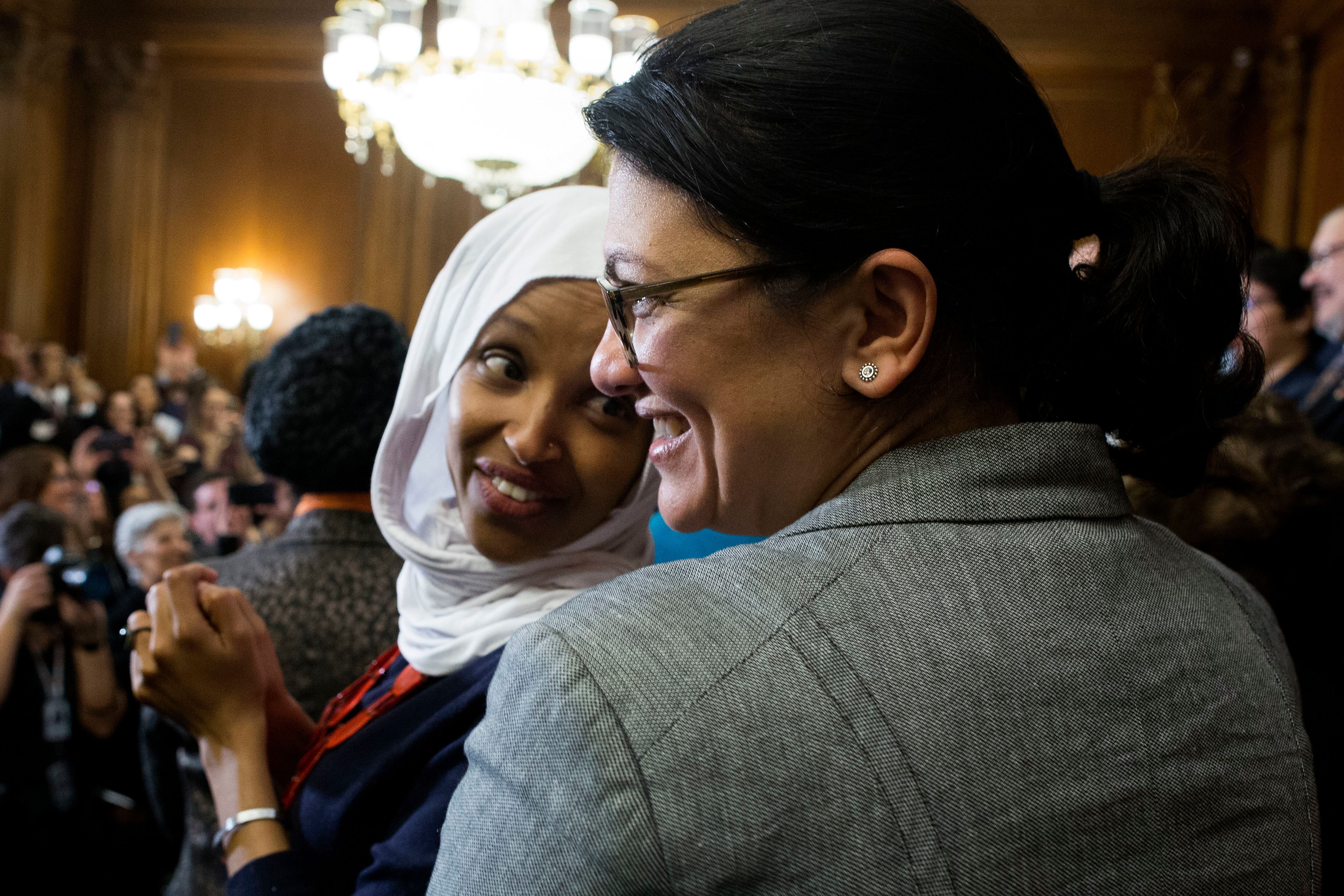
Tlaib and Omar — the first two Muslim American women ever to be elected to Congress — have been vocal supporters of the BDS movement. In July, the Congresswomen and just a handful of other lawmakers voted against a resolution to formally condemn the BDS campaign. The bill passed overwhelmingly with 398 votes in favor and 17 against.
In a tweet on Friday, the BDS movement said that "Palestinians do not bow to oppressor's diktats" and that the attempt by Israel's "far-right regime" to humiliate Tlaib had failed.
"I cannot allow the Israeli government to take that away from them or to use my deep desire to see my grandmother, potentially for the last time, as a political bargaining chip," Tlaib added in her statement.