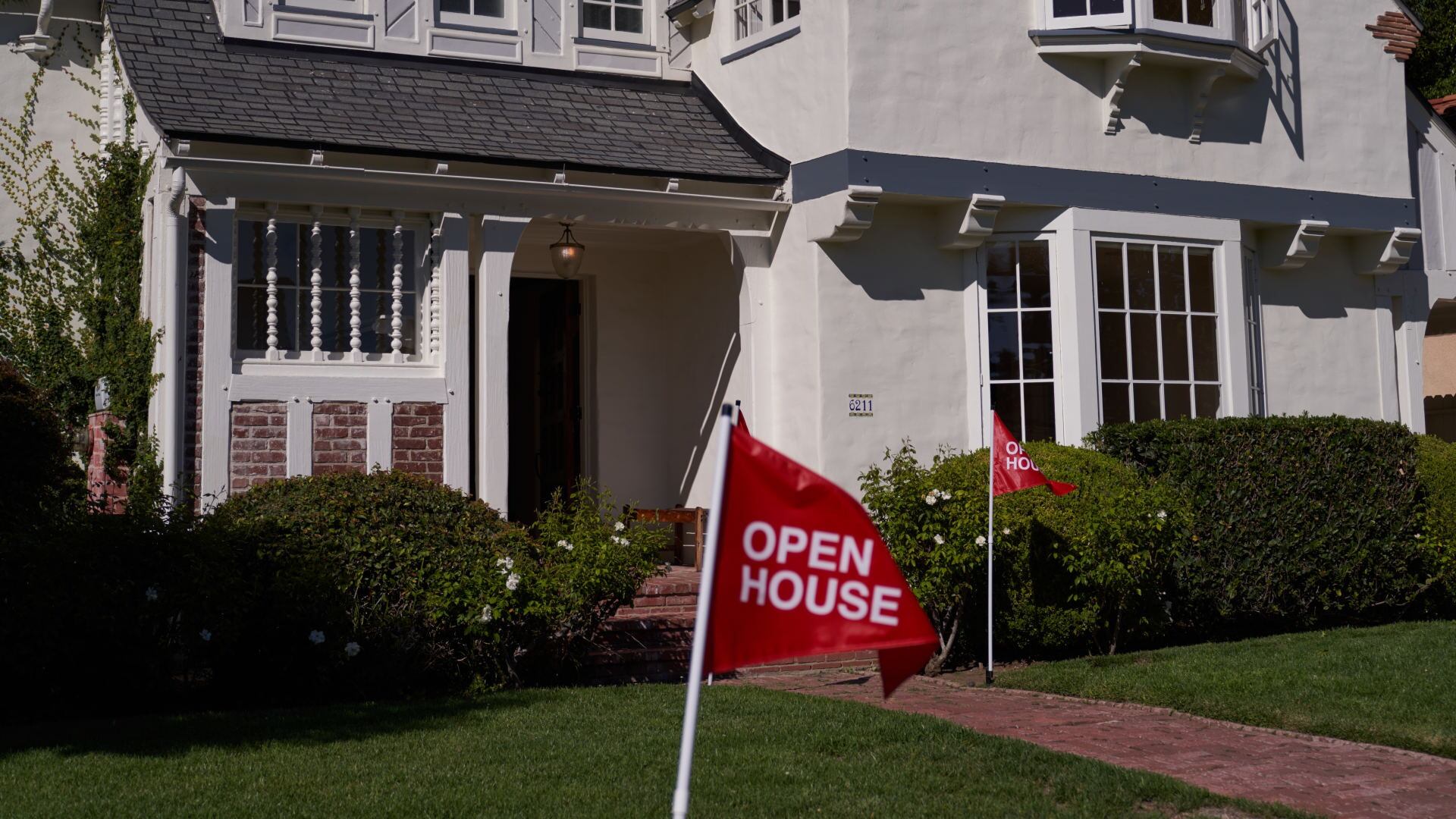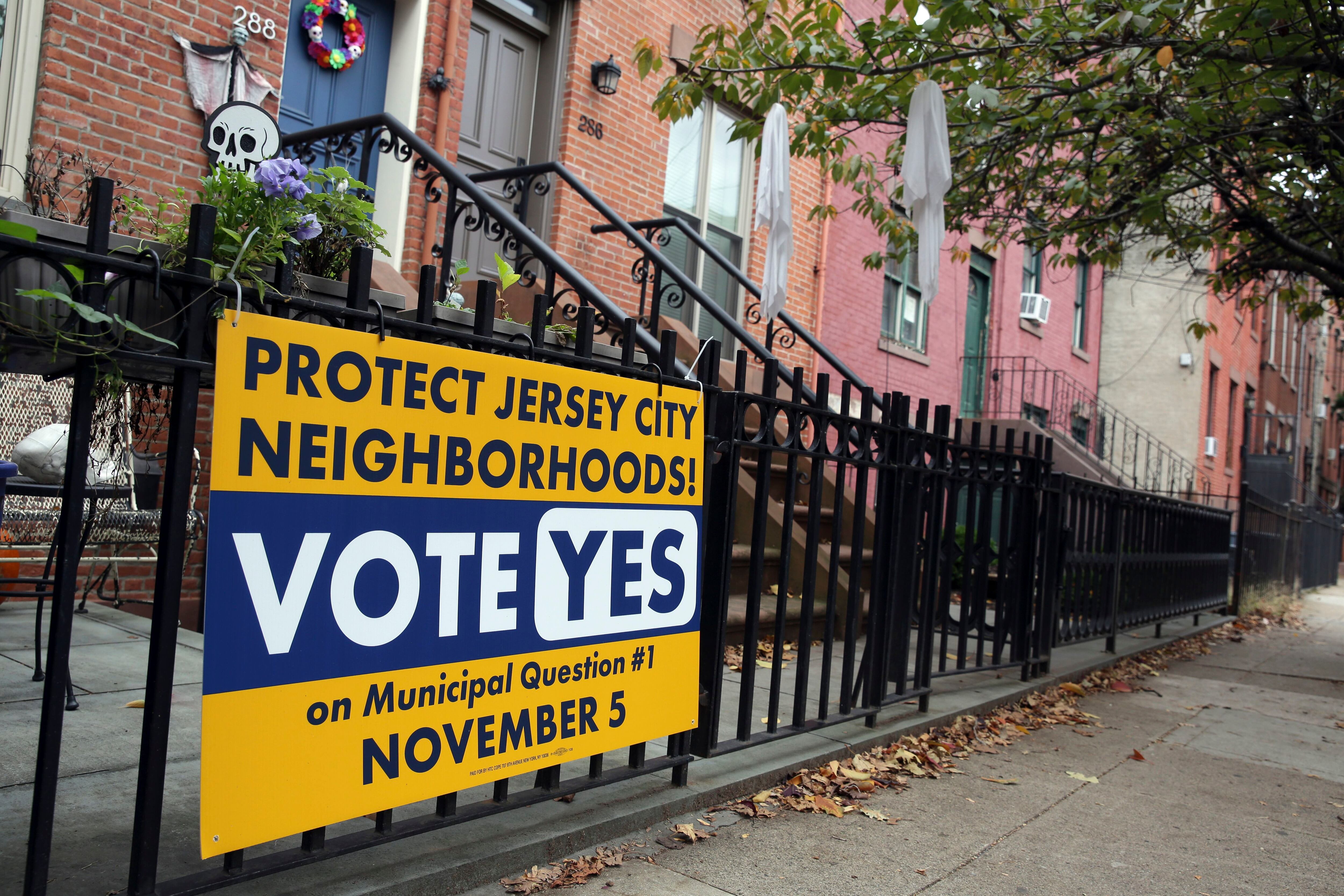
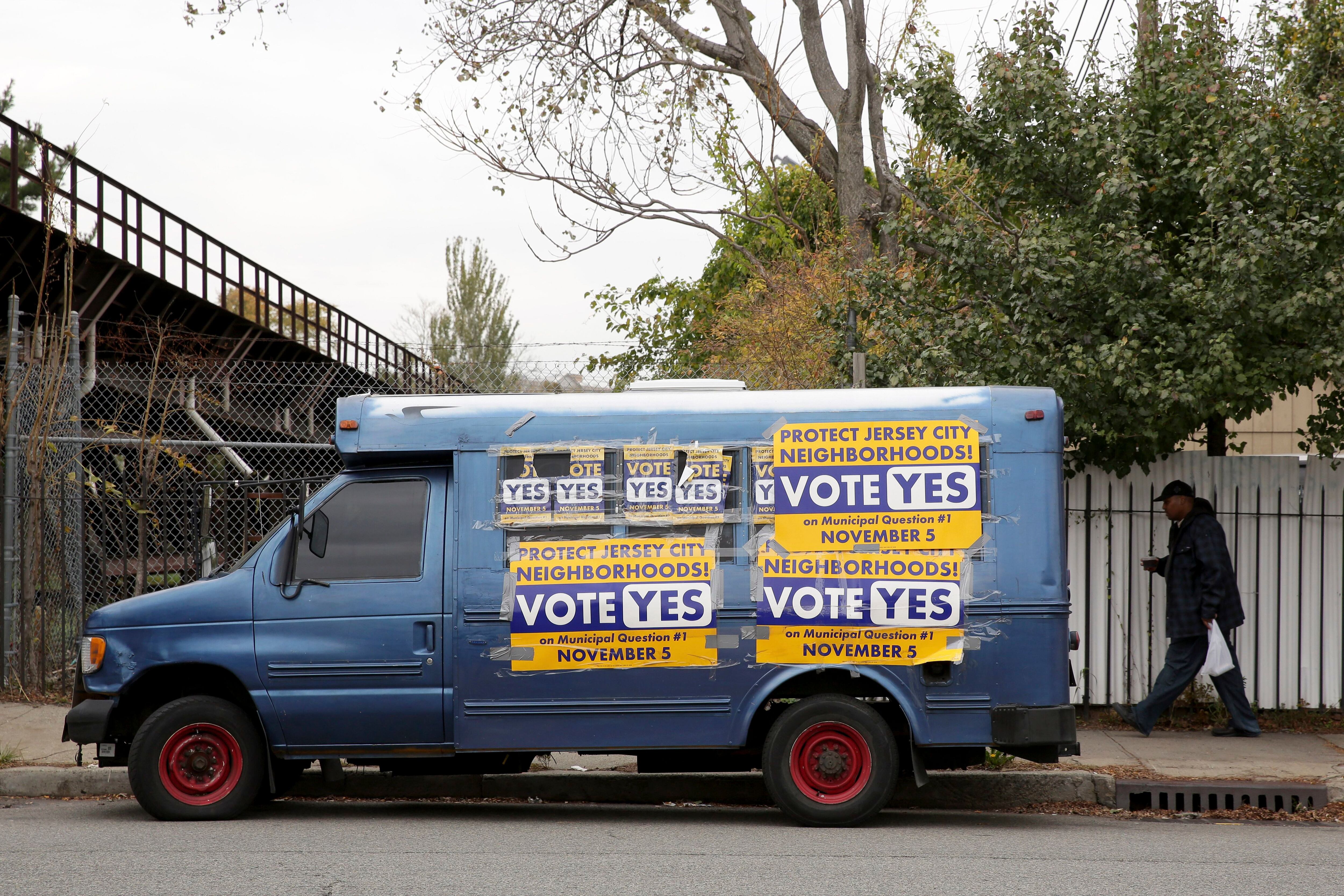
Residents of Jersey City, New Jersey on Tuesday voted overwhelmingly in favor of an ordinance that mandates stricter regulations on short-term rental units. The vote was a major blow to Airbnb, which launched a multimillion-dollar campaign against the measure.
The ordinance, which passed with roughly 70 percent of votes, puts limitations on the number of short-term rental units in residential buildings and mandates safety inspections and an array of other compliance measures. It was also one of the most hotly contested — and expensive — referendums in Jersey City history.
Backed by the city government and hotel union groups, the measure came about after residents expressed concerns over the increasing number of Airbnb rentals in Jersey City, a mid-sized city just minutes by train to Manhattan. Airbnb, which has come under pressure in New York City, adamantly fought the measure by organizing local supporters, buying TV ads, and dispersing mailers citywide.
"I'm proud that Jersey City read through the information and they overcame a campaign, frankly, of misinformation and lies," Jersey City Mayor Steven Fulop said at a press conference Wednesday. "The impact of this referendum is obviously going to be far greater than just Jersey City."
Christopher Nulty, an Airbnb spokesperson, said that the company was disappointed "to see the hotel-backed special interests run a campaign" to garner support for the vote.
"We knew this was going to be one of the toughest fights we've faced, with the big New York hotel industry determined to fight home sharing, but we had an obligation to stand up for our community," Nulty added in a statement.
Jersey City first approved Airbnb in 2015, a time when there were just 300 short-term listings. Today, Fulop said, there are over 35,000 listings, most of which are run by commercial operators and not individual hosts. Fulop added that the approved ordinance will not affect small homeowners that rent rooms or units for additional income and will remain focused on limiting large scale operations, which amount to "unregistered hotels."
"I think we were very reasonable and fair," the mayor said Wednesday. "A lot of the commercials that were run by Airbnb were entirely disingenuous and misleading."
Airbnb, which boasts seven million accommodations worldwide, maintains that the "red tape and onerous registration systems" will hurt tenants and hosts that rely on rental income.
Tension between the two sides was sustained even throughout voting hours after Keep Our Homes, an Airbnb-backed group against the ordinance, posted a video that alleged to show Fulop conducting prohibited campaigning at a polling place Tuesday.
"There can be no doubt that this election took place under a cloud," Graeme Zielinski, Keep Our Homes campaign manager, said in a statement. "We are evaluating our options going forward."
Fulop called the video "sour grapes from Airbnb" on Wednesday, adding that "the public spoke very loudly and they are trying to distract."
The ordinance, which will undoubtedly decrease the number of Airbnb listings in Jersey City, comes as the digital rental marketplace faces a number of setbacks. Over the weekend, the company instituted a ban on party house rentals after a shooting in California at an Airbnb rental left five dead on Halloween. Airbnb also reportedly posted greater than expected operating losses this year, which could cast doubt over its forthcoming initial public offering.