By Jill Lawless And Gregory Katz
Prince Philip, the irascible and tough-minded husband of Queen Elizabeth II who spent more than seven decades supporting his wife in a role that both defined and constricted his life, has died, Buckingham Palace said Friday. He was 99.
His life spanned nearly a century of European history, starting with his birth as a member of the Greek royal family and ending as Britain’s longest serving consort during a turbulent reign in which the thousand-year-old monarchy was forced to reinvent itself for the 21st century.
He was known for his occasionally racist and sexist remarks — and for gamely fulfilling more than 20,000 royal engagements to boost British interests at home and abroad. He headed hundreds of charities, founded programs that helped British schoolchildren participate in challenging outdoor adventures, and played a prominent part in raising his four children, including his eldest son, Prince Charles, the heir to the throne.
Philip spent a month in hospital earlier this year before being released on March 16 to return to Windsor Castle.
“It is with deep sorrow that Her Majesty The Queen has announced the death of her beloved husband, His Royal Highness The Prince Philip, Duke of Edinburgh,” the palace said. “His Royal Highness passed away peacefully this morning at Windsor Castle.”
Philip saw his sole role as providing support for his wife, who began her reign as Britain retreated from empire and steered the monarchy through decades of declining social deference and U.K. power into a modern world where people demand intimacy from their icons.
In the 1970s, Michael Parker, an old navy friend and former private secretary of the prince, said of him: “He told me the first day he offered me my job, that his job — first, second and last — was never to let her down.”
Speaking outside 10 Downing St., Prime Minister Boris Johnson noted the support Philip provided to the queen, saying he “helped to steer the royal family and the monarchy so that it remains an institution indisputably vital to the balance and happiness of our national life.”
The queen, a very private person not given to extravagant displays of affection, once called him “her rock” in public.
In private, Philip called his wife Lilibet; but he referred to her in conversation with others as “The Queen.”
Over the decades, Philip’s image changed from that of handsome, dashing athlete to arrogant and insensitive curmudgeon. In his later years, the image finally settled into that of droll and philosophical observer of the times, an elderly, craggy-faced man who maintained his military bearing despite ailments.
The popular Netflix series “The Crown” gave Philip a central role, with a slightly racy, swashbuckling image. He never commented on it in public, but the portrayal struck a chord with many Britons, including younger viewers who had only known him as an elderly man.
Philip’s position was a challenging one — there is no official role for the husband of a sovereign queen — and his life was marked by extraordinary contradictions between his public and private duties. He always walked three paces behind his wife in public, in a show of deference to the monarch, but he was the head of the family in private. Still, his son Charles, as heir to the throne, had a larger income, as well as access to the high-level government papers Philip was not permitted to see.
Philip often took a wry approach to his unusual place at the royal table.
“Constitutionally, I don’t exist,” said Philip, who in 2009 became the longest-serving consort in British history, surpassing Queen Charlotte, who married King George III in the18th century.
He frequently struggled to find his place — a friction that would later be echoed in his grandson Prince Harry’s decision to give up royal duties.
“There was no precedent,” he said in a rare interview with the BBC to mark his 90th birthday. “If I asked somebody, ‘What do you expect me to do?’ they all looked blank.”
But having given up a promising naval career to become consort when Elizabeth became queen at age 25, Philip was not content to stay on the sidelines and enjoy a life of ease and wealth. He promoted British industry and science, espoused environmental preservation long before it became fashionable, and traveled widely and frequently in support of his many charities.
In those frequent public appearances, Philip developed a reputation for being impatient and demanding and was sometimes blunt to the point of rudeness.
Many Britons appreciated what they saw as his propensity to speak his mind, while others criticized behavior they labeled offensive and out of touch.
In 1995, for example, he asked a Scottish driving instructor, “How do you keep the natives off the booze long enough to pass the test?” Seven years later in Australia, when visiting Aboriginal people with the queen, he asked: “Do you still throw spears at each other?”
Many believe his propensity to speak his mind meant he provided needed, unvarnished advice to the queen.
“The way that he survived in the British monarchy system was to be his own man, and that was a source of support to the queen,” said royal historian Robert Lacey. “All her life she was surrounded by men who said, ‘yes ma’am’ and he was one man who always told her how it really was, or at least how he saw it.”
Lacey said at the time of the royal family’s difficult relations with Princess Diana after her marriage to Charles broke down, Philip spoke for the family with authority, showing that he did not automatically defer to the queen.
Philip’s relationship with Diana became complicated as her separation from Charles and their eventual divorce played out in a series of public battles that damaged the monarchy’s standing.
It was widely assumed that he was critical of Diana’s use of broadcast interviews, including one in which she accused Charles of infidelity. But letters between Philip and Diana released after her death showed that the older man was at times supportive of his daughter-in-law.
After Diana’s death in a car crash in Paris in 1997, Philip had to endure allegations by former Harrods owner Mohamed Al Fayed that he had plotted the princess’s death. Al Fayed’s son, Dodi, also died in the crash.
During a lengthy inquest into their deaths, a senior judge acting as coroner instructed the jury that there was no evidence to support the allegations against Philip, who did not publicly respond to Al Fayed’s charges.
Philip’s final years were clouded by controversy and fissures in the royal family.
His third child, Prince Andrew, was embroiled in scandal over his friendship with Jeffrey Epstein, an American financier who died in a New York prison in 2019 while awaiting trial on sex trafficking charges.
U.S. authorities accused Andrew of rebuffing their request to interview him as a witness, and Andrew faced accusations from a woman who said that she had several sexual encounters with the prince at Epstein’s behest. He denied the claim but withdrew from public royal duties amid the scandal.
At the start of 2020, Philip’s grandson Harry and his wife, the American former actress Meghan Markle, announced they were quitting royal duties and moving to North America to escape intense media scrutiny that they found unbearable.
Born June 10, 1921, on the dining room table at his parents’ home on the Greek island of Corfu, Philip was the fifth child and only son of Prince Andrew, younger brother of the king of Greece. His grandfather had come from Denmark during the 1860s to be adopted by Greece as the country’s monarch.
Philip’s mother was Princess Alice of Battenberg, a descendent of German princes. Like his future wife, Elizabeth, Philip was also a great-great-grandchild of Queen Victoria.
When Philip was 18 months old, his parents fled to France. His father, an army commander, had been tried after a devastating military defeat by the Turks. After British intervention, the Greek junta agreed not to sentence Andrew to death if he left the country.
The family was not exactly poor but, Philip said: “We weren’t well off” — and they got by with help from relatives. He later brought only his navy pay to a marriage with one of the world’s richest women.
Philip’s parents drifted apart when he was a child, and Andrew died in Monte Carlo in 1944. Alice founded a religious order that did not succeed and spent her old age at Buckingham Palace. A reclusive figure, often dressed in a nun’s habit, she was little seen by the British public. She died in 1969 and was posthumously honored by Britain and Israel for sheltering a Jewish family in Nazi-occupied Athens during the war.
Philip went to school in Britain and entered Britannia Royal Naval College Dartmouth as a cadet in 1939. He got his first posting in 1940 but was not allowed near the main war zone because he was a foreign prince of a neutral nation. When the Italian invasion of Greece ended that neutrality, he joined the war, serving on battleships in the Indian Ocean, the Mediterranean and the Pacific.
On leave in Britain, he visited his royal cousins, and, by the end of war, it was clear he was courting Princess Elizabeth, eldest child and heir of King George VI. Their engagement was announced July 10, 1947, and they were married on Nov. 20.
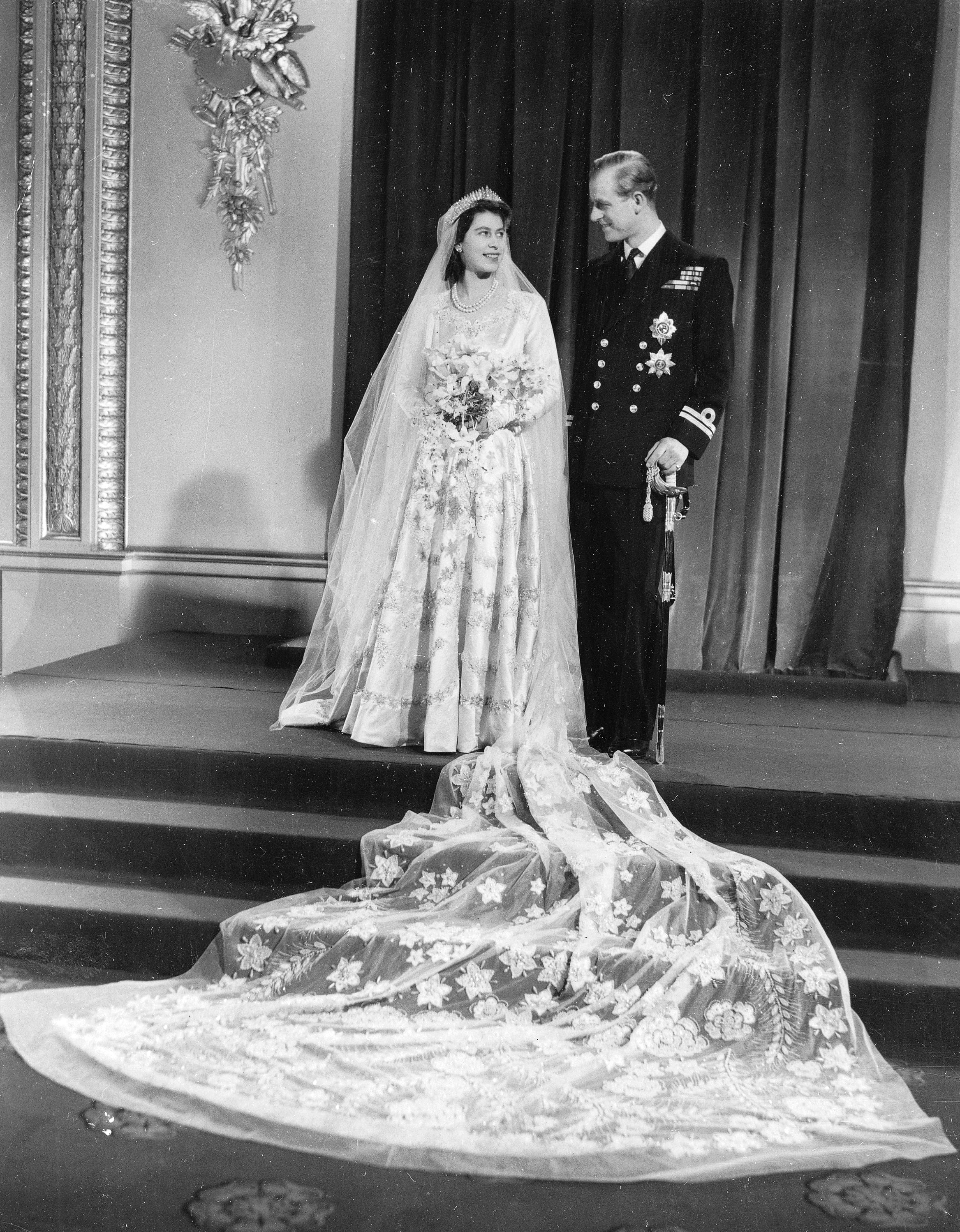
After an initial flurry of disapproval that Elizabeth was marrying a foreigner, Philip’s athletic skills, good looks and straight talk lent a distinct glamour to the royal family.
Elizabeth beamed in his presence, and they had a son and daughter while she was still free of the obligations of serving as monarch.
But King George VI died of cancer in 1952 at age 56.
Philip had to give up his naval career, and his subservient status was formally sealed at the coronation, when he knelt before his wife and pledged to become “her liege man of life and limb, and of earthly worship.”
The change in Philip’s life was dramatic.
“Within the house, and whatever we did, it was together,” Philip told biographer Basil Boothroyd of the years before Elizabeth became queen. “People used to come to me and ask me what to do. In 1952, the whole thing changed, very, very considerably.”
Said Boothroyd: “He had a choice between just tagging along, the second handshake in the receiving line, or finding other outlets for his bursting energies.”
So Philip took over management of the royal estates and expanded his travels to all corners of the world, building a role for himself.
From 1956, he was Patron and Chairman of Trustees for the largest youth activity program in Britain, the Duke of Edinburgh’s Award, a program of practical, cultural and adventurous activities for young people that exists in over 100 countries. Millions of British children have had some contact with the award and its famous camping expeditions.
He painted, collected modern art, was interested in industrial design and planned a garden at Windsor Castle. But, he once said, “the arts world thinks of me as an uncultured, polo-playing clot.”
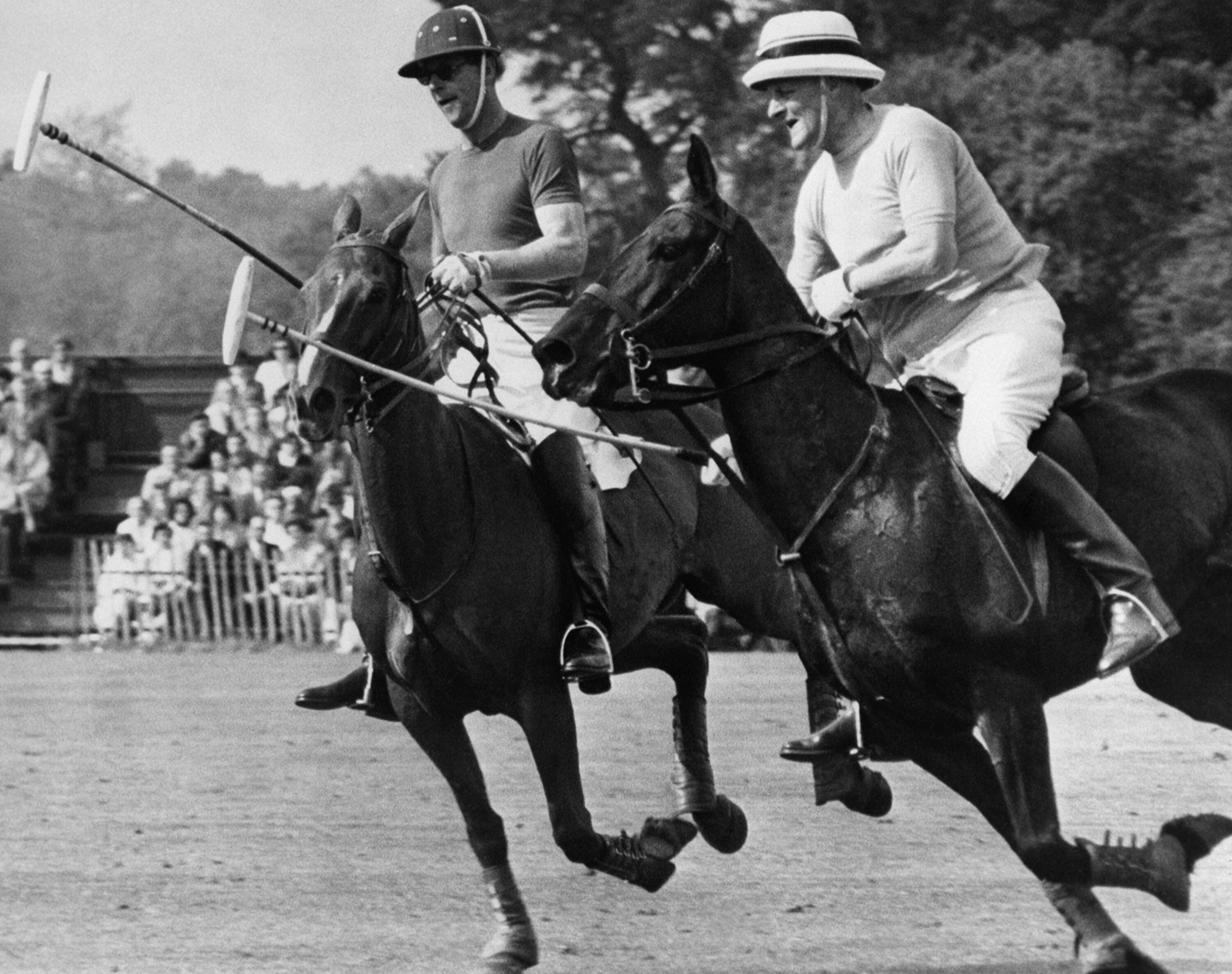
In time, the famous blond hair thinned and the long, fine-boned face acquired a few lines. He gave up polo but remained trim and vigorous.
To a friend’s suggestion that he ease up a bit, the prince is said to have replied, “Well, what would I do? Sit around and knit?”
But when he turned 90 in 2011, Philip told the BBC he was “winding down” his workload and he reckoned he had “done my bit.”
The next few years saw occasional hospital stays as Philip’s health flagged.
He announced in May 2017 that he planned to step back from royal duties, and he stopped scheduling new commitments — after roughly 22,000 royal engagements since his wife’s coronation. In 2019, he gave up his driver’s license after a serious car crash.
Philip is survived by the queen and their four children — Prince Charles, Princess Anne, Prince Andrew and Prince Edward — as well as eight grandchildren and 10 great-grandchildren.
The grandchildren are Charles’ sons, Prince William and Prince Harry; Anne’s children, Peter and Zara Phillips; Andrew’s daughters, Princess Beatrice and Princess Eugenie; and Edward’s children, Lady Louise and Viscount Severn.
The great-grandchildren are William and Kate’s children, Prince George, Princess Charlotte and Prince Louis; Harry and Meghan’s son, Archie; Savannah and Isla, the daughters of Peter Phillips and his wife, Autumn; Mia, Lena and Lucas, the children of Zara Phillips and her husband, Mike Tindall; and Eugenie’s son, August, with her husband, Jack Brooksbank.
Katz and Associated Press writer Robert Barr contributed to this report before their deaths.