President Donald Trump, from a podium at the White House on Wednesday, said the U.S. will impose new sanctions on Iran in his first public remarks since Iranian missiles hit two military bases in Iraq that house American troops.
Iran launched more than a dozen ballistic missiles on Tuesday night in response to the U.S. drone strike that killed top military Gen. Qassem Soleimani. U.S. and Iraqi officials said there were no fatalities resulting from the "revenge" attacks, although Iranian news outlets claim dozens were killed.
Trump told the nation that Iran appeared to be standing down from the escalating conflict and asked NATO, an organization he has shunned, to be more involved in the Middle East. He also announced the U.S. will further raise sanctions on Iran, though he did not immediately provide details. Current sanctions have had a substantial impact on the country and additional sanctions levied against Iran's central bank late last year after its suspected attack on Saudi Arabia, further crippled its economy.
Trump also defended his decision to take out Iran's top general and stressed: "Soleimani's hands were drenched in both Iranian and American blood."
"As long as I am President of the United States Iran will never be allowed to have a nuclear weapon," the president said in the Grand Foyer of the White House standing in front of Vice President Mike Pence and an assortment of cabinet secretaries and military officers in uniform. He said the U.S. is "ready to embrace peace."
Stocks rallied and the Nasdaq and S&P 500 hit all-time highs after the president concluded his comments.
The president said the U.S. had "sent a valuable message to terrorists."
He also alleged the missiles launched by Iran last night were "paid for by the funds made available by the last administration." The money he was referring to were funds that had been frozen after the shah of Iran fell in 1979. Obama agreed to return the long-disputed funds as part of a nuclear deal.
He also referenced what he said was the U.S.'s independence from foreign oil. Though it is true the U.S. produces far more oil than it did years ago, it still imports about 10 million barrels daily. Most U.S. oil comes from Canada, but oil still flows in from Saudia Arabia, Iraq, and other nations in the Middle East.
Hours after launching its missiles, Iranian foreign minister Mohammad Javad Zarif tweeted the nation did not "seek escalation or war." It was unclear if Iran had planned more attacks after Iran's Revolutionary Guard yesterday said in a statementthe attacks were the start of "the fierce revenge." Zarif said Iran "took & concluded proportionate measures in self-defense," suggesting yesterday's attack was the last. Trump's comments seemed to confirm Zarif's statement.
Just after the U.S. carried out the drone attack the killed Soleimani last week, Trump said he had authorized the strike due to an "imminent" threat and he had intended to prevent a war, not start one. Since then, U.S. officials, like Secretary of State Mike Pompeo agreed the move was done to send a message to Iran.
While Iran and the U.S. have held tense relations for more than four decades, the recent escalation began when an American military contractor was killed by an Iranian-backed militia group in the final week of December. The U.S. responded with airstrikes in areas where the militias are based. Then, on New Year's Eve, Iranian-backed militias stormed the U.S. Embassy in Baghdad and trapped American diplomats in the compound. Gen. Soleimani was killed in response by a drone strike last Friday.
Markets were pointing mostly lower to end the week as investors reacted to the threat of a Covid resurgence in Europe. Jeff Schulze, Investment Strategist at ClearBridge Investments joined Cheddar's Opening Bell to discuss Friday's pre-market activity.
A federal judge tossed out a lawsuit against financial services platform Robinhood following the meme stock saga that swept the investment world. The judge said it found no wrongdoing on Robinhood's part after the platform halted trading on popular meme stocks Gamestop and AMC.
Jill and Carlo are back to cover the latest in the Rittenhouse trial, new information on the origins of Covid, return-to-office and more.
JOIN US FOR THE YOUTUBE WATCH PARTY @ 9aET: http://www.youtube.com/cheddarnow
The U.S. Justice Department has filed a lawsuit against Uber after it was discovered that disabled people were being disproportionately affected by extra “wait time” fees. Attorney Jonathan Bell joined Cheddar to discuss.
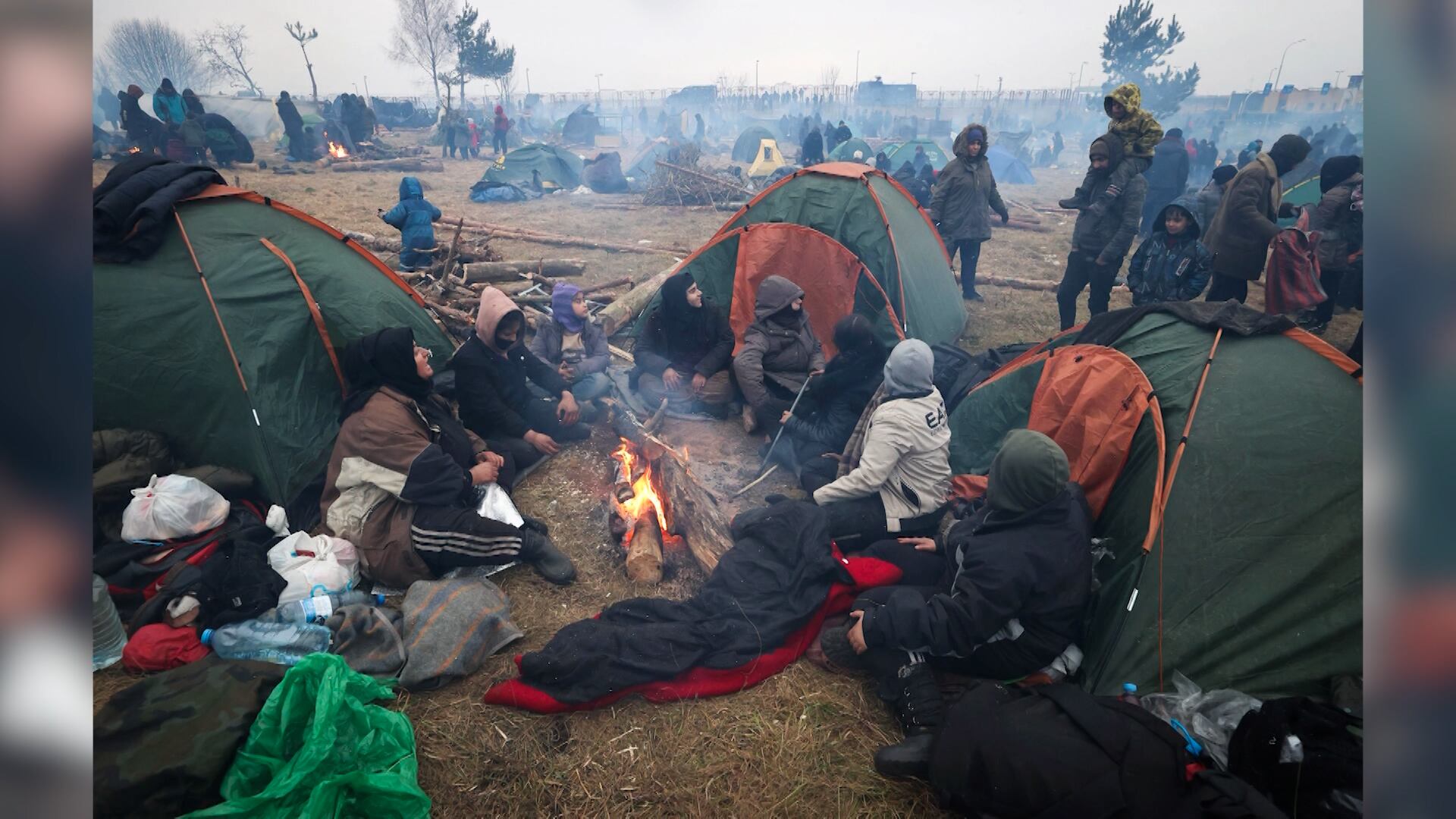
Belarus President Alexander Lukashenko has been accused by the EU of manufacturing a migration crisis along his border with Poland. But, even as tensions appear to be stabilizing at the moment, Ali Noorani, the president and CEO of National Immigration Forum and the host of the "Only in America" podcast spoke to Cheddar about the ongoing danger to the migrants who hail from countries like Iraq and Afghanistan. "What is going to happen to folks who are in Belarus who came from these countries? Is Lukashenko going to provide them asylum and protection in Belarus, or are they going to continue to be political pawns in a geopolitical battle," he said. "Real people's lives are being put at great risk."
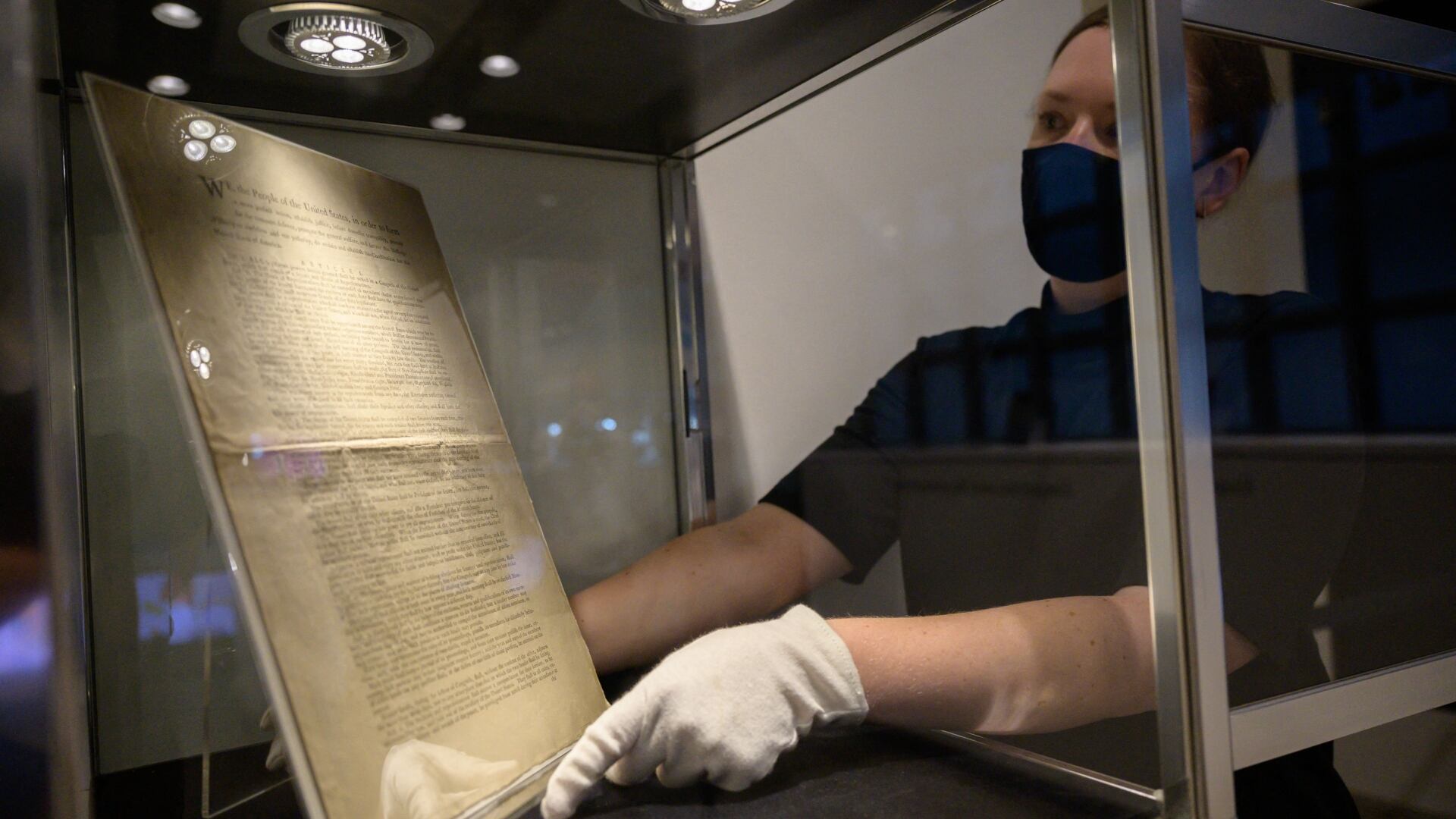
A group of crypto investors has come together to raise millions of dollars in the hopes of owning a rare piece of the U.S. Constitution. According to the crypto group, "Constitution DAO" It is time to put the constitution in the hands of the people. CEO and Founder of Metaversal Yossi Hasson, joined Cheddar to discuss more.
Polarization is among the defining traits of American politics in the 21st century. Sometimes it seems like the only thing we can all agree on is the fact that we don't really agree on anything. But those divisions don't just stop at whether you vote red or blue.
A new survey from the Pew Research Center finds that rather than just two political buckets, we have nine. The "2021 political typology" as it's called distinguishes between different ideological subsets in the Democratic and Republican party. It encompasses everyone from the loudest revolutionary lefties, to the loudest insurrection apologists on the right.
Andrew Daniller, research associate at the Pew Research Center, joins None of the Above to discuss.
Tanya Snyder, transportation reporter at Politico, joins None of the Above with J.D. Durkin to discuss the bipartisan infrastructure law, what it means for the electric vehicle industry and whether Democrats will be able to capitalize on the legislative victory ahead of the 2022 midterms.
Heading into 2022, the eyes of political nerds like us are fixed on statehouses across the country. State legislatures are in the process of taking the data from the 2020 census and using it to draw new congressional districts. The process has major implications for midterms, as Republicans could retake the majority just by gerrymandering enough seats into their column. In Maryland, state level Democrats are considering several maps, one of which would completely draw out the only Republican from the state in Congress.
Bruce DePuyt, senior reporter at Maryland Matters, and Helen Brewer, legal analyst at Princeton's Electoral Innovation Lab, join Cheddar Politics to discuss.